Azin Asro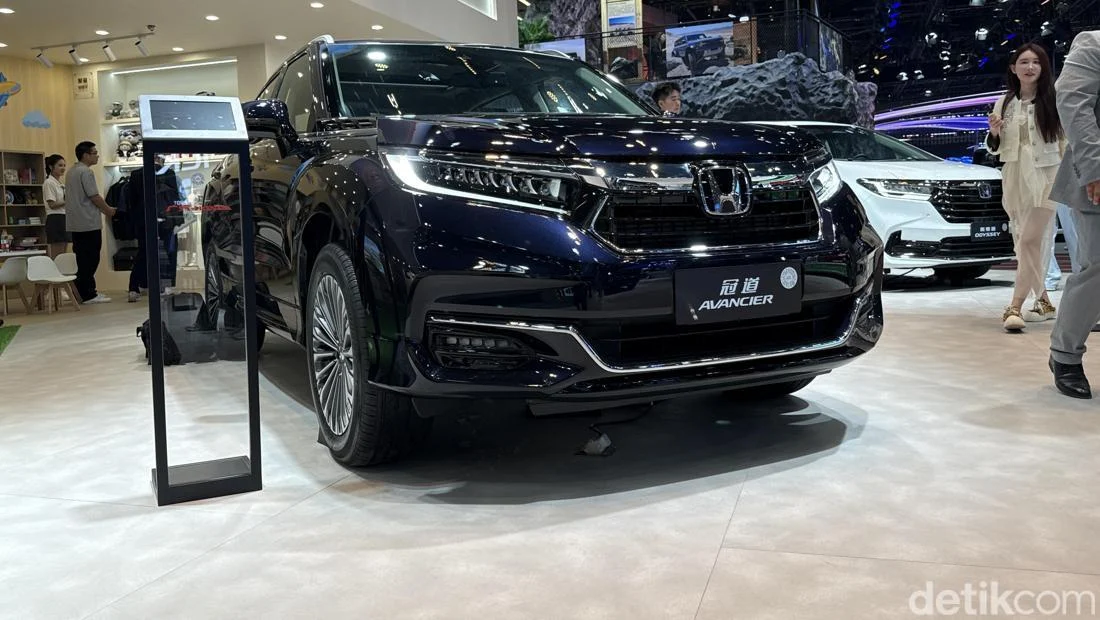
The landscape of the global automotive industry continues to shift toward a more nuanced definition of luxury, a trend prominently displayed at the Auto China 2026 exhibition in Beijing. While the Honda CR-V has long been established as the definitive flagship SUV for the Japanese automaker in various international markets, including Indonesia, a different contender stole the spotlight at the Honda pavilion this year. The Honda Avancier, a premium SUV manufactured through the GAC Honda joint venture, has emerged as a compelling alternative that challenges the traditional hierarchy of the brand’s lineup. Offering a more upscale experience, larger dimensions, and a more potent powertrain, the Avancier remarkably maintains a price point in the Chinese market that often undercuts its more famous sibling, the CR-V.
The Strategic Debut at Auto China 2026
Auto China, also known as the Beijing International Automotive Exhibition, has solidified its status as one of the world’s most influential automotive stages. In 2026, the event served as a critical platform for legacy automakers to demonstrate their resilience and innovation amidst a rapidly evolving market dominated by electrification and domestic Chinese competition. Within the GAC Honda booth, the Avancier stood as a testament to the brand’s commitment to the internal combustion engine (ICE) and hybrid segments, catering to a demographic that prioritizes executive comfort and road presence over the utilitarian nature of standard family SUVs.
The Avancier is not a new nameplate for the Chinese market, but its 2026 iteration showcases significant refinements in design and technological integration. Since its initial introduction, the model has been positioned exclusively for China, filling a gap between the compact crossover segment and the full-sized luxury SUV market. The collaboration between Honda and the Guangzhou Automobile Group (GAC) has allowed for a vehicle that is specifically tailored to local tastes, which often favor expansive rear-seat legroom and "coupe-like" silhouettes.
Architectural Design and Dimensional Superiority
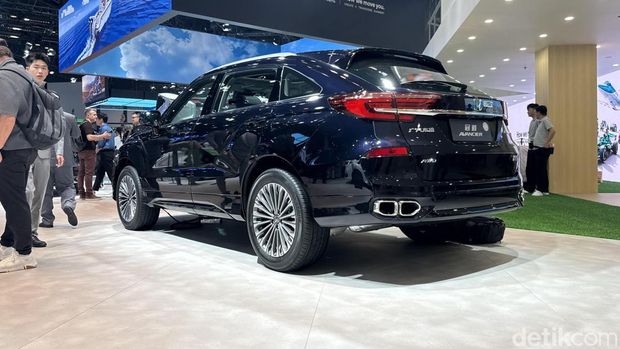
One of the most striking aspects of the Honda Avancier is its departure from the traditional "two-box" SUV design. While the CR-V adheres to a more conservative, family-oriented aesthetic, the Avancier adopts a sporty, fastback-inspired profile. This "Coupe SUV" styling gives the vehicle a more planted and aggressive stance, drawing comparisons to a high-riding version of the Honda Accord rather than a traditional utility vehicle.
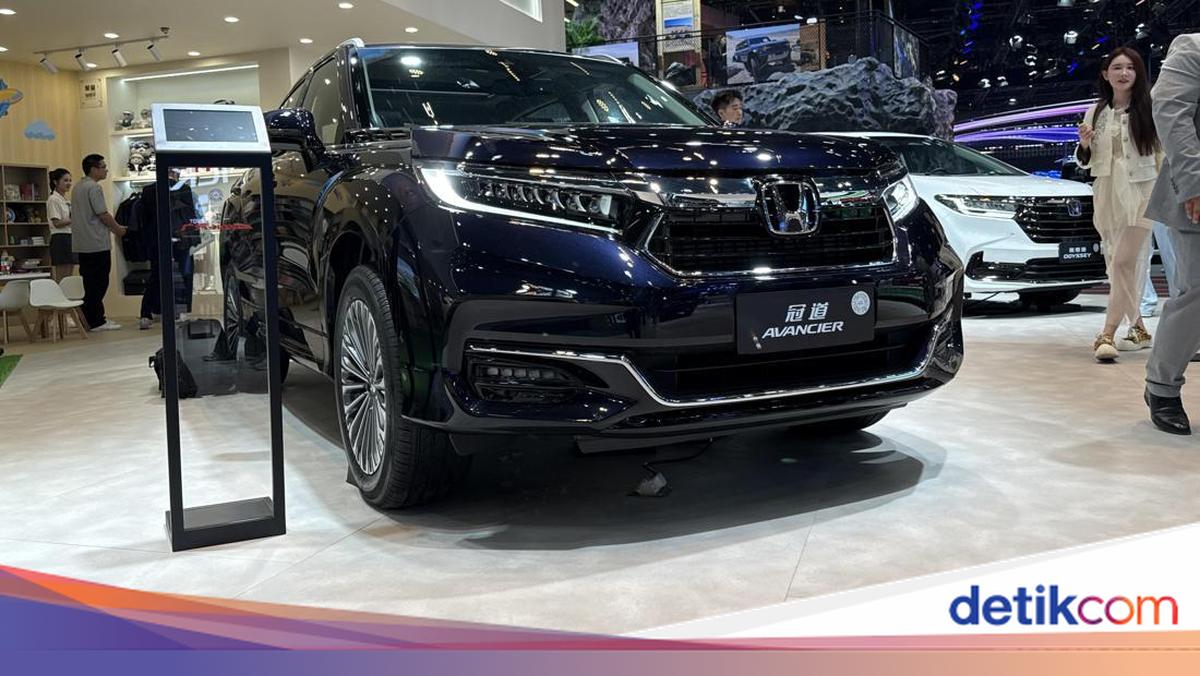
In terms of physical footprint, the Avancier significantly outclasses the CR-V. The vehicle measures 4,816 mm in length and sits on a generous wheelbase of 2,820 mm. For comparison, the current generation Honda CR-V measures approximately 4,691 mm in length with a wheelbase of 2,701 mm. This extra 119 mm in the wheelbase is almost entirely dedicated to the rear passenger compartment. Unlike many competitors that attempt to squeeze a third row of seats into such dimensions, GAC Honda has made the deliberate choice to keep the Avancier a strict five-seater. This decision transforms the rear cabin into an "executive lounge" environment, providing legroom that rivals D-segment luxury sedans.
Powertrain Options: Performance Meets Sophistication
The Honda Avancier offers a dual-engine strategy designed to cater to both efficiency-minded buyers and performance enthusiasts. The entry-level variants are powered by a 1.5-liter VTEC Turbo engine, a familiar unit within the Honda ecosystem but tuned specifically for this larger application. This engine produces approximately 193 horsepower and 240 Nm of torque, paired with a refined Continuously Variable Transmission (CVT). While this powertrain is shared with the CR-V, the Avancier’s superior sound insulation and suspension tuning provide a more isolated and premium driving experience.
For those seeking a more commanding performance, the flagship variants of the Avancier feature the 2.0-liter turbocharged K20C engine. This powerhouse delivers an impressive 272 horsepower and 370 Nm of torque. Unlike the 1.5-liter model, the 2.0T variant is mated to a sophisticated 9-speed automatic transmission sourced from ZF, replacing the CVT for a more direct and engaging gear-shifting feel. Furthermore, this high-spec model comes equipped with an Intelligent All-Wheel Drive (AWD) system, ensuring stability and traction across various road conditions. The inclusion of the 9-speed AT and the high-output 2.0T engine places the Avancier in a performance bracket usually reserved for European luxury crossovers.
Interior Amenities and Executive Comfort
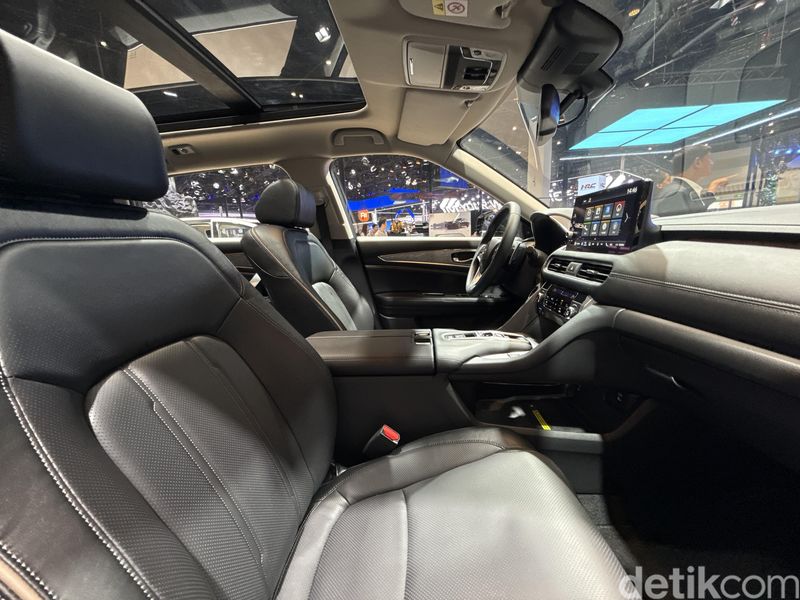
Steering away from the "family-first" philosophy of the CR-V, the Avancier’s interior is a study in premium appointments. The dashboard features high-quality soft-touch materials, wood-grain accents, and a layout that emphasizes width and space. The 2026 model showcased at Auto China features an updated digital cockpit, including a large-format infotainment screen and a fully digital instrument cluster with customizable displays.
The list of premium features is extensive and includes:
- Panoramic Sunroof: A massive glass roof that extends over the rear passengers, enhancing the sense of space.
- Ventilated and Heated Seating: Available for both front and rear occupants in higher trims, a feature often missing from the CR-V.
- Tri-Zone Climate Control: Allowing rear passengers to set their own environmental parameters.
- Electric Tailgate: Featuring kick-sensor technology for hands-free operation.
- Honda Sensing Suite: A comprehensive array of ADAS (Advanced Driver Assistance Systems), including adaptive cruise control, lane-keeping assist, and collision mitigation braking.
The rear seat experience is the Avancier’s "pièce de résistance." With the absence of a third row, the rear bench is pushed back, and the doors open nearly 90 degrees, allowing for effortless ingress and egress. The center armrest in the rear often features integrated controls for the audio system and the sunshade, mimicking the features found in flagship luxury sedans.
Pricing Disparity: A Market Anomaly
The most discussed aspect of the Honda Avancier at the Beijing show was its pricing strategy relative to the CR-V. According to the official GAC Honda price list, the Avancier is positioned between 169,800 yuan and 222,800 yuan. When converted, this translates to approximately Rp 373 million to Rp 490 million.
In a surprising twist of market positioning, the Honda CR-V in China—produced by the Dongfeng Honda joint venture—is priced between 185,900 yuan and 263,900 yuan (approximately Rp 408 million to Rp 580 million). This means that a consumer in China can purchase a larger, more premium, and more powerful Avancier for significantly less than the cost of a high-spec CR-V.
This pricing anomaly is largely attributed to the intense competition within the Chinese domestic market. As Chinese brands like BYD, Li Auto, and NIO dominate the mid-to-high-end SUV segments, joint ventures like GAC Honda have been forced to price their premium ICE offerings aggressively to maintain market share. Additionally, the localized supply chain in China and the massive scale of production allow for price points that are unattainable in other regions.
The Indonesian Context and Global Implications
For the Indonesian automotive market, the data presented at Auto China 2026 serves as a stark contrast to local realities. In Indonesia, the Honda CR-V remains the undisputed flagship of the local Honda Prospect Motor (HPM) lineup. The CR-V RS e:HEV (Hybrid) is currently priced in the range of Rp 825 million (On The Road Jakarta), which is nearly double the price of the more premium Avancier in China.
This price gap is the result of several factors, including:
- Taxation and Duties: Indonesia’s luxury goods sales tax (PPnBM) and import duties on components significantly inflate the final retail price of vehicles, especially those with larger engines or hybrid systems.
- Production Scale: The Chinese market consumes millions of vehicles annually, allowing for lower per-unit production costs compared to the smaller, though growing, Indonesian market.
- Market Segmentation: In Indonesia, the CR-V is positioned as a luxury aspiration for the upper-middle class, whereas in China, it is a high-volume "bread and butter" model facing stiff competition from dozens of local rivals.
The existence of the Avancier raises questions about the future of Honda’s global SUV portfolio. While the CR-V is a "world car" designed to satisfy global tastes, the Avancier proves that there is a significant appetite for SUVs that prioritize rear-seat luxury over three-row utility. Industry analysts suggest that as the SUV market matures, more brands may look toward the "Executive 5-Seater" format pioneered by models like the Avancier and the BMW X6.
Conclusion: A Shift in the Flagship Paradigm
The presence of the Honda Avancier at Auto China 2026 highlights a pivotal moment for the Japanese automaker. By offering a vehicle that is "more for less," Honda is navigating a complex Chinese market where value and prestige must coexist. For the global observer, the Avancier serves as a reminder of the regional diversity in automotive manufacturing.
While the CR-V will likely remain the face of Honda in Indonesia and North America due to its versatile 7-seater configuration and global brand recognition, the Avancier represents a more sophisticated branch of the Honda family tree. It combines the reliability and engineering prowess of Honda with a level of luxury and performance that punches well above its price tag. As the automotive world moves toward 2030, the lessons learned from the Avancier’s success in China—prioritizing passenger experience and aggressive pricing—may well influence the next generation of Honda SUVs worldwide. For now, the Avancier remains a "forbidden fruit" for many markets, standing as a premium, affordable alternative that redefines what a flagship Honda can be.