Eko Sulistyo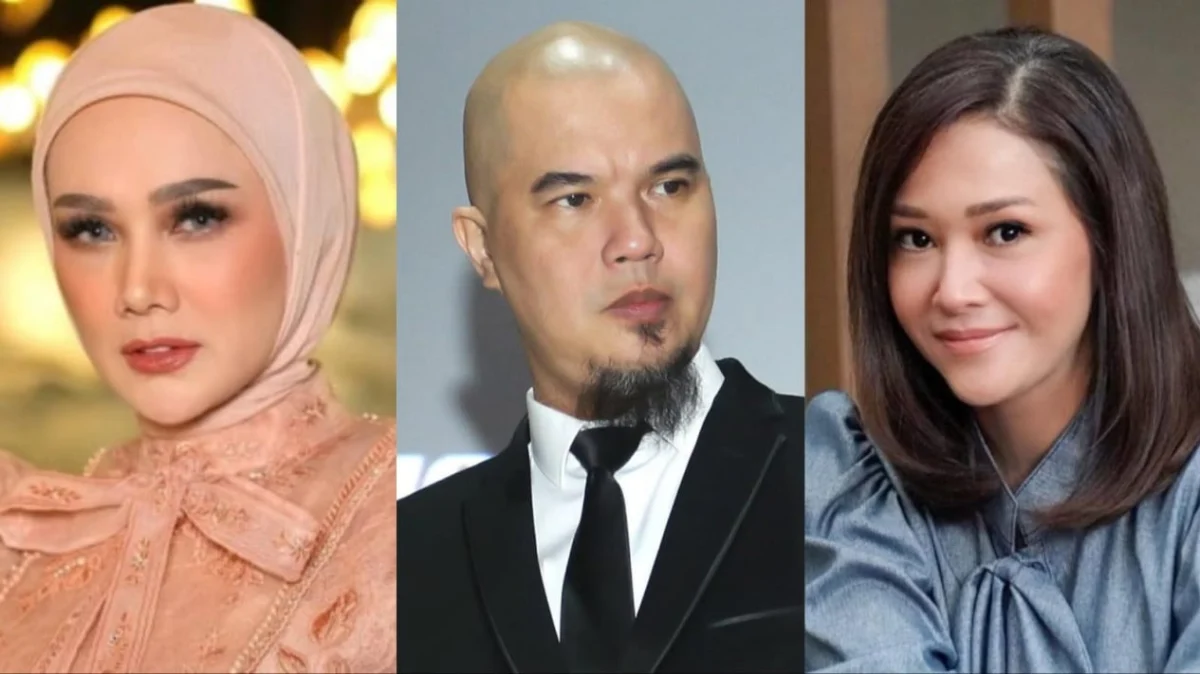
The long-standing personal conflict between Indonesian music mogul Ahmad Dhani and his former wife, Maia Estianty, has once again surfaced in the public eye, signaling that the wounds of their 2008 divorce remain unhealed nearly two decades later. On Friday, May 1, 2026, the Dewa 19 frontman utilized his social media platform to deliver a series of provocative statements that revisited the circumstances of their high-profile separation. The latest friction appears to have been ignited by recent public appearances and statements made by Estianty during a traditional ceremony for their second son, El Rumi. Dhani’s remarks, which combined praise for his current wife, Mulan Jameela, with sharp criticism of Estianty’s past conduct, have reignited a national conversation regarding celebrity privacy, the accuracy of public narratives, and the enduring impact of marital disputes on the next generation.
In an Instagram post featuring a photograph of himself with his daughter, Shafeea Ahmad, Dhani framed his grievances through a fatherly message. He claimed to have whispered to his daughter the importance of being grateful for her mother, Mulan Jameela, whom he described as a figure who prioritizes the family unit above all else. This comparison was pointedly directed at Estianty, as Dhani alleged that his former wife had historically prioritized material gain and public image over the needs of her children. The post, which quickly went viral across Indonesian social media sectors, characterized Estianty’s recent behavior at family events as a calculated performance intended to garner public sympathy, rather than a genuine expression of maternal sentiment.
The Catalyst: El Rumi’s Siraman Ceremony and the Performance of Family Unity
The immediate trigger for Dhani’s social media outburst appears to have been the siraman (pre-wedding ritual bath) ceremony held for El Rumi. During the event, Maia Estianty was seen participating in the traditional rites alongside her former husband, a rare moment of public convergence for the estranged pair. While media outlets and fans initially praised the duo for maintaining a facade of harmony for the sake of their son, Dhani’s subsequent post suggests that the atmosphere behind the scenes—or at least his perception of it—was far from amicable.
Dhani labeled Estianty’s conduct during the event as "bad acting," suggesting that the display of emotional vulnerability was a facade. He further escalated his rhetoric by questioning Estianty’s mental well-being, stating that the public narrative surrounding her as a "victim" of the divorce was a construction of the media and fan imagination rather than a reflection of reality. According to Dhani, the emotional fallout of this "acting" had a visible impact on Shafeea, though he did not provide specific details on how the young girl was affected. This tactic of involving the younger generation in the parental dispute has been a recurring theme in the Dhani-Estianty saga, often drawing criticism from child psychologists and social commentators.
A Chronology of Conflict: From Ratu to the Supreme Court
To understand the gravity of Dhani’s recent allegations, one must look back at the timeline of one of Indonesia’s most publicized marital breakdowns. Ahmad Dhani and Maia Estianty married in 1996, during the height of Dhani’s success with the legendary rock band Dewa 19. Together, they had three sons: Al Ghazali, El Rumi, and Dul Jaelani. By the mid-2000s, the couple was also a professional powerhouse, with Dhani producing Estianty’s highly successful musical duo, Ratu.
The professional and personal relationship began to disintegrate in 2006, coinciding with the rise of Mulan Jameela (then known as Mulan Kwok) as the new vocalist for Ratu. The ensuing years were marked by a bitter legal battle that captivated the Indonesian public. The divorce was finalized in 2008, but the legal disputes over child custody and the division of assets lasted for years. For much of the last two decades, the dominant public narrative has painted Estianty as the betrayed wife and Mulan Jameela as the third party responsible for the family’s collapse.
However, Dhani’s latest statements seek to dismantle this narrative entirely. He reiterated claims that the divorce was not triggered by his relationship with Mulan, but rather by Estianty’s alleged infidelity with a high-ranking executive of a private television station. Dhani asserted that he possesses a written and signed confession from Estianty regarding this matter. Furthermore, he pointed to the 2013 Supreme Court (Mahkamah Agung) ruling regarding child custody as proof that the allegations of domestic violence and infidelity leveled against him were not legally substantiated. He argued that while "fans of soap operas and Korean dramas" might believe the narrative of his villainy, the highest court in the land did not.
Legal Realities and the "Court of Public Opinion"
The discrepancy between legal findings and public perception is a central theme in Dhani’s defense. In the Indonesian legal system, divorce proceedings often involve the presentation of evidence regarding "moral failings," including infidelity. While the specifics of the 2013 Supreme Court ruling focused largely on the custody of the three sons—ultimately granting them the right to choose which parent they wished to live with—Dhani views the lack of a definitive legal condemnation against him as an exoneration.
Conversely, Estianty has historically spoken about the trauma of being locked out of her own home and being separated from her children during the peak of the dispute. These stories have solidified her status in the eyes of many as a resilient figure who rebuilt her life and career independently. Dhani’s move to bring up a "signed confession" from nearly twenty years ago is seen by analysts as an attempt to pivot the "moral high ground" back in his direction, especially as his children from his first marriage have reached adulthood and are navigating their own public lives.
Comparing Maternal Philosophies: Mulan Jameela vs. Maia Estianty
A significant portion of Dhani’s recent rhetoric involves a direct comparison between the two women in his life. He praised Mulan Jameela for being a "stay-at-home" figure who does not "blindly pursue material wealth" or "abandon the home" regardless of the severity of internal problems. This is a thinly veiled critique of Estianty’s successful career as a businesswoman and media personality.
Since the divorce, Maia Estianty has built a multi-industry empire, ranging from entertainment and cosmetics to real estate, often alongside her husband, billionaire Irwan Mussry. Dhani’s assertion that she "prioritizes material gain" over her children taps into traditional gender role expectations within Indonesian society, where a "good mother" is often culturally defined by her presence in the domestic sphere. By framing Mulan Jameela as the virtuous antithesis to Estianty’s professional ambition, Dhani is appealing to a conservative demographic that views maternal career success with skepticism.
Reactions from the Parties Involved and the Public
As of this report, Maia Estianty has not issued a formal rebuttal to Dhani’s latest Instagram posts. Historically, Estianty has adopted a policy of "calculated silence" or indirect responses through inspirational quotes, choosing to focus on her current marriage and her sons’ burgeoning careers. Sources close to the Estianty-Mussry household suggest that she prefers to maintain a distance from Dhani’s outbursts to avoid fueling a "media circus" that could overshadow her children’s milestones.
The public reaction, meanwhile, remains deeply polarized. On platforms like X (formerly Twitter) and TikTok, younger audiences often view Dhani’s persistence in bringing up the past as a sign of "unresolved issues" and "toxic behavior." Many commenters have expressed sympathy for the children—Al, El, Dul, and Shafeea—who are repeatedly caught in the crossfire of their parents’ digital warfare. Conversely, a segment of Dhani’s loyal fanbase continues to support his right to "set the record straight," arguing that he has been unfairly vilified by the media for twenty years.
Broader Implications for Celebrity Culture and Family Law
The ongoing saga between Ahmad Dhani and Maia Estianty serves as a significant case study in the evolution of Indonesian celebrity culture. It highlights the shift from traditional infotainment television—which dominated the early 2000s—to the direct-to-consumer grievances of social media. In the past, celebrities relied on press conferences and "exclusive" interviews to tell their stories; today, a single Instagram post can bypass editorial filters and reach millions instantaneously, often with more volatile consequences.
Furthermore, the situation underscores the long-term psychological impact of high-conflict divorces on families in the public eye. Despite Al, El, and Dul being adults, the "re-traumatization" of the family unit occurs every time the details of the 2008 split are re-litigated in public. Legal experts suggest that such public disputes also complicate the concept of "right to be forgotten," as digital footprints ensure that decades-old allegations remain easily accessible to future generations.
As Ahmad Dhani continues to challenge the established narrative of his past, the implications reach beyond his personal life. His actions force a re-examination of how society consumes celebrity "drama" and whether the legal resolutions of the past can ever truly compete with the enduring power of a well-crafted public image. For now, the "Dhani-Maia" polemic remains a permanent fixture of the Indonesian cultural landscape, a reminder that in the world of high-profile entertainment, some chapters are never truly closed.