Azin Asro
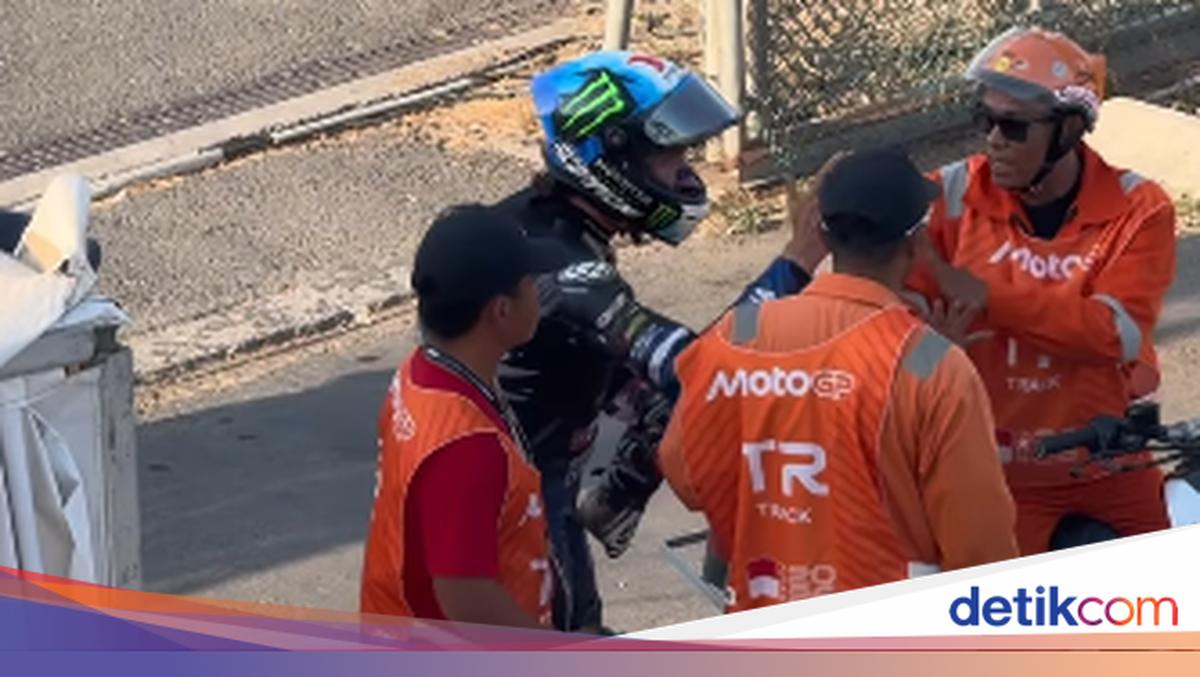
The Mandalika International Street Circuit in Lombok, West Nusa Tenggara, once again found itself at the center of a MotoGP paddock discussion following a tense on-track interaction during practice sessions. Monster Energy Yamaha MotoGP rider Alex Rins became visibly frustrated after being denied a ride back to the paddock on a flying marshal motorcycle along an evacuation route. The incident, which quickly circulated across global motorsport media and social platforms, captured Rins gesturing with a middle finger toward the circuit marshal. While the emotional response from the rider highlighted the physical toll and immediate frustrations inherent in premier-class motorcycle racing, the controversy has triggered a broader examination of safety protocols, the distinct roles of trackside personnel, and the strict operational boundaries enforced by the Fédération Internationale de Motocyclisme (FIM) and circuit management.
Understanding the underlying rules governing track operations during a Grand Prix weekend requires a close examination of standard safety procedures. According to motorsport logistics experts and former circuit leadership, the actions taken by the marshal at the scene were not only appropriate but strictly aligned with pre-approved safety directives. To the untrained eye, any motorcycle stationed around a racing circuit during a crash may appear interchangeable as a mode of transport for stranded competitors. However, professional motorcycle racing management maintains rigid operational distinctions between various support vehicles to ensure that emergency response capabilities remain uncompromised at all times.
Anatomy of an Incident: The Chronology of the Mandalika Misunderstanding
The sequence of events unfolded during a high-stakes practice session at the Lombok circuit. As is standard protocol during a crash or mechanical failure, riders who find themselves stranded off their motorcycles look for immediate transit options to return to the pit lane, enabling them to consult with their engineering crews and potentially switch to a secondary machine. For Alex Rins, the desire for a swift return to the Yamaha garage was paramount. Having experienced an unanticipated stoppage on the circuit, the Spanish veteran sought a quick lift from the nearest available trackside vehicle.
Upon encountering a flying marshal stationed near an evacuation route, Rins attempted to secure a ride directly back to the team garage using the marshal’s motorcycle. However, the marshal firmly denied the request, adhering strictly to the designated safety parameters of the circuit. Frustrated by the refusal—stemming from a misunderstanding of vehicle deployment protocols—Rins reacted visibly by raising his middle finger before eventually seeking alternative authorized transportation. The brief confrontation was captured on video, instantly drawing the attention of fans, journalists, and race control officials who monitor every square meter of the asphalt during official sessions.
Differentiating Circuit Assets: Flying Marshals Versus Moto Taxis
To contextualize why the marshal was obligated to refuse Rins’ request, industry experts have pointed to the fundamental differences in vehicle classifications and operational duties during a Grand Prix weekend. Andhi Satria, former President Director of the Mandalika Grand Prix Association (MGPA) and a recognized FIM license holder, shed critical light on the mechanical and functional disparity between the assets deployed around the circuit.
The motorcycle utilized in the incident was explicitly designated as a flying marshal vehicle, fundamentally distinct from a moto taxi. A primary visual and functional identifier of a flying marshal motorcycle is the inclusion of specialized safety equipment, specifically a securely mounted fire extinguisher, known locally by its Indonesian acronym APAR (Alat Pemadam Api Ringan). These vehicles are integral components of the circuit’s rapid-response infrastructure. Their primary mandate is to support track supervision, assist in immediate fire suppression, and manage initial incident containment alongside medical and recovery teams.
Conversely, moto taxis are logistics-oriented assets specifically allocated and deployed to assist with rider transportation. Their operational workflow is tailored to pick up uninjured or medically cleared riders from designated points and safely transport them back to the paddock or medical center according to a pre-arranged logistical grid. Conflating the two categories compromises the safety equilibrium of the circuit. If a flying marshal abandons their designated post or vehicle to transport a rider directly to the paddock, that specific sector of the track is temporarily left without rapid-response fire and safety mitigation capabilities—a risk that Race Direction and circuit safety officers are not permitted to take.
The Role of Designated Transit Points in FIM Safety Plans
The management of rider evacuation is not left to spontaneous decision-making by trackside personnel. Months and weeks prior to the Grand Prix weekend, circuit management, in direct consultation with the FIM Safety Officer and the appointed Race Director, formulates a comprehensive Safety Plan. This document undergoes rigorous review and must receive formal approval from governing bodies before the first motorcycle touches the asphalt.
Within this safety architecture, evacuation routes are mapped out with pinpoint accuracy. The plan designates specific "transit points"—predetermined geographic locations around the circuit where handovers between different tiers of transport can safely occur. A flying marshal is strictly authorized to move a rider only from the immediate incident zone to the nearest designated transit point. Once the rider reaches this secure handover zone, they are transitioned to a dedicated transit car or a secondary logistics vehicle, such as a moto taxi or official circuit car, which handles the remainder of the journey back to the team garages.
This layered approach ensures that emergency assets remain within their assigned operational sectors, ready to respond should a secondary incident occur elsewhere on the circuit. By attempting to bypass the transit point and demanding a direct ride to the paddock on a flying marshal’s bike, Rins was inadvertently asking the marshal to breach established FIM safety protocols.
Broader Implications for Rider-Marshal Relations and Circuit Operations
Incidents involving tension between riders and marshals are rare, yet they highlight the immense psychological and physical pressures placed on competitors in the MotoGP paddock. Riders operate in a high-adrenaline environment where every minute spent away from the garage during a practice session can significantly hinder setup adjustments and time attacks. This intense pressure frequently leads to emotional reactions when logistics do not move at the speed desired by the athlete.
However, the consensus within international motorsport governance is absolute: circuit marshals, the vast majority of whom serve as dedicated volunteers or trained local professionals, operate under the direct authority of Race Control. Their primary duty is the preservation of safety for all participants on the track. Undermining their authority or violating standard operating procedures—even out of frustration—can set a dangerous precedent that compromises overall circuit safety.
In the wake of the incident, sports commentators and industry analysts have emphasized the importance of continuous communication and education between teams, riders, and circuit management. While rider briefings cover logistical protocols extensively prior to the start of a race weekend, high-stress moments often test adherence to these rules. Moving forward, the Mandalika incident serves as an instructive case study for MotoGP stakeholders regarding the critical need for patience and adherence to protocol, ensuring that the vital work of track marshals is respected by all members of the global racing community.