Azin Asro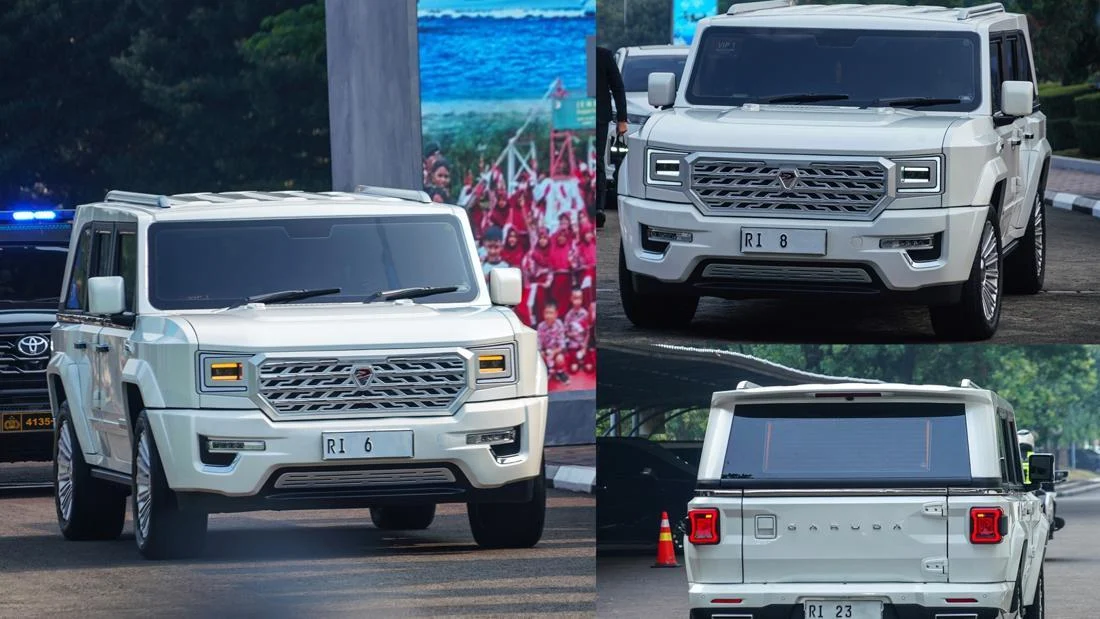
The landscape of official state vehicles in Indonesia is undergoing a historic transformation as ministers and deputy ministers serving in the Red and White Cabinet are officially slated to receive locally manufactured tactical vehicles produced by state-owned defense enterprise PT Pindad (Persero). This strategic policy marks a monumental shift in the government’s approach to procurement, prioritizing domestic manufacturing capabilities, technological self-reliance, and national industrial pride over foreign luxury imports. The decision to designate the Pindad Maung—specifically the Maung Garuda variant—as the official standard-issue transport for high-ranking government officials underscores a broader national commitment to strengthening domestic supply chains and bolstering the "Proud of Indonesian Products" movement.
As preparations intensify for the nationwide rollout, details regarding the distribution schedule, technical specifications, and potential expansion of the program to other branches of government continue to emerge from key stakeholders, including defense industry leaders and cabinet members who have already experienced the vehicles firsthand.
Chronology and Phased Implementation of the Maung Fleet
The transition toward utilizing homegrown tactical vehicles for daily ministerial duties did not happen overnight; rather, it is the culmination of years of military-industrial development and strategic political decision-making. The journey of the Pindad Maung from a military prototype to an executive state vehicle began to accelerate significantly following the inauguration of the Red and White Cabinet.
The initial phase of the deployment commenced in early October 2024, targeting a select group of high-ranking officials to test the operational viability and comfort of the vehicles under real-world Jakarta traffic and official transit conditions. By October 5, 2024, several Coordinating Ministers and agency heads became the pioneers of the initiative, receiving the first wave of vehicles rolling off the PT Pindad assembly line in Bandung, West Java.
According to data released by government officials, an initial batch of 18 units of the Pindad Maung Garuda was successfully distributed during this pilot phase. These vehicles were primarily allocated to Coordinating Ministries and critical state agencies to evaluate performance, fuel efficiency, passenger comfort, and security features. Building upon the success of this initial deployment, the administration is now preparing for a comprehensive, synchronized second wave of distribution.
Chief Technology Officer (CTO) of the Danantara Investment Management Agency, Sigit Puji Santosa, recently confirmed that the distribution of the Maung Garuda service vehicles will soon expand significantly. While the initial focus remained on coordinating ministers, the upcoming phase will systematically cover all remaining ministers and deputy ministers across the entire cabinet. Furthermore, hints from defense industry insiders suggest that the program possesses the potential to eventually encompass a wider array of senior state officials beyond the immediate cabinet structure, signaling a long-term institutional shift in official government fleet management.
Technical Specifications and Passenger Experience
One of the most frequently discussed aspects of the ministerial Pindad Maung is how its specifications compare to both traditional luxury sedans previously used by the government, such as the Toyota Crown, and the specialized, highly fortified Maung Garuda Limousine reserved exclusively for the President of the Republic of Indonesia.
Industry experts and cabinet members who have spent time inside the cabin have been quick to share their impressions. Menteri Koordinator Bidang Perekonomian (Coordinating Minister for Economic Affairs) Airlangga Hartarto, one of the earliest recipients of the vehicle, provided valuable insights into the interior layout and amenities of the ministerial variant. Unlike standard military tactical vehicles, which prioritize raw utility and armor over luxury, the ministerial Maung Garuda has been meticulously customized to meet the ergonomic and functional demands of high-level civilian governance.
Airlangga noted that the cabin space offers a dramatic improvement in spatial comfort compared to the aging fleet of Toyota Crown sedans that previously served Indonesian ministers. The headroom and legroom are significantly more expansive, creating a relaxed environment suitable for officials who often use transit time to review complex policy documents, conduct secure phone calls, or prepare for legislative hearings.
The second-row seating arrangement features reclining capabilities, allowing passengers to adjust their posture during long journeys across the sprawling capital or during inter-city official visits. Additionally, the cabin is equipped with modern technological amenities, including Bluetooth connectivity and an integrated touch-screen infotainment system, bridging the gap between rugged tactical build quality and executive modern convenience.
Despite these luxury enhancements, clear distinctions remain between the standard ministerial Maung and the presidential iteration. While the presidential Maung Garuda Limousine is equipped with comprehensive ballistic protection, specialized communication arrays, and a prominent sunroof designed for public addresses during parades, the ministerial versions do not come standard with a sunroof. Furthermore, CTO Sigit Puji Santosa emphasized that the technical and security specifications tailored for the cabinet members differ substantially from those of the head of state, maintaining a strict hierarchy in vehicular security protocols while still delivering a premium executive experience.
Comparative analysis of the vehicle’s market positioning often draws parallels with international executive SUVs. Minister Airlangga remarked that the comfort level and premium finish of the Maung Garuda can be considered highly competitive, drawing qualitative comparisons to established international executive utility vehicles such as those produced by SsangYong in South Korea. This comparison highlights how far Indonesian automotive engineering has progressed in merging heavy-duty chassis architecture with refined civilian interior design.
Broader Implications for the National Defense and Automotive Industry
The decision to transition the official ministerial fleet to the Pindad Maung carries profound economic, industrial, and symbolic implications for Indonesia. For decades, Indonesian government officials have relied heavily on imported luxury sedans, a practice that, while practical in terms of established dealership networks, did little to stimulate domestic technological innovation or foster high-value manufacturing capabilities within the country.
By mandating that state officials use vehicles produced by PT Pindad—a state-owned enterprise traditionally focused on manufacturing weaponry, ammunition, and tactical vehicles for the Indonesian National Armed Forces (TNI)—the government is providing a massive vote of confidence to the domestic defense and manufacturing sectors. This captive market strategy guarantees baseline production volumes, allowing PT Pindad to refine its engineering processes, invest in advanced research and development, and potentially scale up operations to target commercial civilian markets in the future.
Furthermore, this policy aligns seamlessly with the national industrial downstreaming agenda championed by the Indonesian government. Rather than merely exporting raw materials or assembling foreign-designed vehicles under strict license agreements, the creation and adoption of the Maung Garuda demonstrate that Indonesian engineers possess the capability to design, fabricate, and deploy complex automotive platforms tailored to domestic geographic and administrative requirements.
From a fiscal perspective, prioritizing domestic procurement helps retain capital within the national economy, supporting local component suppliers, small and medium-sized enterprises (SMEs) integrated into the defense supply chain, and thousands of skilled Indonesian workers employed in advanced manufacturing sectors. The multiplier effect of such large-scale government procurement is expected to ripple across various supporting industries, ranging from specialized steel fabrication to automotive electronics and interior upholstery.
Looking Ahead: Future Outlook and Anticipated Announcements
As the October 2025 and subsequent legislative milestones approach, anticipation is building across government ministries regarding the finalization of the nationwide vehicle distribution schedule. While exact timelines and logistical details for the comprehensive rollout are closely guarded by administrative planners, statements from officials like Sigit Puji Santosa indicate that significant announcements and operational reveals will continue to unfold.
The successful integration of the Pindad Maung into the daily operations of the Red and White Cabinet will serve as a vital litmus test for the viability of homegrown heavy vehicles in high-profile administrative roles. If the deployment proceeds smoothly and the vehicles continue to receive positive reviews regarding reliability, maintenance costs, and executive comfort, the Maung could well become a permanent fixture of Indonesian statecraft.
Ultimately, the sight of ministers traveling through the thoroughfares of Jakarta in locally manufactured tactical-executive hybrids is more than just a logistical update; it represents a powerful visual statement of national self-reliance, industrial ambition, and a resolute step toward a future where Indonesia builds the tools of its own governance.