
 Tyo Susilo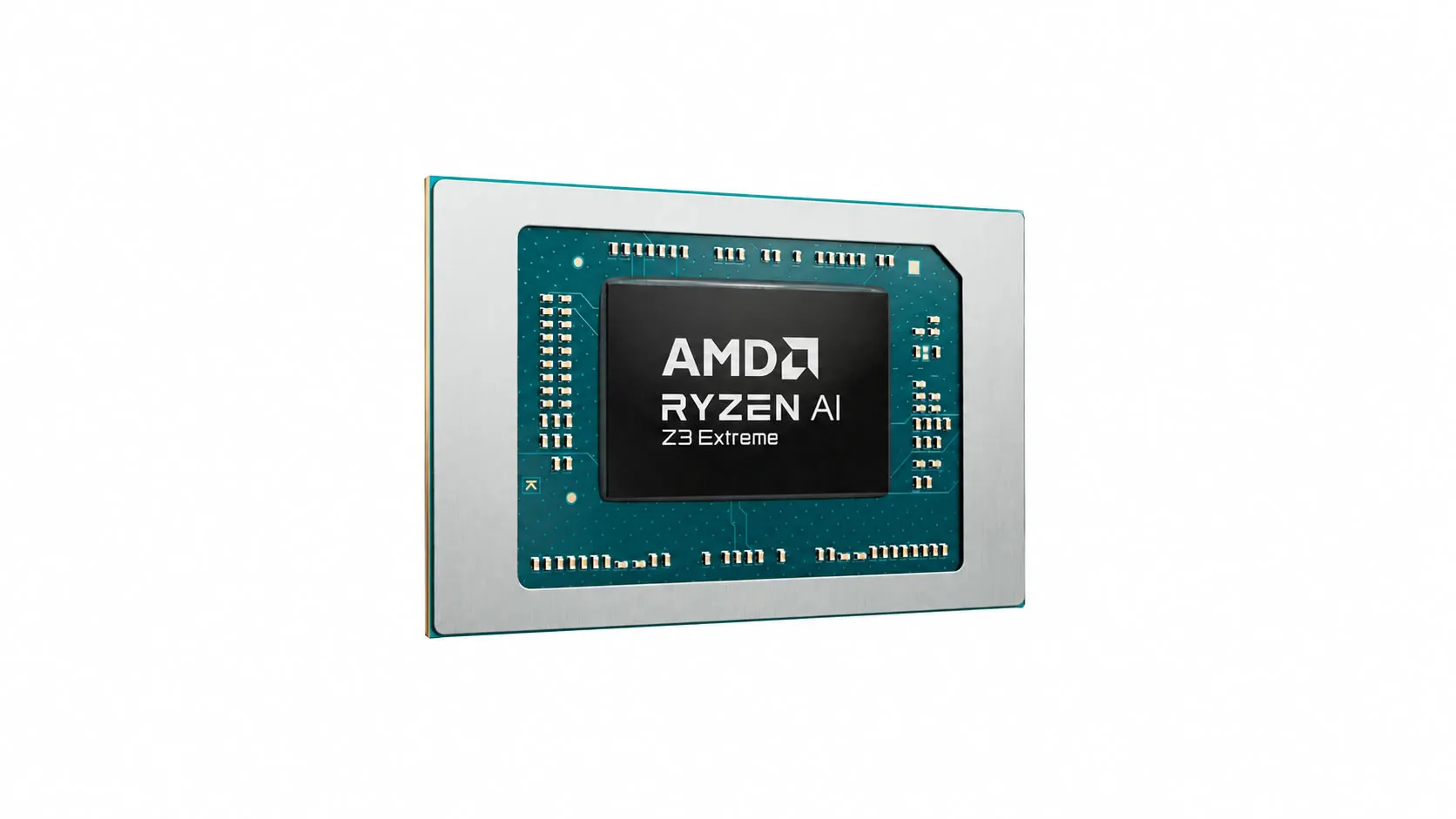
Advanced Micro Devices (AMD) is reportedly laying the groundwork for the next evolution in portable gaming hardware, with early industry leaks pointing toward the development of the Ryzen Z3 series System-on-Chip (SoC). As the portable PC gaming market continues to expand rapidly—driven by the success of Valve’s Steam Deck, ASUS ROG Ally, and Lenovo Legion Go—chipmakers are racing to deliver silicon tailored specifically for the unique thermal and spatial constraints of handheld form factors. According to recent supply chain disclosures, AMD’s upcoming Ryzen Z3 architecture aims to break away from traditional laptop-to-handheld adaptations by introducing a dedicated semi-custom design philosophy. Utilizing cutting-edge Zen 6 CPU cores and an optimized RDNA 4m graphics engine, the upcoming processor family is expected to redefine the performance boundaries of mobile PC gaming.
The Evolution of Handheld Gaming Silicon: Background and Market Context
To understand the significance of the Ryzen Z3 series, it is essential to examine the historical trajectory of AMD’s involvement in the handheld gaming console and PC market. When Valve launched the Steam Deck in late 2021, it relied on a custom AMD APU codenamed "Aerith," built on the Zen 2 architecture and RDNA 2 graphics. This move validated the concept of running a full Linux-based PC operating system on a low-power, handheld form factor.
The market experienced a paradigm shift in 2023 with the introduction of the AMD Ryzen Z1 and Z1 Extreme processors, which powered the ASUS ROG Ally and subsequent Windows-based handheld competitors. These processors were derived closely from the "Phoenix" laptop silicon family, utilizing Zen 4 architecture and RDNA 3 graphics. While highly capable, adapting notebook-class silicon meant navigating thermal design power (TDP) constraints that were originally optimized for slightly larger chassis.
By the time rumors regarding the Ryzen Z2 generation surfaced, industry observers noted a gradual refinement of AMD’s mobile strategy. However, the latest disclosures surrounding the Ryzen Z3 indicate a much more aggressive and specialized engineering approach. Rather than simply binning and down-powering standard notebook processors, AMD is reportedly designing the Ryzen Z3 with a dedicated semi-custom mindset. This strategy mirrors the approach AMD successfully employs in the home console market with custom silicon for the Sony PlayStation and Microsoft Xbox ecosystems, ensuring maximum efficiency, tailored thermal profiles, and feature sets built specifically for mobile gaming ergonomics.
Detailed Breakdown of Alleged Ryzen Z3 Specifications
According to leaked hardware specifications circulating within the tech industry, the Ryzen Z3 lineup will introduce a compelling configuration of compute and graphics resources. At the heart of the standard Ryzen Z3 processor is a hybrid-style core architecture featuring four standard Zen 6 CPU cores complemented by two low-power efficiency cores. This balance aims to maintain robust single-threaded and multi-threaded performance for modern gaming while aggressively conserving battery life during lighter tasks, web browsing, or background system operations.
In the graphics department, the Ryzen Z3 family is rumored to utilize an advanced integrated GPU based on the RDNA 4m architecture, equipped with 12 Compute Units (CUs). Industry analysts note that the "RDNA 4m" nomenclature suggests a specialized architectural bridge—serving as an evolution that sits structurally close to an enhanced RDNA 3.5+ design, setting it apart from the standard RDNA 4 architecture destined for discrete desktop graphics cards. This tailored approach allows AMD to maximize graphical throughput per watt, a critical metric for maintaining playable frame rates in AAA titles without draining a handheld’s battery within an hour.
Power consumption targets represent another crucial optimization area for the Ryzen Z3 series. The standard Ryzen Z3 variant is reportedly engineered around a baseline 15W TDP target, making it ideal for ultra-thin, highly portable devices focused on longevity. Meanwhile, the higher-tier Ryzen Z3 Extreme variant is projected to push envelope boundaries up to approximately 25W TDP, delivering significantly higher sustained clock speeds and enhanced graphical performance for enthusiasts willing to sacrifice a fraction of battery runtime for desktop-class visual fidelity on the go. While exact SKU segmentation and core counts for the Extreme variant remain unconfirmed, the presence of a scalable power envelope highlights the versatility of the underlying platform.

Physical Dimensions and Packaging Innovation
One of the most technically intriguing aspects of the Ryzen Z3 leak centers on its physical form factor and packaging. Rumors indicate that the new SoC utilizes an FF6 packaging design measuring a remarkably compact 25 x 25 millimeters.
To put this into perspective, this footprint is noticeably smaller than the FP8 packaging utilized by AMD’s mobile "Strix Point" processors. In hardware engineering, reducing the physical footprint of the SoC yields profound cascading benefits for device manufacturers. A smaller motherboard footprint frees up vital internal volume within a handheld chassis. This extra space can be reallocated toward larger battery capacities, more robust cooling solutions—such as expanded vapor chambers or larger fans—or more ergonomic structural designs that improve grip comfort during extended gaming sessions. By shrinking the silicon package without sacrificing compute density, AMD is providing hardware partners with unprecedented freedom in industrial design.
Relationship to Medusa Point and Industry Implications
While the Ryzen Z3 is engineered as a semi-custom handheld solution, it shares underlying technological DNA with AMD’s broader mobile roadmap, specifically bearing architectural similarities to "Medusa Point," the anticipated Zen 6-based mobile SoC family slated for mainstream laptops. This shared architectural lineage allows AMD to leverage its research and development investments across multiple product categories while applying specific microarchitectural trimming to suit the power and spatial boundaries inherent to handheld gaming devices.
The implications of these leaked specifications extend far beyond individual hardware enthusiasts. As Windows handhelds mature into a distinct and permanent product category within the PC ecosystem, the demand for specialized silicon has never been higher. Standard laptop processors, while versatile, often leave performance on the table when forced to operate strictly within the 10W to 30W envelope required by handheld systems. By investing in dedicated semi-custom handheld architectures like the Ryzen Z3, AMD is signaling its commitment to dominating the portable PC gaming space for years to come.
Current Status, Verification, and Next Steps
Despite the excitement generated by these leaks, industry analysts and hardware watchdogs urge caution. The technical specifications, core configurations, and packaging details currently circulating originate from preliminary supply chain leaks and early roadmap documentation. Consequently, specific architectural details—such as the exact distribution of performance versus efficiency cores and the definitive feature set of the RDNA 4m graphics engine—remain subject to change before mass production begins.
Furthermore, AMD has not yet made any official announcements regarding the Ryzen Z3 series, nor has the company provided a formal launch timeline or commercial availability window. Historically, major architectural transitions from design conceptualization to retail shelves involve rigorous validation phases, software optimization cycles, and close collaboration with hardware original equipment manufacturers (OEMs). As a result, consumers should anticipate further leaks, refinements, and eventual official disclosures from AMD as the development lifecycle progresses toward a commercial rollout.








