Eko Sulistyo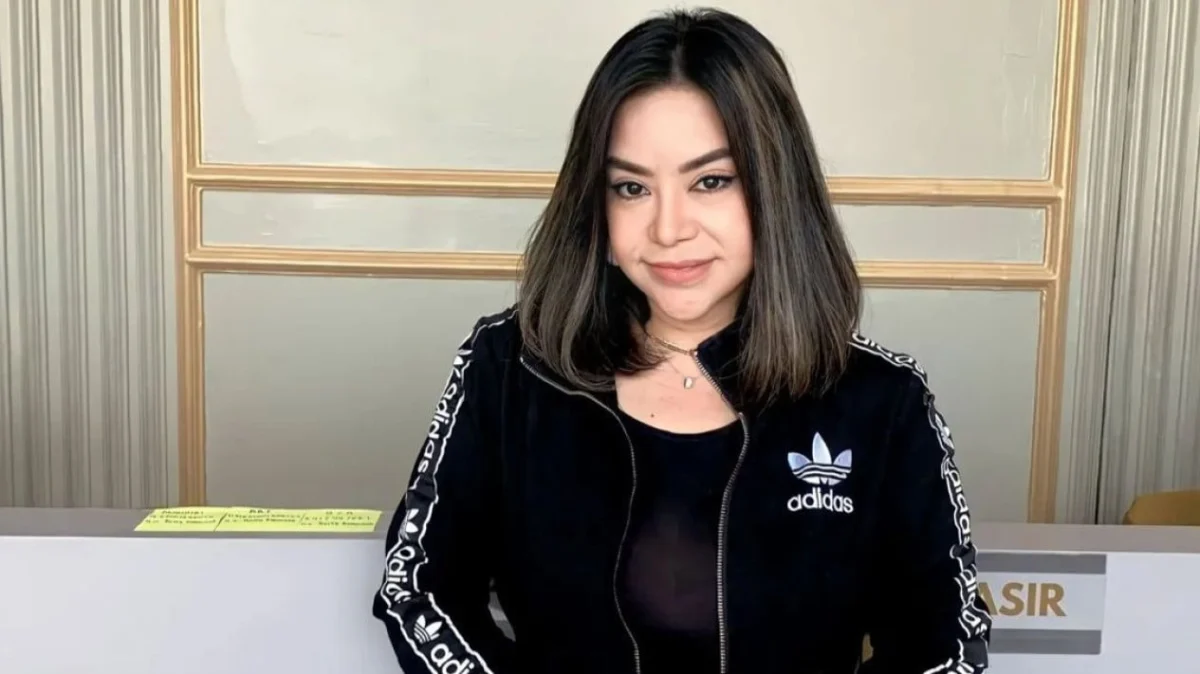
The Indonesian music industry is currently witnessing a significant legal and ethical confrontation as veteran dangdut singer Anisa Bahar takes a firm stand against the unauthorized and vulgar modification of her creative work. On Tuesday, July 7, 2026, the prominent vocalist publicly expressed her outrage after discovering that her hit song, "Gapapa," had been repurposed by two unidentified singers with lyrics that contain explicit and pornographic undertones. Bahar, known for her long-standing career and influence in the dangdut genre, has officially issued a 72-hour ultimatum for the parties involved to provide a formal clarification, or face potential legal consequences for their actions.
The controversy erupted when a video surfaced on social media platforms featuring two performers covering the song "Gapapa." However, instead of adhering to the original message of resilience and emotional strength, the performers substituted the lyrics with highly suggestive and inappropriate language. The original lyrics of "Gapapa" translate to a message of stoicism: "It is okay if I am shunned. It is okay if I am treated as an enemy. It is okay if I am talked about, mistreated, or even bullied." This sentiment of perseverance has been a hallmark of the song since its release, resonating with fans who have faced social adversity. In contrast, the modified version replaced these empowering lines with explicit references to sexual acts and unplanned pregnancy, effectively stripping the song of its original intent and replacing it with what Bahar describes as "uneducated" and "indecent" content.
The Ultimatum and Initial Reaction
Taking to her official Instagram account, @anisa_bahar_new, the singer did not mince words regarding her displeasure. She characterized the parody as a direct insult to her artistry and a violation of the professional standards governing the music industry. "Please, I am giving you 3×24 hours to contact me. I do not accept the way you have handled this," she wrote in a post that quickly garnered thousands of impressions. The demand for a 72-hour window is a standard precursor in Indonesian civil disputes, often serving as a final warning before a formal police report or a civil lawsuit is filed under the nation’s stringent copyright and information technology laws.
Anisa Bahar emphasized that while the pursuit of "viral" fame is common in the digital age, it should never come at the expense of another artist’s dignity or the integrity of a musical composition. She argued that the modified lyrics were not only offensive but also failed to provide any educational or artistic value to the public. The singer’s stance is rooted in the protection of "Moral Rights," a legal concept that grants creators the power to object to any distortion, mutilation, or modification of their work that would be prejudicial to their honor or reputation.
The Perspective of the Lyricist
The indignation is shared by Seruni Bahar, the songwriter and lyricist behind "Gapapa." As the individual responsible for the original phrasing and thematic structure of the song, Seruni expressed a deep sense of betrayal. She noted that the creative process behind the song involved significant emotional investment, intended to provide a voice for those feeling marginalized. To see that effort reduced to "trashy" and "obscene" wordplay for the sake of social media engagement was, in her view, an intolerable breach of ethics.
"This cannot be ignored," Seruni Bahar stated in a public comment. "They are messing with someone’s work outside the boundaries of decency. Using lewd lyrics just for the sake of popularity, sacrificing others’ reputations in the process—it is truly inappropriate. As someone who took part in creating the lyrics for ‘Gapapa,’ I feel this is a personal affront. What should we do with people like this?" Her reaction highlights a growing frustration among Indonesian songwriters who find their intellectual property frequently misappropriated in the "cover song" culture prevalent on platforms like TikTok and Instagram.
Legal Implications and Intellectual Property Protection
From a legal standpoint, the incident touches upon several critical aspects of Law No. 28 of 2014 concerning Copyright (UU Hak Cipta) in Indonesia. Under this legislation, a musical work is protected from the moment it is created. The law distinguishes between Economic Rights (the right to earn money from the work) and Moral Rights (the right to be identified as the author and to preserve the integrity of the work).
Legal experts suggest that by altering the lyrics to include pornographic content, the two singers may have violated Article 5 of the Copyright Law, which protects the "integrity of the work." Furthermore, because the content was distributed via social media, the Electronic Information and Transactions (ITE) Law could also come into play. If the modified lyrics are deemed to violate public decency or fall under the category of pornography, the perpetrators could face criminal charges in addition to civil liability for copyright infringement.
The case of Anisa Bahar serves as a litmus test for how the Indonesian legal system handles digital parodies that cross the line into defamation or obscenity. While the "Fair Use" doctrine exists in many jurisdictions, it rarely protects modifications that significantly damage the original creator’s reputation or transform a clean, radio-friendly track into adult-rated content without permission.
Chronology of the Dispute
The timeline of this event reflects the rapid pace of digital controversy in 2026:
- Early July 2026: A video is uploaded to social media by two emerging performers featuring a "remix" or "parody" of the song "Gapapa." The video gains traction due to its controversial and explicit lyrics.
- July 6, 2026: Fans and followers of the Bahar family begin tagging Anisa and Seruni Bahar in the video, alerting them to the unauthorized use and modification of their intellectual property.
- July 7, 2026 (00:00 WIB): Anisa Bahar issues a formal statement via Instagram, condemning the video and setting a 72-hour deadline for a response and clarification.
- July 7, 2026 (Morning): Seruni Bahar joins the discourse, confirming her role as the lyricist and expressing her intent to see the matter resolved through formal channels if an apology is not forthcoming.
- Current Status: The industry awaits the expiration of the 72-hour window. If the offending parties do not reach out to the Bahar family by July 10, 2026, legal counsel is expected to be engaged to file a formal report with the authorities.
Broader Impact on the Dangdut Industry
This incident occurs at a time when the dangdut industry is struggling to balance its traditional roots with the demands of modern digital marketing. Dangdut, often referred to as "the music of the people" in Indonesia, has occasionally faced criticism for performances that rely on "gimmicks" or overly sensual stage acts. However, the "Bahar Dynasty"—which includes Anisa, her daughter Juwita, and her sister Seruni—has generally maintained a professional standard focused on vocal ability and stage presence.
By speaking out against the vulgarization of her song, Anisa Bahar is asserting a boundary for the entire genre. The concern is that if such parodies are allowed to proliferate, the cultural value of dangdut will be diminished, and it will be increasingly viewed as a medium for low-brow humor rather than a legitimate art form. Furthermore, this case highlights the vulnerability of veteran artists whose catalogs are being rediscovered and often exploited by younger content creators who may not understand the legalities of music licensing and adaptation.
Public Sentiment and Social Media Reaction
The public reaction has been overwhelmingly supportive of Anisa Bahar. Netizens have flooded social media with comments criticizing the "chase for virality" that often leads creators to ignore basic ethics. One user commented, "Covering a song is fine, but changing the lyrics to something like that is just crossing the line. It’s disrespectful to the artist." Another noted, "The words they used are terrifying. It’s not just a parody; it’s a degradation of the song’s meaning."
This collective outcry reflects a broader societal fatigue with "trash content" (konten sampah). In recent years, the Indonesian digital landscape has seen a rise in creators using shock value, controversy, and obscenity to trigger the algorithms of social media platforms. The backlash against the "Gapapa" parody suggests that there is a limit to what the public is willing to accept in the name of entertainment.
Conclusion and Future Outlook
As the 72-hour clock ticks down, the ball is firmly in the court of the two singers who initiated the controversy. Anisa Bahar’s demand for a clarification is a measured first step, providing an opportunity for a private resolution before the machinery of the law is fully engaged. However, her firm tone suggests that she is prepared to go the distance to protect her creative legacy.
This case will likely serve as a significant precedent for intellectual property rights in the age of social media. It underscores the necessity for content creators to respect the moral rights of authors and the potential consequences of using someone else’s platform to spread indecent material. For Anisa Bahar, "Gapapa" was a song about resilience in the face of mistreatment; ironically, she is now living out the message of the song by standing strong against the very "bullying" and "mistreatment" of her work that the lyrics originally described. The outcome of this dispute will determine whether the "it’s okay" (gapapa) attitude extends to the desecration of art, or if there is a definitive line that cannot be crossed.