Bambang Pamungkas
A chilling security breach unfolded on Saturday evening, April 26, 2026, at the annual White House Correspondents’ Dinner in Washington, D.C., when a lone gunman managed to bypass security checkpoints, leading to a shooting incident that necessitated the immediate evacuation of President Donald Trump from the premises. The event, a cornerstone of American political and journalistic tradition, quickly devolved into a scene of chaos before Secret Service agents swiftly neutralized the assailant, who reportedly declared intentions to target Trump administration officials. The incident sent shockwaves globally, prompting a rapid and widespread outpouring of solidarity and condemnation from world leaders, with Israel notably among the first to express unwavering support for the United States.
Chronology of the Incident
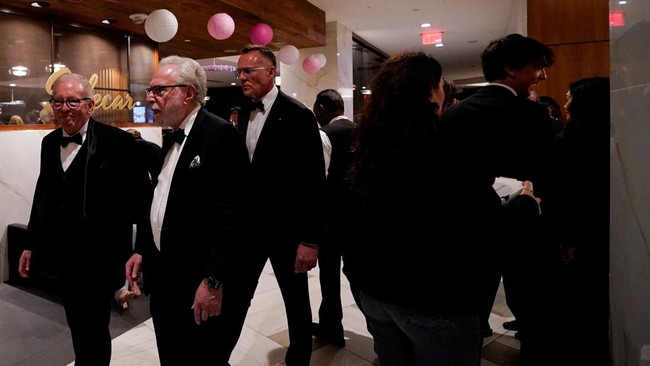
The evening commenced with the usual fanfare and anticipation surrounding the White House Correspondents’ Dinner, a high-profile gathering attended by hundreds of government officials, prominent journalists, and public figures, including First Lady Melania Trump and Vice President JD Vance. The event was being held in a grand ballroom, likely within a major hotel in Washington, D.C., an area typically under stringent security.
- Approximately 8:00 PM EST: The dinner was in full swing, with guests mingling and the program underway. President Trump, First Lady Melania Trump, and Vice President JD Vance were seated at the head table, enjoying the proceedings.
- Around 8:30 PM EST: Reports indicate a male suspect, whose identity has not yet been fully disclosed, approached a security perimeter outside the event venue. It remains unclear how he managed to penetrate the initial layers of security, but accounts suggest he bypassed a checkpoint, potentially exploiting a momentary lapse or an unforeseen vulnerability.
- Moments Later: Upon breaching the perimeter, the suspect reportedly began firing a weapon. The exact number of shots fired and the type of weapon used are under ongoing investigation. The immediate target appeared to be the general vicinity of the event entrance, rather than a specific individual initially.
- Rapid Secret Service Response: The sound of gunfire instantly triggered a pre-planned, high-alert security protocol. Secret Service agents, always present in large numbers at events involving the President, reacted with remarkable speed and precision.
- Presidential Evacuation: Within seconds of the first shot, President Trump and the First Lady were whisked away from the head table by their protective detail, following established emergency procedures. They were quickly moved to a secure, undisclosed location, ensuring their safety. Vice President Vance was also swiftly secured.
- Neutralization of the Assailant: As guests ducked for cover and security personnel converged, Secret Service agents engaged the gunman. The suspect was reportedly shot and incapacitated by agents, bringing an end to the immediate threat.
- Injury to Secret Service Agent: During the exchange, a Secret Service agent sustained a non-life-threatening injury. Initial reports from President Isaac Herzog of Israel later confirmed the agent was stable and recovering, a detail that brought a measure of relief amidst the tension.
- Investigation Commences: Immediately following the neutralization of the threat, federal and local law enforcement agencies, including the FBI, Secret Service, and Washington D.C. Metropolitan Police Department, began a comprehensive investigation. The suspect, once apprehended, reportedly claimed his actions were aimed at "targeting officials of the Trump administration," providing a crucial lead into the motive behind the attack.
- Venue Lockdown and Clearance: The entire venue was placed under lockdown as law enforcement swept the area to ensure no additional threats existed. Guests were instructed to remain in place until the all-clear was given, which occurred several hours later.
The White House Correspondents’ Dinner: A Tradition Under Threat
The White House Correspondents’ Dinner, traditionally held on the last Saturday of April, is more than just a social gathering; it’s a century-old tradition dating back to 1921, symbolizing the often-contentious but vital relationship between the American presidency and the free press. Historically, presidents have attended and often delivered humorous speeches, light-heartedly roasting themselves, their staff, and the journalists covering them. The event serves as a platform for the White House Correspondents’ Association (WHCA) to raise funds for journalism scholarships and present awards.
Over the years, the dinner has evolved into a star-studded affair, attracting celebrities, politicians, and media executives, making it one of Washington D.C.’s most anticipated annual events. However, its significance has been debated, particularly in recent years, with some critics arguing it blurs the lines between journalists and the powerful figures they cover. Despite these debates, its core purpose — to underscore the importance of a free and independent press in a democratic society — remains paramount.
The security apparatus surrounding such an event, especially with presidential attendance, is always meticulously planned and executed. The Secret Service, responsible for protecting the President and other high-ranking officials, works in conjunction with local and federal law enforcement to establish multiple layers of security, including physical barriers, access control points, surveillance, and undercover agents. The breach on Saturday night highlights the persistent challenges in safeguarding high-profile individuals and events against determined assailants, even with extensive precautions in place. This incident is a stark reminder of the vulnerability even the most secure environments can face, echoing historical attempts on presidential lives, such as the 1981 assassination attempt on President Ronald Reagan, which also involved a Secret Service agent being shot.
Domestic Condemnation and Calls for Unity
In the immediate aftermath, the incident drew widespread condemnation from across the American political spectrum, uniting figures typically at odds.
Speaker of the House Mike Johnson conveyed his concern, stating, "My family and I are praying for our nation tonight." His message underscored the gravity of the event, which transcended partisan divides, touching on the collective well-being of the country.
House Democratic Leader Hakeem Jeffries, from New York, issued a forceful statement, asserting, "The violence and chaos in America must end." His remarks reflected a broader sentiment among many political leaders and citizens alike, concerned about the rising tide of political polarization and its potential manifestations. The call for an end to "violence and chaos" can be seen as an implicit reference to the increasingly volatile political climate in the United States, which has witnessed heightened tensions and occasional unrest in recent years.
Washington D.C. Mayor Muriel Bowser commended the swift actions of law enforcement. "I am profoundly grateful to the members of law enforcement who performed their duties… and ensured all guests were safe," Bowser stated, acknowledging the critical role played by the Secret Service and other agencies. She also provided an early assessment that there was "no immediate reason to believe anyone other than the shooter was involved in the attack," helping to quell fears of a broader conspiracy.
Weijia Jiang, a senior White House correspondent who was seated near President Trump during the incident, offered a poignant reflection on the role of journalism in crisis. "When there’s an emergency, we rush toward the crisis, not away from it," Jiang remarked, highlighting the inherent duty of journalists to report from the front lines, even when personal safety is at risk. She further emphasized the fragility of fundamental freedoms, stating, "On a night when we reflect on the freedoms guaranteed by the First Amendment, we must also consider how fragile those freedoms are." Her words served as a powerful reminder of the importance of a free press and the threats it faces, not just from external forces but also from societal divisions. "Thankfully everyone is safe, and thank you for gathering tonight. We will do it again," she concluded, signaling resilience and a commitment to the tradition despite the trauma.
A Wave of International Solidarity
The global community reacted with a unified voice of shock, concern, and solidarity following the attack. The swiftness and breadth of these international responses underscored the United States’ pivotal role on the world stage and the widespread recognition of such an attack as an assault on democratic principles.
Israel: Among the first and most emphatic responses came from Israel. Foreign Minister Gideon Sa’ar immediately declared, "Israel stands shoulder-to-shoulder with the United States and Trump," expressing his nation’s unwavering support. He condemned the incident "in the strongest possible terms," adding, "Zero tolerance for political violence." President Isaac Herzog echoed these sentiments, conveying both concern and relief. "From the Holy Land, we pray for the safety and security of the United States and its leaders after this heinous attack," Herzog stated, also providing the reassuring update that the injured U.S. law enforcement officer was "safe and recovering." This rapid and strong show of support from Israel highlights the deep strategic alliance and shared security concerns between the two nations.
Australia: Prime Minister Antony Albanese of Australia conveyed relief for the safety of those present. "I am pleased to hear that the President and First Lady, along with all attendees of the White House Correspondents’ Dinner, are safe," he remarked, emphasizing the importance of their well-being. Australia, a close ally, consistently aligns with the U.S. on matters of security and democratic values.
Canada: Prime Minister Mark Carney of Canada expressed empathy and a strong stance against political violence. "Political violence has no place in any democracy, and I extend my sympathies to all those shaken by this disturbing event," Carney stated. As the closest neighbor and a fellow G7 nation, Canada’s immediate concern for U.S. stability is a given.
Mexico: South of the border, Mexican President Claudia Sheinbaum asserted, "Violence must never be the way forward." Her statement reflects a shared commitment to peaceful political discourse and stability in the North American region.
Pakistan: From Asia, Pakistani Prime Minister Shehbaz Sharif expressed his deep distress, saying he was "deeply shocked by the disturbing shooting incident" and extended wishes for President Trump’s safety. Deputy Prime Minister Ishaq Dar added, "We strongly condemn all forms of violence, which is an enemy of diplomacy and intolerable in any civilized society. We extend our best wishes to the President and people of America." Pakistan’s condemnation underscores the universal rejection of political violence and the importance of diplomatic engagement.
India: Indian Prime Minister Narendra Modi also weighed in, stating, "Violence has no place in democracy and must be condemned unconditionally." India, as the world’s largest democracy, shares with the U.S. a commitment to democratic values and peaceful transitions of power.
Venezuela: In a notable statement from a country with often strained relations with the U.S., Acting President Delcy Rodriguez of Venezuela declared, "We strongly condemn the attempted attack on President Donald Trump and his wife, Melania Trump." This unexpected condemnation from Venezuela suggests a basic adherence to the principle that attacks on heads of state, regardless of political differences, are unacceptable.
Beyond these direct statements, it can be inferred that numerous other allied nations and international organizations, such as the United Nations, the European Union, and NATO, would have issued similar condemnations, expressing concern for stability and reiterating the importance of upholding democratic institutions and the rule of law. Such incidents invariably prompt global leaders to reflect on their own security protocols and the broader implications for international stability.
Analyzing the Broader Implications
The shooting incident at the White House Correspondents’ Dinner carries significant implications across several domains:
- Security Protocols: The breach will undoubtedly trigger a comprehensive review and likely an overhaul of security protocols for high-profile events involving the President and other senior officials. The Secret Service, already operating under immense pressure, will face scrutiny regarding how an assailant managed to penetrate existing safeguards. This could lead to stricter access controls, enhanced surveillance, and more rigorous background checks for attendees and staff at future events. The incident serves as a stark reminder that no security system is infallible, and constant adaptation is necessary against evolving threats.
- Political Climate: The attack, particularly given the assailant’s reported motivation, underscores the escalating political polarization and animosity prevalent in the United States. While isolated acts of violence do not represent the entire political discourse, they are often symptoms of deeper societal divisions. The incident could further exacerbate these tensions, or conversely, it could serve as a wake-up call for political leaders to de-escalate rhetoric and foster greater national unity. The calls for an end to "violence and chaos" from both sides of the political spectrum suggest a shared recognition of this critical challenge.
- Role of Media and Democracy: The fact that the attack occurred at an event celebrating the free press adds another layer of gravity. Weijia Jiang’s comments about the fragility of the First Amendment rights resonate deeply. In an era where trust in media is often questioned, an attack at such an event highlights the dangers faced by journalists and the essential role they play in holding power accountable, even when that role puts them in harm’s way. It reinforces the idea that attacks on the press are, by extension, attacks on democracy itself.
- International Relations: The global outpouring of solidarity reaffirms the United States’ enduring position as a leader and ally for many nations. Such expressions of support are crucial in demonstrating unity against acts of political violence and reinforce diplomatic ties. It also serves as a reminder that the stability of American democracy has far-reaching implications for global stability.
Ongoing Investigation and Future Outlook
As the investigation unfolds, authorities will focus on several key areas:
- Motive and Affiliations: A thorough examination of the suspect’s background, mental state, and potential affiliations will be crucial in understanding the motive behind the attack and whether he acted alone or was part of a larger plot.
- Security Lapses: The Secret Service and other agencies will conduct an internal review to identify any security breaches or procedural failures that allowed the assailant to get as close as he did.
- Preventative Measures: The findings of the investigation will inform future security strategies for presidential events, potentially leading to new technologies, training protocols, and intelligence-gathering methods.
The incident at the White House Correspondents’ Dinner on April 26, 2026, will undoubtedly be remembered as a sobering moment in American history. It tested the resilience of its institutions, the effectiveness of its security apparatus, and the strength of its democratic values. While the immediate threat was neutralized and the President secured, the event leaves a lasting imprint, prompting deeper reflection on the challenges of safeguarding democracy in an increasingly volatile world. The commitment from journalists to continue their work, and the global reaffirmation of democratic principles, stand as powerful counterpoints to the violence witnessed that night.