Tyo Susilo
The dynamic landscape of PC gaming, while offering unparalleled flexibility and customization, inherently presents a complex ecosystem where software and hardware interactions can lead to unforeseen challenges. A prime example of this delicate balance is currently impacting players of the popular title Battlefield 6. Electronic Arts has officially acknowledged a widespread issue causing game crashes, particularly affecting users with NVIDIA’s latest GeForce RTX 50 Series graphics cards, specifically when engaging with maps featuring extensive water elements. This situation has necessitated an unusual recommendation from the developers: a rollback of graphics drivers to a previous version.
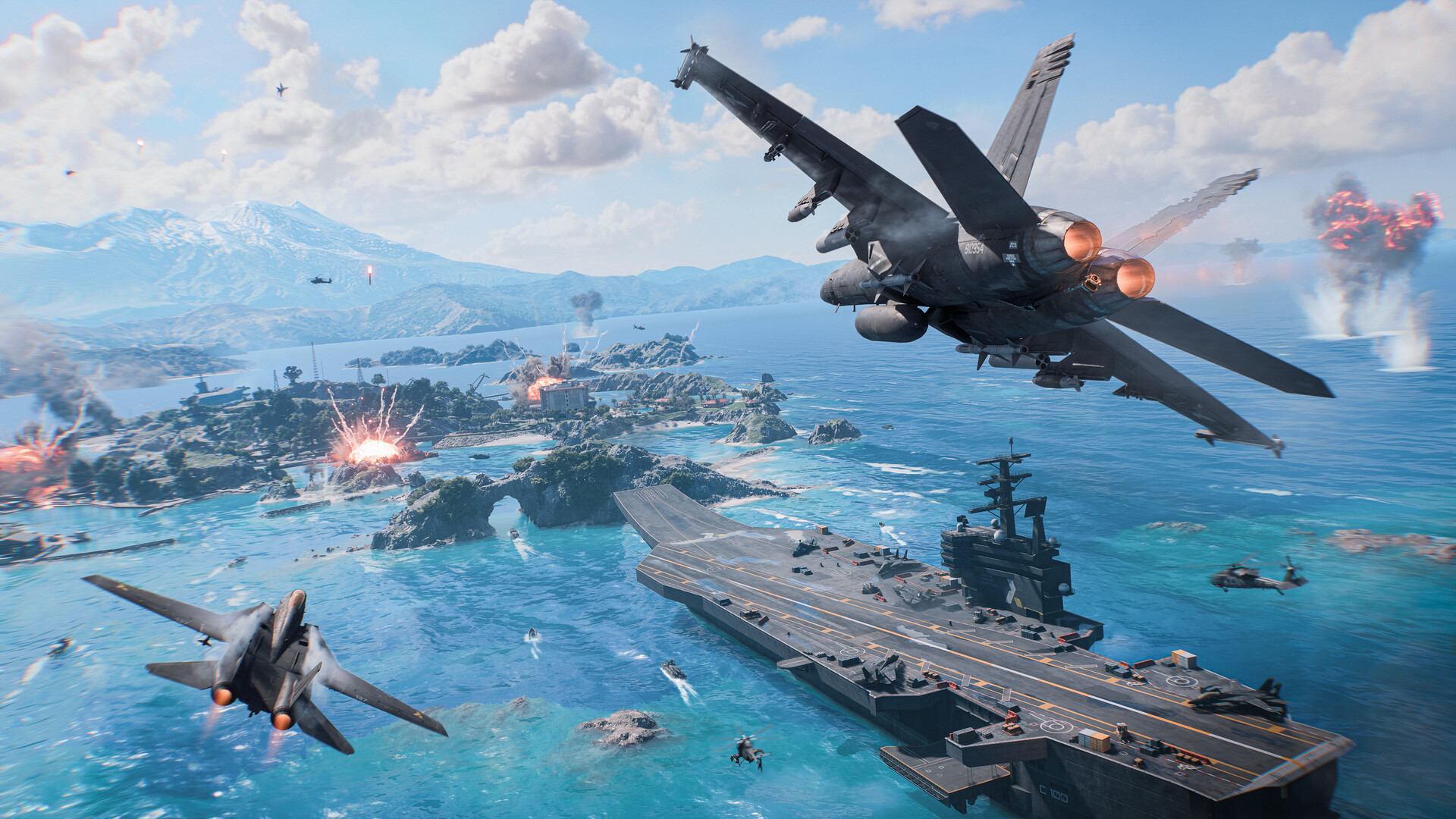
The problem was first brought to light through a series of player reports and subsequently confirmed by Electronic Arts via their official communication channels, including a statement on social media. The company confirmed that Battlefield 6 on PC is experiencing GPU driver-related crashes. These disruptions are most frequently reported when players find themselves in environments with significant bodies of water. This phenomenon is particularly pronounced on the newly introduced Tsuru Reef map, a key addition accompanying the recent Season 4: Pacific Front update, which has become a focal point for these technical difficulties.
Unpacking the Technical Glitch
Initial data shared by EA indicates that the issue disproportionately affects owners of NVIDIA GeForce RTX 50 Series graphics cards. While the majority of problematic reports stem from this specific hardware tier, a notable number of players utilizing the RTX 40 Series have also reported similar crashing incidents. This suggests a potential vulnerability within the driver architecture that interacts with the rendering of complex water surfaces in Battlefield 6.
The precise cause of the crashes remains under investigation by both Electronic Arts and potentially NVIDIA. However, the development team behind Battlefield 6 has proactively issued a temporary workaround. Players are advised to revert their NVIDIA Game Ready Drivers from the latest version, identified as 610.74, to an older, stable iteration, specifically version 596.49. This older driver is believed to circumvent the issues that are triggered by the newer driver’s interaction with the game’s water rendering.
Electronic Arts has also actively solicited detailed information from affected players to expedite the diagnostic process. They have requested users to submit crucial data, including their specific GPU model, the exact driver version they are using, the in-game map where the crash occurred, and any relevant crash reports. This collaborative approach aims to gather comprehensive insights that can help pinpoint the root cause of the problem more efficiently.
A Chronology of the Issue and Response
While the exact date of the initial player reports is not precisely documented in the provided source, the confirmation and subsequent recommendation from Electronic Arts on social media, referencing a specific tweet with a date of July 23, 2026, places the public acknowledgment and initial advisory within that timeframe. The release of Battlefield 6‘s Season 4: Pacific Front update, which introduced the problematic Tsuru Reef map, likely predates or coincides closely with the surge in player complaints.
The rollout of NVIDIA’s Game Ready Drivers is a continuous process, with updates frequently released to optimize performance and stability for new game releases and patches. Driver version 610.74, the current problematic driver for RTX 50 Series users in Battlefield 6, would have been a recent release intended to enhance gaming experiences. The recommendation to downgrade signifies a critical incompatibility that overrides the benefits of the latest driver.
It is worth noting that NVIDIA has a history of releasing driver updates to address game-specific issues. The promptness of a fix often depends on the complexity of the problem and the availability of diagnostic information. In this instance, the call for player assistance underscores the need for detailed telemetry to accelerate NVIDIA’s internal testing and development cycles.
Supporting Data and Technical Context
The rendering of realistic water in modern video games is a computationally intensive task. It involves complex physics simulations for wave dynamics, realistic reflections and refractions of light, caustics (the patterns of light and shadow created by light passing through or reflecting off water), and potentially volumetric effects for depth and clarity. These elements require significant processing power from the GPU and intricate programming within the game engine.
The GeForce RTX 50 Series represents NVIDIA’s latest generation of graphics cards, boasting advanced architecture and features designed for cutting-edge performance. These cards typically incorporate new technologies and optimizations that, while powerful, can sometimes introduce compatibility challenges with older or less optimized software. The fact that the issue is primarily affecting the newest hardware suggests that the specific way Battlefield 6 handles water rendering may be triggering a bug or a performance bottleneck within the RTX 50 Series’ architecture or its corresponding driver.
The rollback to driver version 596.49 implies that this specific iteration contained code or settings that did not conflict with Battlefield 6‘s water rendering. This could be due to a different implementation of certain shader instructions, memory management techniques, or power-saving features that are now behaving erratically with the newer driver.
Official Responses and Industry Reactions
Electronic Arts’ direct communication on social media serves as the primary official response to the issue. Their confirmation of the problem and the provision of a temporary solution demonstrate a commitment to player experience. The proactive request for detailed player data is a standard industry practice when troubleshooting complex, hardware-dependent issues.
NVIDIA, while not having issued a specific statement directly addressing Battlefield 6 in the provided context, has recently released a hotfix driver, version 610.82. This hotfix is designed to resolve several stability issues affecting the RTX 50 Series in other games. However, its release notes do not explicitly mention Battlefield 6 as a target for these particular fixes. This leaves open the possibility that the Battlefield 6 issue is either a separate, more nuanced problem or that the hotfix may indirectly alleviate it without being specifically cited.

Industry observers and gaming news outlets have widely reported on this development, highlighting the challenges that can arise in the PC gaming ecosystem. Such incidents underscore the ongoing need for close collaboration between game developers and GPU manufacturers to ensure seamless performance across a wide spectrum of hardware.
Broader Impact and Implications
The recommendation for players to downgrade their drivers, while a necessary temporary measure, can have several implications. Firstly, it disrupts the intended user experience, as players are foregoing the performance enhancements and bug fixes present in the latest driver release for other games. Secondly, it raises questions about the stability and compatibility of new hardware with current software titles.
For NVIDIA, such issues can impact consumer confidence in their latest hardware, especially if they are perceived as being prone to problems. It also necessitates a rapid response to identify and rectify the underlying driver defect. For Electronic Arts and Battlefield 6, persistent technical glitches can lead to player frustration and potentially affect player retention and future sales.
The long-term implication is the reinforcement of the importance of rigorous testing and quality assurance processes. Developers must ensure their games are optimized for a range of hardware, and GPU manufacturers must maintain robust driver development that accounts for diverse software implementations. The incident serves as a reminder that the cutting edge of technology often involves a period of adjustment and refinement.
While the current situation requires a specific workaround, the ongoing investigation by both EA and NVIDIA is expected to lead to a permanent fix, likely through an updated driver release that resolves the conflict with Battlefield 6‘s water rendering. Until then, players with affected hardware are advised to adhere to the downgrade recommendation to ensure a stable gaming experience. The continued dialogue between developers and hardware manufacturers remains crucial for navigating the complexities of the ever-evolving PC gaming landscape.