Nila Kartika Wati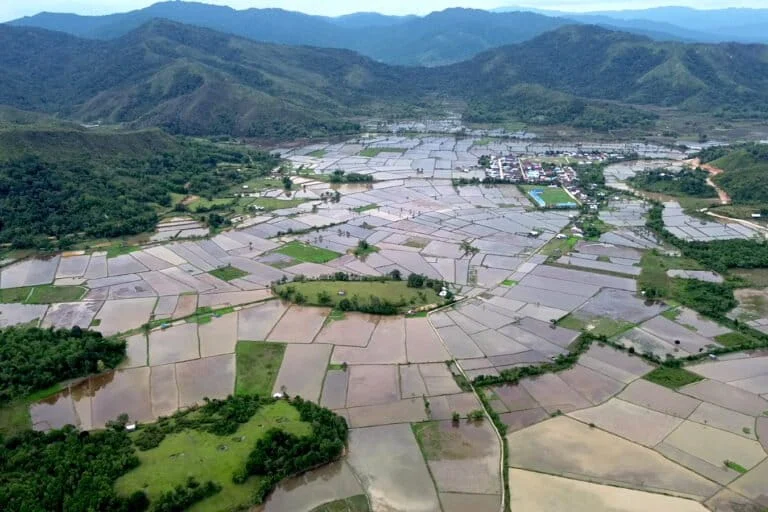
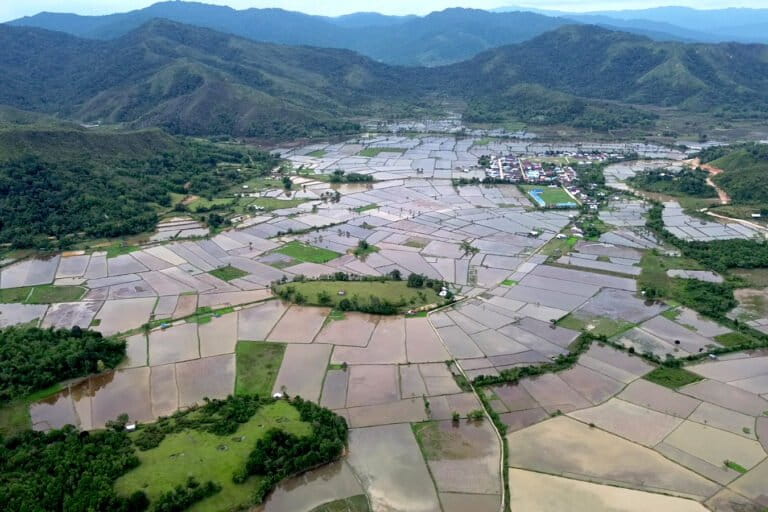
The Dayak Lundayeh community in the Krayan Highlands of Nunukan Regency, North Kalimantan, continues to preserve age-old agricultural traditions that serve as both a cultural cornerstone and a vital economic lifeline in the remote borderlands between Indonesia and Malaysia. Nestled within a fertile valley floor, surrounded by the towering peaks of the Kayan Mentarang National Park (TNKM), the Krayan region stands as a testament to the endurance of indigenous farming practices. Covering an expansive landscape, the community manages approximately 3,600 hectares of rice paddies dedicated to the cultivation of Adan rice, a prestigious local variety renowned for its premium quality, fragrance, and texture.
This agricultural landscape is not merely a production site; it is a critical buffer zone integrated with the 1.27 million-hectare Kayan Mentarang National Park. The indigenous territory of the Dayak Lundayeh spans roughly 343,000 hectares, where the relationship between the people and the forest is defined by a symbiotic, centuries-old dependence. For the Lundayeh, Adan rice represents a legacy that transcends sustenance, anchoring their identity and providing a sustainable source of income that reaches markets as far as Sarawak, Malaysia.
The Agricultural Philosophy of the Krayan Highlands
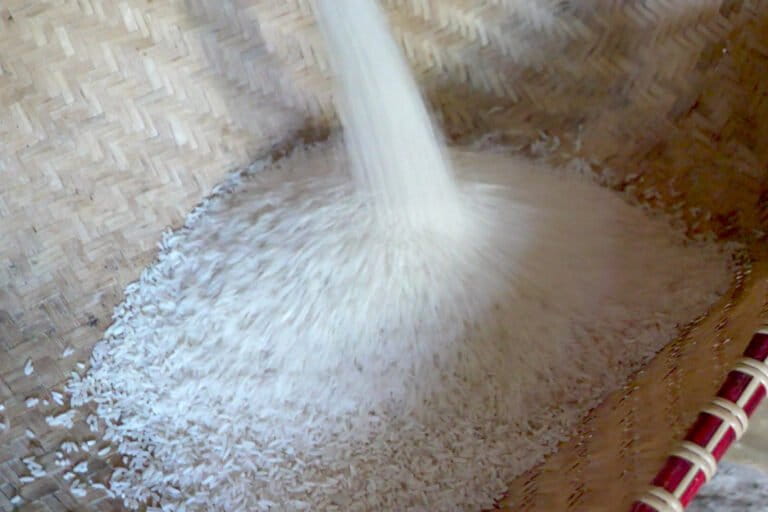
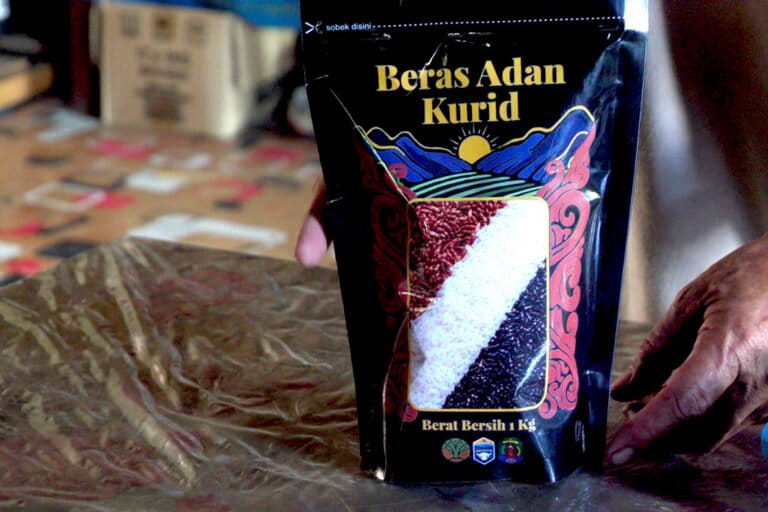
At the heart of this agricultural success is the Kelompok Tani Hutan (KTH) Batu Pun Bersama, led by Otnel Akun in Long Pua Village, West Krayan. According to Akun, the community distinguishes between several types of local rice, with the white, red, and black Adan varieties serving as the primary commercial drivers. These varieties are highly sought after by consumers across the border, where the demand for organic, high-quality rice remains robust.
The economic value of Adan rice is significant for the region. A 15-kilogram tin of this premium grain typically fetches between Rp350,000 and Rp400,000, with prices occasionally peaking at Rp450,000 depending on harvest cycles and market conditions. This premium pricing is justified by the strictly traditional, chemical-free cultivation methods employed by the farmers. Despite the past introduction of chemical fertilizers, the community has consciously returned to natural, regenerative practices.
The use of organic inputs, such as buffalo manure and urine, is a cornerstone of their farming system. Buffalo play a dual role in Krayan agriculture: they are not only the primary source of organic fertilizer but are also instrumental in the tilling process, effectively integrating livestock management with paddy cultivation. As Akun notes, the local ecosystem provides everything necessary for the crops to thrive, eliminating the need for external, synthetic interventions.
Maintaining Quality Through Seasonal Rhythms
A defining characteristic of the Krayan agricultural cycle is the deliberate decision to limit harvests to once per year. Unlike modern industrial farming models that push for multiple harvests to maximize yield, the Dayak Lundayeh prioritize the long-term health of their soil and the specific sensory qualities of the rice. By allowing the fields to rest and recover between cycles, the farmers ensure that the soil does not become nutrient-depleted or "saturated."
This conservation-oriented approach prevents the loss of the rice’s characteristic fluffiness and fragrance, qualities that differentiate Adan rice from mass-produced commercial varieties. The farmers view their land as an heirloom to be managed for future generations, rather than a commodity to be exploited for immediate gain. This philosophy creates a closed-loop system where the health of the paddy, the wellbeing of the livestock, and the integrity of the surrounding forest are inextricably linked.
The Hydrological Vitality of the Kayan Mentarang Ecosystem
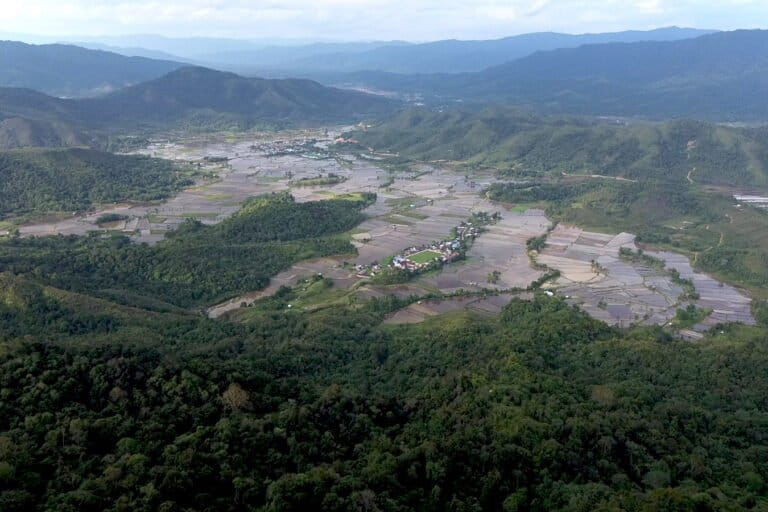
The sustainability of the Adan rice economy is fundamentally tied to the health of the Kayan Mentarang National Park. Hery Gunawan, Head of the National Park Management Section for Region I, explains that the mountainous forests surrounding the valley act as a giant, natural sponge. The dense canopy cover captures moisture from passing clouds and rainfall, storing the water within the forest floor and releasing it slowly through a network of streams and rivers that feed the valley’s irrigation systems.
For the Krayan farmers, the forest is the primary infrastructure that supports their livelihoods. The National Park serves as the "pulse" of their agricultural system; without the stable hydrological cycle provided by the protected forest, the terraced rice paddies would fail. This realization has shifted the role of the national park authority from a purely regulatory body to an active partner in community development.
Institutional Support and Economic Scaling
The collaboration between the Balai TNKM (National Park Authority) and the Dayak Lundayeh community has evolved beyond environmental protection. Through a "Village Assistance" (Desa Binaan) program, the authorities have worked to enhance the capacity of local farmers by providing essential equipment, including hand tractors and rice-milling machines. These investments have had a measurable impact on productivity.
Data from the KTH Batu Pun Bersama indicates a significant increase in output. In the 2025 harvest season, the group produced 51 tons of dried unhusked rice, a substantial rise from the 30 tons recorded in previous years. This growth highlights the efficacy of combining traditional indigenous knowledge with modern, appropriate-scale technology. By improving post-harvest processing, the community has managed to stabilize their supply chain and ensure that more of the product reaches the market in a condition that meets premium standards.
Cultural Identity and Future Sustainability
Seno Pramudito, Head of the Balai TNKM, emphasizes that Adan rice is an indelible part of the cultural identity of the Krayan people. The product is the result of a multifaceted process involving rich soil, pristine mountain water, organic livestock management, and the preservation of ancestral wisdom.
"Beras Adan is the pride of Krayan," Pramudito stated. "It is not merely an agricultural commodity; it is a cultural legacy and a testament to the harmony between the people of Krayan and their environment."
The challenge moving forward, according to conservationists and community leaders alike, is to maintain this equilibrium as external economic pressures and climate change threaten the region. The management of the Kayan Mentarang National Park is predicated on the understanding that it cannot be governed in isolation. The inclusion of indigenous communities as primary partners is the only viable path to long-term success.
Broader Implications and Global Recognition
The success of the Dayak Lundayeh in maintaining their traditional practices while engaging with modern markets has gained international attention. The recognition of these efforts, such as the 2020 Equator Prize awarded to the indigenous communities of Kayan Mentarang, highlights the global importance of locally-led conservation.
The Krayan model provides a replicable template for other regions where indigenous populations coexist with protected areas. By prioritizing ecological stability over short-term production spikes, the Krayan farmers have managed to secure a premium market position while preserving biodiversity. The implications for climate change mitigation are also significant; by maintaining the forest cover and avoiding chemical fertilizers, the community effectively participates in carbon sequestration and soil health preservation.
As the global agricultural sector grapples with the crises of soil degradation and the loss of traditional crop varieties, the Dayak Lundayeh of the Krayan Highlands stand as a silent, yet powerful example of resilience. Their commitment to the Adan rice legacy demonstrates that food security is not merely a matter of caloric production, but a delicate balance of culture, conservation, and community agency. So long as the forests of the Kayan Mentarang remain protected and the traditional knowledge of the Lundayeh is passed down to the next generation, the valley of Krayan will continue to produce more than just rice—it will continue to produce a sustainable future.