Azin Asro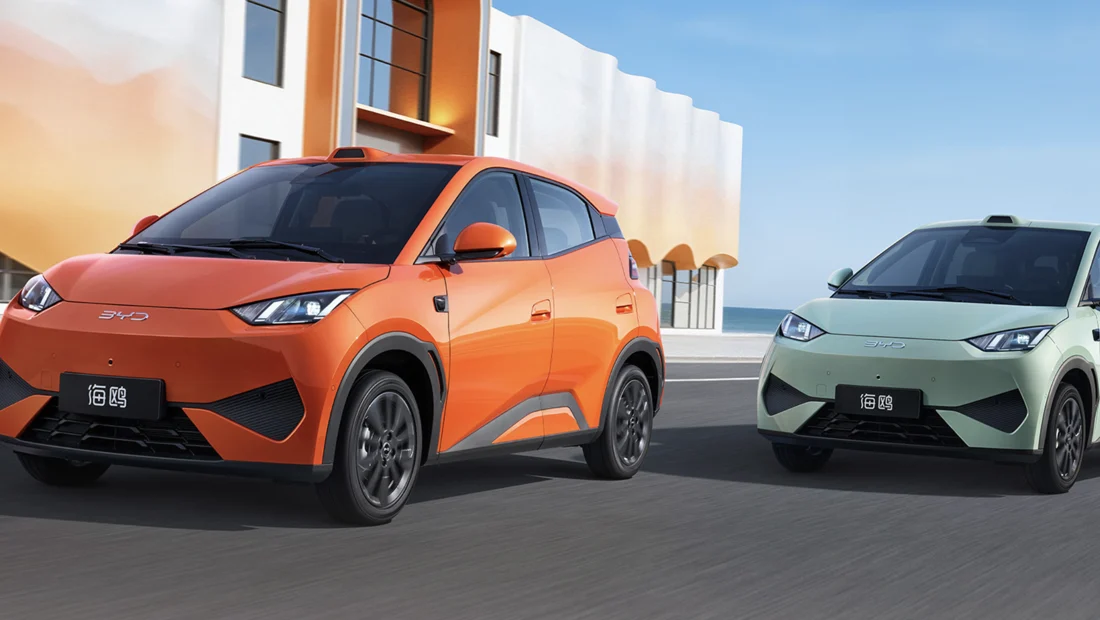
The automotive landscape has reached a significant milestone as BYD, the world’s leading manufacturer of new energy vehicles (NEVs), officially unveiled the 2026 iteration of the BYD Seagull in its domestic market. Known in various international markets, including Indonesia, as the BYD Atto 1, this latest release marks a paradigm shift in the entry-level electric vehicle (EV) sector. By integrating Light Detection and Ranging (LiDAR) technology into a compact, budget-friendly platform, BYD is effectively democratizing high-end autonomous driving features that were previously reserved for luxury sedans and premium SUVs. This move reinforces BYD’s strategy of vertical integration and technological dominance, signaling a new era where "smart" mobility is accessible to a broader demographic of urban commuters.
The Technological Leap: LiDAR and God’s Eye Autonomous Systems
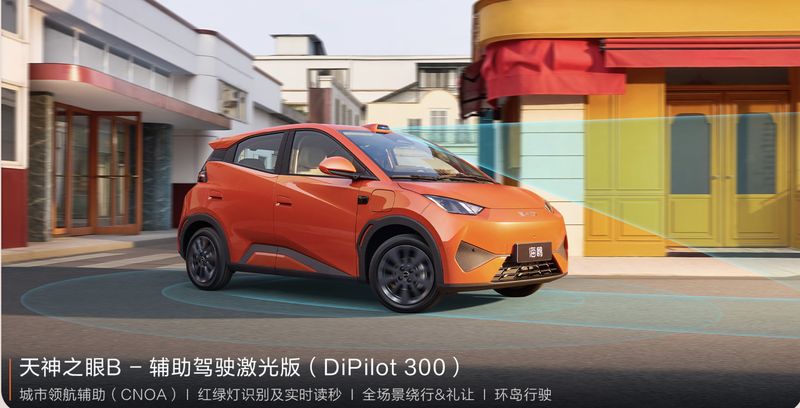
The most striking feature of the 2026 BYD Seagull is the introduction of the "God’s Eye B" advanced driver-assistance system (ADAS). This represents the first time a vehicle in the mini-EV category has been equipped with LiDAR, a remote sensing method that uses light in the form of a pulsed laser to measure ranges. While most competitors in this price bracket rely solely on cameras or ultrasonic sensors, the inclusion of LiDAR allows the Seagull to perceive its environment with high precision, even in challenging lighting or weather conditions.
The LiDAR-equipped versions of the Seagull utilize the DiPilot 300 suite. This system enables City Navigation on Autopilot (CNOA), a sophisticated software package that allows the vehicle to navigate complex urban environments with minimal driver intervention. Key functionalities include the ability to recognize traffic lights and countdown timers, navigate roundabouts, and execute smooth lane changes in congested traffic. According to technical briefings from BYD, the system is designed to handle "full-scenario" urban driving, which includes reacting to pedestrians, cyclists, and unexpected road obstacles with a level of fluidity typically found in vehicles costing three to four times as much.
Pricing Strategy and Model Variants
BYD has maintained a competitive pricing structure for the 2026 Seagull, despite the significant technological upgrades. The base models, which do not include the LiDAR package, are priced between 69,900 yuan and 85,900 yuan (approximately Rp 180 million to Rp 221 million). These trims cater to the mass market looking for an affordable, reliable electric hatchback for daily errands and city commuting.
However, the real disruption lies in the "Freedom Edition" and "Flying Edition" trims. Consumers opting for these versions can add the LiDAR-based God’s Eye B package as an optional upgrade. With this technology included, the prices for these specific trims rise to 90,900 yuan and 97,900 yuan (approximately Rp 234 million to Rp 252 million). Even at the top-end price of roughly $13,500 USD, the Seagull remains the most affordable vehicle globally to offer such advanced autonomous hardware. This pricing strategy is expected to put immense pressure on rivals like the Wuling Bingo and the Geely Panda Mini, forcing a tech-driven arms race in the micro-EV segment.

Performance and Powertrain Specifications
Underneath its futuristic "Ocean Aesthetics" design, the 2026 BYD Seagull continues to utilize the company’s proprietary e-Platform 3.0. The vehicle offers two distinct battery configurations to suit different range requirements:
- Standard Range: Equipped with a 30.08 kWh Blade Battery, providing a range of 305 km (CLTC cycle).
- Extended Range: Equipped with a 38.88 kWh Blade Battery, providing a range of 405 km (CLTC cycle).
Both versions are powered by a single electric motor delivering a maximum power output of 55 kW (approximately 74 horsepower) and a peak torque of 135 Nm. This powertrain allows the Seagull to accelerate from 0 to 50 km/h in just 4.9 seconds, making it exceptionally nimble for city driving. The use of BYD’s "Blade Battery" technology—a lithium iron phosphate (LFP) chemistry—ensures high levels of safety, thermal stability, and a long lifecycle, which are critical selling points for first-time EV buyers.
In terms of dimensions, the 2026 model retains its compact footprint, measuring 3,780 mm in length, 1,715 mm in width, and 1,540 mm in height, with a wheelbase of 2,500 mm. These dimensions ensure that while the car is easy to park in crowded cities, the interior space is optimized to comfortably accommodate four adults.
Interior Refinements and Enhanced Connectivity
The 2026 update also brings significant improvements to the cabin experience. BYD has introduced a new "Cream" color scheme, providing a more airy and premium feel to the interior. The centerpiece of the dashboard is an upgraded 12.8-inch floating intelligent rotating screen, which runs the latest version of the DiLink intelligent network system. This system supports voice commands, seamless smartphone integration, and over-the-air (OTA) updates, ensuring the vehicle’s software remains current over time.
To enhance driver and passenger convenience, the new Seagull includes a 50W high-speed wireless mobile phone charging pad—a significant upgrade from the standard chargers found in most vehicles. Other new features include an automatic climate control system and improved seat ergonomics, which aim to provide a more comfortable ride during longer commutes.
Chronology of the Seagull’s Rapid Rise
The BYD Seagull has had a meteoric rise since its initial debut. To understand the significance of the 2026 model, one must look at the timeline of its development:
- April 2023: BYD officially launches the Seagull at the Shanghai Auto Show. It immediately garners attention for its aggressive pricing and "Ocean" design language.
- Late 2023: The Seagull becomes the best-selling electric vehicle in China, frequently topping monthly sales charts with over 30,000 units sold per month.
- Early 2024: BYD begins exporting the model to international markets under the name "BYD Dolphin Mini" in Latin America and "BYD Atto 1" in Southeast Asia.
- Mid-2024: Industry rumors begin to circulate regarding a high-tech refresh of the Seagull to maintain its lead over emerging competitors.
- May 2026 (Model Year Reveal): BYD officially launches the 2026 version, shocking the industry by including LiDAR technology in a car priced under 100,000 yuan.
Market Analysis and Industry Implications
The introduction of the 2026 Seagull is a strategic masterstroke that addresses several market trends. First, it counters the perception that autonomous driving is a luxury feature. By bringing LiDAR to the masses, BYD is gathering vast amounts of real-world driving data from a high-volume vehicle, which will further accelerate its AI and machine learning algorithms for self-driving technology.
Secondly, this launch is a defensive move against the "Price War" currently ravaging the Chinese automotive market. Rather than simply cutting prices—which can hurt brand equity and resale values—BYD is adding significant value. By offering a "smarter" car for the same price as a "dumb" competitor, BYD secures its market share among younger, tech-savvy consumers.
Industry analysts suggest that this move will have a ripple effect across the globe. As BYD prepares to expand its manufacturing footprint to Europe, Thailand, and Brazil, the availability of an affordable, LiDAR-equipped Atto 1 could fundamentally change the competitive dynamics in those regions. European manufacturers, in particular, may find it difficult to compete with a vehicle that offers Level 2+ autonomous features at a sub-€20,000 price point.
Official Perspectives and Future Outlook
While BYD executives have historically been modest about specific sales targets, the company’s internal goal is clear: to replace internal combustion engine (ICE) vehicles in every segment. A spokesperson for BYD China recently noted that the 2026 Seagull represents the company’s commitment to "technology for all." The focus is not just on electrification, but on "intelligence," which BYD views as the second half of the automotive revolution.
For the Indonesian market, the arrival of the updated Atto 1 is highly anticipated. With the Indonesian government’s push for EV adoption through subsidies and infrastructure development, a high-tech, affordable option like the Atto 1 could be the catalyst needed for mass-market transition. Local observers believe that if BYD Indonesia can maintain a price point similar to the Chinese market (adjusted for taxes and logistics), the Atto 1 could become a dominant force in the domestic city car segment.
In conclusion, the 2026 BYD Seagull (Atto 1) is more than just a minor facelift. It is a bold statement of intent. By marrying the cost-efficiency of the Blade Battery with the high-tech precision of LiDAR, BYD has redefined what a "budget car" can be. As this model begins to roll off production lines and into the hands of consumers, it will likely serve as the benchmark for the next generation of urban mobility, proving that the future of driving is not just electric, but intelligently autonomous.