Eko Sulistyo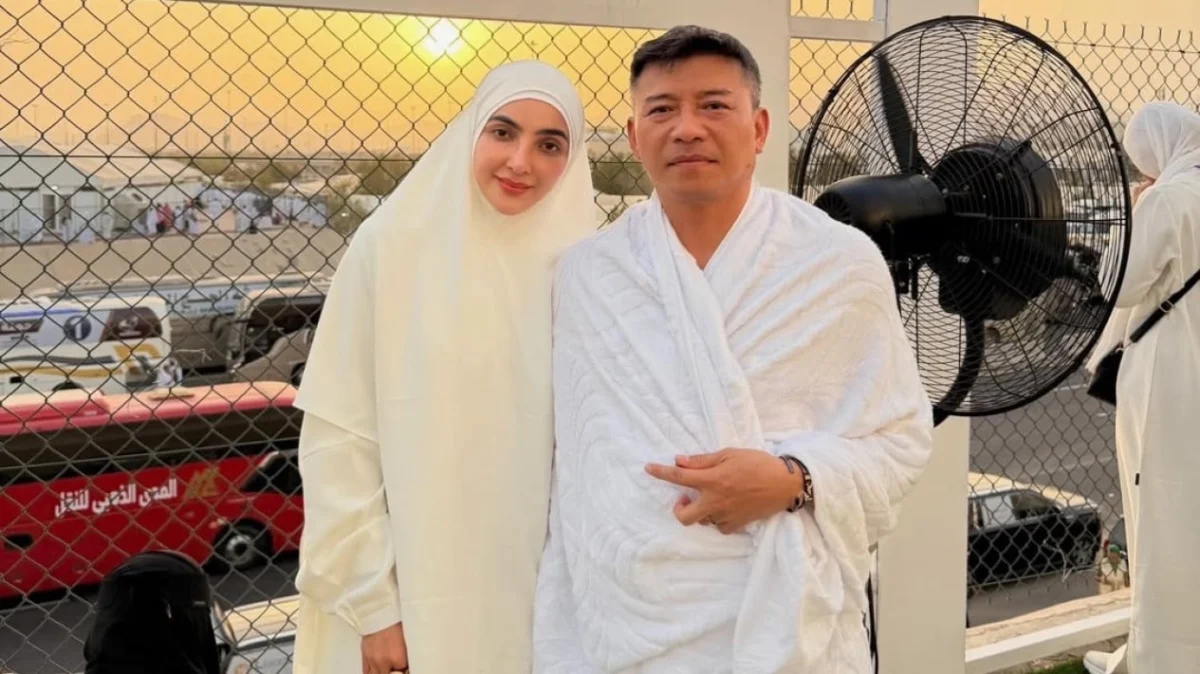
The departure of prominent Indonesian celebrity couple Anang Hermansyah and Ashanty for the Hajj pilgrimage in late May 2026 has ignited a widespread public conversation regarding the logistics, costs, and waiting periods associated with the sacred journey to Makkah and Madinah. On Friday, May 29, 2026, the couple officially began their spiritual undertaking, sharing various moments of their departure and arrival in the Holy Land with their millions of followers on social media. While the primary focus of their updates remained on the spiritual significance of the fifth pillar of Islam, the revelation that they had only waited eight years to depart has shed light on the stark differences between regular and premium Hajj services in Indonesia.
The journey began with a series of emotional posts on Instagram, where Anang and Ashanty documented their preparations, the heartfelt farewells with their children, and their eventual arrival at the Prophet’s Mosque in Madinah. For many Indonesians, the Hajj is a once-in-a-lifetime aspiration that often requires decades of patience. Consequently, when the couple disclosed that they had registered for the pilgrimage in 2018, it sparked an immediate inquiry into how they were able to secure a departure slot within eight years, while millions of other citizens face waiting lists that stretch between 20 and 40 years.
The Chronology of a Spiritual Journey
The timeline of Anang and Ashanty’s Hajj journey began in 2018, a period when the couple decided to commit to the pilgrimage through a private travel agency specializing in Hajj and Umrah. Unlike the "Haji Reguler" (Regular Hajj) scheme managed directly by the Indonesian Ministry of Religious Affairs, which constitutes the bulk of the national quota, the couple opted for the "Haji Khusus" (Special Hajj) track. This track is managed by Private Hajj Organizing Pilgrimage Agencies (PIHK) and is legally recognized under Indonesian law as a faster, albeit significantly more expensive, alternative to the government-run program.
Throughout the years between 2018 and 2026, the couple reportedly maintained their registration despite the global disruptions caused by the COVID-19 pandemic, which saw Hajj quotas severely restricted for several years. Their departure in May 2026 aligns with the standard waiting period for the Special Hajj category, which typically ranges from seven to nine years, depending on the specific quota allocations provided by the Saudi Arabian government to the Indonesian Ministry of Religious Affairs.
Upon their arrival in Saudi Arabia, the couple engaged in the initial rituals of the pilgrimage, including visiting the Rawdah in Madinah and preparing for the core Hajj rites in Makkah. Their digital documentation has provided a window into the "Premium Hajj" experience, characterized by streamlined logistics, high-end accommodation, and specialized guidance, contrasting with the more communal and often physically demanding experience of regular pilgrims.
Understanding the Financial and Logistical Tiers of Hajj
The public fascination with the couple’s journey is largely driven by the transparency regarding the costs involved in premium pilgrimage packages. In Indonesia, the Hajj system is divided into several tiers, each offering different levels of convenience and speed. The "Haji Khusus" program used by Anang and Ashanty is known for its high price point, which covers not only the Saudi visa and basic rituals but also luxury amenities that ensure a more comfortable experience for those who can afford it.
According to industry data and the details circulating regarding the couple’s travel arrangements, the premium packages for 2026 are tiered based on the level of service. A standard "Haji Khusus" package currently starts at approximately Rp589 million (roughly $36,000 USD). This entry-level premium package typically includes five-star hotel accommodations in Makkah and Madinah, often located within the "Ring 1" area—the immediate vicinity of the Masjid al-Haram and the Prophet’s Mosque.
For those seeking the highest level of luxury and proximity, the costs can escalate to Rp884 million (approximately $54,000 USD) or more. These "VIP" or "VVIP" packages offer exclusive tents in Mina with air conditioning and superior catering, private transportation between holy sites, and specialized religious guides (Muthawif) who cater to smaller groups. Additionally, optional upgrades such as business class flights, which the couple reportedly utilized, add an extra Rp35 million per person to the total expenditure.
The Disparity in Hajj Waiting Lists
To understand why the eight-year wait for Anang and Ashanty is considered "fast," one must look at the broader context of the Hajj queue in Indonesia. Indonesia holds the largest Hajj quota in the world, usually exceeding 220,000 slots annually. However, with a Muslim population of over 230 million, the demand far outstrips the supply.
As of 2026, the average waiting time for a Regular Hajj pilgrim in Indonesia is approximately 25 years. In certain provinces, such as South Sulawesi or East Kalimantan, the queue can extend to 40 years or more. These pilgrims pay a much lower cost, subsidized partly by the sovereign fund managed by the Hajj Financial Management Agency (BPKH), with the total cost to the pilgrim usually hovering around Rp50 million to Rp60 million.
In contrast, the "Haji Khusus" quota, which represents about 8% of the total national quota, allows for a shorter wait because the pool of applicants who can afford the Rp600 million to Rp900 million price tag is significantly smaller. By choosing this path in 2018, Anang and Ashanty effectively bypassed the decades-long queue associated with the regular system, a move that is entirely legal and regulated under the Indonesian Hajj Law (UU No. 8 of 2019).
Public Reaction and the Role of Social Media
The reaction from the Indonesian public has been a mixture of religious solidarity and socio-economic observation. On one hand, the majority of comments on the couple’s social media platforms are filled with "Aamiin" and prayers for them to become "Haji Mabrur" (a Hajj accepted by God). In Indonesian culture, performing the Hajj is a pinnacle of social and spiritual achievement, and celebrities who do so are often accorded a new level of respect.
On the other hand, the "flexing" of luxury Hajj facilities has sparked debates about the commodification of religious rituals. Critics argue that the stark contrast between the luxury tents of the elite and the crowded conditions of regular pilgrims highlights growing inequality within the religious sphere. However, supporters of the couple point out that Anang and Ashanty have worked for decades in the entertainment and business industries, and using their wealth to facilitate a more comfortable religious journey is a personal right.
From a journalistic perspective, the couple’s transparency about their 2018 registration serves an educational purpose. It clarifies to the public that even for the wealthy, there is no "instant" Hajj within the official Indonesian quota system. Even with a premium payment, a wait of nearly a decade is still required, debunking myths that celebrities can simply "buy" a spot for the following year through official channels.
The Role of Private Travel Agencies (PIHK)
The agencies that facilitate these premium journeys, known as PIHK (Penyelenggara Ibadah Haji Khusus), play a crucial role in the Indonesian Hajj ecosystem. These agencies must be licensed by the Ministry of Religious Affairs and are subject to strict audits. The high costs they charge are justified by the volatile nature of Saudi Arabian service prices, which have seen significant increases in recent years due to new taxes and the Saudi government’s "Vision 2030" initiatives.
The facilities provided to Anang and Ashanty—such as staying at luxury hotels like the Fairmont Makkah or the Raffles—are part of a broader strategy by the Saudi Ministry of Hajj and Umrah to cater to high-net-worth pilgrims. These accommodations reduce the physical toll of the pilgrimage, allowing older or high-profile pilgrims to focus on the spiritual aspects without the exhaustion of long commutes from distant hotels.
Broader Implications for the Hajj Industry
The narrative surrounding Anang and Ashanty’s pilgrimage reflects a broader trend in Indonesia: the rise of the "Premium Religious Tourism" market. As the Indonesian middle and upper classes expand, the demand for "Haji Khusus" and "Haji Furoda" (a non-quota Hajj visa issued directly by the Saudi Embassy) has surged.
This trend has several implications:
- Economic Growth in the Travel Sector: Specialized travel agencies are seeing record revenues, contributing to the domestic travel industry’s growth.
- Pressure on Quotas: The high demand for "Haji Khusus" puts pressure on the government to negotiate larger percentages of the special quota with Saudi authorities.
- Social Stratification: The "luxury Hajj" phenomenon continues to create a visible divide in how the pilgrimage is experienced, potentially shifting the cultural perception of Hajj from a test of endurance to a luxury service for some.
In conclusion, the pilgrimage of Anang Hermansyah and Ashanty is more than just a personal religious milestone; it is a case study in the complex intersection of faith, finance, and logistics in modern Indonesia. Their eight-year journey from registration to departure highlights the functioning of the "Haji Khusus" system, providing a clear example of how wealth can expedite, but not entirely bypass, the procedural requirements of the world’s largest Hajj management system. As they continue their rituals in the Holy Land, the couple remains a focal point for discussions on how the sacred traditions of Islam adapt to the realities of the 21st-century global economy.