Bambang Pamungkas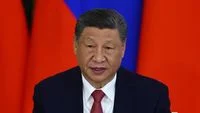
Beijing is increasingly being eyed as a critical player in navigating the intractable Iranian nuclear dispute, particularly as negotiations between Tehran and Washington remain in a protracted stalemate. A prominent figure with close ties to Iranian negotiators has voiced a clear preference for China to assume a central mediating role, even to the extent of taking possession of Iran’s highly enriched uranium, a move that could significantly de-escalate proliferation risks.
The Stalled Dialogue and a Call for Beijing’s Intervention
Mohamed Amersi, a philanthropist and businessman known for his proximity to Iranian negotiating circles, revealed Iran’s strong desire for Beijing to step into this crucial diplomatic void. "Iran truly wants China," Amersi stated, as reported by Newsweek on Tuesday, April 28, 2026. "If China wants to be respected as a rising global power, they must act. They need to tell Iran the truth, then speak to the U.S. from a position of mutual trust." This candid appeal underscores a profound shift in Iran’s diplomatic calculus, seeking an alternative, seemingly more trusted, arbiter than traditional Western powers.
The call for China’s heightened involvement comes amidst a frustrating deadlock in discussions between the United States and Iran. Despite a recent ceasefire that brought a measure of calm to a regional conflict which had severely disrupted global oil exports—sending shockwaves through an already fragile world economy—the underlying nuclear tensions persist. Both Washington and Tehran remain entrenched in their respective demands, showing little willingness to concede. The administration of President Donald Trump, eyeing a potential return to the White House, has consistently pressured Iran to cease uranium enrichment, curtail its ballistic missile program, and withdraw support for proxy groups across the Middle East. Conversely, Iran has vehemently demanded compensation for what it describes as military aggressions by the U.S. and Israel since the regional hostilities flared on February 28. This chasm of demands has rendered direct bilateral negotiations largely unproductive, creating an opening for a third-party mediator with significant geopolitical heft.
Iran’s Nuclear Trajectory and the Shadow of Proliferation
To fully appreciate the urgency and complexity of China’s potential role, it is essential to understand the historical context of Iran’s nuclear program and the evolution of its confrontation with the international community. The roots of Iran’s nuclear ambitions trace back decades, but international concern intensified significantly in the early 2000s when clandestine enrichment facilities were revealed. Years of arduous negotiations culminated in the landmark Joint Comprehensive Plan of Action (JCPOA) in 2015, a multilateral agreement between Iran, the P5+1 group (China, France, Germany, Russia, the United Kingdom, and the United States), and the European Union.
Under the JCPOA, Iran agreed to significantly curtail its nuclear program in exchange for sanctions relief. Key provisions included limiting uranium enrichment to 3.67% purity, reducing its enriched uranium stockpile to 300 kilograms, redesigning the Arak heavy water reactor, and implementing an intrusive monitoring and verification regime by the International Atomic Energy Agency (IAEA). For a few years, the deal successfully constrained Iran’s nuclear activities and provided unprecedented transparency.
However, the agreement began to unravel in May 2018 when the Trump administration unilaterally withdrew the U.S. from the JCPOA, re-imposing a stringent "maximum pressure" campaign of economic sanctions. In response, Iran gradually began to scale back its commitments under the deal, accelerating its enrichment activities and reducing cooperation with IAEA inspectors. By 2026, Iran’s nuclear program had reached alarming levels. Reports from the IAEA indicated that Iran was enriching uranium to 60% purity, a significant technical step closer to the 90% required for weapons-grade material, and possessed a stockpile of enriched uranium far exceeding the JCPOA limits, potentially thousands of kilograms. Concerns also mounted over Iran’s capabilities to enrich uranium to even higher purities, with some intelligence assessments suggesting the potential for enrichment up to 84%. This dramatic escalation has drastically shortened Iran’s "breakout time"—the theoretical period needed to produce enough weapons-grade uranium for one nuclear weapon—to a matter of weeks, if not days, according to some analyses. This precarious situation underscores the critical need for a diplomatic solution to avert a potential nuclear crisis in the Middle East.
China’s Expanding Diplomatic Footprint in the Middle East
China’s emergence as a potential mediator is not an isolated development but rather a reflection of its broader, increasingly assertive diplomatic strategy, particularly in the Middle East. For decades, Beijing adhered to a policy of non-interference, focusing primarily on economic engagement through its Belt and Road Initiative (BRI) while largely leaving complex political and security issues to traditional global powers. However, this posture has visibly shifted in recent years.
A significant precedent for China’s enhanced diplomatic role was set in March 2023 when Beijing successfully brokered a historic rapprochement between long-standing regional rivals Saudi Arabia and Iran. This unexpected breakthrough, which saw the two powers agree to restore diplomatic ties after seven years of estrangement, sent shockwaves through the geopolitical landscape. It demonstrated China’s capacity to facilitate high-stakes negotiations and its growing influence in a region traditionally dominated by the United States. Beijing’s approach leverages its deep economic ties with virtually all regional actors, including being the largest oil purchaser from both Iran and Saudi Arabia, giving it unique leverage that Western powers often lack.
This success has emboldened China to explore more active mediation roles, seeing it as a pathway to assert its status as a responsible global power and challenge the unipolar order. For Beijing, a stable Middle East is crucial for its energy security and the success of its BRI projects. The recent, albeit brief, regional conflict that rattled global markets and led to a ceasefire, which China reportedly played a significant behind-the-scenes role in achieving, further solidified Beijing’s diplomatic standing. This quiet diplomacy, contrasted with the more confrontational approaches of other powers, has positioned China as a credible and relatively neutral interlocutor in the eyes of many regional states, including Iran.
Proposed Mechanisms for Chinese Mediation: Uranium Takeover and New Frameworks
The specific proposals for Chinese mediation, as outlined by Amersi, are both ambitious and potentially transformative. The idea of China taking possession of Iran’s highly enriched uranium is particularly audacious. Such a move would directly address the most pressing proliferation concern by physically removing the dangerous material from Iranian soil. This would not be without precedent; in 2015, Russia transported over 11 tons of low-enriched uranium from Iran as part of the JCPOA implementation, demonstrating the feasibility of such an operation with international cooperation. For China to undertake this would require immense logistical coordination, robust security protocols, and strong international backing, particularly from the IAEA.
Beyond the physical removal of enriched material, Amersi suggests that China could offer a "new framework" for Iran’s nuclear program. This could entail a comprehensive package that addresses Iran’s legitimate energy needs while providing robust, verifiable assurances against weaponization. Such a framework might include:
- Economic Incentives: China, as Iran’s largest trading partner and primary oil customer, could offer significant economic investment, infrastructure development, and access to its vast markets, all contingent on verifiable nuclear de-escalation. This linkage of economic prosperity to nuclear compliance would be a powerful tool.
- Security Guarantees: While China traditionally shies away from explicit security guarantees, it could play a role in fostering a regional security dialogue or offering a form of multilateral assurance that addresses Iran’s perceived external threats.
- Technological Assistance: Providing peaceful nuclear technology under strict international safeguards could be part of a long-term solution, allowing Iran to develop civilian nuclear energy without proliferation risks.
The appeal for Iran to trust China to "tell them the truth" and then engage with the U.S. from a position of "mutual trust" speaks to a desire for a pragmatic, results-oriented mediator. China’s non-Western identity and its permanent seat on the UN Security Council give it a unique position to bridge the divide between Iran and the Western powers.
The Geopolitical Chessboard: US Interests and China’s Strategic Calculus
China’s potential mediation in the Iranian nuclear issue presents a complex geopolitical scenario, particularly concerning the enduring rivalry between Washington and Beijing. From the U.S. perspective, especially under a potential future Trump administration, any significant Chinese diplomatic initiative in the Middle East would be viewed through a lens of strategic competition. There would likely be skepticism about China’s motives, with concerns that Beijing might use the opportunity to enhance its regional influence at America’s expense, undermine U.S. alliances, or gain a strategic advantage in the broader great power competition.
However, a pragmatic U.S. approach might acknowledge the potential benefits of Chinese mediation if it genuinely leads to the verifiable denuclearization of Iran. If China can achieve what direct U.S.-Iran talks have failed to deliver—a halt to enrichment and a reduction of stockpiles—then Washington might find it difficult to oppose such an outcome, regardless of who brokered it. The Trump administration’s "maximum pressure" campaign, while aimed at compelling Iran, has also led to heightened tensions and an unconstrained Iranian nuclear program. A Chinese-led solution that effectively rolls back Iran’s nuclear advancements could be seen as a necessary, albeit politically awkward, path to stability.
For China, engaging in such high-stakes mediation is a delicate balancing act. As Shou Huisheng, an academic from Beijing Language and Culture University, succinctly put it, "The U.S. remains more important for China. The primary priority is to maintain relations to prevent a major conflict." Beijing must carefully weigh the potential gains in global standing and regional stability against the risk of further exacerbating its already strained relationship with the U.S. by being perceived as overtly challenging American influence. China’s strategy would likely involve presenting its role as one of facilitating global peace and non-proliferation, rather than directly confronting U.S. interests. Success in Iran could bolster China’s claims of being a responsible stakeholder in global governance, a narrative Beijing actively promotes.
Iran’s Motivations: Sanctions Relief and Strategic Alignment
Iran’s willingness to embrace China as a mediator stems from a confluence of factors, primarily driven by severe economic pressures and a deep-seated distrust of Western powers, particularly the United States. Years of crippling U.S. sanctions have severely impacted Iran’s economy, leading to high inflation, unemployment, and a decline in living standards. While Iran has managed to circumvent some sanctions, notably by continuing to sell oil to China, the overall impact has been devastating, pushing Tehran to seek viable pathways for sanctions relief and economic revitalization.
China, as Iran’s largest trading partner and its most significant remaining oil customer, offers a lifeline. In 2025, China imported an estimated 80% of Iran’s total oil exports, providing billions of dollars in revenue despite U.S. efforts to cut off Iranian oil sales. This economic leverage makes China an indispensable partner for Iran. Furthermore, China’s permanent seat on the UN Security Council means it holds veto power, making it a crucial actor in any international agreement that seeks to normalize Iran’s status or provide sanctions relief.
From Tehran’s perspective, turning to China is a pragmatic choice. China represents a major non-Western power that has historically maintained a more balanced approach to the Middle East, avoiding the regime change agendas or direct military interventions often associated with the U.S. Iran likely views China as a less politically charged mediator, capable of understanding its security concerns while also possessing the economic muscle to deliver tangible benefits in exchange for nuclear concessions. This strategic alignment with an emerging global power also serves Iran’s broader foreign policy goal of diversifying its international partnerships and reducing its reliance on Western-dominated systems.
Risks and Rewards: The Path Ahead for Beijing
The path for China as a mediator in the Iranian nuclear dossier is fraught with both significant risks and potentially substantial rewards. On the reward side, a successful resolution would cement China’s reputation as a responsible global leader, capable of tackling complex international security challenges. It would demonstrate the efficacy of its "non-interference" approach, adapted for active diplomacy, and further legitimize its ascent as a multipolar power. Such a diplomatic coup would undoubtedly enhance China’s influence in the Middle East, bolster its energy security, and provide a strong counter-narrative to Western criticisms of its human rights record or economic practices.
However, the risks are equally considerable. The Iranian nuclear issue is notoriously complex, with deep-rooted mistrust on all sides. Failure to achieve a lasting solution could damage China’s diplomatic credibility, expose its limitations, and potentially draw it into regional quagmires. There is also the significant risk of alienating the U.S. and its allies, particularly if China’s proposed framework is perceived as too lenient on Iran or as undermining existing non-proliferation norms. Beijing would need to navigate these sensitivities with extreme caution, ensuring that any mediation effort is seen as genuinely aimed at stability and non-proliferation, rather than merely advancing its own geopolitical agenda. The logistical challenges of taking custody of highly enriched uranium, coupled with the long-term commitment required for monitoring and verification, would also place a considerable burden on China’s diplomatic and technical resources.
The Broader Agenda for the Trump-Xi Summit in May 2026
The potential for China to mediate the Iranian nuclear issue is expected to be a prominent item on the agenda for the highly anticipated summit between President Trump and Chinese President Xi Jinping, slated for May 2026. This meeting, which would undoubtedly be a critical moment for global diplomacy, offers a unique platform for high-level discussions on this delicate matter. For President Trump, engaging with China on Iran could be a pragmatic way to address a persistent security threat without direct U.S. involvement, particularly if a re-elected Trump administration seeks to de-escalate certain foreign policy commitments while maintaining pressure on adversaries.
Beyond Iran, the Trump-Xi summit is expected to cover a wide array of other pressing global issues that underscore the complex and often contentious nature of U.S.-China relations. The ongoing conflict in Ukraine, where China has maintained a delicate balance of rhetorical support for Russia while seeking to avoid direct confrontation with the West, will undoubtedly be a key discussion point. Tensions over Taiwan, a flashpoint that carries the risk of direct military confrontation, will also be central to the talks, with both sides seeking to manage the precarious status quo. Furthermore, persistent trade imbalances, intellectual property theft allegations, and fierce competition in advanced technologies like semiconductors and artificial intelligence will continue to shape the economic dialogue between the two superpowers. The Iranian nuclear question, therefore, is not an isolated issue but rather one piece of a much larger, intricate geopolitical puzzle that will define the future of the international order.
Implications for Global Security and Energy Markets
The outcome of China’s potential mediation in Iran carries profound implications for global security and energy markets. A successful resolution, leading to the verifiable de-escalation of Iran’s nuclear program, would be a monumental victory for nuclear non-proliferation. It would prevent a potentially catastrophic arms race in the Middle East, reduce the risk of military conflict, and uphold the international non-proliferation treaty regime. Conversely, a failure to address Iran’s nuclear ambitions could embolden other states to pursue nuclear weapons, further destabilizing an already volatile world.
For the Middle East, a stable resolution would open avenues for greater regional cooperation and economic development, potentially building on the momentum of the Saudi-Iran rapprochement. It could reduce proxy conflicts and foster a more secure environment for investment and trade. On the energy front, while China has diversified its energy sources and accelerated the adoption of electric vehicles domestically, stability in the Persian Gulf remains paramount. The region accounts for a significant portion of global oil and gas production, and any renewed conflict or prolonged uncertainty could send crude oil prices soaring, negatively impacting global economic growth and fueling inflation. China’s substantial energy reserves and alternative supply lines may offer some insulation, but sustained instability would still pose a challenge to its long-term energy security.
Ultimately, China’s potential role in mediating the Iran nuclear standoff represents a critical juncture in international relations. It will test Beijing’s diplomatic prowess, its ability to balance competing interests, and its genuine commitment to global stability. The world watches keenly to see if China can indeed leverage its unique position to forge a path towards peace and non-proliferation in one of the world’s most enduring and dangerous flashpoints.