Azin Asro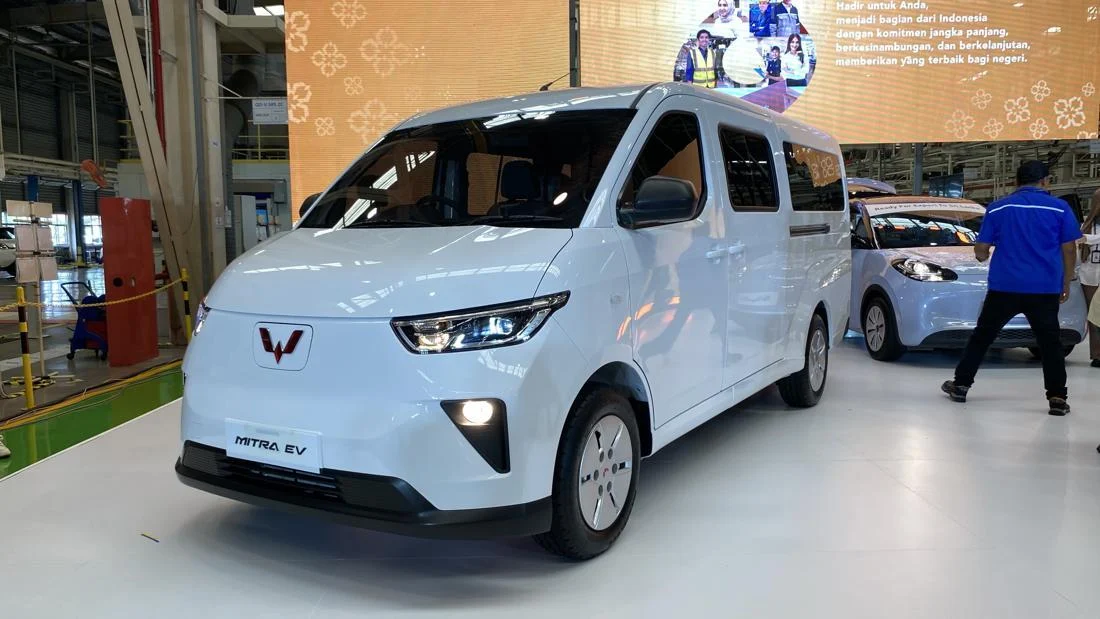
The Depok City Government, through its Transportation Agency (Dinas Perhubungan or Dishub), has officially announced a strategic shift toward sustainable urban mobility by integrating electric vehicles into its public transportation network. This initiative involves the introduction of the Wuling Mitra EV, a specialized electric commercial vehicle, to serve as the new face of the city’s "angkot" (angkutan kota) system. This move marks a significant milestone in Depok’s urban planning, as the city seeks to replace aging, high-emission internal combustion engine (ICE) vehicles with modern, eco-friendly alternatives. The transition is currently in its preparatory phase, with several units undergoing customization at specialized coachbuilders (karoseri) to ensure they meet the specific operational requirements of local transit routes.
Aan Syurahman, the Acting Head of the Depok City Transportation Agency, confirmed that the administration is conducting rigorous technical evaluations of the Wuling Mitra EV. The selection of this particular model was driven by its high passenger capacity and its alignment with the city’s long-term environmental goals. According to Syurahman, these electric minibuses are slated to replace the existing fleet on the D10A route, a key corridor within the city’s transport grid. The primary objective is to provide a more comfortable, reliable, and efficient service for the residents of Depok while simultaneously addressing the pressing issue of urban air pollution.
The Strategic Shift Toward Sustainable Mobility
The modernization of the angkot system in Depok is not merely a cosmetic upgrade but a fundamental shift in the city’s approach to public service. For decades, the angkot has been the backbone of local transportation in Indonesian cities, yet the system has frequently been criticized for utilizing outdated vehicles that contribute significantly to traffic congestion and carbon emissions. By introducing the Wuling Mitra EV, the Depok City Government is positioning itself at the forefront of the "Go Green" movement within the Greater Jakarta (Jabodetabek) region.
The "Go Green" concept emphasized by the Transportation Agency focuses on three pillars: environmental sustainability, social inclusivity, and economic efficiency. From an environmental perspective, the elimination of tailpipe emissions is expected to contribute to improved air quality in Depok, a city that has seen rapid population growth and a corresponding increase in vehicular density. Socially, the new fleet is designed to be more inclusive than traditional angkots, featuring dedicated facilities for passengers with disabilities and priority seating for pregnant women and the elderly. This represents a major departure from the traditional angkot design, which often lacks basic accessibility features.
Technical Specifications of the Wuling Mitra EV
To understand the impact of this transition, it is essential to examine the technical capabilities of the Wuling Mitra EV. As a dedicated commercial electric vehicle, the Mitra EV is engineered to handle the high-intensity demands of urban stop-and-go traffic. The vehicle measures 5,010 mm in length, 1,800 mm in width, and 1,975 mm in height, with a substantial wheelbase of 3,050 mm. These dimensions allow for a spacious interior configuration, which is critical for maximizing passenger capacity in a public transport setting.
The vehicle is powered by a Lithium Iron Phosphate (LFP) battery, a chemistry known for its safety, thermal stability, and long cycle life compared to other lithium-ion variants. Wuling offers two primary battery configurations for the Mitra EV:
- Minibus Long Range: Equipped with a 41.9 kWh battery, providing a range of up to 300 kilometers on a single full charge.
- Minibus Premium Range: Equipped with a 56.2 kWh battery, extending the operational range to approximately 400 kilometers.
For the Depok angkot fleet, the ability to cover 300 to 400 kilometers is vital, as it allows vehicles to operate for a full shift without needing mid-day recharging, depending on the length and frequency of the route. Furthermore, the Mitra EV supports fast charging via a CCS2 (Combined Charging System) port. This technology enables the battery to charge from 30 percent to 80 percent in just 30 minutes, significantly reducing downtime and ensuring that the fleet remains operational throughout the day.
Under the hood, the Mitra EV utilizes an electric motor capable of producing 75 kW of power and a maximum torque of 180 Nm. This power is delivered to the rear wheels, providing the necessary traction for Depok’s varied terrain. Drivers can choose between three driving modes—Eco, Normal, and Sport—allowing them to balance performance with energy efficiency based on traffic conditions. The vehicle’s top speed is electronically limited to 115 km/h, which is more than sufficient for urban transit environments.
Economic Implications and Operational Costs
One of the most compelling arguments for the adoption of electric angkots is the projected reduction in operational costs. Traditional angkots are heavily dependent on subsidized or commercial-grade fossil fuels, the prices of which are subject to global market volatility. In contrast, the cost of electricity per kilometer is significantly lower. The Depok Transportation Agency has indicated that the operational tariffs for these new electric units are projected to be more affordable for the public, as the savings from fuel and reduced maintenance are passed down to the system.
Electric vehicles have fewer moving parts than internal combustion engines—no oil changes, spark plugs, or complex transmission systems are required. This translates to lower long-term maintenance expenses for fleet operators. While the initial acquisition cost of the Wuling Mitra EV—starting at approximately Rp 348 million—is higher than that of a conventional gasoline-powered minibus, the total cost of ownership (TCO) over a five-to-seven-year period is expected to be considerably lower. This economic viability is a crucial factor in convincing private angkot owners and cooperatives to transition to electric fleets.
Chronology of the Transition and Integration
The path toward electric angkots in Depok has been a multi-stage process involving policy formulation, stakeholder engagement, and technical testing.
- Phase 1: Policy Alignment: The initiative aligns with Indonesia’s Presidential Regulation No. 55 of 2019 regarding the Acceleration of the Battery Electric Vehicle Program for Road Transportation. Depok sought to integrate these national goals into its local transportation master plan.
- Phase 2: Fleet Selection: After evaluating several commercial EV options available in the Indonesian market, the Wuling Mitra EV was selected due to its proven platform and the manufacturer’s established service network in the country.
- Phase 3: Prototype and Customization: Currently, units are being modified at coachbuilders. This step is essential because standard cargo or passenger vans must be retrofitted with specific seating arrangements, payment systems (such as electronic tap-on-tap-off readers), and safety handles required for public transport certification in Indonesia.
- Phase 4: Pilot Testing on Route D10A: The initial rollout will focus on the D10A route as a pilot project. Data collected during this phase regarding energy consumption, passenger feedback, and charging frequency will inform the expansion to other routes across the city.
Broader Impact on Urban Planning and Public Health
The introduction of electric angkots in Depok serves as a catalyst for broader urban improvements. As part of the modernization effort, the city is also looking into improving the infrastructure surrounding public transport, including the installation of Public Electric Vehicle Charging Stations (SPKLU) at strategic terminals and depots. The presence of these charging stations will not only serve the public transport fleet but also encourage private citizens to make the switch to electric vehicles, knowing that charging infrastructure is becoming more accessible.
From a public health perspective, the impact of reducing vehicular emissions cannot be overstated. The Jabodetabek area frequently struggles with high levels of PM2.5 (fine particulate matter), much of which is attributed to transportation. By decarbonizing the public transit sector, Depok is taking a proactive step in reducing the incidence of respiratory illnesses among its citizens. Furthermore, the near-silent operation of electric motors will significantly reduce noise pollution in densely populated residential areas and along busy commercial strips.
Challenges and Future Outlook
Despite the optimistic outlook, the transition to an all-electric angkot fleet faces several challenges. The most prominent is the requirement for a robust and reliable power grid. The Depok City Government must coordinate closely with the state electricity company, PLN, to ensure that charging hubs do not strain the local grid and that there is sufficient capacity for rapid charging during peak hours.
Another challenge lies in the human element. Drivers who have spent decades operating manual, petrol-powered vehicles will require comprehensive training to adapt to the regenerative braking systems and energy management techniques required for electric driving. Additionally, the administration must ensure that the transition does not marginalize existing angkot drivers. Integrating them into the new system through cooperatives and providing financial schemes for vehicle upgrades will be essential for social stability.
In conclusion, the deployment of Wuling Mitra EV units for Depok’s public transport represents a forward-thinking approach to urban governance. By prioritizing green technology, accessibility, and economic efficiency, Depok is setting a precedent for other satellite cities in Indonesia. As the units move from the coachbuilders to the streets, the eyes of urban planners across the nation will be on Depok to see if this model can truly revolutionize the traditional angkot system and pave the way for a sustainable, electrified future in Indonesian public transportation. The success of the D10A pilot project will likely dictate the speed at which other routes are converted, potentially making Depok the first city in the region to operate a fully modernized, zero-emission public transit network.