
 Nila Kartika Wati
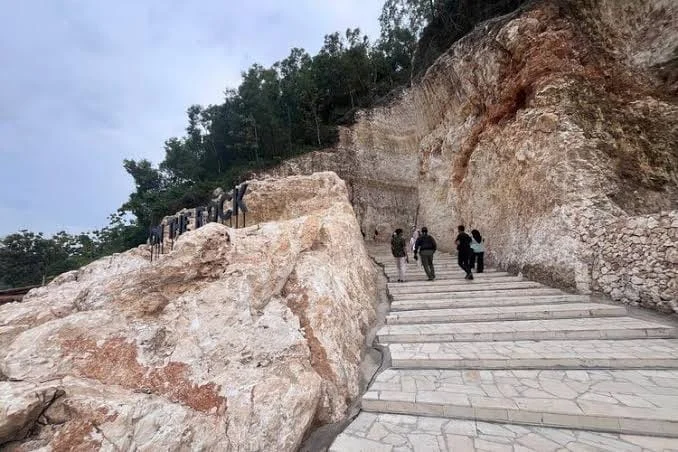
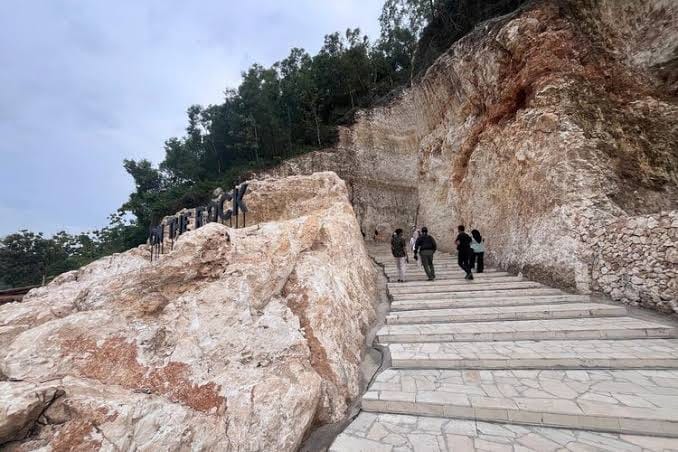
The rapid expansion of tourism infrastructure in the Gunungsewu karst landscape of Gunungkidul, Yogyakarta, has reached a critical juncture as local communities and environmental advocates challenge the sustainability of current development models. For residents like Suparjiyanti, a long-time trader at Sanglen Beach, the scenic coastal landscape has long been the backbone of her family’s livelihood. However, the recent encroachment of resort construction has cast a shadow of uncertainty over her future, as developers begin carving through ancient karst hills and demanding that traditional vendors vacate the premises.
This struggle for land and survival is not an isolated incident. It reflects a broader systemic tension between the Indonesian government’s push for tourism-led economic growth and the preservation of fragile ecosystems that support both local communities and regional water security. With at least 57 families at Sanglen Beach and 37 at Watu Bolong Beach facing potential displacement, the situation has escalated to the halls of the Ministry of Environment and Forestry in Jakarta, as residents, supported by the Indonesian Forum for the Environment (Walhi) Yogyakarta, seek urgent intervention.
The Human Cost of Tourism Development
For many residents, the transition to large-scale resort tourism has been marked by a lack of transparency and exclusion. Yulianto, a representative of the local Community-Based Tourism Group (Pokdarwis) at Watu Bolong, highlights that the community-led tourism initiatives established in 2020 are being systematically sidelined. According to Yulianto, the developers behind the new projects have failed to engage in meaningful socialisation or consultation with the very people who have served as stewards of the coastline for generations.
"We have spent years cultivating a model of tourism that respects the community and the environment," Yulianto stated during recent advocacy meetings. "The current trajectory of these projects threatens to strip us of our economic autonomy and displace the businesses we have built from the ground up."
The concern among these families is not merely about temporary relocation; it is about the structural transformation of their environment. By privatizing access to coastal areas, these resorts effectively bar locals from traditional fishing grounds and small-scale commercial activities, turning residents into outsiders in their own neighborhoods.
Ecological Fragility of the Gunungsewu Karst
The environmental stakes of this development are profound. The Gunungsewu area is a designated karst landscape, defined by its complex network of underground rivers, limestone caves, and unique hydrological systems. Walhi’s recent investigation into 13 major tourist destinations across the region reveals that infrastructure development has already physically altered approximately 34.46 hectares of the landscape.
Rizky Abiyoga, a researcher with Walhi, notes that the practice of "trimming" or cutting through limestone hills to create level building foundations is a dangerous precedent. Karst formations act as critical carbon sinks and are essential for groundwater filtration and storage. Disrupting the topography risks severing the intricate underground river systems that provide water to surrounding villages.
Furthermore, the water demand for modern resort operations is staggering. According to Walhi’s technical estimates, a single large-scale resort facility can consume tens of millions of liters of water annually. In a region like Gunungkidul, where water scarcity is a seasonal reality, the diversion of resources to support swimming pools, air conditioning systems, and guest amenities creates a direct competition for water between the tourism industry and local agriculture and domestic needs.
Regulatory Lapses and the "Administrative Penalty" Loophole
A central point of contention in this controversy is the widespread lack of Environmental Impact Assessments (Amdal). Endah Subekti Kuntariningsih, the Regent of Gunungkidul, has publicly acknowledged that a significant portion of the tourism industry operating in the area lacks the necessary environmental documentation.
The issue stems from a systemic flaw in the digital permitting process. Many developers appear to be leveraging a loophole where they bypass the rigorous, time-consuming process of conducting an Amdal, opting instead to pay relatively minor administrative fines. This "pay-to-pollute" approach allows projects to proceed under the guise of compliance, even while they operate without the environmental oversight required by law.
This regulatory environment has created a chaotic landscape where private interests often override public safety and environmental integrity. Despite efforts by investigative journalists to solicit responses from the 13 identified tourism destinations, no substantive answers have been provided, with management often deferring comment or failing to respond to repeated inquiries.
Government Response and the Path Toward Accountability
The Ministry of Environment and Forestry (KLHK) has recently signaled a shift toward stricter enforcement. Ardyanto Nugroho, the Director of Complaints and Environmental Supervision at the Ministry, has emphasized that environmental documentation must be a prerequisite for operation, not an afterthought.
"We are moving toward conducting comprehensive field verifications," Nugroho stated. "Our inspection will focus on the extent of the damage to the karst topography, the integrity of local cave systems, and the potential for long-term disruption of the subterranean water tables."
However, advocates like Abiyoga argue that administrative fines are insufficient to address the scale of the damage. "Some companies have already paid fines and were instructed to draft environmental evaluation documents," he said. "This is a weak remedy. The payment of a fine should not exempt these developers from criminal or civil liability for the long-term ecological destruction they have caused."
Broader Implications: Sustainability vs. Expansion
The crisis in Gunungkidul serves as a microcosm for a larger national dilemma. As Indonesia seeks to position itself as a global tourism hub, the "Blue Economy" often clashes with the preservation of the very natural assets that make these destinations attractive in the first place.
- Hydrological Security: The loss of karst functions will likely exacerbate water shortages in Gunungkidul. Without careful management of the recharge areas, the region may face a long-term decline in water quality and availability.
- Socio-Economic Inequality: The model of high-end, exclusive resort development often fails to create sustainable wealth for the local population. Instead, it concentrates profits in the hands of external investors while offloading the environmental and social costs onto local communities.
- Legal Precedents: How the government handles the 13 identified projects will set a legal precedent for environmental law enforcement in Indonesia. If the government allows businesses to continue operating after mere "remedial" fines, it risks signaling that environmental protection is a negotiable cost rather than a legal requirement.
Looking Forward
For the residents of Sanglen and Watu Bolong, the next few months will be decisive. The requested government interventions—ranging from site-specific environmental audits to the potential suspension of operations for non-compliant entities—will determine whether the region continues down a path of reckless exploitation or pivots toward a more sustainable, community-inclusive model of development.
The environmental community is calling for a "restorative justice" approach. This would entail not just the cessation of harmful construction, but also mandatory remediation efforts funded by the developers to restore damaged karst hills and invest in community-based water management systems.
As the Ministry of Environment prepares its field reports, the voices of Suparjiyanti and Yulianto remain at the center of the debate. Their demand is simple: that the development of their home should not come at the cost of their survival. Whether the state can balance the competing pressures of economic development and environmental stewardship in the Gunungsewu karst remains one of the most pressing challenges for local governance in Yogyakarta.
In the final analysis, the situation in Gunungkidul is a reminder that natural landscapes are not infinite resources. Without the integration of robust environmental safeguards, meaningful community consultation, and a firm rejection of the "fine-based" compliance model, the rapid growth of the tourism sector risks destroying the very beauty it aims to monetize. The resolution of this case will likely serve as a litmus test for the effectiveness of Indonesia’s environmental regulatory framework in an era of accelerating climate and development pressures.