Tyo Susilo
DJI, a global leader in drone and camera technology, has officially launched its latest innovation in the pocket gimbal camera segment: the Osmo Pocket 4. This new iteration directly succeeds the highly popular Osmo Pocket 3, promising a suite of significant upgrades designed to elevate content creation for both amateur enthusiasts and seasoned professionals. Key enhancements include a newly integrated 1-inch sensor, a substantially brighter display, and the introduction of built-in storage, addressing a crucial need for seamless on-device data management.
The Osmo Pocket 4 arrives at a time when compact, high-performance cameras are increasingly sought after by vloggers, travelers, and social media creators who prioritize portability without compromising on image quality or functionality. DJI’s Osmo Pocket series has consistently aimed to bridge this gap, and the Osmo Pocket 4 appears poised to set a new benchmark. This release follows a period of intense development and anticipation within the creative technology community, with rumors of a larger sensor and improved user interface circulating for months. The official unveiling confirms many of these expectations, signaling DJI’s commitment to iterative yet impactful advancements in its product line.
Enhanced Imaging Capabilities: A New Era for Sensor Technology
At the heart of the Osmo Pocket 4’s revolutionary upgrade is its new 1-inch sensor. This significant leap from previous generations offers a more robust foundation for capturing stunning visuals. The larger sensor is engineered to deliver an impressive dynamic range of 14 stops, allowing for greater detail preservation in both the brightest highlights and the darkest shadows of a scene. This capability is particularly beneficial in challenging lighting conditions, such as shooting at sunrise or sunset, or in environments with high contrast.
Furthermore, the Osmo Pocket 4 is equipped to handle advanced video recording formats, supporting up to 4K resolution at an astonishing 240 frames per second (fps). This high frame rate capability unlocks the potential for incredibly smooth slow-motion footage, adding a cinematic quality to action sequences or subtle movements. The inclusion of a 10-bit D-Log color profile is another critical feature for serious videographers. D-Log provides a wider color gamut and flatter image, offering significantly more flexibility in post-production color grading, enabling users to achieve professional-level looks.
The camera’s lens boasts a focal length equivalent to 20mm with a wide f/2.0 aperture. This combination provides a broad field of view, ideal for capturing expansive landscapes and immersive group shots, while the f/2.0 aperture allows for better low-light performance and the creation of pleasing background bokeh.
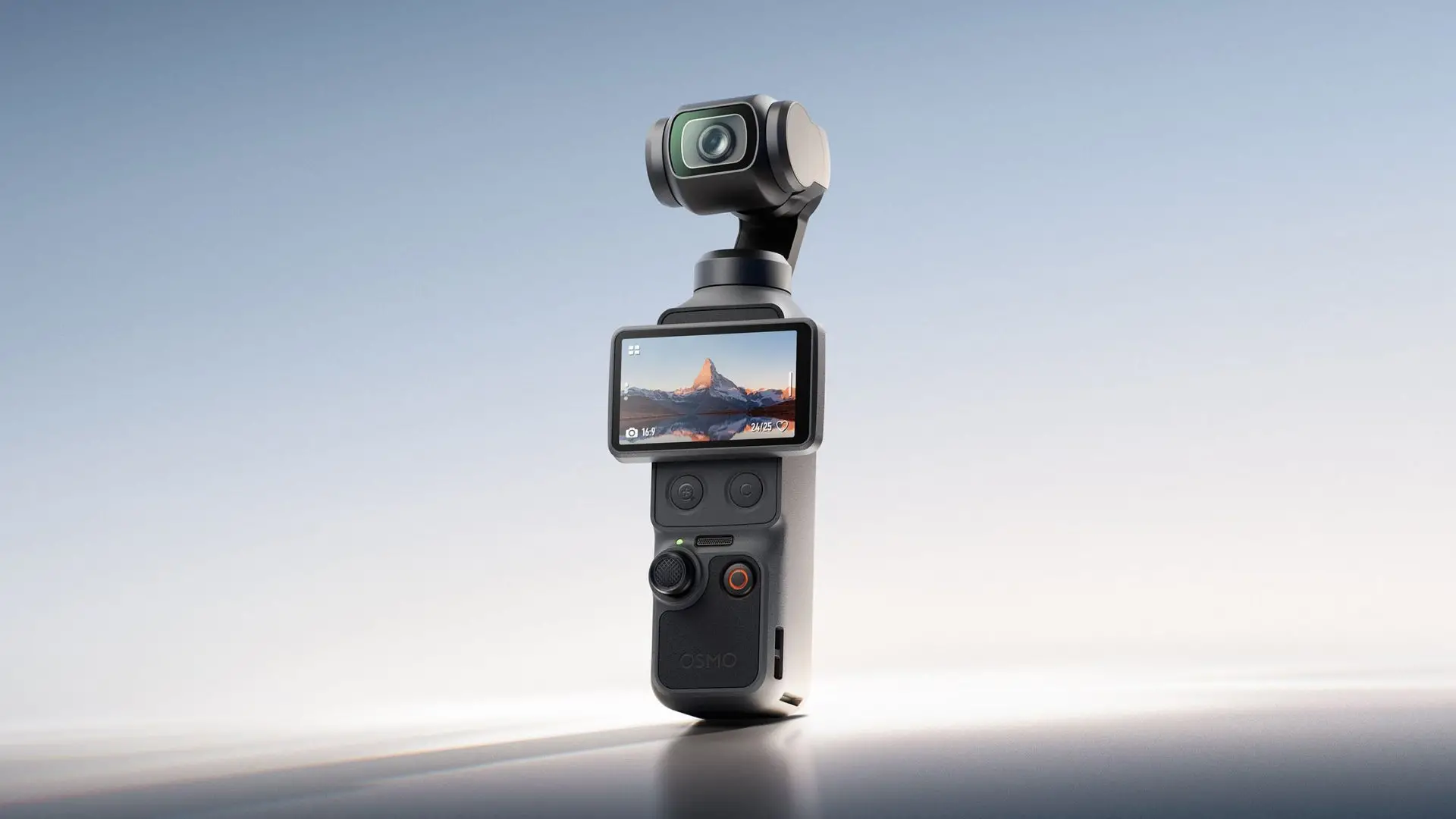
For standard video recording, the Osmo Pocket 4 maintains versatility with support for resolutions up to 4K at frame rates ranging from 24 fps to 60 fps. The device also introduces 2x lossless zoom for 4K footage and up to 4x zoom for 1080p resolution, offering creative flexibility without sacrificing significant image quality. In the realm of still photography, the Osmo Pocket 4 can capture images up to 37 megapixels (7680 x 4320 pixels in a 16:9 aspect ratio). The support for DNG RAW format ensures maximum detail and editing potential for photographers, complemented by a manual shutter speed setting that extends up to 4 seconds, enabling creative long-exposure shots.
Advanced Stabilization and Intelligent Tracking Features
DJI has long been synonymous with gimbal technology, and the Osmo Pocket 4 continues this legacy with its robust 3-axis stabilization system. This advanced stabilization ensures exceptionally smooth and shake-free footage, even when the user is in motion, walking, or navigating uneven terrain. This is crucial for maintaining professional-looking video quality in dynamic environments.
A significant upgrade comes in the form of ActiveTrack 7.0, the latest iteration of DJI’s intelligent subject tracking technology. ActiveTrack 7.0 offers enhanced object recognition and tracking capabilities, now supporting tracking at up to 4x zoom levels. This means users can keep a subject in sharp focus even when zooming in, a feature particularly useful for capturing action from a distance or maintaining a specific framing. Complementing ActiveTrack are features like Spotlight Follow and Dynamic Framing, which work in tandem to intelligently keep the subject centered and framed within the shot, allowing creators to focus more on the narrative and less on manual camera adjustments. These intelligent features are designed to democratize advanced camera work, making it accessible to a wider audience.
A Brighter, More Immersive Viewing Experience
The user interface and visual feedback have also seen substantial improvements. The Osmo Pocket 4 features an upgraded 2.0-inch OLED display with a remarkable brightness of 1000 nits, a significant increase from the 700 nits found on its predecessor. This enhanced brightness ensures excellent visibility even in direct sunlight, a common challenge for outdoor content creators. The OLED technology provides vibrant colors and deep contrasts, offering a clear and accurate representation of the captured footage. The display resolution stands at 556 x 314 pixels, providing crisp detail for reviewing shots and navigating menus. In line with the series’ established usability, the screen retains its ability to be rotated, allowing users to switch between vertical and horizontal orientations seamlessly for different content formats.
Integrated Storage and Connectivity: Streamlined Workflow
One of the most anticipated features, and a significant convenience for users, is the inclusion of built-in storage. The Osmo Pocket 4 comes equipped with 107 GB of internal storage. This onboard memory alleviates the immediate need for an external microSD card for basic recording, offering a more streamlined shooting experience, especially for quick captures or when traveling light. The storage boasts impressive transfer speeds of up to 800 MB/s, facilitating rapid offloading of footage to a computer or external drive, thereby minimizing downtime in the production workflow.
In terms of connectivity, the Osmo Pocket 4 supports the latest Wi-Fi 6 standard, ensuring faster and more stable wireless transfers of files and for potential remote control applications. It also features Bluetooth 5.4, enhancing its connectivity with accessories and other devices.

Battery Life and Global Availability
Powering these advanced features is a 1545 mAh battery. DJI claims this battery can provide up to 240 minutes of continuous recording time when shooting in 1080p at 240 fps. This extended battery life is a crucial factor for creators who often spend long hours on location, reducing the need for frequent recharging or battery swaps.
The DJI Osmo Pocket 4 has officially launched in Europe, with a starting price of EUR 499, which translates to approximately Rp 10.1 million. The release in the European market suggests a phased global rollout, and the company is expected to announce availability and pricing for other regions, including Indonesia, in the near future. This pricing positions the Osmo Pocket 4 competitively within the premium compact camera market, aiming to attract users looking for a powerful yet portable solution for their creative endeavors.
Implications for the Content Creation Landscape
The introduction of the Osmo Pocket 4 with its 1-inch sensor and advanced features has significant implications for the content creation industry. By packing professional-grade imaging capabilities into a pocket-sized device, DJI is further blurring the lines between professional cinema cameras and consumer electronics. This accessibility lowers the barrier to entry for high-quality video production, empowering a new generation of creators to produce content that rivals that of more established professionals.
The integrated storage is a particularly noteworthy addition. Historically, users of such devices have had to manage external memory cards, which can be lost, damaged, or filled unexpectedly. Having a substantial amount of built-in storage simplifies the user experience and reduces potential points of failure. The fast transfer speeds further contribute to an efficient workflow, a critical consideration for busy content creators.
The continued refinement of ActiveTrack and stabilization technologies underscores DJI’s focus on user-friendly operation. Creators can spend less time wrestling with technical settings and more time focusing on storytelling, a key factor in creating engaging content. The Osmo Pocket 4’s combination of advanced technology and intuitive design makes it a compelling option for anyone looking to elevate their video production capabilities.
The release is likely to spur further innovation from competitors, as the market for compact, high-performance cameras continues to grow. DJI’s strategic move with the Osmo Pocket 4 sets a high bar for future releases in this segment, pushing the boundaries of what is possible with mobile imaging technology. As the device becomes more widely available, its impact on how and where content is created will undoubtedly become more pronounced. The future of portable content creation appears brighter, sharper, and more convenient than ever before.