
 Lina Irawan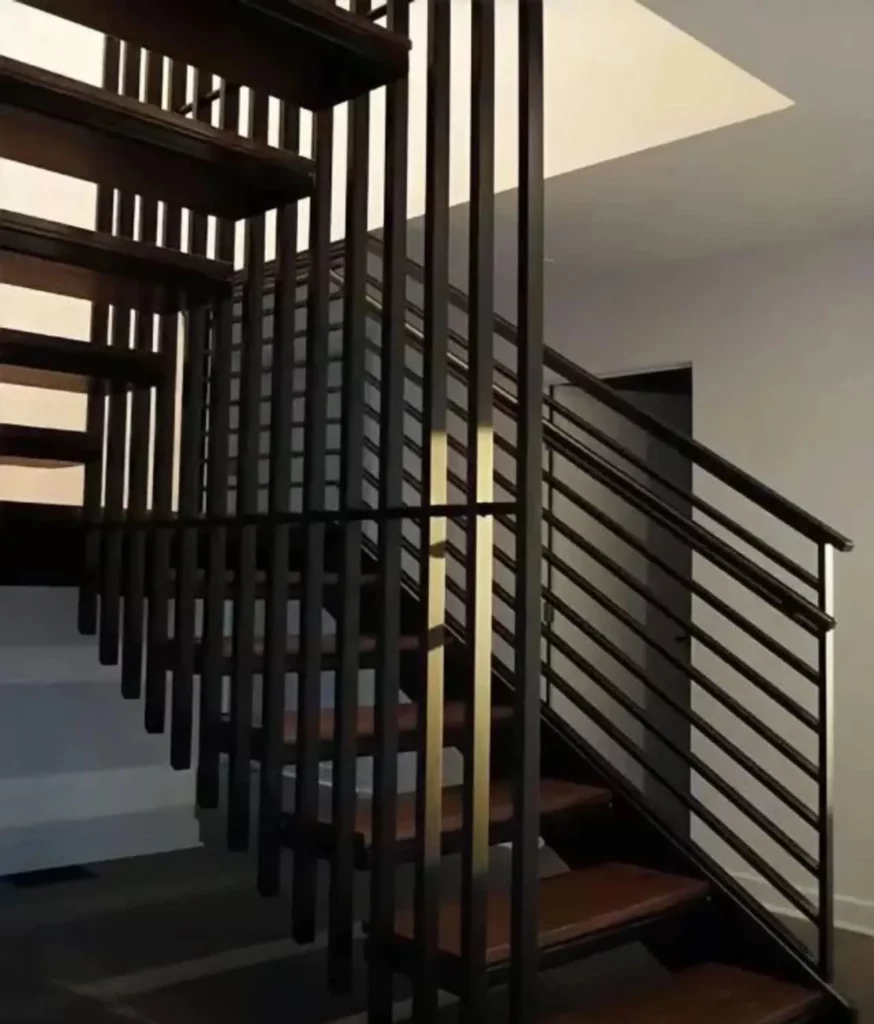
The safe height for stair railings typically ranges between 90 cm and 100 cm, measured vertically from the leading edge of the stair tread (the "nose" or "nosing") to the uppermost point of the handrail. This specific range is ergonomically designed to allow an average adult to comfortably grip the handrail without having to bend excessively or raise their shoulders, promoting natural posture and optimal balance during ascent or descent. Beyond the primary handrail height, the spacing between balusters – the vertical supports beneath the handrail – is equally critical, with a maximum permissible gap of 10 cm. This stringent limit is a vital safety measure, specifically intended to prevent young children or toddlers from inadvertently inserting their heads or bodies through the gaps, thereby mitigating the risk of entrapment or falls. Stairways within residential and public buildings represent crucial vertical circulation paths, and their design, particularly the railing system, demands precise calculation and adherence to established standards. Even minor deviations from these dimensions can significantly elevate the risk of accidents, posing particular hazards to vulnerable populations such as the elderly.
The Critical Role of Stair Railings in Home Safety
The design and installation of stair railings are often relegated to conventional construction practices, sometimes overlooking the nuanced biomechanics of human movement. When an individual navigates a staircase, their body weight continuously shifts from one foot to the other, requiring a dynamic sense of balance. Railings serve as both a primary balancing aid and a crucial support mechanism in the event of a slip or loss of equilibrium. The importance of these structures cannot be overstated; they are not merely decorative elements but fundamental safety features.
A handrail positioned too low forces the user to lean forward instinctively to grasp it. This stooped posture on an incline can dangerously shift the body’s center of gravity outside the stable base of the foot, significantly increasing the likelihood of a fall. Conversely, a handrail that is excessively high compels the elbow to bend unnaturally, compromising the strength and efficacy of the grip, which is paramount when sudden support is needed. Optimal handrail height is generally aligned with the user’s elbow when standing on the tread, allowing for a comfortable and strong grip. Architects and safety experts consistently emphasize that neglecting these ergonomic considerations can transform a functional staircase into a significant hazard. According to global statistics from organizations like the World Health Organization (WHO) and national safety councils, falls on stairs account for a substantial number of injuries and fatalities annually, underscoring the necessity of strict adherence to safety standards in building design.
International and National Safety Standards
The regulations governing building construction in Indonesia primarily reference the Standar Nasional Indonesia (SNI), while international guidelines often adhere to the International Building Code (IBC). Both of these authoritative frameworks converge on the principle that railing dimensions must be calibrated to accommodate the average human physique, ensuring safety and accessibility for a broad user base. These codes are not arbitrary; they are the result of extensive research, accident analysis, and ergonomic studies, continuously updated to reflect best practices in safety engineering.
The evolution of these building codes reflects a growing understanding of safety. Early building practices often lacked standardized dimensions, leading to a higher incidence of accidents. Over decades, through the collection of data on fall types, injury patterns, and user interactions with staircases, regulatory bodies developed comprehensive guidelines. The SNI and IBC, therefore, represent a culmination of this historical learning, aiming to create safer environments for all occupants. Compliance with these codes is not just a legal requirement but a fundamental aspect of responsible design and construction, contributing to public health and safety.

Specific Dimension Guidelines: Tailoring Heights for Different Areas
While the general principle of safety remains constant, specific areas within a building, such as stairways, landings (bordes), and balconies, require distinct railing height considerations due to their differing functions and associated risks.
Handrail Height for Residential Stairs
For residential staircases, the handrail height is typically set between 90 cm and 100 cm, measured from the nose of the stair tread. The 90 cm mark represents the absolute minimum. This range is specifically chosen to align with the average stature of individuals, allowing their elbows to form a relaxed angle of approximately 110-120 degrees when gripping the handrail. This ergonomic angle ensures a firm yet comfortable hold, reducing strain and maximizing support.
In homes where the average occupant height is greater, installing the railing at the upper end of this spectrum, around 100 cm, would be more appropriate. However, exceeding this height on an inclined stair path is generally discouraged, as it can make it difficult for users to maintain a natural arm position and a strong grip. Crucially, this specified height must be consistently maintained along the entire length of the staircase, from the very first step to the final landing, ensuring an uninterrupted and uniform support system. This continuity is vital for tactile feedback and consistent support throughout the climb or descent.
Bordes and Balcony Railing Heights
It is imperative not to conflate the height requirements for inclined stair railings with those for flat floor areas such as landings (bordes) or balconies. These flat areas serve primarily as fall barriers rather than just walking aids, necessitating a greater protective height. Railings for bordes or balconies should be installed at a minimum height ranging from 105 cm to 110 cm from the floor level. The increased height in these areas is specifically designed to prevent an adult’s waist from tipping over, providing a more robust barrier against accidental falls, especially when leaning against the railing. This differentiation in height underscores the varied safety functions these structures perform.
Handrail Design and Usability: Beyond Just Height
The handrail, the uppermost part of the railing that comes into direct contact with the hand, plays a pivotal role in safety. Its shape, material, and dimensions directly influence its usability and effectiveness, particularly in emergency situations.

Grip Diameter
For round handrails, the ideal diameter ranges from 3.2 cm to 5 cm. This specific measurement allows the fingers and palm to encircle the rail effectively, enabling a secure grip where the thumb can firmly lock around the bar. Handrails that are too thick, such as large solid blocks, prevent a proper grasp, allowing the hand merely to rest on the surface rather than encircle and grip it securely. In such cases, the ability to maintain balance or prevent a fall is significantly compromised. For square-shaped handrails, the total perimeter should not exceed 16 cm, and the corners should be chamfered or rounded to prevent discomfort and injury. The choice of material also impacts the grip; while metal can feel cold, especially in air-conditioned environments, a wooden cap or overlay can mitigate this, offering a warmer, more tactile surface.
Continuity and Extension
A fundamental safety principle dictates that the handrail must be continuous and uninterrupted from the bottom-most step to the top-most step. Any breaks or gaps, such as those caused by oversized decorative posts in the middle of a run, force users to release their grip momentarily, creating a dangerous discontinuity in support. This brief moment of unsupported transition can be critical, especially for individuals with limited mobility or in an emergency.
Furthermore, the handrail should extend horizontally beyond the first and last steps by approximately 30 cm, parallel to the floor level. This extension provides an automatic tactile cue to users that the inclined section of the staircase has concluded, allowing them to maintain their grip for a longer duration, especially beneficial for those with visual impairments or balance issues. This subtle design element enhances safety by preparing the user for the transition to a flat surface.
Wall Clearance
For handrails mounted directly to a wall, a clearance gap of approximately 4 cm to 5 cm from the wall surface is essential. This space is crucial to prevent knuckles and fingers from scraping against the wall while gripping the rail, particularly when sliding down. It ensures an unhindered and comfortable grip, allowing the hand to move freely along the rail. When installing wall-mounted handrails, it is imperative to secure the brackets from the underside of the handrail, preventing any protrusions that could impede the smooth movement of the hand along its length.
Baluster Specifications: Preventing Entrapment and Ensuring Structural Integrity
Balusters, the vertical spindles or bars that fill the space beneath the handrail, are integral to both the safety and structural stability of a railing system. Their primary function is to secure the handrail while also preventing falls through the open space.
The 10-Centimeter Sphere Rule
An internationally recognized safety standard, often referred to as the "10-centimeter sphere rule," is used to test the gaps between balusters. This rule dictates that no part of the baluster spacing should allow a 10 cm sphere to pass through. In practical terms, this dimension is meticulously chosen to prevent a toddler’s head from becoming entrapped between the support bars, a tragically common accident in poorly designed staircases.

While vertical balusters are generally safer, horizontal railing designs, where bars run parallel to the handrail, present an increased risk. Children are often tempted to climb these horizontal bars as if they were a ladder, potentially leading to falls from a greater height. If horizontal designs are chosen, additional safety measures such as fine-mesh safety nets or panels are strongly recommended, especially in homes with young children, or it may be prudent to forgo such designs entirely.
Structural Load Bearing
Beyond preventing entrapment, the entire railing assembly must possess sufficient structural integrity to withstand significant lateral force. The structure must be capable of resisting an outward push of at least 90 kilograms. This robust construction is vital to ensure the railing does not fail or collapse if a person slips and collides with it. Crucially, the main end posts of the railing system must be securely bolted, using long anchors, directly into the concrete floor slab, rather than merely being superficially screwed into a wooden parquet or superficial flooring layer. This deep anchoring provides the foundational strength necessary to withstand substantial impact.
Tailoring Railing Design for Diverse Users
A truly safe and accessible home environment often accommodates individuals of varying ages and physical abilities. Thoughtful railing design can ensure that everyone can use the stairs comfortably and safely.
Dual Railings for Children
Implementing a dual railing system is an excellent strategy for fostering independence and ensuring safety for young children. While the upper handrail is positioned at the standard 90 cm height for adults, a second, lower handrail can be installed at approximately 60 cm. This lower rail allows children to comfortably grasp a support without having to stretch their arms unnaturally, promoting confidence and reducing the risk of falls as they learn to navigate stairs. This design respects the ergonomic needs of different age groups.
Accessibility for Seniors and Individuals with Mobility Challenges
Ascending and descending stairs can be particularly challenging and energy-intensive for seniors or individuals with limited mobility. To enhance their safety and comfort, installing railings on both sides of the staircase – one mounted on the wall and another as part of the main railing system – is highly recommended. These dual points of support help distribute the body’s load, reducing strain on the knees and other joints, thereby minimizing discomfort and the risk of injury. Furthermore, integrating LED strip lighting along the underside of the handrail can dramatically improve visibility of the treads, providing clear illumination of the path and further reducing the risk of missteps, especially in dimly lit conditions.
Material Considerations and Durability

The choice of material significantly influences the structural requirements and overall performance of a railing system, dictating the necessary thickness and design to ensure adequate load-bearing capacity.
Metal Options: Sleek and Strong
Materials like hollow iron or stainless steel are renowned for their high density and inherent strength. Even a metal pipe with a diameter of 4 cm can provide exceptional structural support, appearing slender yet robust. However, metal, particularly in air-conditioned environments, can transfer cold to the hand, making it less comfortable to grip. To mitigate this, a thin wooden cap or overlay is often integrated onto the top surface of metal handrails, offering a warmer and more tactile interface for the user. Modern designs often leverage the sleekness of metal for a minimalist aesthetic, but comfort should not be sacrificed for style.
Solid Wood: Warmth and Substance
Wood, while offering a natural aesthetic and warmth, requires a more substantial profile than metal to achieve comparable strength and prevent the risk of breakage. Profiles with widths of 5 cm to 6 cm are commonly applied for wooden handrails. To ensure safety and comfort, the edges of wooden handrails must be carefully routed and smoothed, eliminating sharp corners. Furthermore, a thorough varnish or sealant finish is crucial to prevent splinters from injuring the user’s palm, ensuring a smooth and safe gripping surface.
Tempered Glass: Modern Transparency
Modern railing designs sometimes feature tempered glass panels, often without traditional vertical metal frames, for a minimalist and open aesthetic. For such applications, the glass must be tempered and have a minimum thickness of 10 mm to ensure sufficient strength and safety. In frameless glass designs where a classic handrail bar might be absent, the absence of a traditional grip is often addressed by fitting a thin, continuous stainless steel clamp or cap along the top edge of the glass panel. This serves as a tactile guide, allowing users to comfortably slide their fingers along the top edge for support, providing a subtle yet effective substitute for a conventional handrail.
Common Installation Errors and Best Practices
Inaccurate measurement and installation techniques are common pitfalls that can compromise the safety and functionality of a stair railing. Builders often rely on customary practices rather than precise adherence to safety standards.
Incorrect Measurement Reference
A frequent error involves measuring the 90 cm height from the middle of the stair tread. However, the width of individual stair treads can vary, leading to an inconsistent and undulating handrail line if measured from the center. The correct protocol mandates that the "zero" point of the measuring tape must consistently be placed at the very edge of the stair nosing (the "nose" of the tread). This ensures a uniform and straight handrail height relative to the point where the foot first contacts each step, maintaining ergonomic consistency.

Deviating from the Stair’s Incline
To ensure that the angle of the balusters and the handrail precisely follows the slope of the staircase, a nylon string should be stretched tautly from the nosing of the bottom-most step to the nosing of the top-most step. This string acts as a guide, providing a precise line that can be marked with chalk, serving as the cutting reference for the top of each baluster. Adhering to this method ensures that the entire railing system is perfectly aligned with the staircase’s incline, appearing straight and symmetrical when viewed from any point in the room, and more importantly, providing consistent support.
Maintenance and Long-Term Safety
The continuous cycle of use, involving climbing, descending, and occasionally supporting a person’s weight during a stumble, can gradually loosen the foundational integrity of a railing system. Therefore, routine maintenance is not merely advisable but essential for long-term safety. It is crucial to inspect and tighten the nuts at the base plates of the main support posts at least once a year. The subtle vibrations caused by daily foot traffic can, over time, loosen the anchor bolts securing these posts to the floor without immediate noticeable signs. Regular checks and timely tightening ensure that the railing system maintains its structural integrity and continues to provide reliable support throughout its lifespan.
Legal and Safety Implications of Non-Compliance
Adherence to building codes and safety standards for stair railings is not just a recommendation; it is a legal and ethical imperative. Non-compliance can lead to severe consequences, ranging from legal liabilities to tragic accidents. Property owners and builders who fail to install railings according to established standards may face lawsuits in the event of an injury or fatality, incurring substantial legal costs, fines, and damages. Insurance companies may also deny claims related to accidents if it is determined that the property did not meet safety codes.
Beyond the legal and financial repercussions, there is a profound moral obligation to ensure the safety of all occupants and visitors. A well-designed and properly installed stair railing is a proactive measure against preventable accidents, contributing significantly to the overall well-being and peace of mind within any building, whether residential or commercial. Investing in compliant and robust railing systems is an investment in safety, accessibility, and the long-term value of a property.








