
 Lina Irawan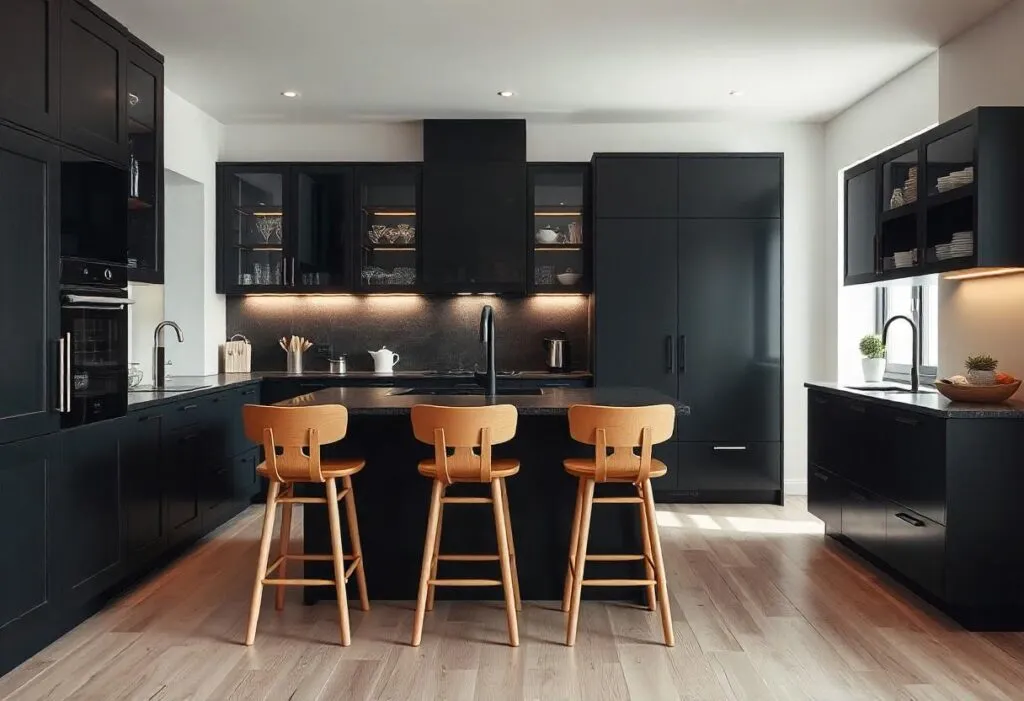
The Evolving Allure and Technical Considerations of Dark Kitchens
The global shift towards minimalist, industrial, and contemporary design aesthetics has propelled dark kitchen palettes into widespread popularity. Beyond mere visual appeal, dark colors offer distinct technical advantages and disadvantages that warrant careful consideration during the design phase. A significant benefit of dark cabinetry, particularly black, is its remarkable ability to camouflage common kitchen blemishes such such as sauce splatters, grease marks, and smoke residue from cooking. Unlike white or light-colored cabinets that often show yellowing over time, dark surfaces maintain their original tone, contributing to a consistently fresh appearance. However, this advantage comes with a crucial caveat: intensely dark and matte surfaces are paradoxically prone to highlighting dust accumulation, water spots, and even the subtle scratches from everyday wiping. This intrinsic characteristic underscores the paramount importance of selecting appropriate cabinet finishes to prevent an increased maintenance burden for homeowners. The challenge, therefore, lies in harnessing the aesthetic power of darkness while mitigating its practical drawbacks through informed material and design choices.
Ergonomic Standards and Spatial Dynamics in Dark Kitchen Design
Ergonomics plays a pivotal role in ensuring a kitchen is not only beautiful but also comfortable and efficient to use daily. Given that dark colors tend to make spaces feel more enclosed and visually heavier, precise measurements for furniture and adequate spacing between cabinets are non-negotiable to maintain ease of movement and prevent a cramped sensation. Ill-conceived dimensions can lead to discomfort, such as back strain from leaning over too-low countertops, or accidental bumps from overhead cabinets.

-
Countertop Height: The primary workstation in any kitchen, the countertop, demands an ergonomic height tailored to the user. In Indonesia, the average countertop height is typically set between 85-90 cm from the floor. A personalized method to determine ideal height involves standing upright, bending the elbow to a 90-degree angle, and ensuring the countertop surface sits approximately 10-15 cm below the elbow. Crucially, the thickness of the countertop material, such as a 2 cm granite slab, must be factored into the overall calculation, requiring the base cabinet frame to be adjusted accordingly. Industry standards often align with these measurements to promote comfort and reduce strain during prolonged cooking activities.
-
Cabinet Depth: Standard base cabinets are typically 60 cm deep, aligning perfectly with the dimensions of common built-in ovens and cooktops. To prevent water spills from seeping into drawers and cabinets, the countertop often extends an additional 2-3 cm beyond the cabinet doors. Conversely, upper cabinets are designed with a shallower depth, usually 30-40 cm. This reduced depth is a critical ergonomic consideration, preventing users from repeatedly hitting their heads on cabinet doors while performing tasks at the countertop below, a common oversight in less thoughtfully designed kitchens.
-
Upper Cabinet Clearance: A minimum vertical clearance of approximately 60 cm between the countertop surface and the base of the upper cabinets is recommended. This space comfortably accommodates common kitchen appliances like blenders or rice cookers. In a dark kitchen, this 60 cm clearance is particularly vital. Lower-set upper cabinets in a dark palette can create a perpetually dim and oppressive work area, as the dark surfaces absorb available light rather than reflecting it. For kitchens incorporating a cooker hood above the stove, the installation height should be raised to 65-75 cm from the gas hob. This increased clearance is essential to prevent heat damage to the hood and ensure optimal smoke extraction, aligning with safety and functional guidelines.
-
Optimizing the Work Triangle: The efficiency of a kitchen workflow hinges on the "work triangle," which connects the three primary zones: the refrigerator, the sink, and the stove. The cumulative distance between these three points should ideally fall between 3.6 meters and 8 meters. A triangle that is too compact can lead to congestion, especially when multiple individuals are cooking, creating a chaotic environment. Conversely, an overly expansive triangle necessitates excessive movement, leading to fatigue during meal preparation. Maintaining clear pathways between these three critical points, free from obstructions, is paramount for a smooth and enjoyable cooking experience. This fundamental layout principle is a cornerstone of effective kitchen design, irrespective of color palette, but gains added importance in visually denser dark kitchens where perceived space can feel more restricted.
Advanced Material Selection for Dark Cabinetry

The success of a dark kitchen aesthetic hinges significantly on the quality and characteristics of its surface finishes. Inferior materials can quickly degrade, displaying uneven light reflections, premature fading, and peeling edges, undermining the desired sophisticated look.
-
High Pressure Laminate (HPL): HPL remains a popular choice due to its cost-effectiveness and ease of installation. For dark kitchens, matte or doff textured HPL is highly recommended. Unlike glossy HPL, which tends to amplify fingerprints, smudges, and wipe marks, matte finishes are significantly more forgiving and tactilely pleasant. Advancements in material science have led to the development of premium HPL options featuring anti-fingerprint technology, where surface treatments cause handprints to disappear quickly or be easily wiped away. The primary challenge with HPL lies in its edge seams. To ensure durability and water resistance, it is crucial that professional installers utilize automated edge banding machinery rather than manual gluing methods, which often result in less precise and more vulnerable edges.
-
Duco Paint: Duco paint offers a seamless, luxurious finish by completely sealing wood pores, leaving no visible edge lines. A matte black Duco finish lends cabinets a perception of considerable depth and high-end sophistication. However, Duco paint is notably susceptible to chipping from impacts; a collision with a heavy metal pot can easily mar the surface. Repairing chipped Duco paint is also more complex, requiring professional patching and re-spraying to achieve an undetectable repair, which can be both time-consuming and costly.
-
Acrylic: For those desiring a high-gloss, mirror-like dark kitchen, acrylic is the superior solution. Its inherent thickness and perfectly even light reflection distinguish it from cheaper laminates that might exhibit an "orange peel" effect. Acrylic black boasts excellent resistance to fine scratches and maintains its color integrity over time, even with consistent exposure to sunlight from open windows, making it an ideal choice for sun-drenched kitchens. Positioned at the higher end of the pricing spectrum, acrylic represents a premium investment for enduring elegance.
-
Countertop (Top Table) Materials: The countertop endures daily stress from hot pans, knife scratches, and spills. Deep black granites, such as Nero Assoluto, offer exceptional heat resistance and durability. Another robust option, known for its scratch and stain resistance (even against strong coffee), is black Quartz Stone. To introduce visual contrast and enhance practical visibility, pairing dark cabinets with a bright white solid surface countertop or a light marble with subtle grey veining can be highly effective. The lighter surface improves visual acuity, making it easier to see ingredients while chopping and preparing meals, thereby balancing the overall visual weight of the dark cabinetry.

Strategic Lighting for Dark Kitchen Environments
The fundamental principle of physics—that dark colors absorb light—is critically important in dark kitchen design. Consequently, a dark-paletted room demands significantly brighter and more strategically placed lighting than a conventional white kitchen. Inadequate lighting in a dark kitchen can create a cave-like atmosphere, not only making the space feel oppressive but also posing a safety risk, particularly when handling sharp utensils or hot substances.
-
Task Lighting: Overhead downlights positioned in the center of the ceiling often prove insufficient for task areas because a person’s body will inevitably cast a shadow over the workbench. The essential solution is the installation of concealed LED strip lighting directly beneath the upper cabinets. These lights provide direct, shadow-free illumination on the countertop. Opting for a natural white color temperature, typically around 4000K, is paramount. This specific Kelvin temperature ensures accurate color rendering, which is vital for assessing the doneness of food; warm yellow lights can distort the appearance of raw meat, while cool bluish-white lights can cause eye strain. A 4000K natural white light ensures ingredients and cooked dishes appear in their true colors.
-
Main Ceiling Lighting: The primary ambient lighting from the ceiling must offer a broad and evenly distributed spread of light. For dark kitchens, it is advisable to increase the wattage of ceiling lights by approximately 20% compared to standard room lighting calculations. This adjustment compensates for the light absorbed by the dark cabinets and surfaces. Critically, these ceiling lights should be positioned precisely along the outer edge of the kitchen countertop, rather than centered in the empty aisle. This strategic placement ensures the light directly illuminates the cabinet faces and the floor, maximizing overall brightness and minimizing shadows across the entire kitchen space.
Minimalist Layout Options for Dark Kitchens

The physical dimensions and configuration of the kitchen space should always dictate the cabinet layout. In the context of dark-colored cabinetry, compact and uncluttered layouts are preferred to prevent the room from feeling visually overwhelming or intimidating.
-
Single-Line Layout (Galley Style): This layout, commonly found in studio apartments or smaller homes, arranges all cabinets, the sink, and the stove along a single, extended wall. A recommended sequence for maximum efficiency is to place the refrigerator at one end, followed by the sink, a clear preparation counter, and finally the stove at the other end. To mitigate the visual rigidity of a continuous dark wall, incorporating open wooden shelves or display niches in place of some upper cabinets can effectively break up the monochrome expanse, adding warmth and visual interest.
-
L-Shaped Layout: An L-shaped configuration naturally facilitates an efficient work triangle, allowing for seamless transitions between cooking, cleaning, and preparation zones with minimal body rotation. The primary design challenge with an L-shaped kitchen often lies in optimizing the corner base cabinet, which can have limited and awkward access. This issue can be elegantly resolved by installing wide-opening hinges (165-degree) and incorporating specialized pull-out storage solutions such as Magic Corners or rotating Lazy Susans. These mechanisms allow pots, pans, and other items stored deep within the corner to be easily retrieved without requiring the user to crouch or reach awkwardly into the dark recess.
Maintaining the Pristine Appearance of Dark Surfaces
Cleaning dark kitchen cabinets requires specific techniques to avoid leaving unsightly streaks and water marks, which are far more noticeable on dark, reflective surfaces than on lighter ones.

-
Cleaning Tools and Agents: Discard abrasive dish sponges, as their coarse fibers can scratch delicate finishes. Instead, utilize clean, soft microfiber cloths for daily dusting and wiping. For HPL and Duco-painted cabinets, a solution of warm water mixed with a small amount of liquid dish soap is typically sufficient. It is crucial to avoid ammonia-based glass cleaners, as the ammonia can chemically degrade the protective layers and color of many cabinet finishes, leading to dullness or discoloration over time.
-
Wiping Technique: Adopt a consistent, single-direction wiping motion, typically from top to bottom. Avoid circular wiping patterns, which tend to spread grease and residue rather than removing it, often resulting in visible smears. After a wet wipe, immediately follow up by drying the surface with a separate, clean, dry microfiber cloth. Allowing water to air-dry on dark surfaces almost invariably leaves behind visible white water spots or streaks, detracting from the pristine finish. Regular, gentle cleaning with the correct tools and methods will preserve the elegance of your dark kitchen for years.
Frequently Asked Questions (FAQ) Regarding Dark Kitchens
-
Do dark kitchens make small spaces feel smaller?
Visually, darker colors can indeed create the perception that walls are advancing, making a small room feel more enclosed. A popular design solution is the "tuxedo" approach: installing dark-colored base cabinets while opting for white or light wood-toned upper cabinets. The lighter elements at eye level help to maintain an open and airy feel, counteracting the visual weight of the darker lower cabinetry, thereby preserving a sense of spaciousness in compact kitchens. -
Which protective layer offers the best anti-fingerprint properties?
For optimal resistance to fingerprints, seek out materials explicitly labeled "anti-fingerprint" or "super matte" finishes. These often incorporate advanced surface treatments that reduce oil adherence and make smudges less visible. As a more budget-friendly alternative, HPL with a black wood grain texture is highly effective. The natural variations and lines of the wood grain cleverly camouflage oil smudges and fingerprints much more effectively than a solid, plain black HPL finish.
-
What is the recommended safe thickness for a granite countertop?
Standard granite slabs typically range from 1.5 to 2 centimeters in thickness. Crucially, the underlying support structure for these heavy stone slabs must be robust. It is imperative that the base plywood used for support is at least 15-18 mm thick. If the supporting plywood is too thin or of inferior quality, the granite countertop will gradually begin to sag or warp downwards over time due to its considerable weight, compromising both aesthetics and structural integrity. -
Can the black color fade if the kitchen is near a window?
The longevity of the color in a dark kitchen is directly dependent on the quality of the materials used. Lower-grade HPL, for instance, is highly susceptible to fading when regularly exposed to ultraviolet (UV) sunlight. If the kitchen’s orientation means it receives direct and prolonged sun exposure through an open window, then acrylic-based finishes are the most durable option. Acrylic materials are formulated with UV-resistant properties, making them exceptionally resilient against color fading, thus preserving the deep black hue over many years.
By meticulously considering these technical and aesthetic guidelines, homeowners can create a dark-themed kitchen that not only captivates with its sophisticated appearance but also delivers unparalleled functionality and durability for everyday use. The investment in precise planning and quality materials ensures that the elegance of a dark kitchen endures, transforming it into a truly distinguished culinary space.








