Lina Irawan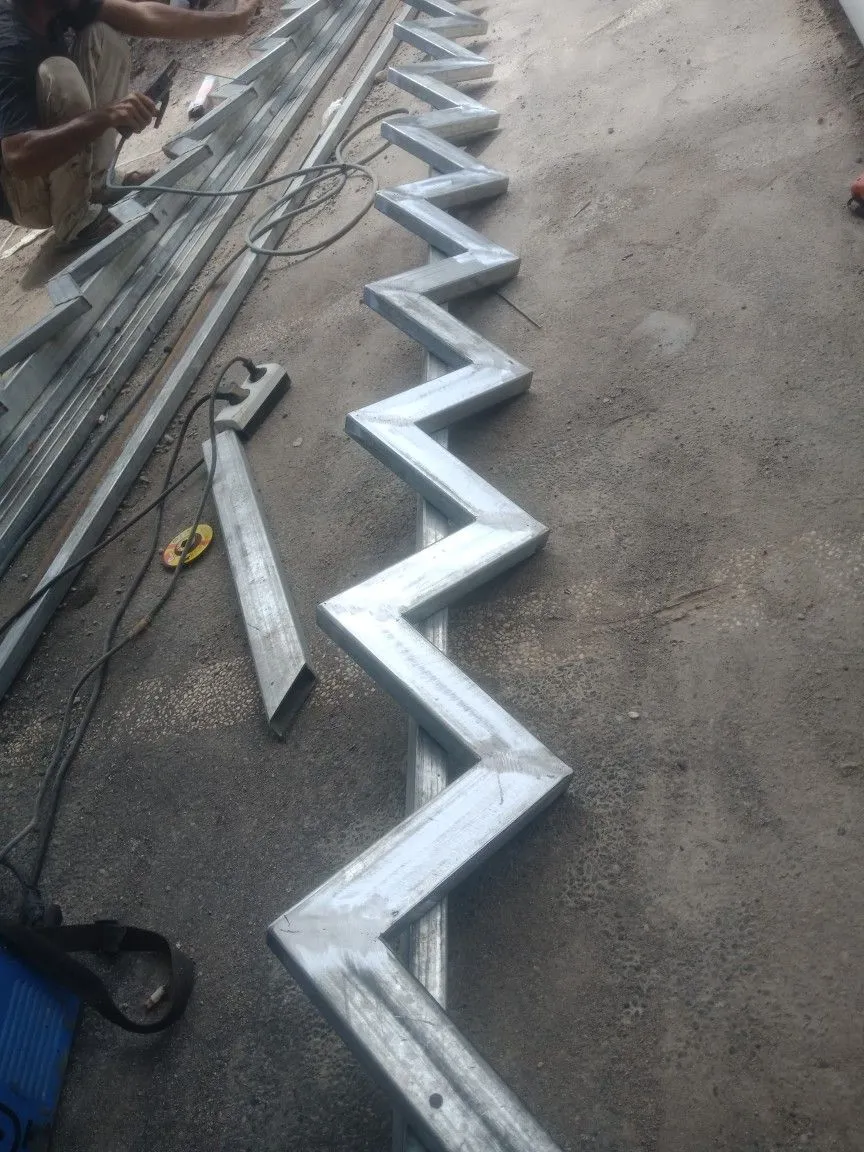
The construction of a safe, durable, and aesthetically pleasing staircase in modern residential and commercial buildings hinges critically on the precise selection and application of its core materials, particularly hollow steel. InteriorDesign.ID, a leading authority in interior design and construction insights, has issued a comprehensive guideline detailing the optimal specifications for hollow steel components in staircases. This directive underscores the paramount importance of structural integrity, safety, and longevity, aiming to equip homeowners and professionals with the knowledge to ensure robust construction and informed decision-making when engaging with fabricators and welders. The rising popularity of minimalist, industrial, and floating stair designs in contemporary architecture necessitates a renewed focus on the engineering principles that guarantee both form and function.
The Foundation of Safety: Main Stair Stringers
At the heart of any steel staircase lies the main support structure, commonly referred to as the "ibu tangga" or stringer. This critical component is engineered to bear approximately 80% of the staircase’s total load, including static weight and dynamic forces from foot traffic. InteriorDesign.ID recommends a standard dimension of 100×50 mm hollow steel with a minimum wall thickness of 2.0 mm for double-stringer designs, where two main supports run parallel on either side of the steps. For maximum load-bearing capacity, it is crucial that these stringers are positioned vertically, with the 100 mm side oriented top-to-bottom. This configuration optimizes the steel’s resistance to bending and deflection under stress, ensuring a rigid and secure ascent.
The consequences of deviating from these specifications can be severe, ranging from a noticeable "bouncy" sensation when ascending or descending the stairs to, in extreme cases, catastrophic structural failure. Thinner steel walls are inherently more prone to buckling or permanent deformation, particularly over longer spans. For staircases where one side is fully integrated into a supporting wall (wall-supported designs), a slightly reduced profile of 80×40 mm with a minimum thickness of 1.8 mm may be acceptable, as the wall provides supplementary load distribution, effectively reducing the unsupported span of the stringer. However, even in such scenarios, compromising on thickness can lead to premature wear and instability, undermining the staircase’s long-term performance.

The Modern Aesthetic: Single Stringer (Monolithic) Staircases
Contemporary architectural trends have seen a surge in the popularity of "floating" or monolithic staircases, characterized by a single, prominent stringer running centrally beneath the treads. While visually striking, this design significantly intensifies the load on the singular support, as all forces are concentrated on one beam. To compensate for this concentrated stress, InteriorDesign.ID advises using substantially larger hollow steel sections. The recommended dimensions for a single stringer are a minimum of 150×150 mm or 100×100 mm, accompanied by a drastic increase in wall thickness to 3.0 mm, ideally up to 4.0 mm. This robust sizing is essential to counteract the amplified bending moments and shear forces.
In scenarios demanding even greater structural resilience, or for designs pushing the limits of span and load, the use of Wide Flange (WF) beams or H-Beams is strongly recommended. These industrial-grade steel profiles offer superior strength-to-weight ratios and are inherently designed for heavy load-bearing applications, providing an unparalleled level of structural rigidity. Furthermore, to mitigate acoustic resonance and enhance structural rigidity in hollow single stringers, filling the internal cavity with concrete or injecting dense polyurethane (PU) foam can effectively dampen vibrations and eliminate the hollow "thud" often associated with lighter steel structures. This additional measure contributes to both the perceived quality and the long-term durability of the staircase, offering a solid feel underfoot.
Supporting the Steps: Tread Frames
Once the main stringers are securely in place, the next crucial step involves constructing the frames that will support the individual stair treads. These rectangular frames are typically fashioned from 40×40 mm hollow steel. For a sleeker, more minimalist edge profile, a 20×40 mm flat hollow steel can be employed, offering a refined aesthetic without compromising support. The optimal wall thickness for these tread frames is 1.6 mm. This thickness is robust enough to withstand the forces exerted during the installation of various tread materials like wood, ceramic, or stone, particularly when drilling and screwing attachment points, preventing material deformation or cracking during assembly.

A vital, often overlooked, detail for tread frames is the inclusion of a diagonal cross-bracing element within the rectangular frame. This internal brace significantly enhances the frame’s resistance to twisting and prevents the tread material from flexing or cracking under concentrated impact, such as a heavy footfall. This reinforcement ensures a solid and secure footing for users, contributing to both safety and the longevity of the tread material.
The Safety Barrier: Railing System Components
The railing system, while not directly bearing the vertical load of foot traffic, is indispensable for user safety and contributes significantly to the overall rigidity of the staircase. It comprises several distinct components, each with specific requirements tailored to its function.
-
Railing Master Posts: These are the primary anchor points for the entire railing structure, typically positioned at the base of the staircase and at any landings or turns (bordes). They must be exceptionally rigid to resist lateral forces, pushes, and pulls. InteriorDesign.ID recommends 50×50 mm or 40×40 mm hollow steel with a wall thickness ranging from 1.6 mm to 2.0 mm. Crucially, these master posts must be fully welded directly to the main stair stringer, not merely attached to the tread plate. This direct, robust connection ensures that the entire railing system remains stable and unyielding, acting as a reliable anchor for the entire balustrade.
-
Handrails: The handrail is the component that users directly grasp for support. Ergonomics and safety dictate its dimensions. For hollow steel, a 40×40 mm profile is generally considered the maximum comfortable size for an adult’s grip. Larger profiles can make it difficult to maintain a secure hold, especially during a loss of balance or in an emergency. Alternatively, a 30×50 mm flat hollow steel installed horizontally offers a comfortable and modern aesthetic, providing a broad, flat surface for grip. Given that handrails do not bear direct vertical loads from footsteps, a wall thickness of 1.2 mm is typically sufficient, provided the spacing between the supporting balusters or master posts is not excessively wide, preventing undue flexing.

-
Balusters (Railing Spindles): These are the vertical infill elements between the handrail and the stringer, primarily serving as a safety barrier to prevent falls. Since they are not primary load-bearing elements, lighter profiles can be used. InteriorDesign.ID suggests 20×40 mm or 20×20 mm hollow steel with a thickness of 1.0 mm to 1.2 mm. Using excessively thick steel for balusters adds unnecessary dead weight to the stringers without significantly enhancing safety, potentially increasing material costs. A critical safety standard for balusters, especially in homes with children, is to maintain a maximum spacing of 10 centimeters between them, preventing a child’s head or body from passing through, aligning with international safety codes for railings.
Navigating the Market: Beware of "Undersized Steel"
A pervasive issue in the construction material market is the phenomenon of "besi banci" or "undersized steel." This term refers to steel products whose actual dimensions, particularly wall thickness, fall short of their advertised specifications. For instance, a piece of hollow steel labeled as 40×40 mm with a 1.6 mm thickness might, upon careful measurement with a caliper, reveal an actual thickness of only 1.2 mm or even 1.0 mm. This seemingly minor discrepancy has profound implications for structural integrity, as the strength of a beam is exponentially related to its dimensions.
A reduction in steel thickness directly translates to a significant loss in its load-bearing capacity and resistance to bending and torsion. A staircase built with undersized steel will be inherently weaker, more prone to vibration, and at a higher risk of premature failure. InteriorDesign.ID strongly advises consumers to specifically request "full thickness" steel from suppliers and to bring their own calipers to verify the material specifications on-site before acceptance. This proactive measure is crucial for safeguarding the investment and, more importantly, the safety of the occupants, preventing costly rectifications down the line.
Durability and Maintenance: Galvanized vs. Black Steel

The choice of steel finish also plays a pivotal role in the long-term durability and maintenance requirements of a staircase. The market primarily offers two types: black steel and galvanized steel.
-
Black Steel: This is untreated, bare steel, which is highly susceptible to rust and corrosion when exposed to moisture and oxygen. Even ambient humidity within a household environment can trigger corrosion if the protective paint layer is scratched or compromised. While initially less expensive, black steel requires meticulous surface preparation, priming with rust-inhibiting agents, and high-quality paint application to prevent rust, and ongoing maintenance to address any chips or abrasions that expose the metal.
-
Galvanized Steel: Distinguished by its silvery, matte finish, galvanized steel has been factory-coated with a layer of zinc. This zinc coating acts as a sacrificial anode, providing superior corrosion resistance by protecting the underlying steel from rust through electrochemical means. InteriorDesign.ID strongly recommends the exclusive use of galvanized hollow steel for all staircase framework. Although the initial cost may be 10-15% higher than black steel, the long-term benefits in terms of reduced maintenance, extended structural lifespan, and peace of mind far outweigh the marginal upfront investment. It effectively eliminates concerns about internal rust and structural degradation for decades, making it a superior choice for both indoor and outdoor applications.
Understanding Structural Mechanics: Why Thin Steel Vibrates
The common complaint of a "bouncy" or "humming" staircase is a direct consequence of inadequate steel thickness in the main support structures. Any long span of metal will exhibit some degree of deflection (bending) when subjected to a concentrated load. This deflection becomes more pronounced and problematic as the wall thickness of the steel decreases, as thinner material offers less resistance to deformation.

These micro-vibrations, while seemingly innocuous initially, can lead to a phenomenon known as metal fatigue over time. Repeated stress cycles cause microscopic cracks to form and propagate, particularly at weld points and stress concentrations, which are often hidden from view. These cracks can silently grow within the material, eventually leading to sudden and unexpected structural failure, even if the exterior paint finish appears pristine. Adhering to the recommended steel thickness specifications is the most effective engineering solution to minimize deflection, dampen vibrations, and prevent the onset of metal fatigue, thereby ensuring the long-term structural integrity and quiet, comfortable operation of the staircase.
Ensuring Connection Strength: Welding Standards
Even the thickest and highest-quality steel can be rendered ineffective if the joining technique is compromised. Proper welding is non-negotiable for load-bearing structures like staircases. InteriorDesign.ID emphasizes the necessity of full welding at every intersection, especially on the main stringers. Full welding creates a continuous, strong bond across the entire joint, distributing stress efficiently and ensuring maximum load transfer.
In contrast, "tack welding," where only small, intermittent spots are welded, is strictly prohibited for structural components. Tack welds are weak, brittle, and prone to failure under dynamic loads, offering minimal structural integrity and posing severe safety risks. After full welding, all excess weld material should be ground smooth and flush with the surrounding steel. This grinding process is not merely for aesthetics; it ensures that body filler and paint adhere perfectly, preventing unsightly bumps and potential weak points in the finish where corrosion could begin. Furthermore, the welding machine’s amperage must be meticulously adjusted. Insufficient amperage results in weak, superficial welds that lack penetration, while excessive amperage can burn through the steel, creating holes and compromising the material’s strength.
Anchoring for Ultimate Stability: Connection to the Building Structure

The ultimate stability of a staircase is fundamentally determined by how securely it is anchored to the main building structure. A staircase must never merely rest on the finished floor, as this provides insufficient resistance to lateral forces and dynamic loads. At both the bottom and top ends of the staircase, as well as at any landings, the fabricator must install robust baseplates made from steel plate at least 8 mm thick. These baseplates are then securely fastened into the concrete slab using heavy-duty dynabolts or chemical anchors, ensuring a rigid, immovable connection to the building’s foundation.
Leveraging adjacent walls as additional points of attachment is also a highly effective strategy for enhancing stability. Auxiliary steel plates should be welded from the main stringers to the adjacent wall, and then bolted directly into the wall structure using appropriate anchors at regular intervals (e.g., every 1 meter). This multi-point anchoring system effectively distributes the staircase’s load into the building’s structural framework and crucially dampens any lateral swaying or torsional movement, contributing significantly to the overall stiffness and safety of the installation.
Budgetary Efficiency Without Compromising Safety
Constructing a robust and safe steel staircase does not necessarily require an exorbitant budget. Strategic allocation of funds can achieve both structural integrity and cost-effectiveness. The largest portion of the budget should invariably be dedicated to the main load-bearing components. InteriorDesign.ID firmly advises against negotiating down the specifications for the main stringers (e.g., 10