Nila Kartika Wati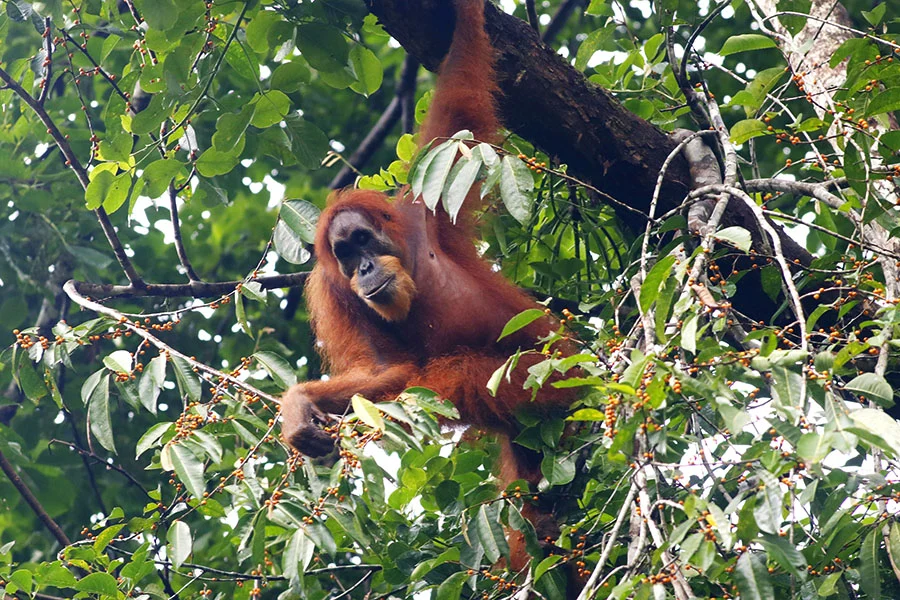
The thick, acrid haze of peat fires has once again blanketed the horizon of the Rawa Tripa peat swamp forest in Nagan Raya Regency, Aceh, signaling a deepening environmental catastrophe in one of Indonesia’s most vital ecological landscapes. Despite its status as a protected area under Aceh Regional Regulation (Qanun) Number 19 of 2013, which mandates the preservation of peat layers exceeding three meters in thickness, the region is currently experiencing a massive surge in illegal land clearing and recurring wildfires. This escalating crisis highlights a significant gap between regional environmental legislation and the reality of enforcement on the ground, as satellite data reveals a staggering acceleration in forest cover loss over the past five years.
According to the latest monitoring reports from the Forest, Nature, and Environment of Aceh Foundation (HAkA), the rate of deforestation in Rawa Tripa has shifted from a concerning trend to an all-out emergency. Lukmanul Hakim, the Geographic Information System (GIS) Manager at HAkA, reported on Monday, June 15, 2026, that the scale of forest cover loss has grown exponentially. In 2021, approximately 36 hectares of forest were lost. This figure rose to 69 hectares in 2022 and jumped significantly to 210 hectares in 2023. However, the most recent data shows a terrifying spike: 644 hectares were lost in 2024, followed by a massive 997 hectares throughout 2025. Cumulatively, from 2021 to 2025, Rawa Tripa has lost 1,955 hectares of its primary forest cover, a trend that threatens to erase the remaining sanctuary for endangered species and release millions of tons of stored carbon into the atmosphere.
A Structural Crisis: The Mechanics of Recurrent Fires
The current fire season in 2026 has already proven to be one of the most destructive in recent history. Data compiled by the APEL Green Aceh Foundation indicates that by mid-June 2026, approximately 334 hectares of the Rawa Tripa peatland had already been consumed by flames. Monitoring systems detected 332 distinct hotspots within this period alone. Rahmat Syukur, the Director of APEL Green, emphasized that these fires should not be viewed as mere seasonal accidents or natural occurrences driven by dry weather. Instead, he characterized the situation as a "structural problem" that repeats annually due to systemic failures in land management and law enforcement.
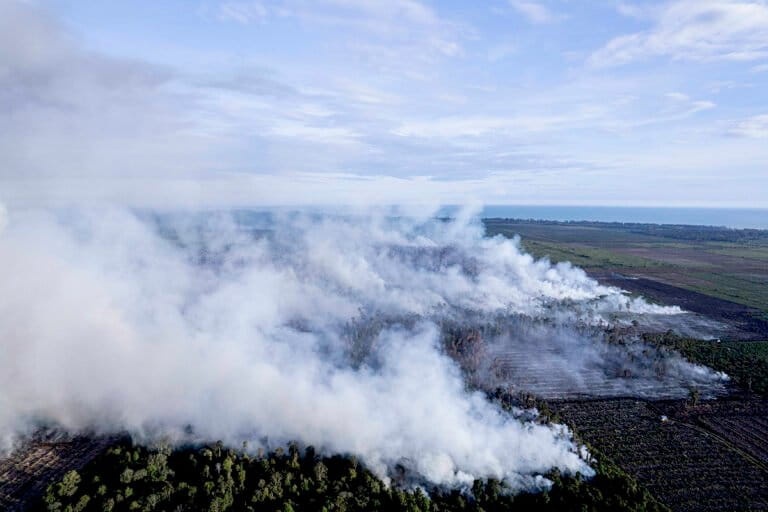
The fires are almost exclusively linked to human intervention. The process typically begins with the drainage of the peatland through the construction of illegal canals. Once the naturally waterlogged peat is dried out, it becomes highly flammable. This drainage is a precursor to land clearing for agricultural expansion, primarily for oil palm plantations. Syukur noted that the presence of heavy machinery in protected zones indicates that this is not the work of small-scale subsistence farmers, but rather an organized effort. In March 2026, the Nagan Raya District Police (Polres) successfully confiscated two excavators operating illegally within the Rawa Tripa area, suggesting the involvement of well-funded actors with significant networks.
Comparative Data: A 43-Fold Increase in Hotspots
The scale of the 2026 crisis is further illuminated by data from Pantau Gambut, an organization dedicated to monitoring Indonesian peatlands. Between January and May 2026, the organization detected 528 hotspots within the Rawa Tripa ecosystem. When compared to the same period in 2025, which saw only 12 hotspots, the data reveals a 43-fold increase in fire activity. This unprecedented surge suggests a coordinated "land-clearing rush," likely driven by high commodity prices and a perceived lack of consequences for environmental crimes.
Putra Saptian, a campaigner for Pantau Gambut, argues that the current regulatory framework is insufficient to deter these activities. While Aceh has its own Qanun, the lack of a comprehensive national Peatland Ecosystem Protection Bill (RUU Perlindungan Ekosistem Gambut) leaves local authorities with limited resources and fragmented legal standing. "Without a strong, unified legal framework, the state will remain trapped in a reactive cycle—constantly deploying firefighters to extinguish flames without ever addressing the root causes of the encroachment," Saptian stated. The absence of strict "command and control" mechanisms allows perpetrators to exploit the ambiguity of land ownership and the difficulty of monitoring remote swamp environments.
The Ecological Toll: Habitat Loss and Carbon Release
Rawa Tripa is often referred to as the "orangutan capital of the world" due to its historically high density of Sumatran orangutans (Pongo abelii). As a critical component of the Leuser Ecosystem, these peat swamps provide a unique habitat that cannot be easily replicated. However, the relentless fire and drainage cycles are pushing this critically endangered species toward local extinction. As the forest canopy disappears and the ground turns to ash, orangutans are forced into smaller, fragmented pockets of trees, making them vulnerable to starvation, human-wildlife conflict, and poaching.
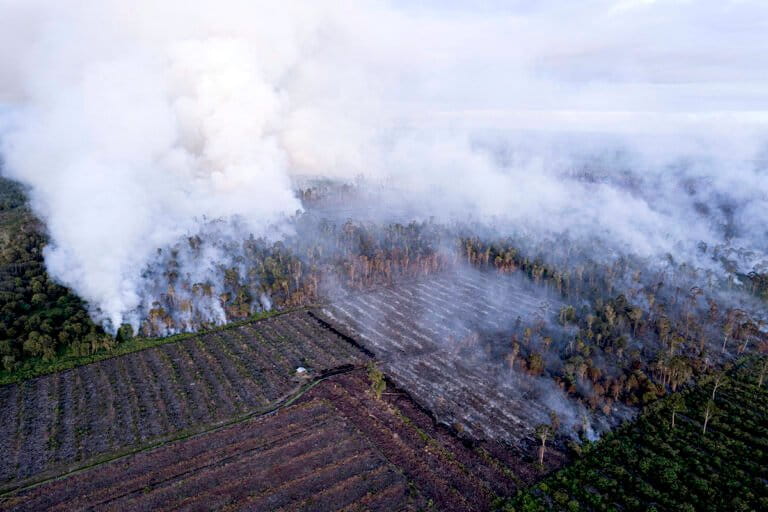
Beyond the loss of biodiversity, the destruction of Rawa Tripa has global implications for climate change. Peatlands are the world’s most efficient terrestrial carbon sinks. In Rawa Tripa, where the peat can reach depths of over five meters, the soil stores centuries of accumulated organic matter. When these lands are drained and burned, they transform from carbon sinks into carbon bombs. The smoke currently rising from Nagan Raya is not just a local health hazard; it represents the release of massive quantities of carbon dioxide and methane, contributing directly to global atmospheric warming.
Scientific Perspectives: Subsidence and Hydrological Collapse
Monalisa, a peatland expert and lecturer at the Faculty of Agriculture, Syiah Kuala University (USK), warns that the damage to Rawa Tripa may soon become irreversible. Peat is essentially a giant sponge made of water and organic debris. Once it is burned and dried, it undergoes a process called subsidence—the physical sinking of the land surface. "Gambut (peat) that is repeatedly burned loses its ability to hold water. This leads to a collapse of the local hydrological system," Monalisa explained.
The implications of subsidence are dire for the surrounding communities. As the land sinks, it becomes prone to prolonged flooding during the rainy season, as the natural "sponge" that once absorbed excess rainfall is gone. Conversely, during the dry season, the area becomes a tinderbox. Furthermore, the chemistry of the local water supply is altered. Fire and drainage increase the acidity of the water, which can kill off local fish populations and disrupt the livelihoods of traditional fishermen who rely on the swamp’s biodiversity.
Challenges in Emergency Response
The physical reality of the Rawa Tripa terrain makes firefighting an almost impossible task. Irfanda, the Head of the Nagan Raya Regional Disaster Management Agency (BPBD), noted that while teams have been deployed to the field, they are hampered by the lack of access roads and the unique nature of peat fires. Unlike surface forest fires, peat fires burn underground. Even when the visible flames are extinguished, the fire can continue to smolder several meters beneath the surface for weeks, only to resurface when the wind picks up.
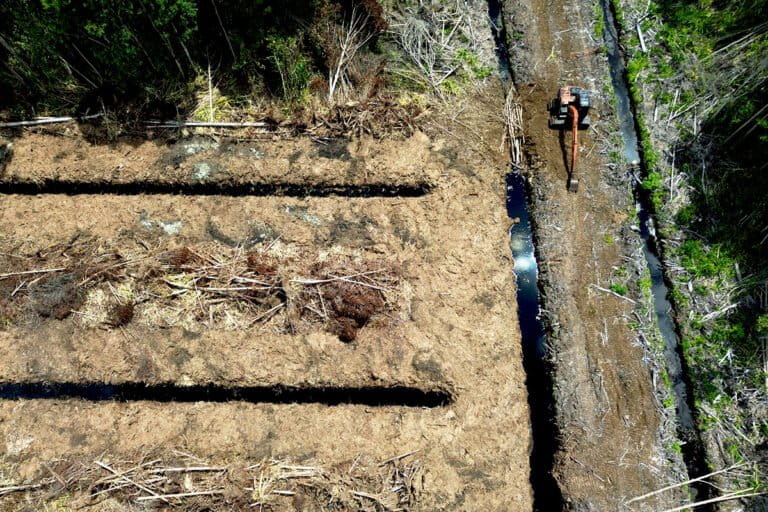
"Our teams are conducting ‘cooling’ operations to prevent the fire from spreading further underground, but the conditions are extremely difficult," Irfanda said. He also confirmed that a significant portion of the currently burning area had already been surreptitiously planted with young oil palm trees, confirming that the fires are a tool for illegal land conversion.
The front line of defense often falls to the Masyarakat Peduli Api (MPA) or Fire-Aware Community groups. These are volunteers from local villages who risk their lives to protect their surroundings. However, Monalisa pointed out that these groups are severely under-equipped. "They are using very basic tools. If there is no immediate water source nearby, they are virtually helpless. There is a desperate need for the government to provide better technology, such as high-pressure pumps and aerial firefighting support (water bombing) when the situation reaches this level of severity," she added.
The Path Forward: Restoration and Enforcement
To save what remains of Rawa Tripa, experts agree that the government must move beyond temporary fire suppression. A multi-pronged approach is required:
- Strict Law Enforcement: Authorities must investigate the "beneficial ownership" behind the land clearing. Confiscating excavators is a start, but the financiers funding these operations must be held legally and financially accountable.
- Canal Blocking and Rewetting: To stop the fires, the peat must be made wet again. This requires the systematic blocking of illegal drainage canals to restore the natural water table. Monalisa suggested that companies operating in the periphery of Rawa Tripa must be audited to ensure they are fulfilling their legal obligation to maintain canal blocks.
- Alternative Livelihoods: Communities living near the peatland need sustainable economic alternatives that do not involve burning. Monalisa proposed "paludiculture" (farming on wet peatlands) or planting fire-resistant crops like pineapple as "firebreaks" to protect village lands.
- Policy Integration: The Aceh government must harmonize its regional Qanun with national environmental standards and ensure that the protection of Rawa Tripa is prioritized in the provincial spatial plan (RTRW).
The ongoing crisis in Rawa Tripa is a stark reminder that environmental protection laws are only as strong as their enforcement. If the current trajectory continues, the 1,955 hectares lost since 2021 will be just the beginning of the end for one of Southeast Asia’s most important ecosystems. The smoke over Nagan Raya is a call for immediate, structural intervention before the "capital of the orangutan" is reduced to a barren, smoldering wasteland. In the words of Putra Saptian, "The state cannot keep waiting for rain to solve a problem created by human greed; we need a system that prevents the first match from being struck."