Nila Kartika Wati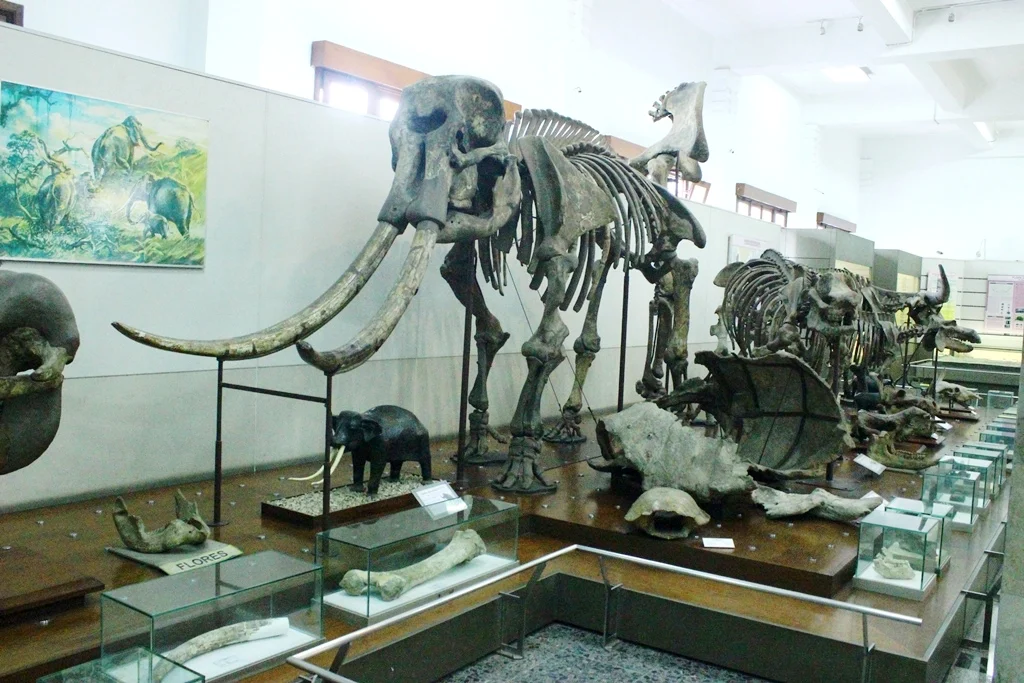
The lush, verdant landscape of Flores, an island in the Indonesian archipelago, was once a drastically different environment than the one observed today. Approximately 100,000 years ago, the region was characterized by dense, humid tropical forests and a network of perennial rivers that provided a stable ecosystem for a variety of prehistoric life forms. The monsoon seasons were predictable and intense, ensuring a high and consistent volume of annual rainfall. This hydrological stability supported not only the local flora and fauna but also a unique lineage of early hominins known as Homo floresiensis, colloquially referred to as the "Hobbits" due to their diminutive stature. However, a significant climatic shift roughly 61,000 years ago appears to have fundamentally altered this habitat, leading to the eventual disappearance of these humans from their long-term residence at the Liang Bua cave.
A comprehensive study published in the journal Communications Earth & Environment in December 2025 provides new insights into this prehistoric mystery. Led by Michael K. Gagan and an international team of researchers from Australia, the United States, China, and Indonesia, the study reconstructs the paleoclimate of Flores to understand the environmental pressures that influenced the habitation patterns of H. floresiensis. The research suggests that a prolonged and extreme period of aridification—specifically an intensification of the summer dry season—depleted the freshwater resources of the region, forcing both the hominins and their primary prey to abandon the area.
The Paleoclimatic Reconstruction of Liang Bua
For decades, the disappearance of Homo floresiensis from the archaeological record at Liang Bua around 50,000 to 60,000 years ago has been a central question in paleoanthropology. While previous theories often weighed the potential impact of volcanic activity or the arrival of modern humans (Homo sapiens), the role of climate-driven water scarcity remained under-researched. To bridge this gap, the research team analyzed speleothems—mineral deposits such as stalagmites—found in the nearby Liang Luar cave, situated just 660 meters from Liang Bua.
By examining a specific stalagmite designated as LR09-K2, the scientists were able to measure the ratios of magnesium to calcium and the variations in oxygen isotopes. These chemical signatures act as a "paleo-rain gauge," recording the intensity of rainfall and the duration of dry seasons over tens of thousands of years. The team complemented this data by analyzing the oxygen isotope ratios in the tooth enamel of Stegodon florensis insularis, an extinct species of dwarf elephant that served as a staple food source for the Hobbit population.
The findings revealed a steady decline in annual rainfall starting approximately 76,000 years ago. This drying trend culminated in a period of extreme "summer aridification" between 61,000 and 55,000 years ago. During this window, the Wae Rancang River, which had previously flowed year-round near Liang Bua, likely became seasonal or dried up entirely during the summer months. This environmental stress created a precarious situation for the inhabitants of the cave, who relied on the river for drinking water and for the animals it attracted.
The Collapse of the Predator-Prey Relationship
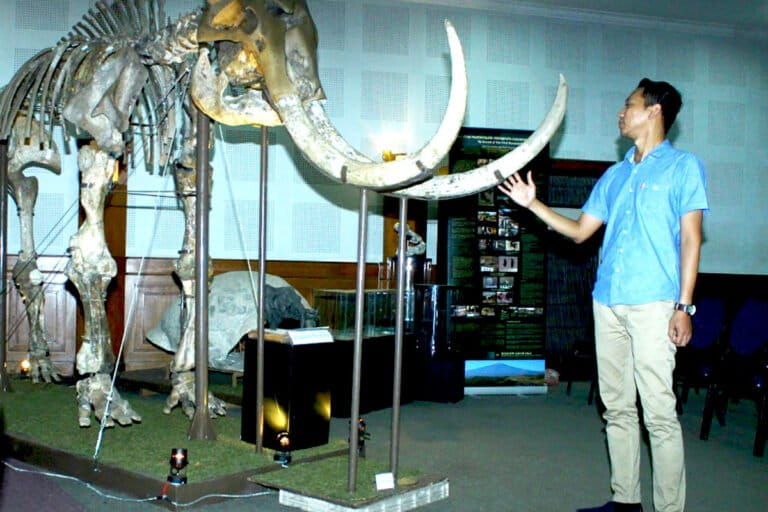
The disappearance of H. floresiensis from Liang Bua coincides almost exactly with a sharp decline in the presence of Stegodon remains in the cave’s stratigraphic layers. According to the fossil record, these dwarf elephants and the small-bodied hominins had coexisted on the island for nearly one million years, surviving various environmental fluctuations. However, the extreme drought of 61,000 years ago appears to have been a breaking point.
Researchers hypothesize a "migration cascade" triggered by the lack of water. Large mammals like the Stegodon are highly sensitive to water availability. As the local vegetation withered and the Wae Rancang River failed, the Stegodon populations likely migrated to other parts of the island—perhaps higher elevations or coastal regions where water was more readily available. Because H. floresiensis was a specialized hunter of these dwarf elephants, the hominins would have had little choice but to follow their primary food source.
"A plausible scenario is that increased summer water stress forced the Stegodon to migrate to better habitats, followed by H. floresiensis in search of their preferred prey," the researchers noted in the study. This suggests that the "disappearance" of the Hobbits from Liang Bua was not necessarily an extinction event at that specific moment, but rather a forced relocation. However, the increased competition for dwindling resources in new habitats may have accelerated their eventual decline.
Revising the Timeline of Human Interaction
One of the most significant implications of this study is its contribution to the timeline of human migration through the Indonesian archipelago. For years, scientists debated whether Homo sapiens played a direct role in the extinction of H. floresiensis through conflict or resource competition. Early estimates suggested the two species might have overlapped for thousands of years.
However, revised dating of the Liang Bua site indicates that H. floresiensis vanished from the cave around 60,000 to 50,000 years ago, while the earliest evidence of modern humans at the same site does not appear until approximately 46,000 years ago. The new climate data supports this gap, showing that the environmental conditions became hostile to the Hobbits well before Homo sapiens established a presence in the area. This suggests that climate change, rather than direct human interference, was the primary catalyst for the abandonment of Liang Bua.
The Unique Biology of the "Hobbit"
The discovery of Homo floresiensis in 2003 remains one of the most shocking finds in the history of archaeology. The initial discovery of a nearly complete skeleton of an adult female, designated LB1, revealed a human relative that stood only about 106 centimeters (3 feet 6 inches) tall with a brain volume of approximately 400 cubic centimeters—similar to that of a chimpanzee. Despite their small brains, the Hobbits were sophisticated enough to manufacture stone tools, use fire, and coordinate hunts for large game.
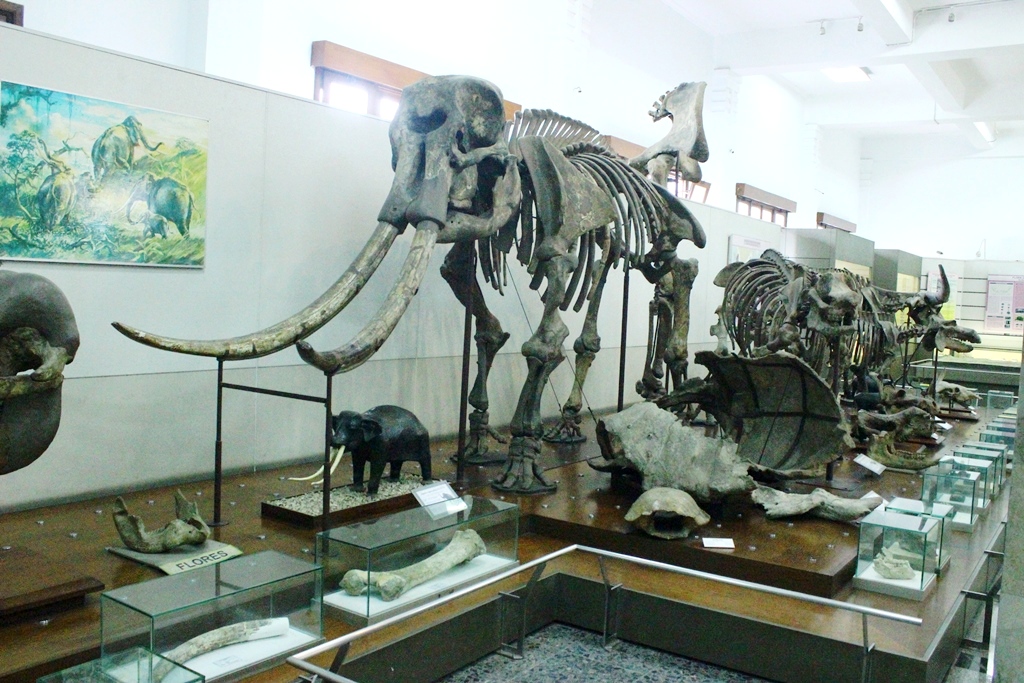
The presence of H. floresiensis on Flores is a classic example of "island dwarfism" or the "Island Rule." This biological phenomenon occurs when large species become smaller over generations due to limited food resources in an isolated environment, while small species may become larger (such as the Leptoptilos robustus, a giant stork that also lived on Flores).
The ancestry of the Hobbit remains a subject of intense debate. Some researchers argue they are a dwarfed lineage of Homo erectus that arrived on the island and evolved in isolation. Others suggest they may be descended from an even more primitive ancestor, such as Homo habilis or Homo georgicus, which would imply a much earlier migration out of Africa than previously recorded. Regardless of their origin, the environmental data from the Gagan study underscores the fragility of such specialized island populations when faced with rapid ecological shifts.
Broader Implications and the Future of Paleoanthropology
The findings at Liang Bua serve as a stark reminder of the power of climate change to reshape the course of human history. The "summer aridification" identified by the researchers represents a significant ecological threshold that the island’s inhabitants could not overcome. The study highlights how the loss of a single critical resource—freshwater—can dismantle an entire ecosystem, forcing the migration of megafauna and the eventual displacement of human populations.
From a modern perspective, this research offers a cautionary tale. As global climate patterns continue to shift in the 21st century, understanding how prehistoric populations responded to environmental stress is vital. The transition of Flores from a lush tropical paradise to a dry, challenging landscape mirrors contemporary concerns regarding habitat loss and water security.
Furthermore, the study emphasizes the importance of multidisciplinary research in archaeology. By combining traditional excavation with advanced geochemical analysis of speleothems and dental enamel, scientists can reconstruct the "invisible" factors—such as rainfall and temperature—that do not leave behind stone tools or bones but are nonetheless essential to understanding the survival of a species.
As researchers continue to explore other caves and archaeological sites across Flores and the neighboring islands of Wallacea, they hope to find where H. floresiensis went after leaving Liang Bua. Whether they survived in small, isolated pockets of the island for several more millennia or succumbed quickly to the pressures of a drying world remains a mystery. What is clear, however, is that the story of the Hobbit is inextricably linked to the climate of the island they called home for nearly a million years. The disappearance of the "Hobbit" from Liang Bua was not a sudden catastrophe, but a forced exodus driven by the relentless drying of a once-fertile land.