Nila Kartika Wati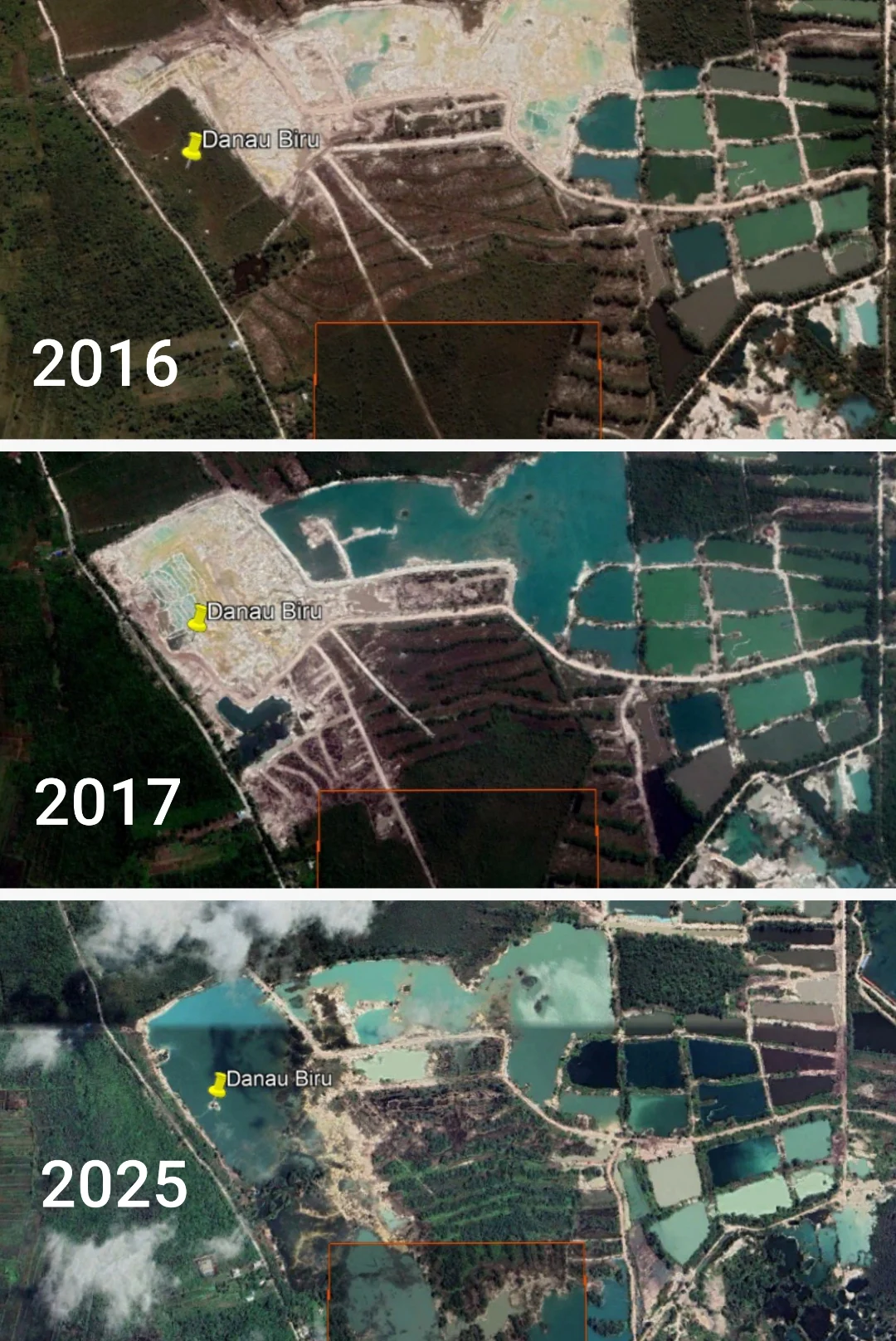
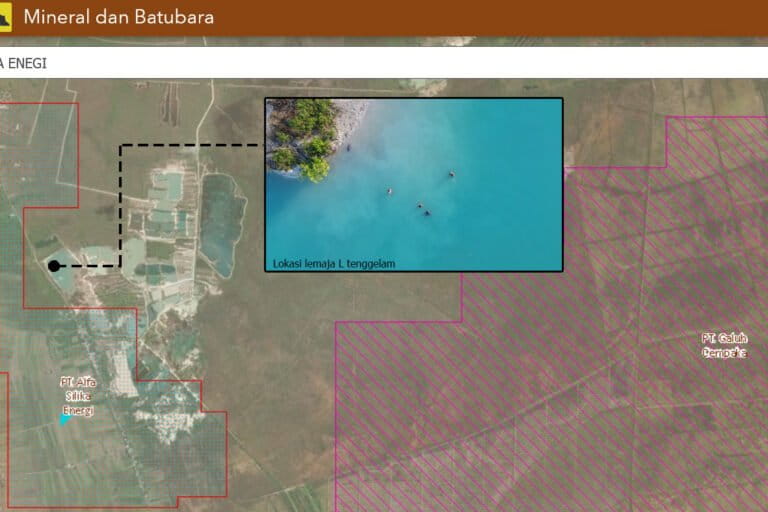
The viral allure of the "Danau Biru" or Blue Lake in Tambak Padi Village, located within the Beruntung Baru District of Banjar Regency, South Kalimantan, has transformed a once-neglected industrial wasteland into a bustling, yet perilous, tourist destination. In recent months, social media platforms have been flooded with images of the site’s striking turquoise waters and stark white sandbanks, drawing dozens of visitors daily from both local and neighboring regions. However, beneath the aesthetic appeal of this "tourist spot" lies a grim reality: the site is an abandoned C-class mineral excavation pit, a remnant of sand and quartz mining that was never properly reclaimed. The recent death of a teenager has once again cast a shadow over the unregulated popularity of these man-made lakes, highlighting a systemic failure in mining oversight and public safety.
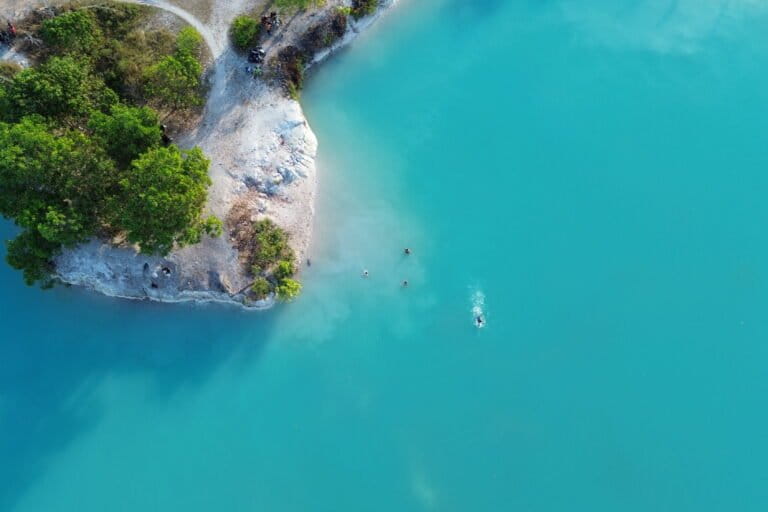
On a typical afternoon, the shores of Danau Biru are dotted with visitors lounging on the sand to catch the sunset, while others take to the water to swim. On one such day, a teenager was observed guiding a group of nine people through the shallows, wading and swimming toward a small mound of earth resembling an island located approximately 44 meters from the shore. The atmosphere of leisure stands in haunting contrast to the tragedy that occurred just three days prior. On June 22, 2026, a young male identified by the initial L, a resident of the Kertak Hanyar District, disappeared beneath the surface of the same water. His death is the latest in a series of fatalities that environmental advocates argue are entirely preventable.
Chronology of a Tragedy: The Search for L
The disappearance of the teenager was first reported to the Banjar Regency Disaster Management Agency (BPBD) at 3:55 PM local time (Wita). According to Wasis Nugraha, the Chief Executive of BPBD Banjar, eyewitness accounts suggested the incident actually occurred around noon. By the time authorities were notified, the victim had already been missing for nearly four hours, significantly diminishing the chances of a successful rescue.
The BPBD’s Rapid Response Team immediately coordinated with relevant agencies to conduct an initial assessment of the site. Arianto, the Operations Head of the Banjarmasin Search and Rescue (Basarnas) Office, noted that the official search operation commenced at 5:00 PM following a tactical briefing. The joint search team utilized surface sweeping and diving maneuvers at the point where the victim was last seen. Within 20 minutes of entering the water, divers located the teenager’s body approximately 10 meters from the shoreline.
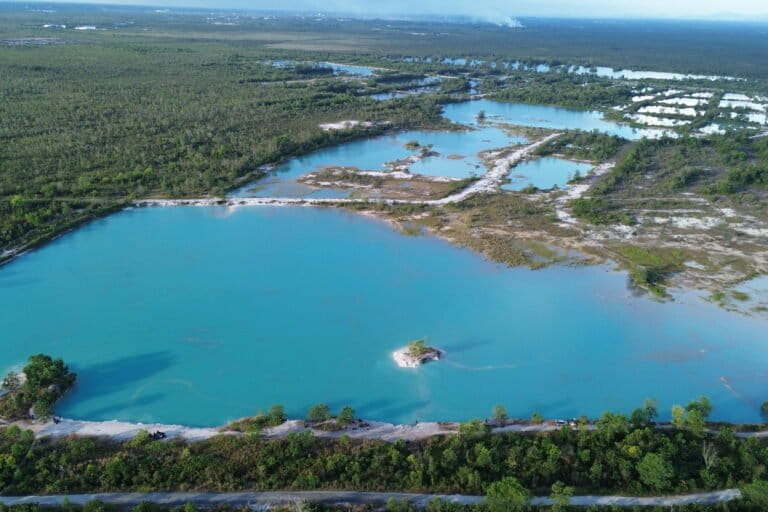
Despite the fatal outcome, the physical conditions of the lake at that specific point seemed deceptively manageable. "The depth was only about two to three meters," Arianto explained. However, the search was hampered by extremely poor visibility. The bottom of the pit is composed of thick, loose mud that, when disturbed, clouds the water instantly, creating a disorienting environment for both swimmers and rescuers. The tragedy has prompted a stern warning from Basarnas, identifying Danau Biru as a high-risk zone for drowning, particularly as it remains an active site for photography and recreational swimming.
A Pattern of Negligence: SAR Data and Recurring Fatalities
The death of L is not an isolated incident but part of a documented surge in drownings at abandoned mining sites across South Kalimantan. Data provided by the Banjarmasin Search and Rescue Office reveals a disturbing trend. Between 2023 and 2025, there were at least seven major SAR operations specifically targeting victims in former mining pits.
The timeline of these incidents illustrates the geographic spread of the danger:
- July 17, 2023: A fatal fall occurred in a former gold mining excavation within the Gunung Lintang protected forest, Sungai Jelai Village, Tanah Laut Regency.
- June 20, 2024: A drowning was recorded at Danau Biru Baroh in Pengayuan Village, Banjarbaru City, resulting in a fatality.
- September 16, 2024: Two separate incidents occurred on the same day. In Madang Village, Hulu Sungai Selatan, a resident died after becoming trapped by limestone rocks. Meanwhile, in Sumber Jaya Village, Tanah Bumbu, another victim was found dead after drowning in a former excavation pit.
- November 25, 2024: A resident went missing near a mining lake in Angsana District, Tanah Bumbu. Despite an extensive search, the victim was never found, and the operation was eventually terminated.
- July 25, 2025: Two children lost their lives after falling into an abandoned pit in Damit Hulu, Batu Ampar District, Tanah Laut Regency.
Arianto noted that in his two-year tenure in South Kalimantan, he has overseen operations for approximately ten drowning victims in various mining excavations. These figures, however, may only represent the tip of the iceberg, as many incidents in remote areas go unreported or are handled locally without the involvement of Basarnas.
Environmental Advocacy and the Scale of the Crisis
The Indonesian Forum for the Environment (Walhi) in South Kalimantan has been tracking these fatalities with increasing alarm. Raden Rafiq Sepdian Fadel Wibisono, the Executive Director of Walhi Kalsel, stated that the teenager L is the 23rd victim to die in a mining pit in the province since 2019. "This year alone, we have recorded three drownings in former mining holes, all of whom were children," Rafiq said. He emphasized that the victims are disproportionately children, teenagers, and women, who are often unaware of the structural and chemical hazards of these sites.
The proliferation of these "death pits" is a direct result of the massive scale of mining in the region. By 2024, the estimated total area of abandoned mining holes in South Kalimantan reached 53,590 hectares, with 814 distinct pits scattered across eight regencies. Banjar Regency holds the third-highest concentration of these hazards, with 117 pits, trailing only behind Tanah Bumbu and Tanah Laut. Rafiq pointed out a particularly concerning irony: hundreds of these holes are located outside of official concession areas, indicating a massive footprint of illegal or "unlicensed" mining activity (PETI).
The Scientific Reality: Acidic Waters and Thermal Shock
To understand why these lakes are so dangerous, Mongabay conducted an independent water quality assessment at Danau Biru using a water quality tester. The results, analyzed by Murjani, Chairman of the Association of Indonesian Environmental Health Experts (Pertalindo) Kalsel, suggest that the water is far from the pristine oasis it appears to be in photographs.
The measured pH level of the water was 5.14, indicating a moderately acidic environment. According to Government Regulation (PP) No. 22/2021, the standard pH for lakes and rivers should range between 6 and 9. Acidic water of this level is not suitable for direct consumption and can cause skin and eye irritation. While the electrical conductivity (EC) was relatively low at 38 µS/cm—suggesting a low concentration of dissolved minerals compared to heavy acid mine drainage—the low Total Dissolved Solids (TDS) of 20 ppm indicates a lack of the natural mineral balance found in healthy aquatic ecosystems.
Perhaps the most significant physical hazard identified was the water temperature. While the surface temperature was a warm 31.3°C, Murjani warned that temperatures in mining pits drop drastically with depth. "The deeper you go, the colder it gets. This sharp temperature gradient can trigger muscle cramps or even cardiac shock in swimmers who are not acclimated to sudden changes," Murjani explained. Furthermore, the lack of oxygen at deeper levels, combined with the potential presence of toxic gases like carbon dioxide (CO2) and hydrogen sulfide (H2S), poses a silent threat to anyone struggling to stay afloat.
The physical structure of the pit adds another layer of danger. Unlike natural lakes, mining pits have unstable, steep slopes and bottoms covered in "quick-mud" or silt. A swimmer who touches the bottom may find their feet trapped, making it impossible to resurface.
Legal Limbo and the Persistence of Illegal Mining
The response from law enforcement has been a source of frustration for environmental activists. Following the death of L, the Beruntung Baru Sector Police (Polsek) temporarily cordoned off the area with police tape. However, Inspector Deden Aprianto Lesmana, the local Police Chief, confirmed that the tape was removed shortly after the investigation because the drowning was deemed an accident rather than a criminal act.
While the police claimed to have installed warning banners and stickers, none were visible during recent site visits. Authorities speculated that the banners might have been blown away by the wind during the dry season. Regarding the legality of the mining site itself, the police stated that the matter falls under the jurisdiction of the Banjarbaru City Police (Polres).
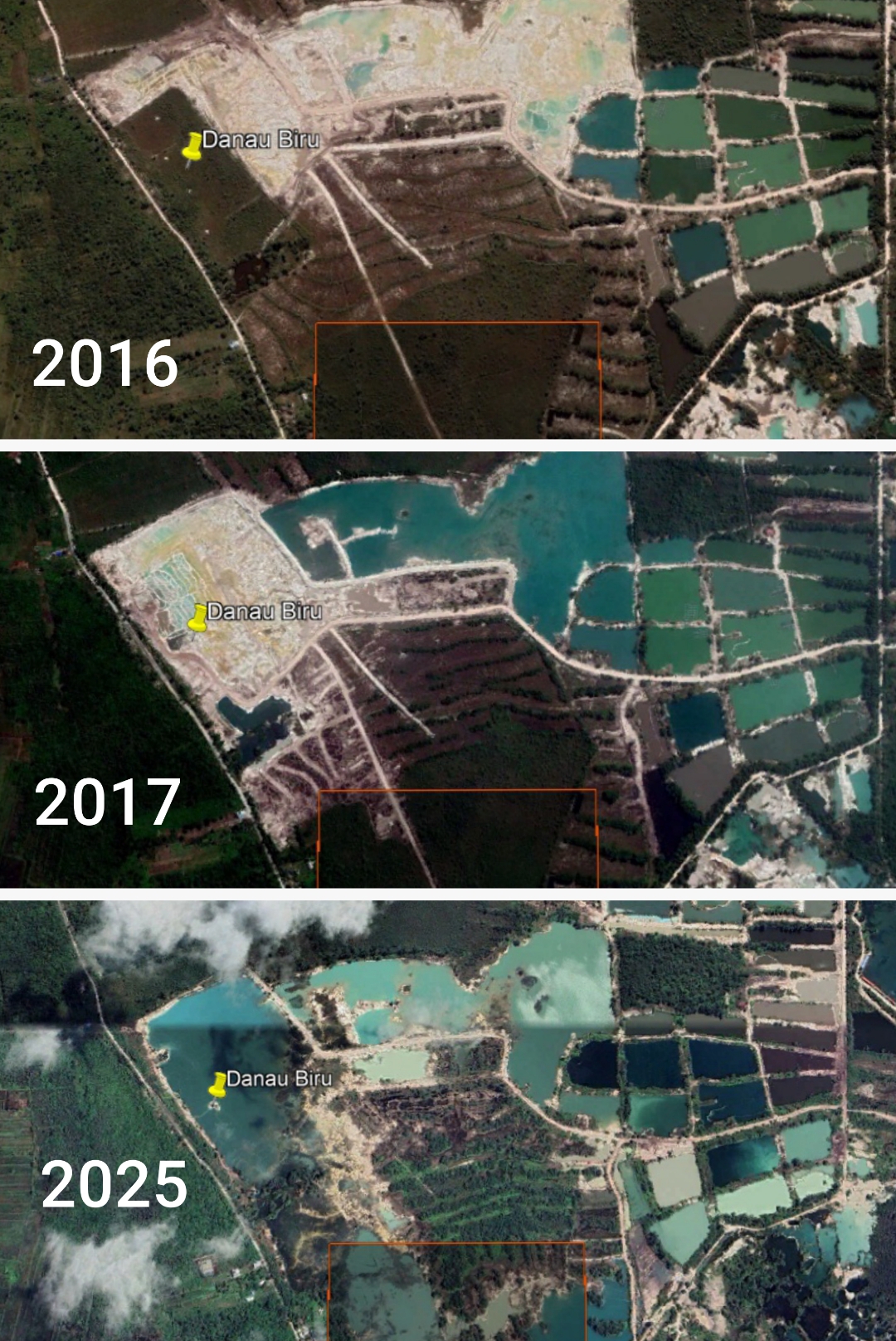
Despite claims by police spokespersons that no active mining was found during recent inspections, field observations tell a different story. Long pipes for water suction still crisscross the roads, and numerous sets of traditional mining equipment remain standing at various points. Dozens of trucks continue to transport material in and out of the area, with activity peaking in the late afternoon and evening. Historical satellite imagery from Google Earth confirms that these pits began to open in 2017 and have expanded significantly through 2025.
Walhi Kalsel argues that the weak enforcement of mining laws and the lack of oversight on "community mining" have allowed these illegal operations to flourish. "This is the consequence of lax law enforcement regarding illegal mining," Rafiq stated. "We shouldn’t have to wait for more victims to act."
Conclusion: A Call for Reclamation and Accountability
The "Blue Lakes" of South Kalimantan are a stark reminder of the environmental and human cost of an extractive economy that fails to clean up after itself. Under Indonesian law, mining companies are required to set aside reclamation funds and restore land once operations cease. However, in the case of illegal or small-scale "Galian C" mining, these regulations are rarely followed, leaving the landscape scarred with beautiful but deadly traps.
As Danau Biru continues to draw crowds seeking the perfect social media post, the risk of another tragedy remains high. Experts argue that until the government mandates the fencing of these pits, implements strict reclamation schedules, and holds landowners accountable for safety, the death toll will continue to rise. For now, the "Blue Lakes" remain a paradox: a viral sensation on the surface, and a silent graveyard beneath.