Azin Asro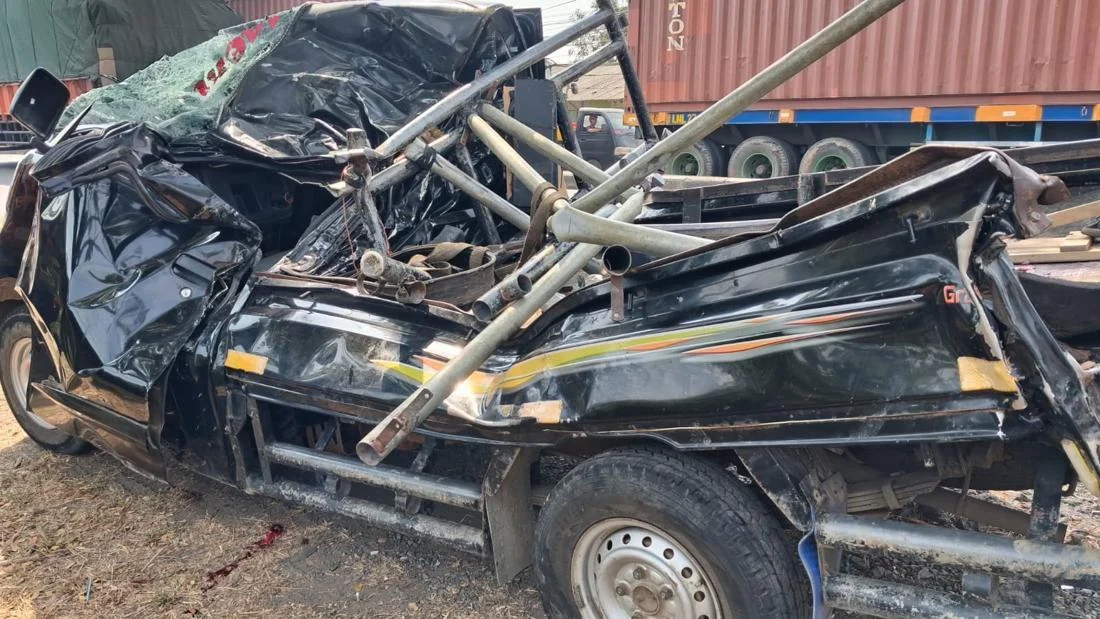
A devastating traffic accident in Indramayu, West Java, has once again brought the dangerous practice of using open-bed pickup trucks for passenger transport into the national spotlight after a collision claimed the lives of 12 individuals. The incident, which involved a pickup truck carrying more than a dozen passengers and a heavy-duty tronton truck, serves as a grim reminder of the high stakes associated with violating traffic safety regulations and the inherent risks of modifying the intended use of commercial vehicles. The tragedy has prompted urgent calls from law enforcement and transportation experts for a fundamental shift in public behavior and stricter enforcement of existing traffic laws to prevent further loss of life on Indonesia’s roadways.
The Chronology of the Indramayu Tragedy
The fatal collision occurred in the Kiajaran Kulon area of Indramayu, a region known for its busy transit routes. According to official reports and eyewitness accounts, the sequence of events began when a pickup truck, bearing the registration number E 8559 RB, was traveling along the main road. The vehicle was driven by an individual identified as Warsidi and was carrying approximately 12 to 15 passengers in the rear cargo bed—a space designed exclusively for goods, lacking any form of passenger restraints or safety enclosures.
As the pickup truck approached a U-turn point at Kiajaran Kulon, the driver, Warsidi, attempted to maneuver the vehicle to change direction. At that precise moment, a large tronton truck with the registration number B 9260 TEV, operated by Deden Ibad, was traveling in the same direction. Due to the proximity of the vehicles and the nature of the maneuver, the tronton truck was unable to brake in time, resulting in a high-velocity rear-end collision.
The force of the impact was catastrophic. Because the passengers in the back of the pickup were not secured and were sitting in an open area, the kinetic energy of the collision caused nearly all of them to be violently ejected from the vehicle. Victims were thrown onto the asphalt, many sustaining direct impacts from the following vehicle or the road surface itself. Initial reports from the scene confirmed that three individuals died instantly due to the severity of their injuries.
Emergency services and local residents rushed to the scene to assist the survivors. The remaining passengers, many of whom were in critical condition, were transported to nearby medical facilities. However, the struggle to save them proved difficult; nine additional victims succumbed to their injuries either during transit or while receiving emergency medical treatment at the hospital. Medical professionals noted that the majority of the fatalities were caused by severe traumatic brain injuries and multiple blunt-force traumas, consistent with being thrown from a moving vehicle at high speeds.
Official Response and the Violation of Vehicle Utility
In the wake of the accident, the Korlantas Polri (the Indonesian National Police Traffic Corps) has been vocal about the preventable nature of this tragedy. AKBP Sandhi Wiedyanoe, the Head of the Data Collection, Processing, and Presentation Section (Kasi Pullahjianta) of the Sub-Directorate of Accident Management, emphasized that the primary cause of the high fatality rate was the blatant misuse of the vehicle.
"This accident was fundamentally caused by a violation of traffic regulations," AKBP Sandhi stated during a press briefing. "The reason we are seeing such a high number of casualties is that a cargo vehicle was utilized in a manner that contradicts its intended design. These vehicles are engineered to transport goods, not human beings."
The police official highlighted that when passengers are placed in an open cargo bed, they are stripped of all modern safety protections. Unlike the cabin of a car, which is equipped with seatbelts, airbags, and a reinforced frame to protect occupants, the rear of a pickup truck offers no protection against ejection or impact. AKBP Sandhi noted that the Indramayu case should serve as a stark lesson for the public. He pointed out that while the convenience of transporting a large group in a single trip might seem appealing to some families, the risk of "fatality amplification" during an accident is too high to ignore.
"The greatest challenge we face is not just law enforcement, but changing the deeply rooted culture of our society," he added. "We must work alongside local governments and all stakeholders to conduct massive, consistent education regarding road safety. People need to understand that a pickup truck is not a substitute for a bus or a passenger car."
Legal Framework and the "Dilemma of Convenience"
The use of open-bed trucks for passenger transport is a long-standing issue in Indonesia, often surfacing during holiday seasons, religious festivals, or local village events. Djoko Setijowarno, a prominent transportation observer and member of the Advisory Board of the Indonesian Transportation Society (MTI), described the phenomenon as a "classic and complex dilemma."
According to Setijowarno, the practice persists despite clear legal prohibitions because it sits at the intersection of economic necessity, cultural habits, and a lack of affordable public transportation in rural areas. However, from a legal standpoint, the rules are unambiguous.

The primary regulation governing this issue is Law No. 22 of 2009 concerning Traffic and Road Transport (UU LLAJ). Specifically, Article 137, Paragraph (4) explicitly states that cargo vehicles are prohibited from being used to transport people. While there are narrow exceptions—such as in emergency situations, for disaster relief, or for specific military and police operations—the general public use for family outings or group travel does not fall under these categories.
Setijowarno explained the tiered legal consequences for drivers who violate these rules:
- Basic Violation (Article 303): Any driver found using a cargo vehicle to transport people outside of the allowed exceptions can face a maximum of one month in prison or a fine of up to Rp 250,000.
- Negligence Resulting in Damage or Injury (Article 310): If a misuse of the vehicle leads to an accident, the legal stakes rise significantly. If the accident causes minor injuries or property damage, the driver faces up to one year in prison. If the accident results in serious injury, the penalty increases to five years in prison or a Rp 10 million fine.
- Negligence Resulting in Death: In cases like the Indramayu tragedy where lives are lost, the driver can be charged under Article 310, Paragraph (4), which carries a maximum sentence of six years in prison and a fine of Rp 12 million.
"The law is meant to protect lives," Setijowarno noted. "When a driver chooses to put a dozen people in the back of a truck, they are assuming a level of risk that the vehicle was never meant to handle. When an accident occurs, the driver is held responsible for that negligence."
Socio-Economic Context and the Need for Structural Solutions
While law enforcement focuses on the driver’s responsibility, many experts argue that the Indramayu accident highlights a broader structural failure in the transportation network. In many parts of West Java and other Indonesian provinces, public transport options are either non-existent or prohibitively expensive for large, low-income families.
For many, the pickup truck is a multipurpose tool. It is used for farm work during the week and becomes the only viable means of transport for family gatherings or trips to the beach on the weekends. This "culture of convenience" is driven by economic reality. However, as the Indramayu incident proves, the "savings" found in using a pickup truck are often paid for in human lives.
To address this, transportation analysts suggest a multi-pronged approach:
- Improved Rural Transit: Local governments need to subsidize or encourage the development of safe, affordable passenger transport options that can accommodate groups.
- Stricter Roadside Inspections: Police presence at known U-turn points and popular travel routes needs to be increased to intercept misused vehicles before they reach high-speed corridors.
- Public Awareness Campaigns: Socialization should not just happen in cities but must reach the village level, involving local leaders (Kepala Desa) to discourage the use of "mobil bak terbuka" for passengers.
Analysis of Safety Implications
From a technical perspective, the dynamics of a pickup truck make it one of the most dangerous places for a human to be during a collision. Most modern pickups are designed with a stiff chassis to handle heavy loads. This stiffness means that in a rear-end collision, the force of the impact is transferred directly through the frame rather than being absorbed by crumple zones.
Furthermore, passengers in the cargo bed have a high center of gravity and no lateral support. Even a sharp turn or sudden braking—without a collision—can cause a passenger to fall out. In the Indramayu case, the tronton truck’s mass was significantly higher than that of the pickup. When a vehicle of such massive weight hits a smaller one, the acceleration change is instantaneous and violent, effectively turning the passengers into unguided projectiles.
The medical data from the Indramayu disaster also points to the lack of "secondary protection." In a standard car, the interior padding and seats provide a second layer of defense. In an open bed, the first thing a victim hits is usually the metal floor of the truck or the hard surface of the road, leading to the high rate of "instant deaths" reported by authorities.
Conclusion
The loss of 12 lives in Indramayu is a national tragedy that underscores a persistent failure to prioritize safety over convenience. While the driver of the pickup may face significant legal repercussions, the event serves as a call to action for the government to address the underlying causes of why such practices continue.
As the Korlantas Polri and transportation experts have indicated, the path forward requires a combination of strict legal enforcement, the provision of better public transport alternatives, and a massive effort to shift the cultural mindset. Until the sight of a pickup truck filled with people is viewed as a life-threatening emergency rather than a common occurrence, the roads of Indonesia will continue to witness such preventable heartbreaks. The Indramayu accident must be the final warning that leads to a safer, more regulated future for all road users.