Azin Asro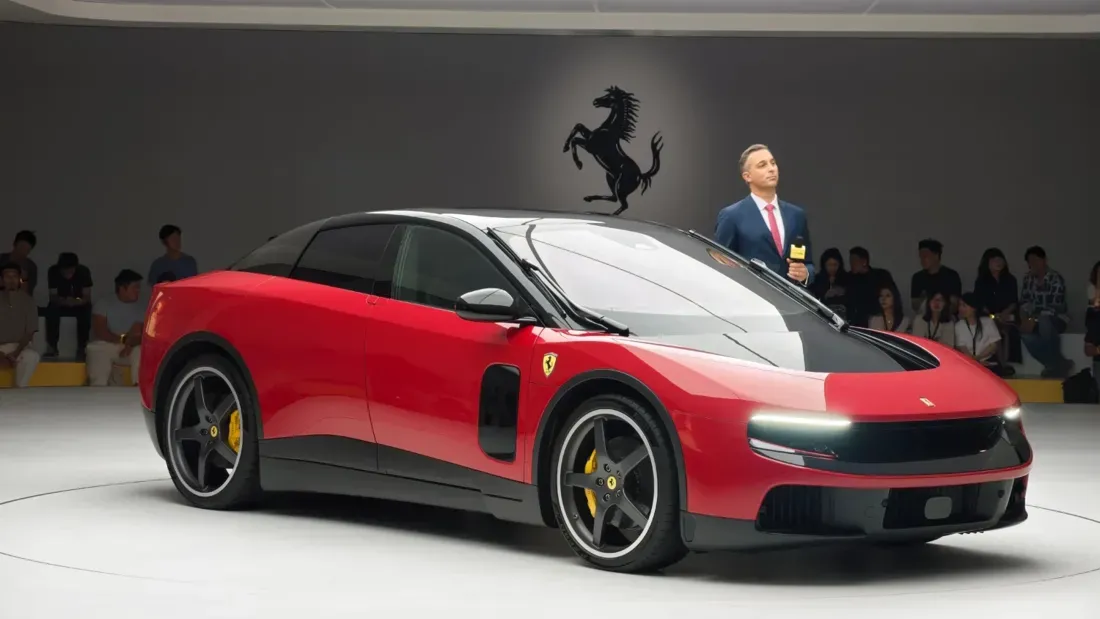
The global automotive landscape witnessed a significant pivot in the luxury electric vehicle (EV) sector as Ferrari officially introduced the Luce EV to the Chinese market, marking a high-stakes gamble for the Maranello-based manufacturer. Despite facing a wave of international criticism regarding its aesthetic direction and the perceived abandonment of its internal combustion heritage, the Italian marque has successfully navigated its entry into China—often referred to as the "tiger’s den" for electric mobility due to its fierce domestic competition and sophisticated consumer base. Early reports indicate that the move, while risky, has yielded immediate commercial results, though the long-term impact on Ferrari’s brand equity remains a subject of intense debate among industry analysts and enthusiasts alike.
Strategic Entry into the Chinese Market
China has long been a critical pillar for Ferrari’s global sales strategy, but the introduction of the Luce EV presented a unique set of challenges. The vehicle arrived in Chinese showrooms with a starting price of 3.98 million yuan, approximately equivalent to Rp 10.5 billion. In a move that surprised many industry observers accustomed to Ferrari’s rigid pricing structures, the vehicle was launched with an unexpected 7 percent discount. This pricing strategy was viewed by some as a calculated maneuver to gain traction in a market saturated with high-performance electric offerings from local giants such as BYD’s Yangwang and Geely’s Zeekr.
The initial allocation for the Chinese market was strictly limited to 88 units. The number eight is traditionally associated with wealth and good fortune in Chinese culture, a detail that suggests Ferrari’s marketing team was keen on tailoring the launch to local sensibilities. Despite the global controversy surrounding the car’s debut, the entire 88-unit quota was reportedly sold out almost immediately following the official launch. This rapid sell-out suggests that while the "purists" in Europe and North America may be skeptical of a silent Ferrari, the appetite for the brand’s first mass-produced electric supercar remains robust among China’s elite tech-savvy buyers.
A Chronology of Controversy: From Debut to Market Launch
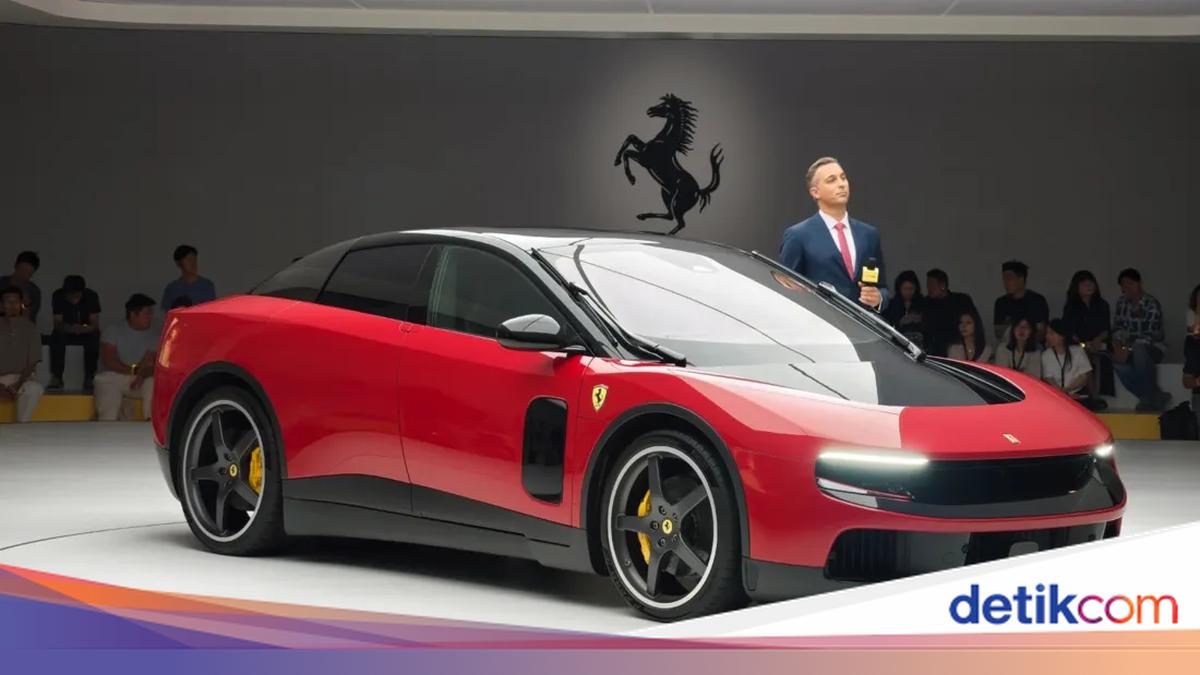
The journey of the Ferrari Luce EV began with its highly anticipated global debut in May 2026. As the first fully electric vehicle designed for mass production by the Prancing Horse, the Luce EV was intended to be the standard-bearer for Ferrari’s transition toward a sustainable future. However, the unveiling did not go as planned. Instead of the typical adulation that accompanies a new Ferrari launch, the Luce EV was met with what analysts have termed "design hate."
Critics argued that the Luce EV’s silhouette and styling cues moved too far away from the exotic, aggressive, and emotional design language that has defined Ferrari supercars for decades. The departure from the traditional front-engine or mid-engine proportions—necessitated by the packaging requirements of a large battery floor and electric motors—resulted in a shape that many found unrecognizable as a Ferrari. This sentiment was not limited to anonymous internet commenters; it reached the highest levels of the automotive and political worlds.
Luca Di Montezemolo, the former chairman of Ferrari who presided over some of the brand’s most iconic eras, was among the most vocal critics. He expressed concern that the Luce EV risked diluting the "soul" of the brand. Similarly, Italy’s Deputy Prime Minister and Minister of Infrastructure and Transport, Matteo Salvini, voiced his disapproval. Salvini, a frequent defender of Italian industrial tradition, suggested that a Ferrari without the roar of a high-revving internal combustion engine lacked the emotional resonance that justifies its status as a national icon.
Financial Repercussions and Investor Anxiety
The immediate fallout from the Luce EV’s polarizing reception was felt on the Milan Stock Exchange. Following the official unveiling and the subsequent social media backlash, Ferrari’s share price experienced a sharp decline of approximately 8 percent. This volatility reflected investor anxiety over whether the brand could successfully translate its prestige into the electric era without the "visceral" mechanical appeal of its V8 and V12 engines.
Market analysts noted that the "design hate" directed at the Luce EV represented a significant risk factor. In the luxury segment, aesthetic desirability is often as important as performance metrics. If the core customer base rejects the visual identity of the new era, the premium pricing power of the brand could be compromised. The successful sell-out in China, however, has provided a much-needed counter-narrative, suggesting that different geographic markets may have vastly different thresholds for design innovation and technological shifts.
The "Loyalty Test" Rumor and Corporate Defense
As the Luce EV began its rollout, a persistent rumor surfaced within the automotive community. It was suggested that the Luce EV was being used as a "brand loyalty test." According to this theory, Ferrari was prioritizing the delivery of the Luce EV to its most loyal collectors, and in some cases, hinting that the purchase of the EV would be a prerequisite for gaining access to future, highly limited-run hypercars or "Icona" series models.
This practice, while not unheard of in the world of ultra-luxury goods, sparked further debate about the genuine demand for the electric model. Critics suggested that if the sell-out was driven by the desire for future allocations rather than the merits of the Luce EV itself, the "success" in China might be artificial.
However, Ferrari’s leadership has moved quickly to quash these rumors. In a statement provided to the automotive outlet The Drive, Ferrari’s head of marketing officially denied that the Luce EV was a gatekeeper for other models. The company maintained that the Luce EV stands on its own merits as a pinnacle of electric performance and that the demand seen in China is a reflection of the car’s innovative technology and the brand’s enduring allure.
Competitive Dynamics in the "Tiger’s Den"
The description of China as a "tiger’s den" is particularly apt in the context of 2026. The Chinese EV market has evolved from a burgeoning sector into the most competitive automotive arena in the world. Ferrari is not merely competing with traditional rivals like Lamborghini or Porsche; it is facing off against domestic manufacturers that have mastered EV software, battery density, and rapid production cycles.
For Ferrari to sell out its allocation in this environment is a significant achievement. It indicates that the Ferrari badge still carries enough cultural capital to outweigh the criticisms regarding its "lost soul." For many Chinese buyers, the silence of an electric motor is not seen as a loss of character but as a symbol of modernity and technological sophistication. Furthermore, the 7 percent discount, while minor in the context of a 4-million-yuan car, may have served as a "gesture of goodwill" to a market that is increasingly price-sensitive even at the luxury level.
Technical Implications and the Future of the Prancing Horse
While the source content focuses on the market reception, the broader implications of the Luce EV involve Ferrari’s massive investment in the "e-building" at its Maranello headquarters. This facility was designed specifically to produce electric motors, battery packs, and power inverters in-house, ensuring that even without the internal combustion engine, a Ferrari remains "made in Maranello."
The Luce EV utilizes a high-performance 800-volt architecture, allowing for ultra-fast charging—a necessity for the Chinese market where infrastructure is rapidly advancing. The challenge for Ferrari moving forward will be to replicate the commercial success of the China launch in other regions where the "purist" sentiment remains stronger. The company is reportedly working on proprietary "sound signatures" to replace the lost engine notes, aiming to recapture the emotional engagement that critics like Montezemolo feel is currently missing.
Conclusion: A Polarized Path Forward
The successful entry of the Ferrari Luce EV into China provides a complex picture of the brand’s future. On one hand, the rapid sell-out of the initial 88 units proves that there is a viable market for an electric Ferrari, even amidst significant design criticism and political pushback in its home country. On the other hand, the initial stock market reaction and the vocal disapproval from former leadership highlight the delicate balancing act Ferrari must perform.
As the automotive world watches the 88 Luce EVs take to the streets of Shanghai, Beijing, and Guangzhou, the data gathered from these early adopters will be crucial. If these owners report a driving experience that remains "distinctly Ferrari," the brand may silence its critics. If, however, the car is viewed merely as a high-priced gadget, the "design hate" of 2026 may be remembered as a pivotal warning sign in the history of the world’s most famous carmaker. For now, Ferrari has proven it can survive—and even thrive—inside the tiger’s den, but the road to total electrification remains fraught with both technical and emotional hurdles.