Azin Asro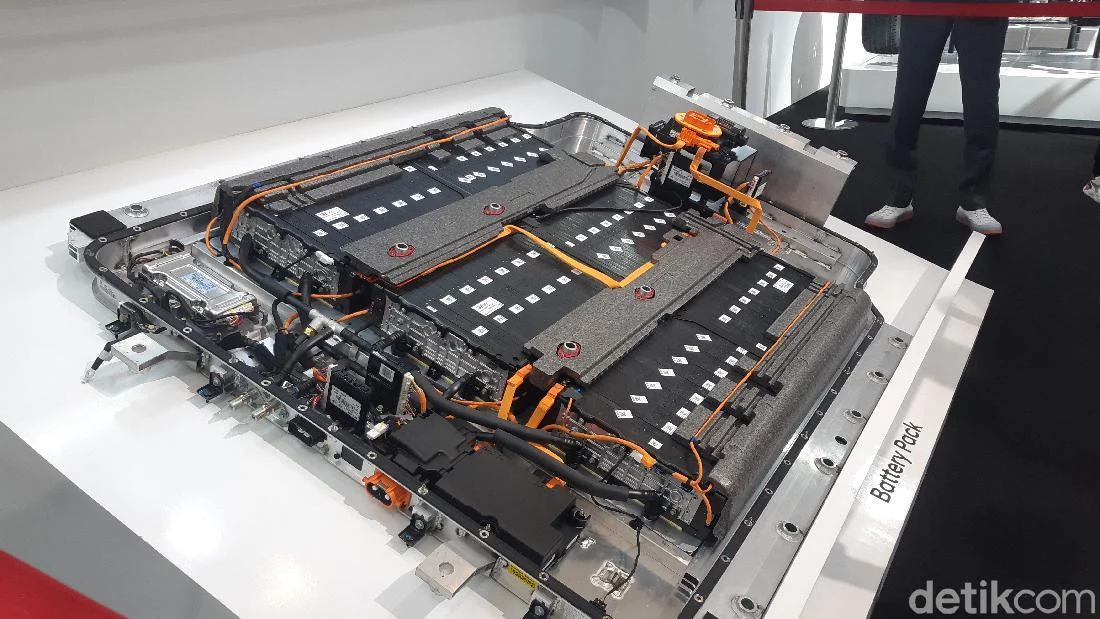
The Indonesian government has officially confirmed that the integrated electric vehicle (EV) battery ecosystem facility located in Karawang, West Java, is scheduled for a grand inauguration in late July 2026, marking a pivotal milestone in the nation’s ambitious journey to become a global hub for green energy technology. This massive industrial project, which represents a sophisticated synergy between state-owned enterprises and international technology leaders, has already secured a dedicated consumer base, primarily consisting of major Japanese automotive manufacturers. The development is the result of a strategic partnership involving PT Aneka Tambang Tbk (Antam), the Indonesia Battery Corporation (IBC)—a consortium of four state-owned enterprises—and a Chinese consortium led by Contemporary Amperex Technology Co., Limited (CATL) through its subsidiaries, Brunp and Lygend (CBL).
A Strategic Leap in Indonesia’s Downstreaming Policy
The Karawang project is a cornerstone of Indonesia’s "hilirisasi" or downstreaming policy, a national economic strategy designed to transition the country from a raw material exporter to a high-value manufacturing powerhouse. By processing its vast nickel reserves domestically, Indonesia aims to capture a larger share of the global EV value chain. Minister of Energy and Mineral Resources (ESDM), Bahlil Lahadalia, recently reported the progress of this ecosystem to President Prabowo Subianto, emphasizing that the collaboration between CATL and Antam has reached a critical stage of completion.
"We held a meeting with the President to evaluate the downstreaming program," Minister Bahlil stated following a high-level briefing. "We reported that our downstreaming program for the car battery ecosystem, which is a cooperation between CATL and Antam, is finalized and, God willing, will be inaugurated in late July. The infrastructure is ready."
The integration of the Karawang facility is unique because it encompasses the entire production cycle, from the refining of nickel ore to the assembly of battery cells. This "end-to-end" approach is expected to significantly reduce production costs and improve the carbon footprint of the batteries produced, making them highly attractive to global automakers under increasing pressure to meet stringent environmental, social, and governance (ESG) standards.
Securing the Market: The Role of Japanese Automakers
One of the most significant revelations regarding the Karawang plant is its pre-existing buyer base. According to Aditya Farhan Arif, the President Director of IBC, the facility is not launching into an uncertain market. Instead, it has already locked in commitments from established players in the automotive industry.
"In terms of existing buyers, we already have confirmed interest and contracts from the EV sector, specifically from Japanese manufacturers," Aditya noted. This development is particularly noteworthy given that Japanese automakers, such as Toyota, Honda, and Nissan, have historically been more cautious in their transition to full battery electric vehicles (BEVs), often focusing on hybrid technology. Their commitment to sourcing batteries from the Karawang ecosystem suggests a major strategic shift and a vote of confidence in Indonesia’s industrial capabilities and the quality of its nickel-based battery chemistry.
The Technological Debate: NMC vs. LFP
A central theme in the development of Indonesia’s battery industry is the competition between different battery chemistries: Nickel-Manganese-Cobalt (NMC) and Lithium Iron Phosphate (LFP). While many Chinese EV brands currently dominating the Indonesian market—including BYD, Wuling, and Chery—utilize LFP batteries due to their lower cost and thermal stability, IBC remains staunchly optimistic about the future of nickel-based NMC batteries.
In a recent hearing with Commission XII of the House of Representatives (DPR RI), Aditya Farhan Arif argued that while LFP has gained significant market share, the demand for NMC batteries is growing in terms of absolute volume. "The market size itself is increasing so sharply that even as LFP grows, the demand for NMC cathodes is rising alongside it," Aditya explained.
NMC batteries are generally favored for high-performance vehicles because they offer higher energy density, allowing for longer driving ranges and faster charging times compared to LFP. Given Indonesia’s status as the world’s largest holder of nickel reserves, the national strategy is heavily weighted toward NMC technology. "Based on current technology trends, we remain very optimistic that we can successfully market our nickel-based lithium-ion batteries," Aditya added. This optimism is backed by the global demand for premium EVs, where range anxiety remains a primary concern for consumers in North America and Europe.
Mapping the Ecosystem: Antam, IBC, and the CBL Consortium
The complexity of the Karawang project is reflected in its corporate structure. The Indonesia Battery Corporation (IBC) serves as the domestic anchor, representing the interests of PT Industri Baterai Indonesia, which is owned by four state giants: Antam, Pertamina, PLN, and Mind ID. This ensures that the state maintains a strategic stake in the energy transition.
On the international side, the partnership with CBL (CATL, Brunp, and Lygend) brings world-class expertise. CATL is currently the world’s largest EV battery manufacturer, commanding more than a third of the global market share. Their involvement ensures that the Karawang facility will utilize cutting-edge manufacturing processes and benefit from a global distribution network. The project involves a multi-billion dollar investment that includes the development of High-Pressure Acid Leaching (HPAL) plants to process limonite nickel ore, which was previously considered waste but is now a vital source for battery-grade nickel sulfate.
Chronology of Development and Future Milestones
The path to the July 2026 inauguration has been a multi-year journey involving intense diplomatic and economic negotiations.
- 2020-2021: The Indonesian government officially bans the export of raw nickel ore, forcing international companies to invest in domestic smelting and refining.
- 2022: Formal agreements are signed between IBC, Antam, and the CBL consortium, outlining a framework for a $6 billion integrated battery project.
- 2023-2024: Construction begins on the Karawang facility, alongside the development of upstream mining sites in Halmahera and other regions.
- Early 2026: Testing and commissioning of the production lines are expected to commence to ensure the facility meets the quality standards required by Japanese buyers.
- July 2026: Official inauguration by the President, marking the start of commercial production.
Macroeconomic and Regional Implications
The successful launch of the Karawang ecosystem is expected to have far-reaching implications for Indonesia’s economy. Beyond the direct creation of thousands of high-skilled jobs, the project is a magnet for further foreign direct investment (FDI). As the battery plant comes online, it is likely to attract component manufacturers, such as those producing separators, electrolytes, and cooling systems, to set up shop nearby, creating a comprehensive "EV City" in West Java.
Furthermore, this development positions Indonesia as a formidable competitor to regional neighbors like Thailand and Vietnam, who are also vying for the title of Southeast Asia’s EV hub. While Thailand has a strong legacy in internal combustion engine (ICE) manufacturing, Indonesia’s control over the raw material supply chain gives it a unique "upstream-to-downstream" advantage that is difficult to replicate.
Addressing Global Market Dynamics
The global EV landscape is currently in a state of flux. While China remains the largest market, there is a growing movement in Western economies to diversify supply chains away from a single-country dependence. Indonesia’s Karawang facility, though partnered with Chinese firms, represents a diversification of the physical manufacturing base. For Japanese automakers, sourcing from Indonesia provides a strategic middle ground that leverages Chinese technology while utilizing Indonesian resources and labor.
However, challenges remain. The industry must navigate fluctuating nickel prices and the evolving landscape of battery technology. Some researchers are looking into solid-state batteries or sodium-ion batteries as future alternatives. Nevertheless, the consensus among industry experts is that nickel-based chemistries will remain the standard for the premium and long-range EV segments for at least the next decade, providing a solid window of opportunity for Indonesia to solidify its market position.
Conclusion: A New Era for Indonesian Industry
As the July 2026 deadline approaches, the Karawang EV battery ecosystem stands as a testament to Indonesia’s resolve to evolve its economy. The project is more than just a factory; it is a symbol of the country’s transition toward a sustainable future and its integration into the high-tech global economy. With a secured buyer base of Japanese automotive giants and the backing of the world’s leading battery technologists, the Karawang facility is poised to redefine Indonesia’s industrial landscape, ensuring that the nation’s natural wealth is translated into long-term prosperity and technological leadership on the world stage.