Azin Asro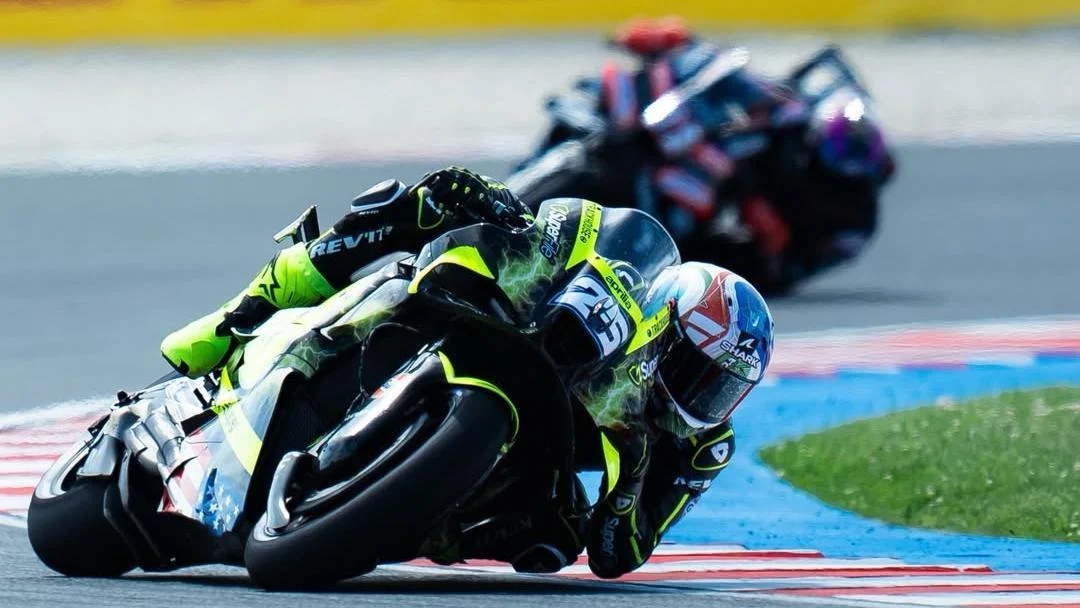
The 2026 MotoGP season continues to redefine the competitive landscape of premier-class motorcycle racing, and the Dutch Grand Prix at the iconic Circuit van Drenthe has served as the latest stage for a seismic shift in power. While Aprilia has long been regarded as a formidable force at the "Cathedral of Speed," the narrative of the 2026 Sprint Race was not written by the factory heavyweights, but by the American-owned satellite squad, Trackhouse Racing. Raul Fernandez delivered a masterclass in defensive and offensive riding to claim his first-ever Sprint Race victory, leading a historic one-two finish for the Trackhouse Aprilia team alongside his teammate, Ai Ogura.
The weekend began with a clear signal of intent from the Noale-based manufacturer. During Friday’s qualifying sessions, Aprilia achieved a feat seldom seen in the modern era of MotoGP: sweeping the top four positions on the starting grid. This total dominance suggested that the factory riders, led by championship leader Jorge Martin, would be the ones to beat. However, as the lights went out for the 13-lap Sprint on Saturday afternoon, it became clear that the technical parity enjoyed by the Trackhouse satellite team would allow their riders to challenge the hierarchy of the factory hierarchy.
The Opening Salvo: A Battle of Reflexes
The start of the Sprint Race was characterized by high-stakes maneuvering and immediate drama. Although Jorge Martin, the reigning world champion and current Aprilia Factory spearhead, got a clean launch from his grid slot, he was out-muscled into the first corner. Ai Ogura, the Japanese sensation who has rapidly adapted to the RS-GP’s unique handling characteristics, executed a perfect holeshot. Ogura’s ability to find traction on the inside of the Haarbocht corner allowed him to seize the lead, momentarily relegating Martin to second place.
Further down the pack, the unforgiving nature of the Assen circuit claimed its first victim almost immediately. Joan Mir, struggling to find a rhythm on the HRC Castrol Honda, suffered a low-side crash at Turn 1. While the rider was uninjured, the incident marked another disappointing chapter in Honda’s ongoing struggle to regain technical competitiveness in the 2026 season.
By the end of the first lap, Jorge Martin demonstrated why he is considered the most aggressive starter on the grid. Utilizing the sheer horsepower of the 2026-spec Aprilia engine, Martin forced his way past Ogura to reclaim the lead. Simultaneously, Raul Fernandez began his ascent, moving into third position and putting immediate pressure on the leaders. The opening lap ended with a clear "Aprilia train" leading the field, while Fabio Di Giannantonio emerged as the primary challenger for Ducati, holding steady in fourth.
Mid-Race Shift: The Collapse of the Factory Pace
The second lap introduced further volatility to the standings. Pedro Acosta, the KTM prodigy who had shown flashes of brilliance during the morning practice sessions, committed a rare unforced error. Entering the high-speed transition at the Strubben corner, Acosta lost the front end slightly, forcing him wide into the gravel trap. Although he managed to keep his machine upright, the excursion cost him dearly, dropping him from eighth to 14th and effectively ending his chances of a podium finish.
As the race entered its third and fourth laps, the focus shifted to the tactical battle at the front. Raul Fernandez, who had been observing Martin’s lines with clinical precision, sensed an opening. On the fourth lap, Fernandez executed a daring overtake at the Ruskenhoek chicane, catching Martin off guard.
What followed was perhaps the most surprising development of the race: Jorge Martin’s pace began to evaporate. The factory Aprilia rider, usually known for his consistency in short-format races, suddenly found himself vulnerable. In the final sector of Lap 4, both Fabio Di Giannantonio and Ai Ogura capitalized on Martin’s loss of momentum, demoting the world champion from the lead to fourth place within a single lap. Technical analysts later speculated that a potential issue with the front tire pressure or a glitch in the ride-height device may have contributed to Martin’s sudden lack of competitiveness.
Internal Rivalries and the Ducati Resurgence
While the Trackhouse Aprilia riders were checking out at the front, a familiar rivalry was reignited in the chasing pack. Francesco "Pecco" Bagnaia and Marc Marquez, teammates at the Ducati Lenovo Team, found themselves locked in a fierce battle for sixth place. Throughout 2026, the dynamic between the two multi-time world champions has been a focal point of the paddock, and Assen was no exception.
Bagnaia, who had lost a position during the opening lap, spent several laps shadowing Marquez’s rear wheel. The two exchanged positions multiple times through the fast sweeps of the back straight, showcasing the aerodynamic efficiency of the 2026 Ducati Desmosedici. Eventually, Bagnaia’s superior knowledge of the Assen layout allowed him to make a decisive move at the Geert Timmer Chicane, securing sixth place and leaving Marquez to settle for seventh.
Meanwhile, Marco Bezzecchi, riding for the Pertamina Enduro VR46 team, continued his quiet but effective charge. Bezzecchi managed to overtake the struggling Martin on Lap 7, further pushing the factory Aprilia rider down the order. The battle highlighted the incredible depth of the 2026 field, where satellite bikes from both Aprilia and Ducati were consistently outperforming their factory counterparts.
The Final Charge: Trackhouse Dominance Confirmed
As the race entered its final third, Raul Fernandez established a comfortable cushion of approximately 0.6 seconds over Fabio Di Giannantonio. However, the real story was the resurgence of Ai Ogura. The Japanese rider, who had briefly slipped to third, began a relentless pursuit of Di Giannantonio’s VR46 Ducati.
With five laps remaining, Ogura pulled off the move of the race. Using the slipstream on the run-down to the final chicane, he out-braked Di Giannantonio with pinpoint accuracy. This maneuver secured a Trackhouse one-two, a milestone moment for the American team that joined the grid with the ambition of disrupting the established European order.
The closing stages were not without drama. Franco Morbidelli, who had been fighting for a points-paying position, lost control of his VR46 Ducati at Turn 4 with just two laps to go. The crash was a significant blow for Morbidelli, who has been seeking a contract extension for the 2027 season. His retirement, along with Jack Miller’s mechanical failure on the Pramac Yamaha, thinned the field as the checkered flag beckoned.
Results and Championship Implications
Raul Fernandez crossed the finish line with a wheelie, celebrating a career-defining victory. His win marks the first time a satellite Aprilia has won a Sprint Race, and more importantly, it signals Fernandez’s maturation into a top-tier contender. Ai Ogura’s second-place finish solidified a dream result for Trackhouse Racing, while Fabio Di Giannantonio took the final step on the podium, salvaging pride for the VR46 camp.
The final standings for the 2026 Assen Sprint Race were as follows:
- Raul Fernandez (Trackhouse Aprilia)
- Ai Ogura (Trackhouse Aprilia) +0.842
- Fabio Di Giannantonio (VR46 Ducati) +1.215
- Marco Bezzecchi (VR46 Ducati) +2.103
- Jorge Martin (Aprilia Factory) +3.442
- Francesco Bagnaia (Ducati Lenovo) +4.109
- Marc Marquez (Ducati Lenovo) +4.556
For Jorge Martin, a fifth-place finish is a case of damage limitation. While he remains the leader in the riders’ standings, the gap has narrowed. The 2026 championship is proving to be a war of attrition, and the rise of the Trackhouse duo adds another layer of complexity to Martin’s title defense.
Technical Analysis: Why the Satellite Teams Prevailed
The success of Raul Fernandez and Ai Ogura at Assen can be attributed to several factors. Firstly, the 2026 RS-GP has been designed with a high degree of modularity, meaning the Trackhouse team receives identical engine maps and aerodynamic updates as the factory squad. In the cooler temperatures of the Dutch afternoon, the Trackhouse engineers seemingly found a better balance for the medium-compound rear tire, which offered more lateral grip in Assen’s long, cambered corners.
Secondly, the "Trackhouse effect"—the infusion of American data analytics and a fresh approach to team management—has clearly revitalized Raul Fernandez. After several seasons of inconsistent results, Fernandez appears to have found a technical environment that suits his smooth, high-corner-speed riding style.
Post-Race Reactions
While official press conferences are scheduled for later in the evening, sources close to the Trackhouse garage described the atmosphere as "electric." Team owner Justin Marks was seen congratulating his riders, noting that the one-two finish validates the significant investment made into the Aprilia partnership.
In the factory Aprilia camp, the mood was more somber. Jorge Martin reportedly went straight into a technical debrief to understand the sudden drop in pace that saw him fall from first to fifth. "We had the speed for the first three laps, but then something changed," Martin was overheard telling his chief mechanic. "The bike became very difficult to turn in the final sector."
Looking Ahead to the Sunday Grand Prix
The Sprint Race result has set the stage for an explosive main event on Sunday. With the full-length race requiring more rigorous tire management and a different fuel strategy, the factory teams will be looking to reassert their dominance. However, Raul Fernandez and Ai Ogura have proven that they are no longer just supporting players.
The 2026 Dutch Grand Prix at Assen will be remembered as the moment the Trackhouse Aprilia team truly arrived. As the paddock prepares for the 26-lap feature race, the question remains: can the factory giants solve the puzzle of Assen, or will the "Cathedral of Speed" witness another sermon delivered by the underdogs from Trackhouse? One thing is certain—the 2026 MotoGP season is far from predictable, and the era of the satellite team is officially here.