Nasution Nanang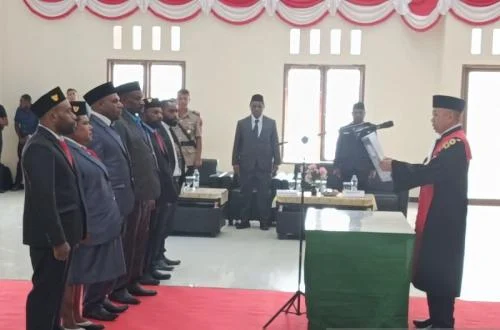
WAMENA, REPUBLIKA.CO.ID – In a significant move set to bolster indigenous representation and uphold the spirit of special autonomy, the District Court of Wamena, Jayawijaya Regency, Papua Pegunungan, officially inaugurated five members of the Mamberamo Tengah Regional House of Representatives (DPRK) through the special autonomy (Otsus) indigenous mechanism. The formal ceremony, led by Wamena District Court Chairman Hirmawan Agung Wicaksono, took place during a special plenary session of the Mamberamo Tengah DPRK on Friday, ushering in a new legislative term for these members from 2025 to 2030. This event underscores a pivotal moment in the implementation of special autonomy provisions in Papua, aimed at empowering the indigenous people (Orang Asli Papua – OAP) and ensuring their voices are directly heard in regional governance.
The meticulously planned ceremony encompassed the official announcement, formal inauguration, appointment, and the solemn oath-taking for these five individuals, marking the culmination of a rigorous selection process. Each of the newly sworn-in members will represent distinct electoral districts (dapil) within Mamberamo Tengah, ensuring broad geographical and communal coverage. The individuals stepping into these crucial roles are Marmin Yikwa, representing Electoral District I (Distrik Kelila); Anis Doga, representing Electoral District II (Distrik Ilugwa); Emianus Gombo, representing Electoral District III (Distrik Eragayam); Yakomina Endaganggok, representing Electoral District IV (Distrik Kobagma); and Yafet Barusa, representing Electoral District V (Distrik Megambilis). Their induction is expected to infuse the regional legislative body with perspectives deeply rooted in the customary traditions and specific needs of their respective communities, reinforcing the unique governance model stipulated by the Special Autonomy Law.
The Context of Special Autonomy in Papua
The special autonomy status for Papua was initially granted through Law No. 21 of 2001, enacted by the Indonesian government. This landmark legislation was a response to long-standing grievances, socio-economic disparities, and calls for greater self-determination in the region. Its primary objectives included accelerating economic development, improving social welfare, preserving Papuan culture, and enhancing political participation for OAP. A key component of this law was the provision for special representation of indigenous Papuans in regional legislative bodies, known as the DPRK and the Papuan People’s Assembly (MRP), to ensure that policies are tailored to the unique characteristics and aspirations of the local population.
The original Special Autonomy Law underwent significant revisions with the enactment of Law No. 2 of 2021. This updated legislation extended the special autonomy fund for another 20 years, provided for the creation of new administrative provinces within Papua, and refined several aspects of governance, including the mechanisms for indigenous representation. The establishment of Papua Pegunungan province, where Mamberamo Tengah is located, is a direct outcome of this revised law, reflecting the government’s strategy to decentralize administration and bring services closer to communities in a geographically challenging region. The inauguration of these five members in Mamberamo Tengah is a tangible manifestation of these legal frameworks being put into practice, providing a direct channel for traditional leadership and community voices to influence modern governance.
Rigorous Selection Process Ensures Diverse Representation
According to Piter Togodly, the Chairman of the Mamberamo Tengah DPRK, the five new members were the product of a highly selective process conducted by a dedicated selection committee over several months. This rigorous procedure was designed to identify candidates who not only possessed the necessary qualifications but also genuinely represented the diverse fabric of Mamberamo Tengah’s indigenous communities. "The five DPRK members appointed through this mechanism represent districts and villages, embodying elements of customary law (adat), religious communities, and academic backgrounds. Out of a significant number of applicants who underwent all stages of selection, these five individuals were ultimately chosen," Chairman Togodly elaborated, highlighting the emphasis on comprehensive representation.
The selection criteria likely included a deep understanding of local customs and traditions, a proven track record of community involvement, leadership qualities, and an commitment to advocating for the welfare of OAP. This method of appointment contrasts with the conventional electoral process for political party representatives, aiming to ensure that voices from segments of society that might otherwise be underrepresented in traditional political systems are guaranteed a seat at the legislative table. This particular mechanism for indigenous representation is crucial in Papua, where traditional social structures and customary laws (adat) continue to play a vital role in community life and governance.
Equal Function, Unique Mandate: The "Fraksi Kelengkapan"
Chairman Togodly underscored that while the method of their entry into the DPRK differs, the special autonomy members hold functions and duties equivalent to those elected through political parties. They are expected to participate fully in legislative processes, including drafting regional regulations, overseeing the executive branch, and formulating regional budgets. From the five newly appointed members, one is designated to assume a leadership position within the Mamberamo Tengah DPRK, further integrating indigenous perspectives into the legislative leadership. The remaining four members will be assigned to various permanent committees (alat kelengkapan dewan), where they will contribute their insights to specific policy areas such as economy, social welfare, infrastructure, and governance.
However, a distinctive feature of their role lies in the formation of their own parliamentary faction, aptly named the "Fraksi Kelengkapan" (Completeness Faction or Complementary Faction). This faction is designed to consolidate their collective voice and ensure that issues pertinent to OAP are consistently brought to the fore. Togodly clarified a key distinction in their capacity: "The five DPRK members appointed through this mechanism do not possess the same capacity as DPRK members from political parties in certain aspects, such as the ability to nominate candidates for regional head elections. However, their primary and powerful mandate is to voice the dignity and welfare of the indigenous people of Mamberamo Tengah." This provision highlights the focus of their role: to serve as dedicated advocates for OAP rights, cultural preservation, and socio-economic advancement, rather than engaging in conventional party politics or electoral nominations. Their unique mandate is a direct reflection of the special autonomy framework’s core objective to empower OAP and protect their distinct identity within the broader Indonesian state.
Statements and Reactions from Stakeholders
The inauguration was met with a chorus of optimism and anticipation from various stakeholders. Chairman Piter Togodly expressed profound gratitude, stating, "On behalf of the extended family of the Mamberamo Tengah DPRK, we express our gratitude to God that the inauguration activities for the appointed DPRK members proceeded smoothly." This sentiment was likely echoed by local government officials, including the Regent of Mamberamo Tengah, who would view these appointments as a vital step towards more inclusive and representative governance. The Regent’s office, while not quoted directly in the original article, would presumably emphasize the importance of synergy between the executive and legislative branches, particularly with the enhanced indigenous representation, to effectively implement regional development programs and special autonomy funds for the benefit of the local populace.
Indigenous customary leaders and community representatives across Mamberamo Tengah would also welcome the new members, seeing them as direct conduits for customary law (adat) and community aspirations to reach the highest levels of regional policy-making. An inferred statement from an indigenous elder might articulate hopes that these representatives will diligently champion issues such as land rights, cultural preservation, access to education and healthcare, and sustainable economic opportunities that respect traditional livelihoods. For many OAP, this mechanism offers a renewed promise that their unique cultural heritage and specific challenges will be given due consideration in legislative decisions, moving beyond mere tokenism to genuine empowerment.
From a broader perspective, central government representatives, particularly from the Ministry of Home Affairs, would likely view this inauguration as a successful implementation of the Special Autonomy Law. They would emphasize the government’s continued commitment to the special autonomy framework as a means to achieve peace, prosperity, and justice in Papua. Legal experts and academics specializing in Indonesian governance and regional autonomy might offer analysis on the evolving effectiveness of the Otsus framework, noting both its strengths in ensuring representation and the ongoing challenges in its full implementation across the vast and diverse Papuan region. Civil society organizations working in Papua would likely call for transparency, accountability, and active participation from the newly appointed members to ensure they genuinely serve the interests of their constituents, especially the most vulnerable segments of OAP.
Broader Implications for Governance and Development
The induction of these special autonomy legislators carries significant implications for governance and development in Mamberamo Tengah and the broader Papua Pegunungan province. Firstly, it strengthens the democratic framework by ensuring that a segment of the population, traditionally marginalized or underrepresented in conventional political systems, has a guaranteed voice. This mechanism is designed to bridge the gap between traditional community leadership and modern governmental structures, fostering a more harmonious and effective governance model.
Secondly, these representatives are expected to play a crucial role in shaping policies that are culturally sensitive and responsive to the unique needs of OAP. Issues such as the recognition of customary land rights, the preservation of indigenous languages and traditions, and the development of education and health services tailored to remote communities are likely to receive heightened attention. Their presence ensures that the vast special autonomy funds allocated to Papua are utilized in ways that genuinely benefit OAP, addressing historical imbalances and accelerating equitable development. Mamberamo Tengah, like many districts in Papua Pegunungan, faces formidable challenges including geographical isolation, limited infrastructure, and socio-economic disparities. The indigenous legislators’ intimate understanding of these local realities will be invaluable in crafting targeted and effective solutions.
Thirdly, the establishment of the "Fraksi Kelengkapan" provides a dedicated platform for advocating OAP interests, potentially leading to more robust legislative outcomes for indigenous communities. While their inability to nominate regional heads might seem like a limitation, it paradoxically sharpens their focus on their core mandate: to be unwavering champions for the rights and welfare of their people. This focused advocacy can lead to better oversight of local government programs, ensuring accountability and adherence to the principles of special autonomy. The long-term success of this model, however, will depend on the effectiveness of these representatives in articulating community needs, their ability to navigate the legislative process, and the willingness of other political factions to collaborate in the spirit of inclusive governance.
The Future of Special Autonomy and Indigenous Empowerment
The inauguration in Mamberamo Tengah is a microcosm of the ongoing efforts to implement special autonomy across Papua. It highlights the continued commitment to ensuring that OAP have a meaningful say in their own future and that their cultural heritage is protected and celebrated. While the special autonomy framework has faced its share of criticisms and challenges, particularly regarding the effectiveness of fund utilization and concerns about human rights, mechanisms like indigenous representation in legislative bodies are crucial steps towards realizing its original intent.
The success of these five individuals and the "Fraksi Kelengkapan" in Mamberamo Tengah will serve as an important benchmark for other regions within Papua. Their ability to effectively translate community aspirations into policy, ensure transparency in governance, and foster unity among diverse indigenous groups will be closely watched. As Papua continues its journey under special autonomy, the role of these indigenous legislators will be instrumental in shaping a future where the dignity, prosperity, and cultural identity of the indigenous people are not only preserved but also flourish within the Indonesian republic. The ceremony in Wamena, therefore, represents more than just a formal oath-taking; it symbolizes a renewed hope for genuine empowerment and a more inclusive political landscape in the heart of Papua Pegunungan.