Bambang Pamungkas
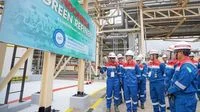
Jakarta, Indonesia – Grab, Southeast Asia’s leading superapp, is significantly ramping up its electric vehicle (EV) fleet in Indonesia, committing to deploy 42,000 electric vehicles by the close of 2026. This ambitious expansion underscores Grab’s pivotal role in accelerating the nation’s transition towards sustainable mobility and aligns with the Indonesian government’s aggressive push for electrification across its transportation sector. The announcement was made during the launch of Grab’s "Gerakan Langkah Hijau Grab untuk Indonesia" (Grab’s Green Step Movement for Indonesia) initiative, signaling a major milestone in the country’s green economy agenda.
Grab’s Green Leap: "Langkah Hijau" Initiative Drives Fleet Expansion
During the "Gerakan Langkah Hijau Grab untuk Indonesia" press conference held on Monday, June 29, 2026, Neneng Goenadi, CEO of Grab Indonesia, highlighted the company’s unwavering commitment to sustainability. She proudly announced that Grab, as the largest EV operator in Indonesia, had already achieved a substantial milestone, with its EV fleet reaching 28,000 units by May 2026. This figure represents a remarkable doubling of the company’s EV count from the end of 2025, demonstrating an aggressive growth trajectory. Goenadi further elaborated on Grab’s forward-looking strategy, stating, "Grab continues to strengthen the development of electric vehicles in our ecosystem, and as of May 2026, we are proud to announce that Grab’s EV fleet has reached 28,000 units, which is twice as many as at the end of 2025. And we are committed to achieving three times the 2025 figure by the end of 2026."
The planned 42,000-unit fleet by year-end 2026 will comprise a strategic mix of electric motorcycles and cars, catering to the diverse needs of Grab’s extensive service ecosystem. According to Goenadi, the breakdown is projected to be approximately two-thirds electric motorcycles and one-third electric cars. This translates to an estimated 28,000 electric motorcycles and 14,000 electric cars, reflecting the dominant role of two-wheelers in Indonesia’s daily commute and delivery services. These electric vehicles will be seamlessly integrated across all of Grab’s core services, including Grab Car for ride-hailing, Grab Bike for motorcycle taxis, Grab Express for package delivery, and Grab Food for food delivery. This comprehensive integration ensures that consumers and driver-partners alike have access to sustainable transportation options, making green mobility a convenient and accessible choice for millions across the archipelago.
Indonesia’s Accelerating EV Ecosystem: A National Priority
The expansion of Grab’s EV fleet occurs within a supportive national framework, as Indonesia vigorously pursues its ambition to become a regional leader in electric vehicle manufacturing and adoption. Coordinating Minister for Infrastructure and Regional Development, Agus Harimurti Yudhoyono (AHY), speaking at the same event, underscored the significant progress already made in the country’s EV sector. He presented compelling data illustrating the robust growth of electric vehicles nationwide, noting an annual increase of approximately 143% for four-wheeled EVs and an even more impressive 158% for two-wheeled EVs.
Minister Yudhoyono provided concrete figures to highlight this surge, revealing that the total number of electric vehicles in Indonesia reached 333,561 units last year (2025), a substantial increase from 207,478 units recorded throughout 2024. "Indeed, from year to year, there has been a positive increase in the number of EVs, with four-wheeled vehicles growing by approximately 143% and two-wheeled vehicles by 158% annually. This positive trend continues to accelerate," he stated. This rapid growth is a testament to the Indonesian government’s multi-pronged approach, which includes attractive incentives, the development of charging infrastructure, and a strong emphasis on fostering local manufacturing capabilities for both vehicles and critical components like batteries. The government envisions a future where Indonesia leverages its abundant nickel reserves to become a global hub for EV battery production, thereby creating a vertically integrated EV ecosystem that drives economic growth and technological advancement.
Chronology of Grab’s EV Journey and National EV Push
Grab’s journey into electric mobility in Indonesia began several years prior, evolving from pilot projects to large-scale deployment.
- 2019-2020: Initial Forays and Pilot Programs: Grab first introduced electric vehicle trials in Indonesia, primarily focusing on electric motorcycles for its GrabBike and GrabExpress services. These early initiatives aimed to test the feasibility, operational efficiency, and user acceptance of EVs in the challenging urban environments of Jakarta and other major cities. Partnerships with local and international manufacturers, as well as energy providers, were crucial during this phase to establish initial charging solutions and vehicle supply chains. The Indonesian government, at this time, began laying the groundwork for EV adoption through preliminary policy discussions and initial incentive considerations.
- 2021-2023: Scaling Up and Ecosystem Building: Building on the insights from pilot programs, Grab gradually expanded its EV fleet, integrating more electric vehicles into its services. This period saw Grab establishing dedicated EV charging hubs and battery swapping stations, particularly for two-wheelers, to address range anxiety and facilitate quick turnarounds for driver-partners. The company also initiated educational programs for its driver-partners, familiarizing them with EV technology and maintenance. Concurrently, the Indonesian government intensified its commitment, rolling out more concrete policies, including tax incentives for EV purchases, reduced import duties for EV components, and subsidies for public charging infrastructure development. These policies provided a clearer roadmap for private sector investment and consumer adoption.
- 2024-2025: Accelerated Growth and Strategic Partnerships: The pace of EV adoption within Grab’s ecosystem significantly accelerated. The company deepened its collaborations with key players in the automotive and energy sectors, including partnerships with major EV manufacturers and utility companies to ensure a robust supply of vehicles and energy. Grab’s EV fleet saw substantial growth, doubling its size from 2024 to 2025, laying the foundation for the current ambitious targets. The government continued to refine its EV roadmap, pushing for greater localization of manufacturing and attracting significant foreign direct investment into the EV battery and vehicle production sectors.
- May 2026: Reaching Critical Mass: Grab’s fleet achieved 28,000 units, marking a critical milestone in its sustainability agenda. This achievement positioned Grab as a dominant force in Indonesia’s EV landscape, demonstrating the viability and scalability of electric mobility within the ride-hailing and delivery sectors.
- June 29, 2026: "Gerakan Langkah Hijau Grab untuk Indonesia" Launch: The official launch of this movement cemented Grab’s long-term commitment and outlined its immediate goal of reaching 42,000 EVs by the end of 2026, tripling its 2025 fleet size. This event served as a public declaration of intent and a rallying cry for collective action towards a greener Indonesia.
- Future Outlook (Beyond 2026): Grab’s commitment extends beyond the current targets, with plans for continuous expansion, further innovation in charging solutions, and exploration of renewable energy sources to power its fleet. The company’s strategic vision aligns with Indonesia’s broader target of achieving net-zero emissions, positioning Grab as a key enabler of a sustainable future.
Supporting Data and Market Context
Indonesia presents a uniquely fertile ground for EV adoption. As the fourth most populous nation globally, with a burgeoning middle class and one of the highest motorcycle penetration rates in the world, the potential for transitioning to electric mobility is immense. The government’s unwavering support, driven by environmental concerns, energy independence aspirations, and economic growth opportunities, has been a critical catalyst.
- Charging Infrastructure: While progress has been made, the development of a widespread and reliable charging infrastructure remains a key challenge. Grab’s strategy of establishing dedicated EV hubs and battery swapping stations directly addresses this, especially for its high-utilization fleet. Public charging networks, though expanding, require further investment and standardization to support broader consumer adoption.
- Battery Technology and Local Production: Indonesia’s ambition to become a global EV battery production hub, leveraging its vast nickel reserves, is a game-changer. Localized battery production is expected to significantly reduce EV manufacturing costs, making electric vehicles more affordable and accessible to the general population. This strategic move aims to position Indonesia at the forefront of the global EV supply chain.
- Economic Impact: The shift to EVs brings significant economic benefits. For driver-partners, the transition to electric vehicles often results in substantial savings on fuel and maintenance costs, directly improving their take-home income. For Grab, it offers long-term operational cost efficiencies and reinforces its brand as an environmentally responsible company. Furthermore, the burgeoning EV sector creates new job opportunities in manufacturing, maintenance, charging infrastructure, and technology development.
- Regional Leadership: Grab’s aggressive EV strategy in Indonesia is part of a larger regional push across Southeast Asia. The company has similar initiatives in markets like Singapore, Vietnam, and Thailand, aiming to establish itself as a leader in sustainable urban mobility throughout the region. Indonesia, given its market size and government support, is a cornerstone of this regional strategy.
Official Responses and Stakeholder Perspectives
The initiative has garnered strong support from both governmental bodies and industry observers.
- Government Perspective: Minister AHY reiterated the government’s commitment to creating an enabling environment for EV growth. He emphasized that private sector initiatives like Grab’s are crucial partners in achieving national goals related to energy transition, carbon emission reduction, and the development of a green economy. The government views such investments as a vote of confidence in Indonesia’s economic future and its sustainability agenda.
- Grab’s Leadership: Neneng Goenadi articulated Grab’s vision, "Our commitment goes beyond just deploying vehicles; it’s about building an entire sustainable ecosystem that benefits our driver-partners, our consumers, and the environment. We empower our driver-partners with cleaner, more cost-effective vehicles, offer our consumers eco-friendly choices, and contribute to cleaner air for Indonesian cities." She also highlighted Grab’s role in driving innovation and setting industry standards for green mobility.
- Industry Analysts (Inferred): Industry experts generally view Grab’s large-scale EV deployment as a significant catalyst for the broader EV market in Indonesia. Its sheer scale can drive down battery costs, stimulate demand for charging infrastructure, and normalize EV usage among the general public. Analysts suggest that such initiatives by major players can de-risk the market for smaller players and accelerate the entire ecosystem’s development.
- Driver-Partners and Consumers (Inferred): For Grab’s driver-partners, the switch to EVs offers tangible benefits, including lower operating costs, potentially higher earnings, and a more comfortable driving experience due to quieter engines. For consumers, the availability of EV options on the Grab platform provides an opportunity to make environmentally conscious choices without sacrificing convenience, potentially fostering a greater appreciation for sustainable services.
Broader Implications and Future Outlook
The expansion of Grab’s EV fleet carries profound implications for Indonesia’s environmental, economic, and social landscape.
- Environmental Impact: A significant reduction in carbon emissions from the transportation sector, a major contributor to air pollution in urban centers. Improved air quality will have direct public health benefits for millions of urban dwellers. It also aligns with Indonesia’s climate commitments under the Paris Agreement.
- Economic Impact: The initiative contributes to the growth of Indonesia’s green economy, fostering innovation, attracting foreign investment, and creating new job opportunities across the EV value chain. It also supports the government’s drive for energy independence by reducing reliance on imported fossil fuels.
- Social Impact: Increased accessibility of cleaner, more sustainable transportation options for the general populace. It can also drive a shift in consumer behavior, normalizing the use of EVs and promoting greater environmental awareness.
- Challenges Ahead: While the outlook is positive, challenges remain. These include ensuring grid stability to support increased electricity demand, developing comprehensive battery recycling infrastructure, and making EVs even more affordable for widespread adoption beyond the ride-hailing sector. Continued collaboration between the government, private sector, and research institutions will be crucial to overcome these hurdles.
- Grab’s Role as a Catalyst: Grab’s position as a superapp with a massive user base and driver-partner network enables it to act as a powerful catalyst. By integrating EVs into its daily operations, Grab not only greenifies its own services but also educates and exposes millions of Indonesians to electric mobility, accelerating the country’s overall transition to a sustainable future.
In conclusion, Grab’s ambitious target of deploying 42,000 electric vehicles by the end of 2026 is a testament to its commitment to sustainable development and its strategic alignment with Indonesia’s national electrification agenda. This initiative, marked by the "Gerakan Langkah Hijau Grab untuk Indonesia," is not merely an expansion of a corporate fleet but a significant stride towards transforming the urban mobility landscape, fostering a greener economy, and contributing to a healthier environment for all Indonesians. As Grab continues to scale its EV operations, it solidifies its role as a key driver in shaping Indonesia’s sustainable future and reinforcing its leadership in green mobility across Southeast Asia.