Nila Kartika Wati
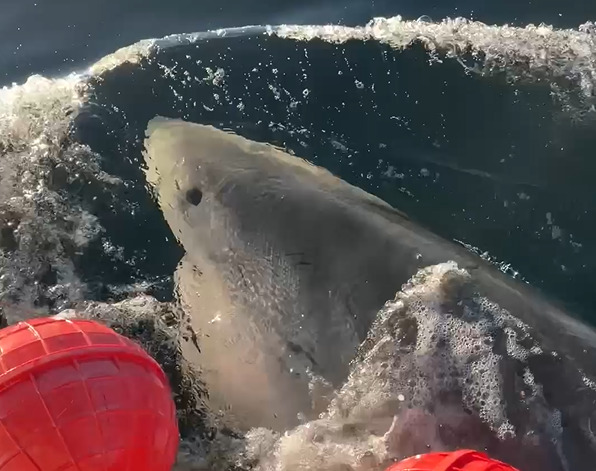
In a significant development for marine biology and conservation science, a research team from the non-profit organization OCEARCH has documented a remarkably large male great white shark (Carcharodon carcharias) in the Atlantic Ocean. The specimen, identified as "Contender," was intercepted in January 2026 within the waters straddling the maritime borders of Georgia and Florida, approximately 70 kilometers offshore. The encounter has provided researchers with a rare, high-quality data set that challenges established metrics regarding the size and maturation timelines of male white sharks in the Western North Atlantic.
The Encounter and Physical Documentation
The documentation of Contender occurred during an expedition aimed at tagging and tracking the migratory patterns of large marine predators. Upon capture, the shark measured 4.2 meters in length and tipped the scales at 750 kilograms. For marine biologists, these dimensions are statistically significant. According to the Smithsonian National Museum of Natural History, the median length for a mature male great white shark typically falls between 3.4 and 4 meters. By exceeding these parameters, Contender serves as a "living anomaly" that forces a re-evaluation of the upper growth limits for the species in this specific geographic region.
The physical examination of Contender took place on the deck of an OCEARCH research vessel. The process was meticulously timed to ensure the safety of the animal. During the brief window the shark was on the platform, the team gathered vital biological samples, including measurements, tissue samples for genetic analysis, and, most importantly, the installation of a SPOT (Smart Position or Temperature) satellite tag on the shark’s dorsal fin. This technology is critical, as it allows researchers to track the animal’s movements in near real-time once it returns to the water.

Revising the Timeline of Sexual Maturity
The discovery of a shark of this magnitude provides an opportunity to revisit the longitudinal study conducted by researchers Natanson and Skomal in 2015. Their work, which analyzed the vertebra of 77 white sharks in the Western North Atlantic, revolutionized the scientific community’s understanding of shark longevity. Previously, it was widely believed that male white sharks reached sexual maturity between the ages of 4 and 10. However, the Natanson-Skomal study demonstrated that maturity is actually achieved much later—around 26 years of age.
Dr. Harley Newton, the lead veterinarian at OCEARCH, emphasized that Contender’s physical profile aligns with these findings regarding late maturation. "This individual is an outlier in the context of historical data, but it fits perfectly into the modern understanding of how slowly these apex predators grow and mature," Dr. Newton noted. The data collected from Contender will now be integrated into existing growth models to refine the precision of age-estimation algorithms, which remain one of the most challenging aspects of elasmobranch research.
Chronology of the Expedition and Tracking
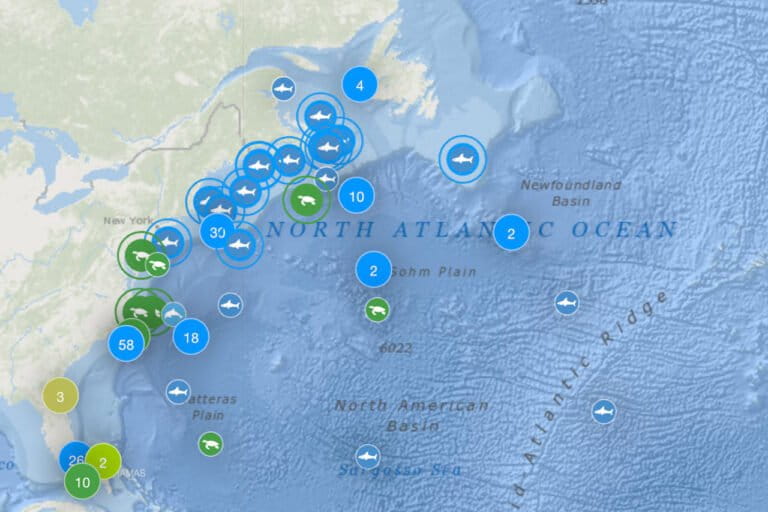
The tracking of Contender has provided a window into the expansive travel habits of adult male white sharks. Following its release back into the Atlantic in January, the shark began a rapid transit. By February 10, satellite transmissions confirmed that the shark had traveled approximately 470 kilometers from the original tagging site. The final signal received by the research team indicated that Contender had reached the waters near Merritt Island, Florida, a region known for its high marine biodiversity.
This movement pattern is consistent with the seasonal migrations observed in other sharks tracked by the OCEARCH project. The organization maintains a publicly accessible, real-time map that tracks various marine species, including turtles and other shark species. By mapping the "highway" used by Contender, researchers can better understand the environmental triggers—such as water temperature, prey availability, and reproductive cycles—that dictate where these sharks spend their time.
The Role of Apex Predators in Marine Ecosystems
Great white sharks serve as vital stabilizers within the marine food web. As apex predators, they perform a function known as "top-down regulation." By preying on weaker, sick, or overpopulated species, they ensure the health of the broader ecosystem. The decline of such predators often leads to trophic cascades, where the loss of a keystone species causes unpredictable and often detrimental shifts in the populations of smaller fish and marine life.
The effort to track Contender is part of a broader, multi-year strategy to advocate for international conservation policies. Because white sharks are highly migratory, they frequently cross jurisdictional lines between state and national waters. Data showing that a single shark can cover hundreds of kilometers in a matter of weeks underscores the futility of localized protection efforts. Effective conservation, experts argue, requires a transnational approach that treats the Atlantic coast as a singular, interconnected habitat.
Implications for Future Marine Policy
The data derived from the Contender project is expected to influence how regional governments approach marine protected areas (MPAs). If specific corridors are identified as critical "transit zones" for mature sharks, those areas may require stricter regulations regarding commercial fishing and vessel traffic. Furthermore, the genetic data collected during the encounter will contribute to the Global Shark Tracker project, helping to identify whether the population of white sharks in the Western North Atlantic is recovering, stabilizing, or declining.
Scientific organizations like OCEARCH operate under the philosophy that "knowledge is the prerequisite for protection." By demystifying the life history of creatures like Contender, researchers hope to shift public perception away from fear and toward an appreciation for the ecological necessity of these animals. Despite their fearsome reputation, great white sharks are highly vulnerable to human-induced pressures, including accidental bycatch and the degradation of coastal nurseries.
Ongoing Monitoring and Long-Term Objectives
As of the latest reports, the satellite tag on Contender remains active, and the research team continues to receive periodic pings. The objective for the coming months is to observe whether the shark follows a predictable migratory path toward northern feeding grounds or if it exhibits erratic behavior that could indicate environmental stress.
The study of Contender is not an isolated event but rather a single data point in a comprehensive effort to map the life of the Atlantic white shark. By combining real-time satellite telemetry with historical data and modern biological sampling, the scientific community is building a clearer picture of one of the ocean’s most misunderstood inhabitants. As the team continues to analyze the metrics gathered from this 4.2-meter giant, the findings will undoubtedly form the foundation for future academic papers and, more importantly, the conservation strategies necessary to ensure that sharks like Contender continue to roam the Atlantic for generations to come.
The collaboration between independent researchers, state agencies, and international partners remains the bedrock of this work. As technology continues to advance—allowing for more accurate tags and deeper analytical capabilities—the window into the "hidden world" of the great white shark continues to widen, proving that there is still much to learn about the titans of the deep.