
 Tyo Susilo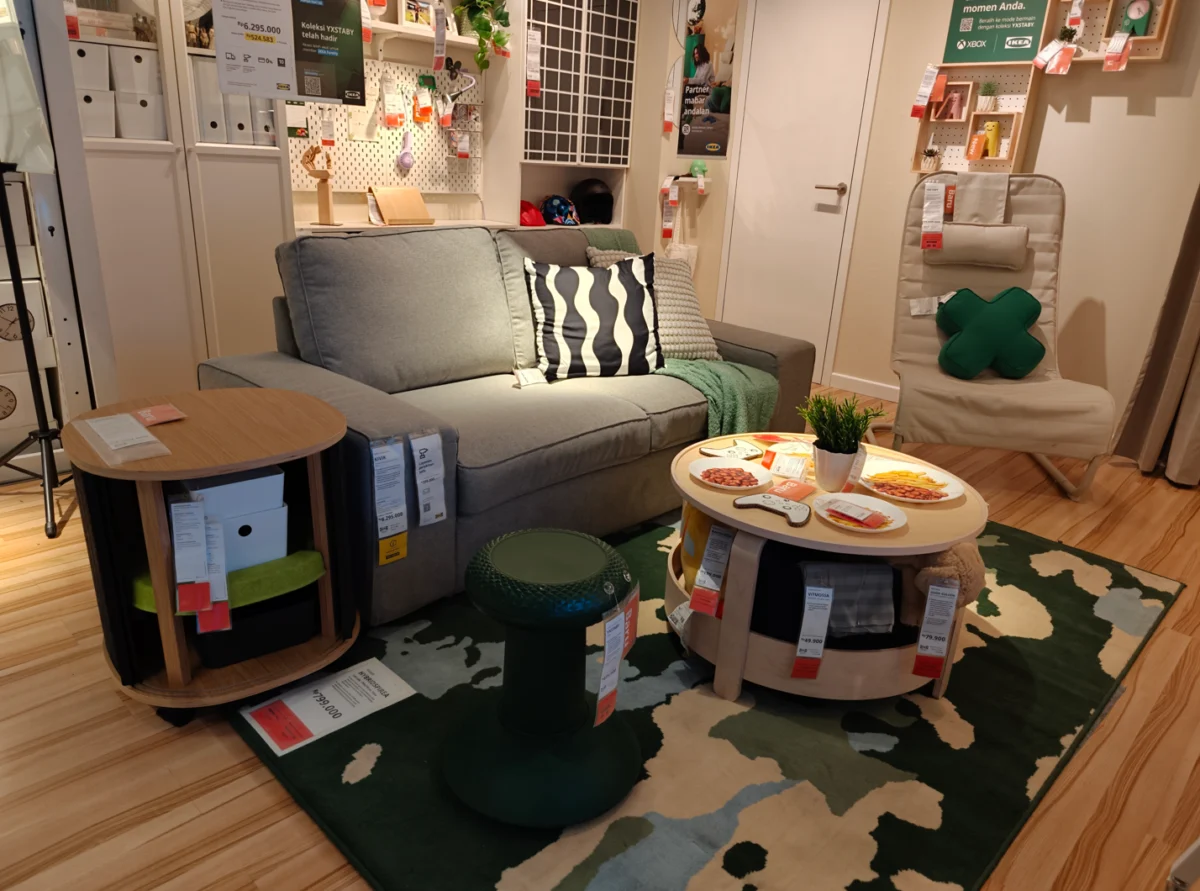
The modern gaming landscape has evolved significantly from the stereotypical image of a secluded, dark basement filled with glowing towers and rigid racing seats. For the vast majority of contemporary gamers, leisure time is seamlessly integrated into everyday living spaces, occurring on living room sofas or shared bedroom floors rather than in dedicated studio rooms. Recognizing this shift in consumer lifestyle, multinational furniture retailer IKEA has joined forces with gaming giant Xbox to launch YXSTABY, a specialized six-piece collection of furniture and accessories designed to harmonize high-performance gaming functionality with domestic interior design.
This collaboration brings together two distinct industry titans: IKEA, with its decades of expertise in ergonomic domestic living and functional spatial organization, and Xbox, which contributes a quarter-century of hardware design and interactive entertainment experience. The partnership commenced with a series of intensive joint workshops held at IKEA’s global design headquarters in Älmhult, Sweden. Operating under a strict co-design philosophy, the initiative mandated that every item within the YXSTABY catalog must be conceptualized, prototyped, and refined collaboratively by design teams from both corporations to ensure authenticity for gamers and aesthetic compatibility for interior decorators.
Translating Gaming Icons into Functional Architecture
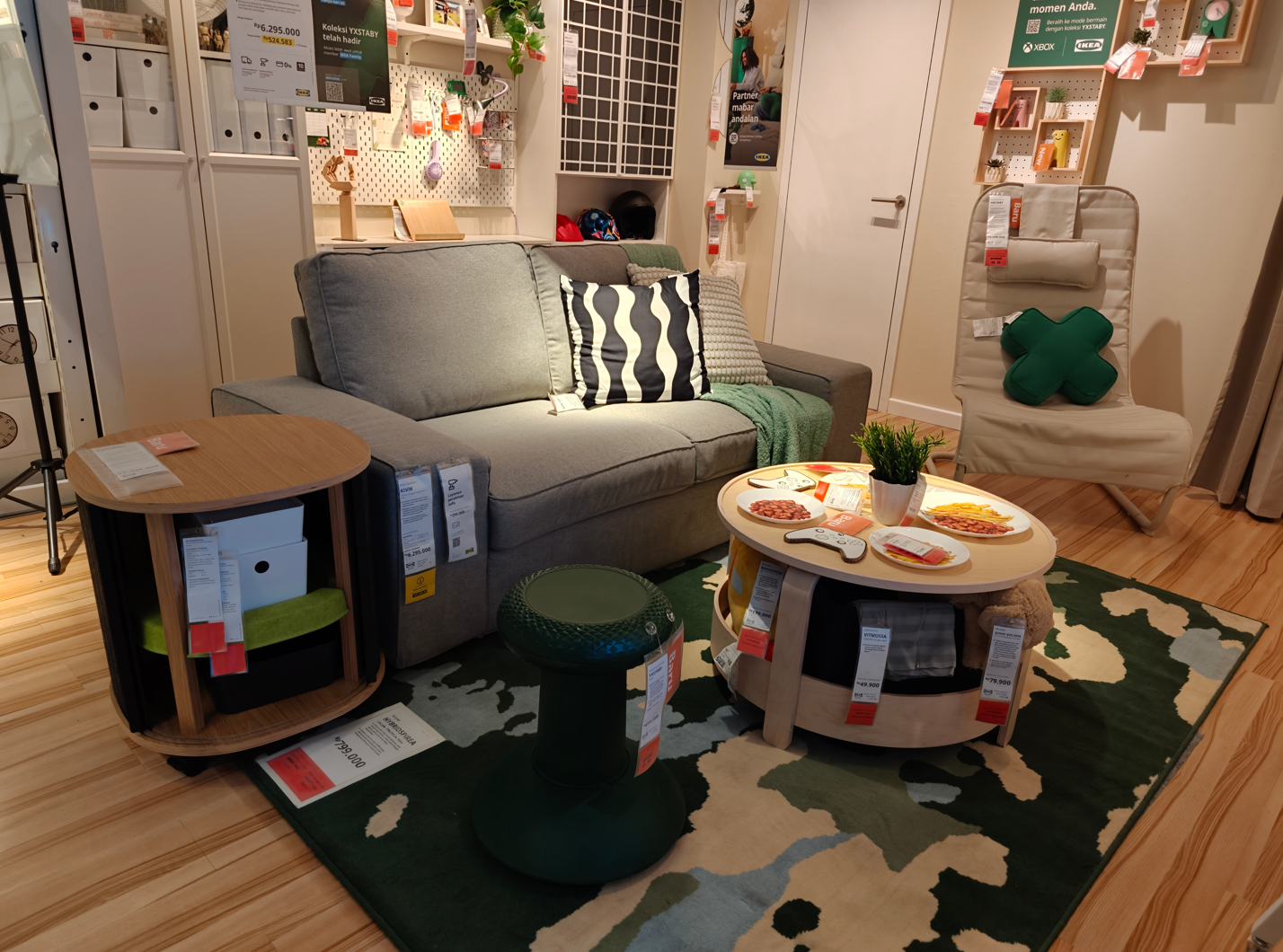
The core philosophy of the YXSTABY collection rests on translating iconic gaming elements into everyday domestic objects without sacrificing room decor. Certain items draw direct inspiration from hardware aesthetics, such as seating surfaces mimicking analog thumbsticks and cushions modeled after the directional pad (D-pad). Simultaneously, other products prioritize practical, behind-the-scenes utility—addressing common domestic gaming pain points such as mobile screen positioning, peripheral storage, thermal and cable management, and device charging solutions.

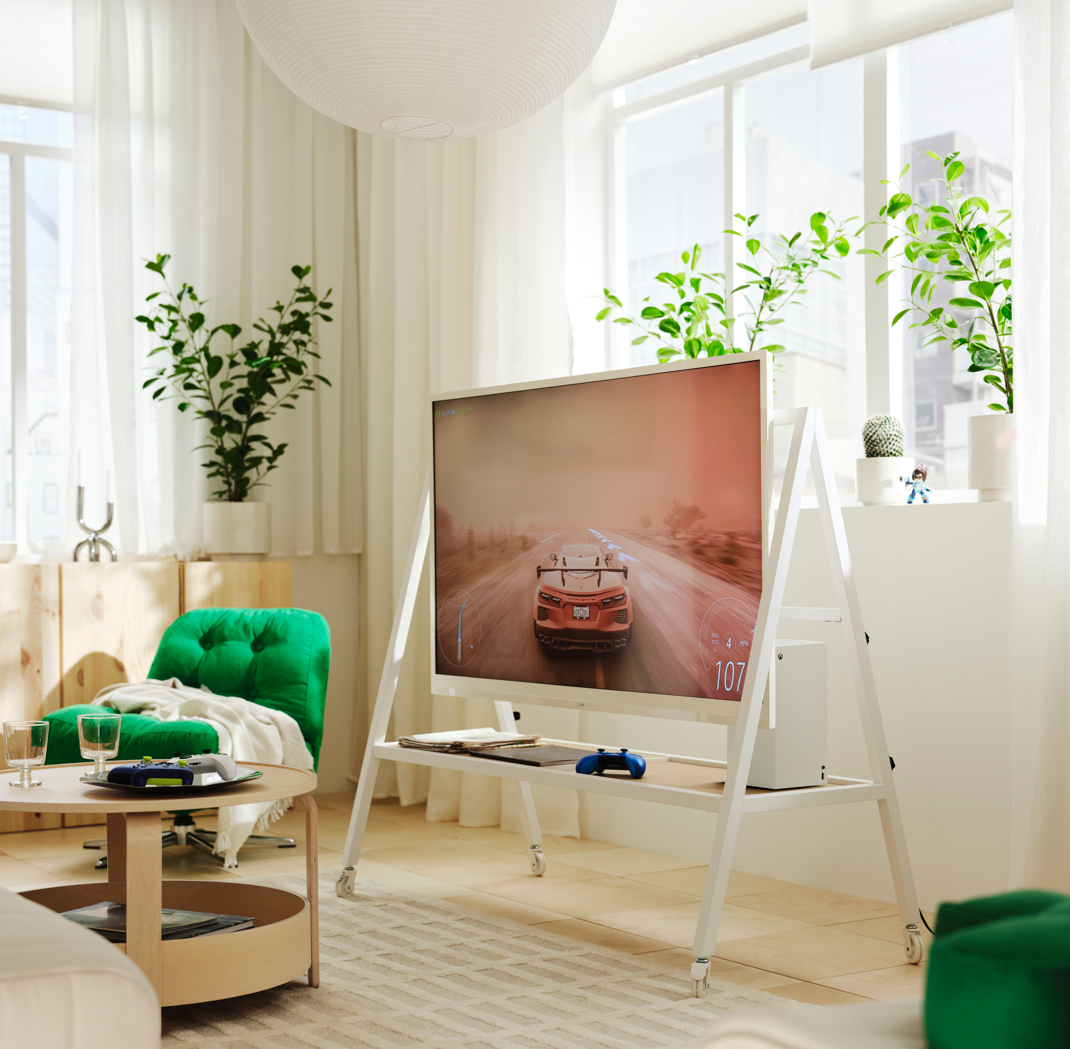
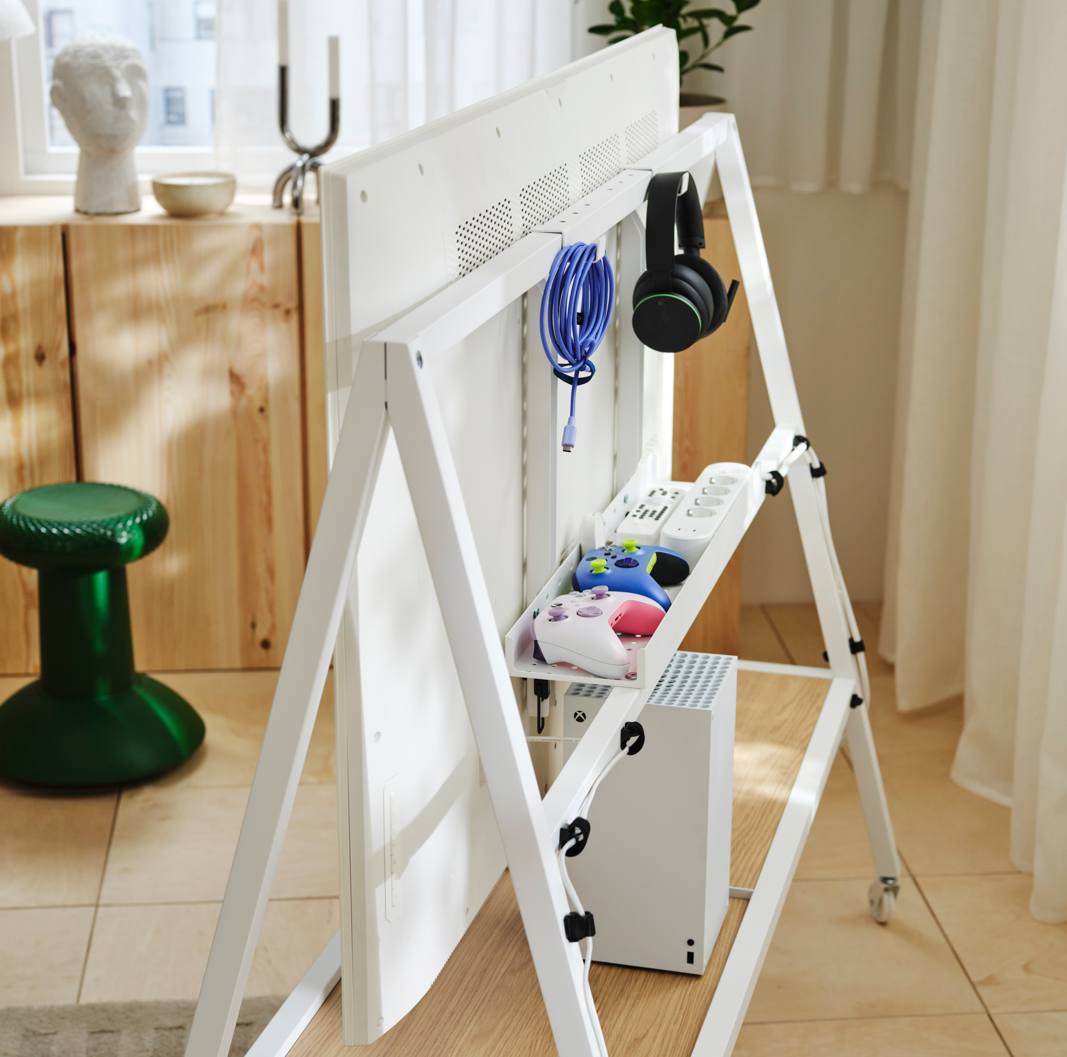
Leading the collection in scale is the YXSTABY TV Stand with Wheels, engineered specifically to resolve the logistical challenges of screen-based gaming in shared rooms. Priced at IDR 1,799,000, this mobile media unit measures 137 by 59.5 by 113 centimeters and is available in monochrome black or white finishes. It accommodates television displays up to 55 inches, featuring integrated shelving designed to house modern consoles, controllers, and associated peripherals, while the rear panel incorporates dedicated cable management channels to maintain a clean aesthetic in living areas.
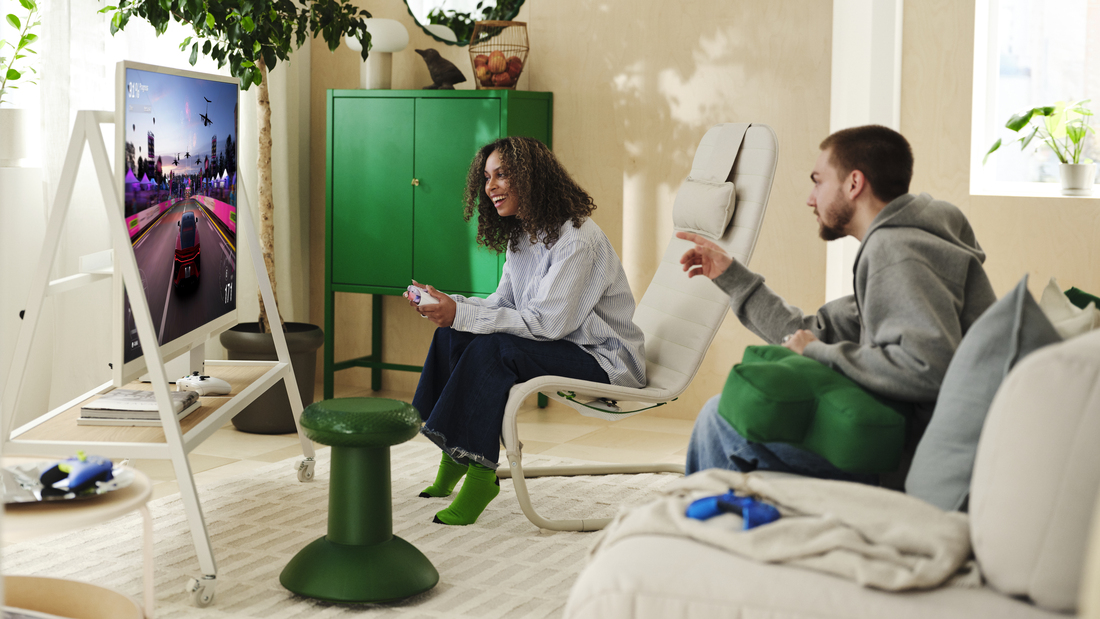
For users seeking flexible seating arrangements that do not permanently transform a living room into a dedicated arcade, the YXSTABY Gaming Lounge Chair offers an alternative. Retailing at IDR 1,999,000 with dimensions measuring roughly 60 by 70 by 113 centimeters, the chair supports a maximum weight capacity of 110 kilograms. Its lightweight frame features a dynamic backrest that intuitively adjusts to the user’s posture, shifting fluidly between a relaxed reclining stance and a forward-leaning, focused competitive posture. A discreet storage pocket is embedded beneath the seat, offering a convenient location to stow controllers or media remotes when not in use.
The Intersection of Ergonomics and Playful Design
Among the most distinctive items in the lineup is the YXSTABY Stool, which bears the most direct visual lineage to the Xbox controller. Designers utilized actual computer-aided design (CAD) 3D files from official Xbox controllers during the prototyping phase, scaling and re-engineering the geometry to meet ergonomic stability standards for human seating. The polypropylene stool, available in black and green colorways for IDR 699,000, features a surface texture reminiscent of a thumbstick cap. Its curved base allows for subtle micro-movements and tilting, keeping users active and engaged during extended sessions.
Addressing the auxiliary needs of players, the YXSTABY Side Table with Wheels is positioned as a multifunctional mobile hub priced at IDR 2,499,000. It combines a durable surface for snacks or beverages with integrated storage compartments and a designated charging station for controllers. To preserve a tidy room appearance, the unit utilizes felt sliding doors that conceal internal clutter, while heavy-duty casters allow the table to follow the user’s movement around the house.
For enthusiasts who view their hardware as collector’s items, the YXSTABY Display Box provides a modular housing solution for IDR 399,000. Featuring a transparent stand and a mirrored back panel, the unit highlights controllers and can be mounted directly to a wall or placed horizontally or vertically on flat surfaces. The removable internal stand also allows the enclosure to house non-gaming collectibles, offering versatility beyond the initial target demographic.
Rounding out the collection is the YXSTABY D-pad Cushion, the most accessible entry point in the series at IDR 149,000. Crafted in the shape of the iconic directional cross, the soft textile pillow serves a dual purpose: providing ergonomic lumbar or arm support during gameplay sessions, and acting as a conventional decorative throw pillow once the console is powered down.
Evolution of IKEA’s Gaming Strategy
The introduction of YXSTABY marks the latest chapter in IKEA’s ongoing campaign to capture the burgeoning demographic of adult and mainstream gamers. The retailer first entered the gaming ecosystem in 2021 through a landmark partnership with Republic of Gamers (ROG), a sub-brand of hardware manufacturer ASUS, resulting in a comprehensive catalog of over 30 specialized desks, chairs, and accessory holders.
In 2024, IKEA shifted its tactical approach toward subtler lifestyle integration with the launch of the BRÄNNBOLL collection, which focused on transforming gaming gear into multi-use residential furniture. The YXSTABY collaboration continues this trajectory, establishing Xbox as the first major console manufacturer to directly co-design a residential furniture ecosystem with the Swedish retailer. By focusing on modularity, mobility, and aesthetic restraint, the collection addresses a key market demand: the desire for functional gaming optimization that respects the spatial and visual boundaries of shared domestic environments.








