Nila Kartika Wati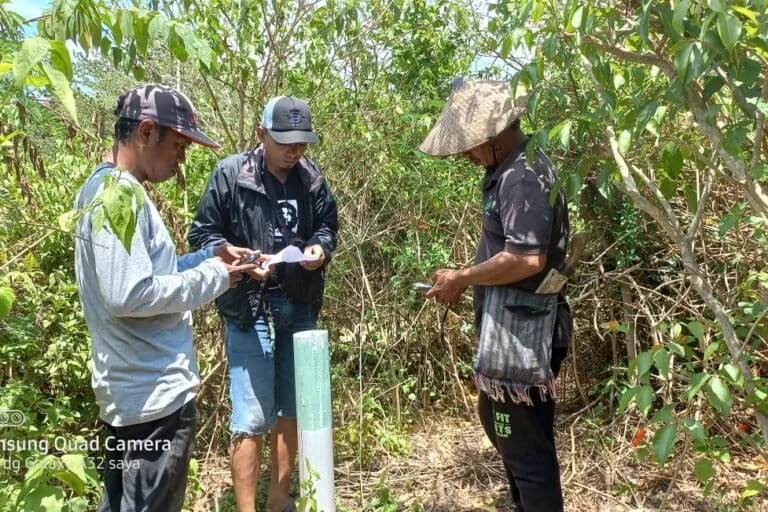
The Pekurehua indigenous community in Poso, Central Sulawesi, is currently navigating a series of relentless agrarian challenges that threaten their ancestral lands and traditional way of life. For years, the community was embroiled in land disputes with the plantation firm PT Sandabi Indah Lestari (SIL) across the districts of Lore Timur and Lore Peore. However, the expiration of the company’s Cultivation Rights Title (HGU) did not result in the return of the land to the indigenous inhabitants. Instead, a new and potentially more complex conflict has emerged with the arrival of the Indonesian Land Bank (Badan Bank Tanah), which has claimed the area under the Right to Manage (HPL) scheme.
This transition from corporate control to state-managed land banking is a direct consequence of the Job Creation Law (Omnibus Law), specifically regulated through Government Regulation Number 64 of 2021 concerning the Land Bank. Since its inception, a network of civil society organizations known as the Koalisi Kawal Pekurehua (Coalition to Guard Pekurehua) has warned that the Land Bank risks becoming a state instrument that perpetuates long-standing agrarian conflicts rather than resolving them.
The Shift from Corporate HGU to State Land Bank
The root of the current tension lies in the 6,648 hectares of land formerly held by PT SIL. When the company’s lease ended, the Pekurehua people expected the state to recognize their ancestral rights and redistribute the land back to the community through a formal agrarian reform process. Contrary to these expectations, the government transferred the land to the Land Bank.
Dana Prima Tarigan, Head of the Strategic Communication and Network Department at Walhi National (The Indonesian Forum for Environment), argues that the Land Bank’s takeover of the ex-HGU SIL land demonstrates a lack of political will from the state to resolve agrarian conflicts. According to Tarigan, the move fails to restore the living spaces lost by indigenous communities during the era of monoculture plantation expansion.
"If the state truly sided with the people, the Land Bank should be abolished because it only serves to extend agrarian conflicts," Tarigan stated. He emphasized that the Ministry of Agrarian Affairs and Spatial Planning/National Land Agency (ATR/BPN) must immediately implement genuine agrarian reform for indigenous communities and guarantee the restoration of their territories.
Impact on Indigenous Livelihoods and the Role of Women
The Pekurehua people, particularly the women of Watutau Village, have been at the forefront of the struggle to reclaim their land. For these communities, the disputed territory is not "idle land" but a productive landscape used for growing vegetables, chilies, and other essential food crops.
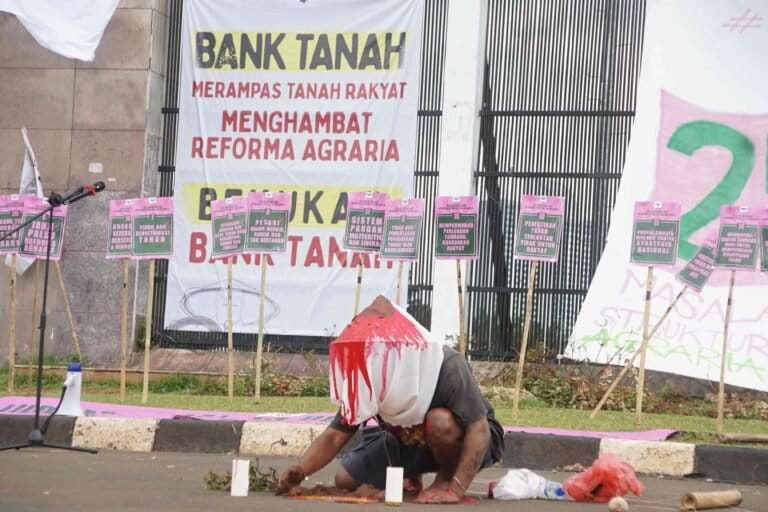
In May 2026, representatives of the Pekurehua women traveled from the Napu Valley in Central Sulawesi to the capital, Jakarta, to voice their grievances. One representative expressed the emotional and economic toll of the conflict, noting that they had to leave their families behind to fight for land that they believe was unjustly seized by the Land Bank.
"We indigenous women of Pekurehua have come all the way from Tanah Napu to Jakarta, leaving our families to fight for our rights taken by the Land Bank Agency," she said. The loss of land is particularly devastating for women, who are often the primary managers of household food security and traditional knowledge.
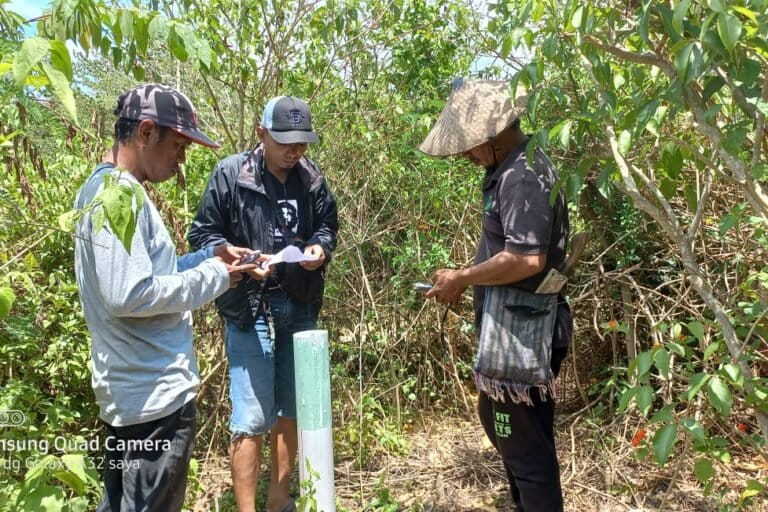
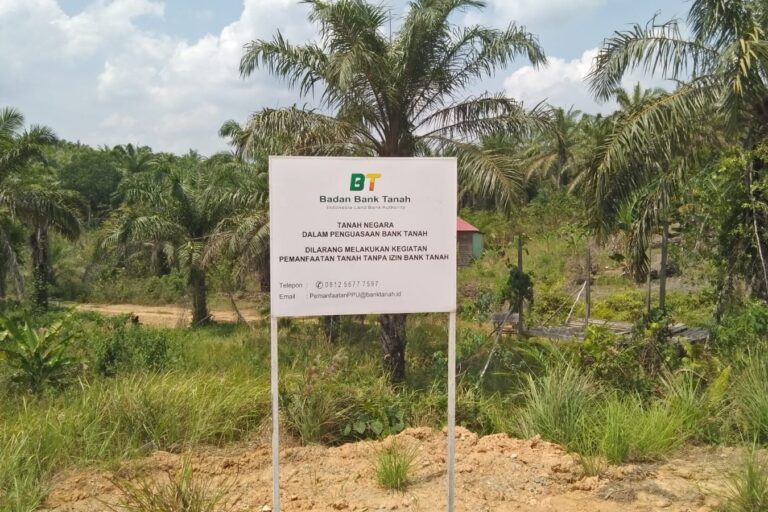
Walhi Central Sulawesi has reported that the presence of the Land Bank has exacerbated tensions in several villages, including Watutau, Moholo, Wingowanga, Kalemago, and Alitupu. Residents report a climate of intimidation characterized by the installation of boundary markers without prior consultation, a massive militaristic presence, and the stigmatization of those who attempt to defend their farms.
Hilman, the Manager of Legal Studies and Environmental Litigation at Walhi Central Sulawesi, noted that the state’s approach has been repressive. Under the guise of "strategic food security projects," the government has allegedly used security forces to silence democratic space and suppress indigenous claims. This has led to deep psychological trauma, especially among women who now live in a state of constant fear and insecurity.
Spatial Analysis and the Violation of Indigenous Rights
The Jaringan Kerja Pemetaan Partisipatif (JKPP), or Participatory Mapping Network, has tracked the Land Bank’s activities since early 2023. According to Imam M. from JKPP, the agency has installed markers and signs across 6,648 hectares in Lore Timur and Lore Peore.
JKPP’s spatial analysis reveals that approximately 2,840.68 hectares of the claimed area fall directly within the indigenous territory of the To Pekurehua Wanua Watutau. This area is not vacant; it includes active settlements, gardens, rice fields, communal livestock grazing areas, and fish ponds. Furthermore, the territory is a vital component of the Lore Lindu Biosphere Reserve, an area protected through traditional indigenous conservation practices.
The unilateral claim by the Land Bank is viewed as a violation of Central Sulawesi Provincial Regulation No. 37/2012, which mandates Free, Prior, and Informed Consent (FPIC)—known locally as Padiatapa. Critics argue that by failing to obtain the community’s consent, the state is effectively reviving colonial-era land principles.
Amelia from the NGO Solidaritas Perempuan (Women’s Solidarity) highlighted that the agrarian resources in question—land, water, forests, and seeds—are the backbone of the community’s survival. "The unilateral claim is not just a takeover of space; it is an act of structural impoverishment by the state against women," she remarked.
The Legal Controversy: Agrarian Reform vs. Investment Facilitation
The Land Bank has been a subject of intense legal debate in Indonesia since its introduction in the Omnibus Law. Benni Wijaya, Head of the Campaign and Knowledge Management Department at the Consortium for Agrarian Reform (KPA), asserts that the agency is legally flawed.
In early 2026, the Minister of ATR/BPN issued Circular Letter Number B/LR.03.01/48/1/2026, which outlines a mechanism for agrarian reform through the Land Bank. Under this scheme, the Land Bank provides land to the people through a time-bound "Right to Use" (Hak Pakai) rather than permanent ownership.
KPA argues that this narrative is a "sweetener" designed to deceive the public. "The Land Bank is actually a new mode for the government to seize community land, rather than a solution to the agrarian mess in Indonesia," Wijaya said. He noted that in the last two years, KPA has recorded at least eight major agrarian conflicts triggered by the Land Bank’s unilateral claims.
Dewi Kartika, Secretary General of KPA, further criticized the HPL (Right to Manage) mechanism. She argues that it revives the domein verklaring principle from the Dutch colonial era—a concept that the 1960 Basic Agrarian Law (UUPA) sought to abolish. This principle assumes that any land not proven to be owned by an individual belongs to the state, effectively stripping indigenous communities of their customary titles.
The Land Bank’s authority is remarkably broad, covering land planning, acquisition, management, and redistribution. KPA contends that while the government claims the bank supports agrarian reform, its actual orientation is heavily skewed toward land procurement for infrastructure and large-scale investment.
The Government’s Defense and Procedural Justification
In response to these allegations, the Land Bank Agency maintains that its operations are fully compliant with the law and are intended to support the national agenda. Wahyu Wibowo, Secretary of the Land Bank Agency, explained that the agency follows the directives of President Prabowo Subianto to strengthen agrarian reform.
According to Wibowo, the 10-year "Right to Use" mechanism is designed to ensure land productivity and prevent the immediate sale or conversion of redistributed land. "After 10 years, if it is proven that the land is being utilized for economic value, the status can be upgraded to Ownership Right (Hak Milik)," he explained.
Wibowo also clarified that the Land Bank does not unilaterally choose the recipients of redistributed land. Instead, the selection process is handled by the Agrarian Reform Task Force (GTRA), which includes local government officials such as sub-district heads and village chiefs. The Land Bank’s role is to conduct the Inventory of Ownership, Possession, Use, and Utilization of Land (IP4T) to validate the data before reporting to the Minister.
"If it is said that we are eliminating agrarian reform, it is quite the opposite. We are mandated to carry out agrarian reform," Wibowo asserted. He insisted that the Land Bank scheme does not cancel out existing proposals for Land Objects for Agrarian Reform (TORA), whether individual or communal.
Broader Implications and Ongoing Conflicts
The conflict in Poso is not an isolated incident. Similar tensions involving the Land Bank have been reported across Indonesia:
- East Kalimantan: Land procurement for the new capital city (IKN) airport has seen the Land Bank claim community lands with unclear compensation, leading to ongoing court battles.
- Cianjur, West Java: The Land Bank’s operations in areas already designated for agrarian reform have led to overlapping claims and heightened social friction.
- Sigi, Central Sulawesi: Lands that were supposed to be redistributed to residents under the TORA scheme were instead absorbed into the Land Bank’s HPL, sparking local protests.
The Koalisi Kawal Pekurehua and other civil society groups continue to demand that the government revoke the Land Bank’s HPL in Watutau and restore indigenous rights. They argue that as long as the Land Bank operates under its current legal framework, it will remain a source of instability, criminalization, and land dispossession for Indonesia’s most vulnerable communities.
As of the latest reports, representatives from the Land Bank, including Poso Project Team Leader Mahendra Wahyu and public relations staff, have been contacted for official statements regarding the specific allegations in Pekurehua. While promises of a formal response were made, no detailed rebuttal has been provided to address the community’s claims of land grabbing and intimidation.
The struggle of the Pekurehua people serves as a critical test case for Indonesia’s agrarian policy. It highlights the fundamental tension between a state-led investment model and the constitutional rights of indigenous peoples to their ancestral domains. Without a shift toward transparent, inclusive, and rights-based land management, the "land bank" model may continue to be viewed not as a solution, but as a catalyst for further unrest.