Bambang Pamungkas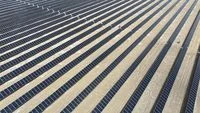
The global landscape is currently gripped by an undeniable wave of energy transformation. The international imperative for decarbonization has transcended its origins as a mere environmental narrative, evolving into a critical geopolitical and geoeconomic instrument that will ultimately determine the competitive standing of nations in the 21st century. Against this backdrop of rapid global shifts, President-elect Prabowo Subianto has articulated a profoundly ambitious and strategic national vision: the development of 100 Gigawatts (GW) of Solar Photovoltaic (PV) power infrastructure across Indonesia.
This monumental vision extends far beyond a technical target to simply meet renewable energy quotas on paper. It is a powerful declaration of national sovereignty, asserted amidst the inherent fragility and volatility of the global fossil fuel supply chain. However, to ensure this colossal initiative does not devolve into a "proyek mercusuar" (lighthouse project) that unduly burdens the state treasury or replicates past structural failures, its implementation must be meticulously guided through the lens of "Ekonomi Pancasila" (Pancasila Economy), harmonized with the principles of modern industrial organization.
The Global Imperative and Indonesia’s Energy Landscape
The urgency for global energy transition stems from mounting climate change concerns and the international community’s commitment to the Paris Agreement, aiming for net-zero emissions. Countries worldwide are setting ambitious targets, driven by a combination of environmental responsibility, energy security concerns, and the economic opportunities presented by green technologies. For a nation like Indonesia, a signatory to the Paris Agreement with a target of achieving Net Zero Emissions by 2060 (or sooner with international support), this transition is not just an option but a necessity.
Indonesia, a vast archipelago nation with a population exceeding 270 million, currently relies heavily on fossil fuels, particularly coal, which accounts for over 60% of its electricity generation. Oil and gas also play significant roles, contributing to a domestic energy mix that is highly carbon-intensive. This dependence exposes Indonesia to the fluctuating prices and supply chain vulnerabilities of international fossil fuel markets, as highlighted by recent geopolitical events that have underscored the precariousness of energy security. The nation’s existing renewable energy target of 23% in the energy mix by 2025 remains significantly off track, with renewables currently contributing only around 12-13%. Against this backdrop, President-elect Prabowo’s 100 GW solar target represents a dramatic acceleration and a potential game-changer. Indonesia possesses immense solar energy potential, with high solar insolation levels across its equatorial regions, offering a reliable and widespread resource for PV development. However, current installed solar capacity is remarkably low, estimated at less than 1 GW, indicating the vast untapped potential and the scale of the challenge ahead.
President Prabowo’s Vision: A Paradigm Shift
The 100 GW solar power initiative, as envisioned by President-elect Prabowo Subianto, signals a profound shift in Indonesia’s national development strategy. It is a testament to a forward-looking administration that seeks to reposition the nation not merely as a participant in the global energy transition, but as a leader. The sheer scale of the target, which would exponentially increase Indonesia’s current solar capacity, demonstrates an ambition to leverage the nation’s natural endowments for strategic advantage.
This vision goes beyond simply adding renewable capacity; it is intrinsically linked to broader national objectives of achieving energy independence, bolstering national competitiveness in the global arena, and fostering a robust green economy. By significantly diversifying its energy sources and reducing reliance on imported fuels and volatile fossil commodity markets, Indonesia aims to enhance its energy security. Furthermore, a massive investment in solar infrastructure and its associated industrial ecosystem is expected to stimulate economic growth, create employment opportunities, and establish new domestic industries. This strategy positions solar power as a fundamental pillar of Indonesia’s future economic resilience and its commitment to a sustainable development pathway.
Ekonomi Pancasila: Guiding the Green Transition
At the heart of this transformative agenda lies the philosophical and economic framework of "Ekonomi Pancasila," deeply rooted in Article 33 of the 1945 Constitution. This constitutional mandate stipulates that sectors vital to the state and impacting the livelihoods of the majority must be controlled by the state. Energy, as the lifeblood of modern civilization, productivity, and economic activity, unequivocally falls within this critical mandate. The initiative to develop 100 GW of solar power, therefore, cannot be perceived as an open invitation for unrestrained energy market liberalization. Instead, it must serve as a pivotal moment for the state to assume its role as the primary orchestrator ("konduktor utama") of strategic resources, ensuring the maximization of public welfare.
The core understanding to be embraced is that energy transition is not merely about substituting coal with photovoltaic panels. It is fundamentally about redesigning market structures to prevent economic benefits from being disproportionately concentrated among a select few large corporations. Without a carefully crafted market design, even "green" projects risk inadvertently creating new forms of inequality, albeit with a modern facade. This principle of distributive justice, central to Ekonomi Pancasila, demands that economic growth be pursued in tandem with equitable distribution of benefits, ensuring that the fruits of development reach all segments of society, particularly the vulnerable.
The Framework of Green Industrial Organization
To prevent the emergence of new inefficiencies and inequities, the framework of Green Industrial Organization becomes paramount. The most significant structural risk in developing massive-scale energy projects is the potential for inefficiencies stemming from either an overly monopolistic market structure or, conversely, uncoordinated market fragmentation. The 100 GW solar initiative necessitates a precisely engineered regulatory architecture to actively counter "greenwashing," rent-seeking behaviors, and the formation of new oligarchies within the clean energy sector.
A modern approach to industrial organization will ensure cost efficiency across the entire value chain, from upstream manufacturing to downstream distribution, without compromising public access to affordable electricity tariffs. Failure to properly structure the market from the outset could lead to severe consequences. Green projects, intended as solutions, might instead generate new fiscal burdens through leaked subsidies, uncompetitive tariffs, or substantial reliance on imported technology. This framework seeks to strike a delicate balance between fostering healthy competition and ensuring strategic state oversight, all while prioritizing national interests and the long-term sustainability of the energy sector.
Key Pillars of Implementation: From Downstreaming to Decentralization
The successful realization of the 100 GW solar vision hinges on several critical pillars, emphasizing self-reliance, local empowerment, and strategic control over the value chain.
Industrial Downstreaming (Hilirisasi) and Local Content (TKDN)
In the spirit of equitable development championed by Ekonomi Pancasila, economic growth must be accompanied by distributive justice. Consequently, the development of 100 GW of solar energy demands both vertical and horizontal integration, grounded in healthy business competition but firmly biased towards national interests. Vertical integration implies that the state, through State-Owned Enterprises (BUMNs) and carefully measured strategic partnerships, must gain mastery over the entire supply chain, from upstream to downstream. This encompasses the processing of silica sand into solar panel components, module manufacturing, energy storage systems, and distribution to the most remote corners of the archipelago. This aligns perfectly with the government’s strengthened agenda for industrial downstreaming. Indonesia must break free from the cycle of merely being a consumer market for foreign technology. The localization of the green energy industry must be a core pillar of the 100 GW solar project, ensuring that economic value-added remains and circulates within the country.
Furthermore, a significant threat to watch out for, from a global industrial economics perspective, is market dominance by foreign technology producers. If the government lacks a strong negotiating position in technology standardization and local content absorption, the enormous budget allocated for the 100 GW solar project could result in substantial capital flight. Policies affirming "Tingkat Komponen Dalam Negeri" (TKDN – Local Content Level) must be rigorously implemented, yet remain economically rational to avoid creating new inefficiencies. The objective is not merely to inflate TKDN figures but to genuinely build a new domestic manufacturing base. This is the crucial intersection where climate action, industrial downstreaming, and the aspiration for national economic independence converge.
Decentralization and Community Participation
The complex puzzle of this transition also requires avoiding rigid and counterproductive bureaucratic traps. Cross-sector collaboration among technical ministries, BUMNs, national private companies, global investors, and local governments must be fostered within a transparent investment ecosystem. In a Pancasila economic democracy, community participation is not a mere supplement but a fundamental element of development. Therefore, the solar energy initiative must create avenues for local energy cooperatives, village-owned enterprises (BUMDes), and local actors to engage in small and medium-scale projects. This decentralization is crucial to ensure that energy sovereignty is not just declared in the capital but genuinely experienced down to the village level. The inherent distributed nature of solar energy is a comparative advantage that can be leveraged to strengthen regional electricity supply resilience, empowering local communities and fostering self-sufficiency.
Funding the Gigantic Leap: The Sovereign Green Fund
The most intricate challenge of this transition vision lies in its funding and fiscal sustainability. The capital requirements to finance a project of this magnitude cannot be conventionally borne by the State Budget (APBN) alone. Consequently, one crucial breakthrough to be pursued is the establishment of a Sovereign Green Fund. This independent financing instrument could be built through mechanisms such as a "windfall tax" on fossil commodity profits, particularly from coal.
For several decades, the fossil fuel sector has contributed significantly to state revenues. However, the same sector has also left a substantial environmental and social burden. The implementation of a windfall tax represents a form of intergenerational justice. The non-renewable natural wealth extracted today must be converted into foundational capital for building clean energy infrastructure for future generations. By capitalizing a portion of the super-profits from fossil commodities during periods of high prices, the state can construct a robust, sovereign financing bridge for the energy transition, free from the encumbrance of foreign debt vulnerable to exchange rate fluctuations. This approach aligns with global discussions around climate finance and the principle of "polluter pays," channeling resources from historically carbon-intensive industries towards sustainable development.
Reforming Energy Subsidies and Fiscal Alignment
The transition spearheaded by the 100 GW solar initiative also demands the courage to reform energy subsidy governance. Conventional energy subsidies, often commodity-based, frequently miss their intended targets. The principle of social justice inherent in Pancasila mandates that subsidies be transformed into direct protection for vulnerable groups, while simultaneously encouraging capable segments of society to transition towards energy independence.
The fiscal space saved from refining fossil fuel subsidies can be reallocated to accelerate the development of smart transmission grids, energy storage systems, and other essential renewable energy infrastructure. The synchronization between fiscal policy and energy targets is a critical prerequisite to prevent clashes between short-term growth imperatives and the long-term vision of sustainability. This integrated approach ensures that financial resources are strategically deployed to support the overarching goals of the energy transition, rather than inadvertently undermining them through misaligned incentives.
Navigating Governance and Geopolitical Realities
Effective governance will be paramount. The success of the 100 GW solar initiative will require seamless cross-sector collaboration among technical ministries, state-owned enterprises, national private sector entities, global investors, and regional governments, all operating within a transparent and efficient investment ecosystem. Avoiding bureaucratic rigidities and fostering a responsive regulatory environment will be key to attracting the necessary capital and expertise.
From a geopolitical standpoint, Indonesia’s leadership in this ambitious energy transition in Southeast Asia holds significant implications. By successfully demonstrating the feasibility of a large-scale green energy transformation guided by principles of national sovereignty and equitable development, Indonesia could emerge as a powerful advocate and a practical blueprint for other developing nations grappling with similar challenges. This move strengthens Indonesia’s position on the global stage as a responsible and forward-thinking nation committed to climate action and sustainable development.
Implications and The Road Ahead
The 100 GW solar initiative represents a historic test for Indonesia. It will demonstrate whether the nation is capable of making a profound leap in green technology and economic governance without compromising the foundational values of Pancasila. Indonesia can no longer afford to be trapped in the outdated dichotomy between economic growth and environmental preservation. Through the lens of Ekonomi Pancasila, these two are integral components of a unified policy breath, where green energy must serve as both an engine for growth and an instrument for equitable distribution.
The success of translating this grand vision into tangible reality will depend heavily on the quality of leadership, political courage, and the technocratic capacity of the government. It will require the boldness to execute resource redistribution across sectors, notably through the proposed Sovereign Green Fund, and the depth of analytical insight to design a competitive and just energy industry architecture. This involves balancing the need for rapid deployment with the imperative to foster domestic industry, manage environmental impacts, and ensure social acceptance across diverse communities.
If this initiative is managed with integrity, professionalism, and unwavering consistency, Indonesia will not only establish itself as a pioneer in energy transition within Southeast Asia but also has the potential to forge a groundbreaking blueprint for green economic development applicable to the wider developing world. The government must ensure that the 100 GW solar target is not merely a capacity figure, but a powerful instrument for industrial sovereignty, energy justice, and the prosperity of its people. With the right direction, solar energy can serve as compelling evidence that a green transition not only cleans the skies but profoundly strengthens the very economic foundations of the nation.