Bambang Pamungkas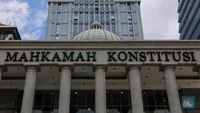
The Indonesian Constitutional Court (Mahkamah Konstitusi) has officially concluded a landmark legal proceeding regarding the 2024 Presidential and Vice-Presidential General Election Result Dispute, issuing a crucial and closely watched ruling concerning the educational qualifications of Vice President Gibran Rakabuming Raka. Convening at the main courtroom in Central Jakarta, the bench of constitutional judges delivered their comprehensive legal considerations, shedding light on the meticulous examination of foreign secondary education equivalency documents that had become a central pillar of contention among political petitioners and legal experts alike.
The high-profile verdict marks the culmination of months of intense legal scrutiny, political debates, and public curiosity surrounding the verification of credentials submitted during the registration phase of the 2024 general elections. As the highest judicial body entrusted with safeguarding the constitution and resolving electoral disputes, the Constitutional Court undertook an exhaustive review of all documentary evidence, expert testimonies, and factual disclosures presented throughout the trial proceedings before arriving at its definitive judicial stance.
Judicial Findings on Foreign Educational Equivalency
During the formal reading of the court’s legal considerations, Constitutional Justice Arsul Sani articulated the core findings of the judiciary regarding the status of the Vice President’s secondary education background. The focal point of the deliberation centered on whether the documentation provided met the strict statutory requirements stipulated under Article 169, letter r, and Article 227, letter l, of Law Number 7 of 2017 concerning General Elections (UU Pemilu), which mandates that presidential and vice-presidential candidates must possess a minimum educational attainment equivalent to senior high school (SMA) or its equivalent.
According to Justice Arsul Sani, after a thorough examination of all evidentiary exhibits submitted by the contesting parties and the factual record established during the hearings, the court determined that it could not locate any official documentation demonstrating that Gibran Rakabuming Raka possessed a valid diploma, certificate, or graduation credential confirming the successful completion of an overseas educational program equivalent to senior high school as required by the electoral statute.
This pivotal judicial conclusion was further substantiated by the formal testimony delivered during the trial by the Director-General of Primary and Secondary Education. The ministry official testified that the administrative files submitted to support the issuance of the foreign diploma equivalency letter did not include a certificate, diploma, or graduation credential. Instead, the dossier comprised a certificate of attendance, academic records, and an explanation of grades.
The court explicitly differentiated between a certificate of attendance and a formal graduation credential. Justices emphasized that a certificate of attendance serves purely as proof of physical presence and participation in an educational learning process, rather than a certification of academic completion or graduation. In standard international educational practices, a valid diploma or graduation certificate typically contains definitive terminology such as "This is to certify that [name] has been awarded," accompanied by comprehensive academic grades or transcript records that serve as the fundamental basis for conferring a formal academic degree or diploma.
Conversely, the court noted that the certificate of attendance and supplementary academic records utilized as the baseline for issuing Ministry Letter Number: 9149/D.D1/KS/2019 failed to establish academic completion. Rather, these documents merely verified course attendance. Consequently, the Constitutional Court concluded that the evidentiary threshold required by the electoral law had not been conclusively met through traditional graduation credentials, anchoring its final consideration in the strict letter of the statutory provisions.
Background and Chronology of the 2024 Election Dispute
The legal challenge surrounding the educational background of Vice President Gibran Rakabuming Raka is part of a broader, highly contentious chapter in modern Indonesian political history. The journey leading to this definitive Constitutional Court ruling began long before the gavel fell in Central Jakarta, tracing through a complex sequence of electoral milestones, administrative verifications, and escalating legal challenges mounted by various civil society groups, political activists, and legal coalitions.
The timeline of the dispute spans several critical phases:
- August to October 2023: The General Elections Commission (KPU) opened the registration window for presidential and vice-presidential candidates. During this period, candidates submitted their administrative requirements, including educational certificates, to prove compliance with statutory prerequisites. The verification process at the time cleared all candidate pairs to participate in the national ballot.
- February 2024: The democratic exercise of the presidential election took place nationwide, culminating in the official vote tabulation by the KPU, which declared the ticket of Prabowo Subianto and Gibran Rakabuming Raka as the victors of the election by a significant margin.
- March to April 2024: Defeated candidate pairs filed formal petitions for the Presidential Election Result Dispute (PHPU) with the Constitutional Court, alleging various administrative and procedural irregularities, including challenges directed at the eligibility and qualifications of the vice-presidential candidate.
- Mid-2024 to Late 2025: As the political transition concluded and the new administration was inaugurated into office, legal scholars and advocacy groups continued to press for transparency regarding administrative records, prompting subsequent legal maneuvers and public hearings to examine the evidentiary basis of foreign educational equivalency letters.
- October 2026: The Constitutional Court formally finalized its comprehensive review and delivered its conclusive legal ruling on the specific educational dispute, bringing judicial closure to this specific facet of the election aftermath.
The prolonged debate underscored the intense public scrutiny facing public officials in the digital and democratic era, where the verification of personal histories, academic credentials, and administrative compliance is frequently subjected to rigorous legal challenges by political opponents and civil society watchdogs alike.
Official Responses and Institutional Perspectives
Following the public reading of the Constitutional Court’s considerations, various political figures, legal analysts, and government representatives offered diverse reactions and interpretations regarding the implications of the ruling.
Representatives from the executive branch and legal defense teams representing the relevant parties maintained that the administrative processes undertaken during the initial candidate registration phase complied with the applicable regulations enforced by the election organizing bodies at the time. They argued that the equivalency letters issued by the authorized government bodies—specifically the Ministry of Education—served as valid administrative acknowledgments of educational attainment based on the guidelines and assessment mechanisms available during the evaluation period.
Conversely, legal representatives for the petitioners and various civil society organizations hailed the court’s detailed consideration as an important milestone in judicial transparency and institutional accountability. They contended that the explicit judicial findings highlight the necessity for stricter standardization, enhanced verification protocols, and absolute transparency when evaluating foreign academic credentials for individuals seeking high public office. These groups emphasized that upholding the integrity of statutory requirements, such as those outlined in the Election Law, is vital for maintaining public trust in democratic institutions.
Independent legal scholars and constitutional law experts have also weighed in, noting that while the ruling offers profound legal clarifications regarding the nature of attendance certificates versus graduation diplomas, it also opens up critical discussions regarding the administrative coordination between educational ministries and electoral administrative bodies. Experts have pointed out the necessity of streamlining verification procedures to prevent future ambiguities regarding domestic and foreign educational equivalency.
Broader Implications and Future Outlook
The conclusion of this constitutional proceeding carries far-reaching implications for Indonesia’s political and legal landscape. Beyond the immediate parties involved, the ruling serves as a vital benchmark for future electoral administration, setting a definitive judicial precedent on how administrative documents, foreign school credentials, and statutory qualifications must be evaluated and verified.
Several key areas are expected to be impacted by this judicial development:
- Electoral Administration Reform: The General Elections Commission (KPU) and the Election Supervisory Board (Bawaslu) face increased pressure to refine their administrative verification protocols, particularly concerning the validation of foreign educational degrees, certificates, and equivalency letters. Clearer guidelines will likely be demanded to ensure absolute alignment between administrative decrees and statutory mandates.
- Legal Precedent for Qualifications: Future candidates running for public office at regional and national levels can anticipate more rigorous background checks and heightened scrutiny from both electoral organizers and political opponents regarding the authenticity and completeness of their educational documentation.
- Public Trust and Transparency: The exhaustive nature of the court’s examination demonstrates the judiciary’s commitment to addressing contentious public grievances through factual and evidence-based legal reasoning. Maintaining this standard of transparency is viewed as essential for strengthening democratic resilience and upholding the rule of law in Indonesia.
As the political dust settles following the culmination of this high-stakes constitutional review, the focus of the nation now pivots toward policy implementation, governance, and institutional reforms aimed at fortifying the integrity of Indonesia’s electoral and administrative systems for generations to come.