Nila Kartika Wati
The recent wave of rolling blackouts across several major cities in Java and Sumatra has left the Indonesian public and the business community in a state of significant distress. From large-scale manufacturing plants to micro, small, and medium enterprises (MSMEs), the sudden and repeated disconnection of the power supply has resulted in substantial financial losses and disrupted essential public services. This systemic failure has reignited a fierce national debate regarding Indonesia’s continued reliance on fossil fuels, particularly coal, and the urgent necessity of transitioning toward a more resilient, decentralized renewable energy system. Experts argue that while the government often boasts of an electricity overcapacity, the reality on the ground reveals a fragile infrastructure that is increasingly unable to cope with the dual pressures of climate change and market volatility.
The Economic Toll of Unreliable Power
The economic repercussions of these blackouts extend far beyond the immediate inconvenience of darkened homes. According to Berly Martawardaya, a Senior Economist at the Institute for Development of Economics and Finance (INDEF), the instability of the national power grid poses a direct threat to Indonesia’s investment climate. Speaking during a recent webinar titled "Behind the Blackouts: Investigating Energy System Reliability and the Urgency of a Just Energy Transition," Martawardaya emphasized that household and production costs are poised to rise as businesses are forced to invest in expensive backup generators or face halted assembly lines.
On a macro level, such instability undermines investor confidence. For a country aiming to become a global hub for electric vehicle (EV) battery manufacturing and high-tech industries, a reliable power supply is a non-negotiable prerequisite. Martawardaya noted that the current situation is an anomaly; Indonesia has spent the last decade dealing with a technical overcapacity of electricity, yet it cannot guarantee a consistent flow to its citizens. Data from INDEF further illustrates a concerning trend: Indonesia’s per capita electricity consumption remains significantly lower than that of its regional neighbors, including Malaysia, Thailand, and Vietnam. This suggests that despite the supposed surplus, the energy is either not reaching the people or the system is too inefficient to manage the load effectively.
The Coal Paradox and Domestic Market Obligations
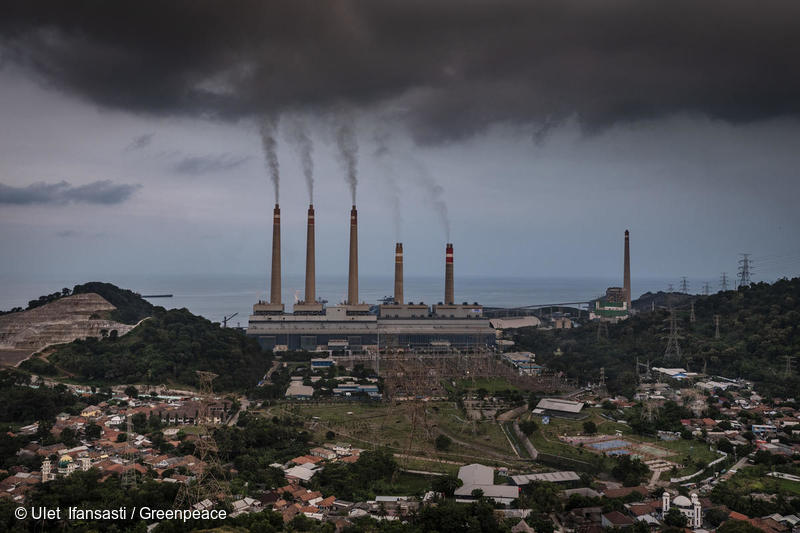
One of the primary drivers of the current crisis is the government’s persistent prioritization of fossil fuel-based power plants, specifically those fueled by coal and gas. Despite the falling costs of solar and wind energy globally, Indonesia’s energy mix remains heavily skewed toward coal. This dependency creates a dangerous vulnerability to international market fluctuations. When global coal prices spike—often driven by geopolitical conflicts or supply chain disruptions—domestic producers are incentivized to prioritize exports over domestic needs.
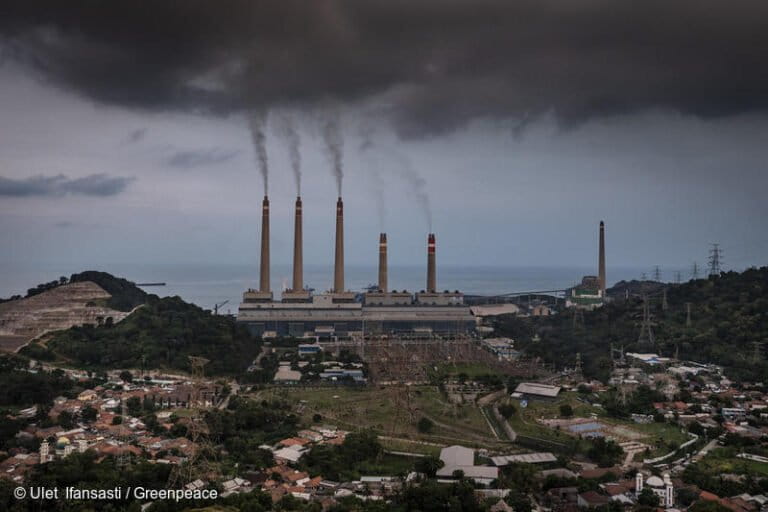
In 2024, Indonesia’s coal production reached a staggering 836 million tons, surpassing the initial government target of 711 million tons by 11%. However, of this massive output, 555 million tons were destined for export markets, where prices are significantly higher. The Domestic Market Obligation (DMO), which requires producers to supply a portion of their coal to the state electricity company (PLN) at a capped price, often struggles to compete with the allure of international profits. Currently, international coal prices can exceed $100 per ton, while the domestic cap remains around $70 per ton. This price gap leads to situations where domestic power plants face "thin" coal reserves, resulting in reduced electricity production and subsequent rolling blackouts.
Infrastructure Lag: Generation vs. Transmission
The vulnerability of the Indonesian grid is not solely a matter of fuel supply; it is also a failure of infrastructure planning. Raden Raditya Wiranegara, a researcher at the Institute for Essential Services Reform (IESR), points out that the expansion of the national power grid has failed to keep pace with the expansion of power plants. While the government has aggressively pursued the construction of new coal-fired power plants (PLTU), the development of transmission lines, distribution networks, and substation capacities has lagged behind.
Data indicates that the growth of transmission and distribution networks is hovering at approximately 1.5% to 3% annually, whereas electricity consumption across all customer categories has been growing at a rate of roughly 10.3% per year. This imbalance creates bottlenecks in the system. When a single transmission line fails, there is often no redundant path for the electricity to take, leading to a "domino effect" that can take down power across entire provinces. The massive blackout in Sumatra in May 2024 is a prime example of this fragility, where a disruption in a single high-voltage line caused a total system collapse across multiple regions.
Climate Change and Grid Vulnerability
As the world enters an era of "global boiling," extreme weather events are becoming more frequent and severe. Raditya Wiranegara notes that Indonesia’s ketenagalistrikan (electricity infrastructure) has not yet adapted to these new climatic realities. Heavy storms, lightning strikes, and flooding are increasingly threatening the physical integrity of the grid. In the Sumatra incident, lightning strikes were cited as a primary cause for the transmission failure.
A fossil-fuel-dependent system is also geographically cumbersome. Most of Indonesia’s coal is mined in Sumatra and Kalimantan, while the largest power plants are located in Java. This necessitates a long, complex, and carbon-intensive logistical chain involving trucks, trains, and barges. Disruptions at any point in this chain—whether due to weather-related shipping delays or mechanical failures at ports—directly impact the reliability of power in Java. In contrast, renewable energy sources like solar and wind can be harvested locally, significantly shortening the supply chain and reducing the number of failure points in the system.
The Failed 23 Percent Renewable Energy Target
Indonesia’s energy policy is currently at a crossroads. Government Regulation (PP) No. 79/2014 on National Energy Policy (KEN) set an ambitious goal of achieving a 23% renewable energy mix by 2025. However, with 2025 fast approaching, the nation is nowhere near this target. Currently, fossil fuels continue to dominate approximately 85% of the energy mix.
The failure to meet these targets is not due to a lack of resources. Indonesia possesses some of the world’s greatest potential for geothermal, solar, hydro, and tidal energy. Yet, the country’s renewable energy production lags behind regional peers like Vietnam, which has seen a massive surge in solar adoption. Critics point to a "coal lock-in" created by long-term power purchase agreements (PPAs) with independent power producers (IPPs) and the monopolistic structure of PLN. Under current regulations, surplus electricity produced by private entities or households (such as through rooftop solar) must be sold to PLN, often under unfavorable terms that discourage private investment in clean energy.
Centralization vs. Decentralization: A Path to Resilience
The current crisis has exposed the inherent risks of a highly centralized energy system. Beyrra Triasdian from Trend Asia argues that relying on massive, centralized power plants in Java creates a single point of failure. When these large plants or their associated transmission lines go offline, the impact is catastrophic and widespread.
Triasdian advocates for a paradigm shift toward decentralization. A decentralized system, characterized by microgrids and distributed renewable energy sources, is inherently more resilient. If one solar farm or wind turbine goes offline, the rest of the grid remains functional. Furthermore, the push for coal-fired power often overlooks the "hidden costs" borne by the public. These include the environmental degradation of mining sites, air pollution leading to respiratory illnesses, and the contamination of waterways by coal ash (FABA). When these externalized costs are factored in, coal is no longer the "cheap" option it is often portrayed to be.
Strategic Imperatives for a Just Energy Transition
To prevent future blackouts and ensure long-term energy security, experts are calling for a multi-pronged approach to energy reform. First, there must be a significant shift in funding and planning priority from building new power plants to modernizing and strengthening the national transmission grid. A "smart grid" capable of handling the intermittent nature of renewable energy is essential.
Second, the government must address the regulatory hurdles that stifle renewable energy growth. This includes reforming the PLN monopoly to allow for more competitive and transparent energy markets and providing better incentives for rooftop solar installations. The recent restrictions on rooftop solar are seen by many as a step backward, further entrenching coal dependency at a time when the world is moving in the opposite direction.
Finally, Indonesia must utilize its international partnerships, such as the Just Energy Transition Partnership (JETP), to fund the early retirement of the oldest and most polluting coal plants. Transitioning to renewable energy is no longer just an environmental imperative; it is a matter of national security and economic survival. The "byar-pet" (flickering) electricity of today is a warning of the systemic collapse that may follow if Indonesia does not act decisively to break its addiction to fossil fuels and embrace a cleaner, more reliable future.
The path forward requires a shift in the national energy paradigm from centralization to decentralization, from fossil fuel dependency to renewable self-sufficiency, and from a focus on sheer volume to a focus on system reliability and justice for the consumers who bear the brunt of every blackout.