Nila Kartika Wati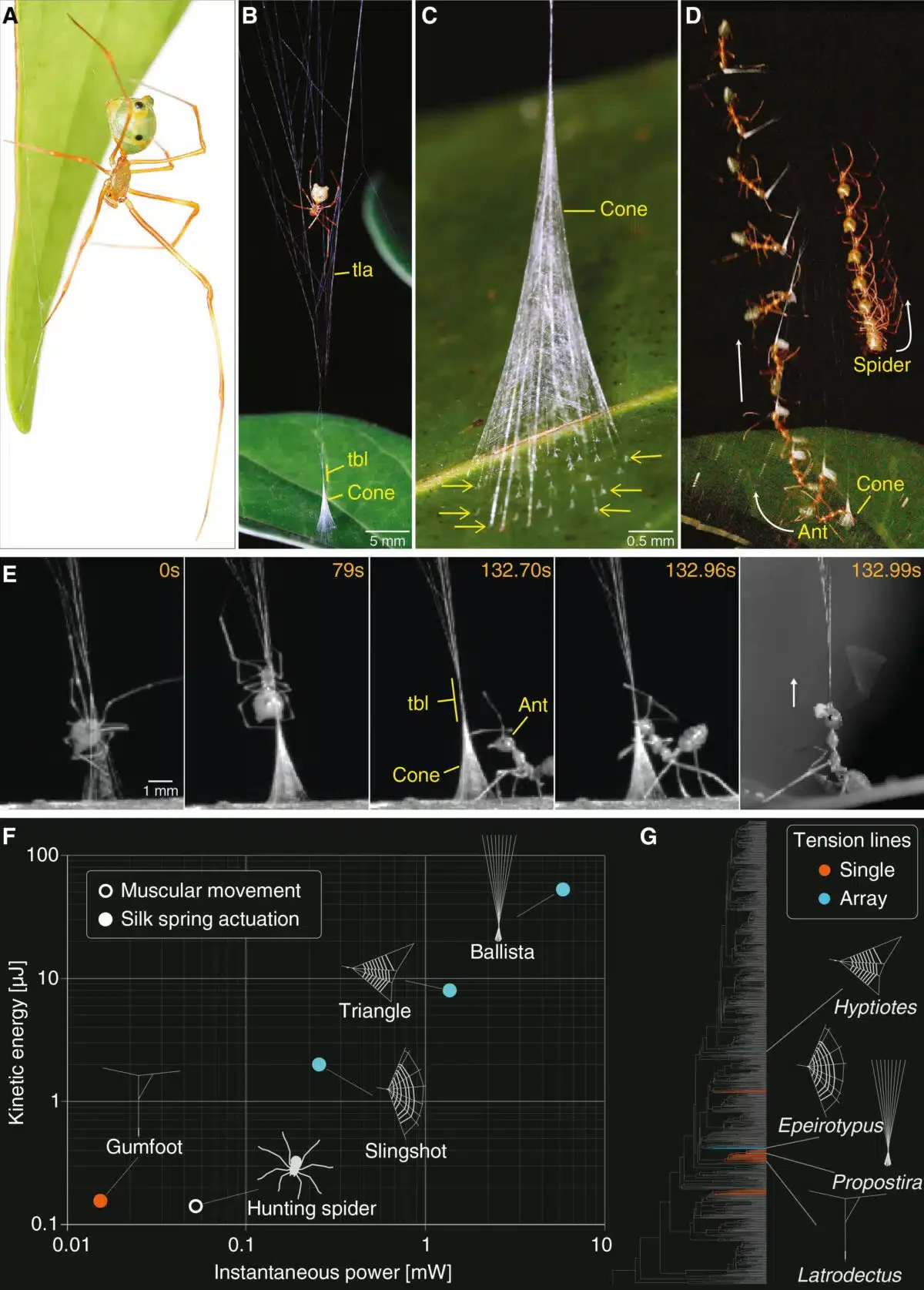
The natural world is a theater of sophisticated predatory strategies where survival often hinges on the ability to outmaneuver, outspeed, or outwit an opponent. Among the most diverse tacticians in this biological arms race are spiders, a group of arachnids that have evolved a staggering array of hunting techniques. While many are familiar with the passive, sticky orb webs or the patient sit-and-wait approach of wolf spiders, recent scientific revelations from the Australian wilderness have introduced a predator that operates on a level of mechanical complexity rarely seen in the animal kingdom. Researchers have identified a new species of spider, colloquially termed the "ballista spider," which utilizes a high-powered, spring-loaded silk trap to catapult dangerous prey off their feet. This discovery, detailed in a 2026 study published in the journal Current Biology, highlights an evolutionary breakthrough where a predator has specialized in hunting one of the most formidable and aggressive insects in the Southern Hemisphere: the weaver ant.
The research, spearheaded by Dr. Ajay Narendra of Macquarie University and Dr. Jonas O. Wolff from the University of Greifswald, provides a rare glimpse into the specialized niche of the genus Propostira. While this spider has yet to receive a full formal scientific name, its behavior has already set it apart from its peers. Unlike generalist predators that catch whatever wanders into their nets, the ballista spider has developed a mechanical system specifically tuned to overcome the defensive capabilities of the weaver ant (Oecophylla smaragdina), also known as the green tree ant. These ants are notorious for their territorial aggression, powerful mandibles, and an extraordinary ability to adhere to surfaces with a force exceeding one hundred times their own body weight. For most predators, a weaver ant colony—which can number up to five million individuals—is a "no-go zone." For the ballista spider, however, it is a primary food source.
The Anatomy of a High-Tension Trap
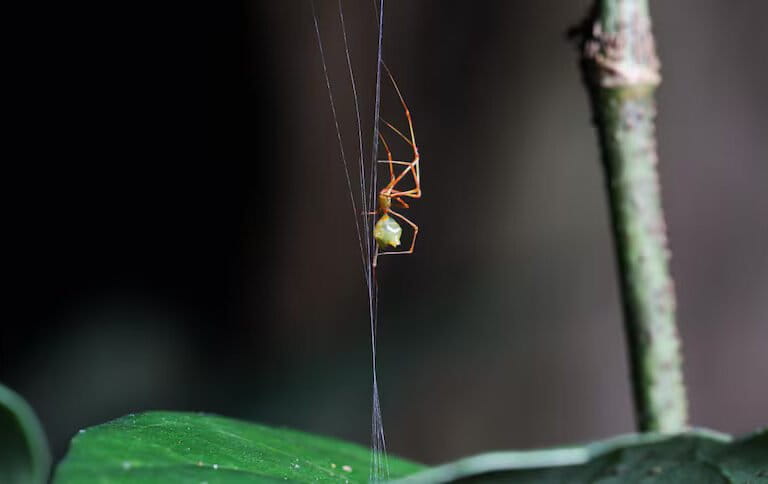
The ballista spider’s hunting strategy is a masterclass in nocturnal engineering. To understand the significance of this discovery, one must first look at the construction of the trap itself. Observations conducted by the research team in the arboreal habitats of Australia revealed that the spider remains largely inactive during the day, hiding behind the safety of leaves to avoid its own predators. The real work begins approximately 30 minutes after sunset, as the spider descends from its canopy hideout to the branches frequently patrolled by weaver ants.
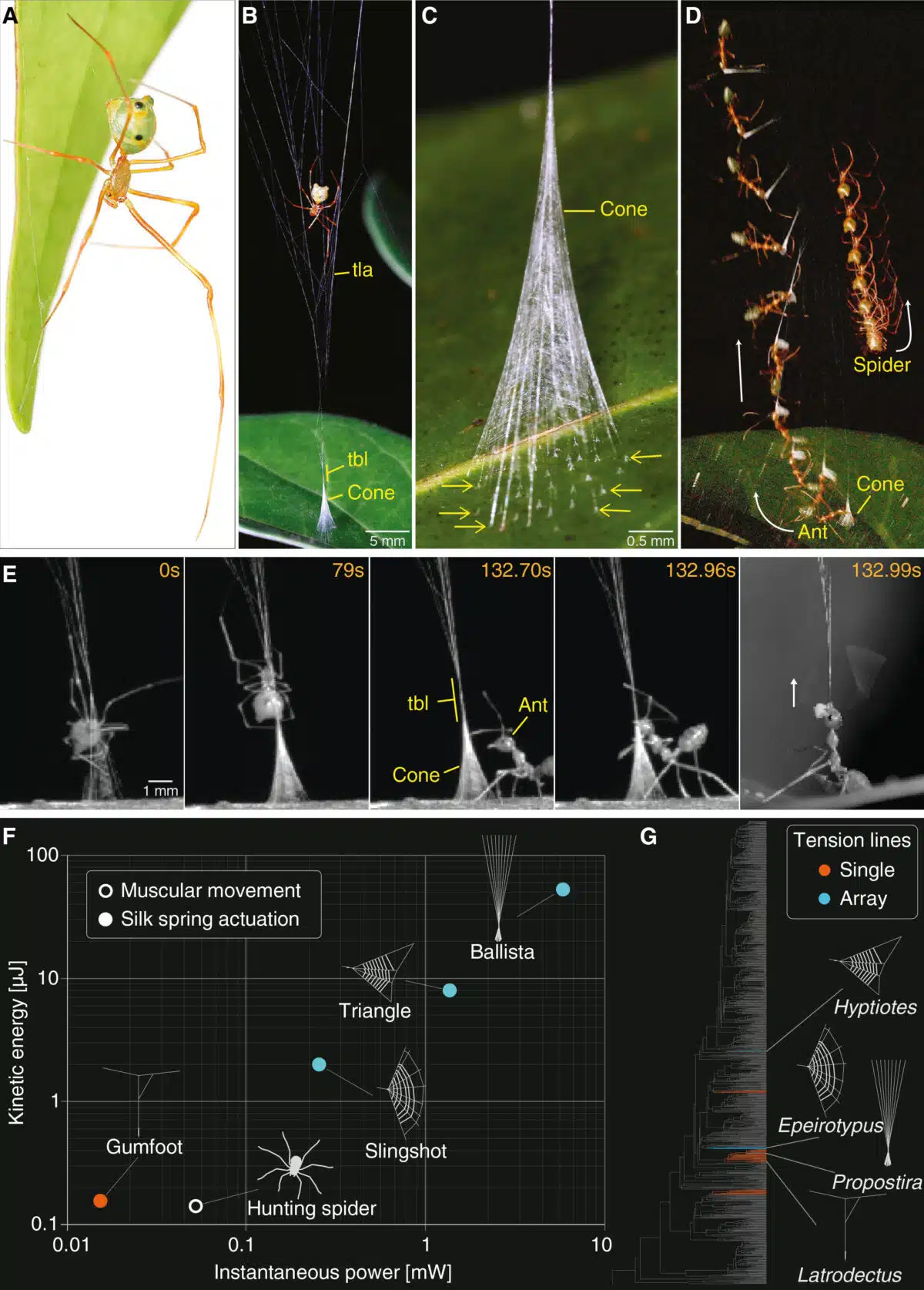
The construction process is meticulous. The spider begins by weaving a fan-shaped array of silk threads, typically consisting of 15 to 60 individual strands. These strands are not merely laid down; they are anchored to the surface of the branch and then pulled back toward a central hub, creating immense tension. At the primary anchor point, the spider constructs a small, conspicuous silk cone. This cone is then wrapped in a secondary layer of finer, more delicate silk. Once the structure is complete, the spider retreats a few centimeters above the trap, holding the "trigger" line and waiting in total stillness.
What makes this trap extraordinary is the storage of elastic potential energy. By bundling dozens of silk threads and stretching them to their limit, the spider creates a biological spring. This is not the first time spring-loaded mechanisms have been observed in spiders—the slingshot spider (Theridiosomatidae) is a well-known example—but the ballista spider’s mechanism is significantly more powerful. The researchers found that the peak power output of this trap far exceeds what could be produced by the spider’s muscles alone, indicating that the silk itself is being used as a high-performance mechanical battery.
The Chemical Lure and the Aggression Trigger
One of the most intriguing aspects of the study is how the spider manages to attract its specific target. In 15 separate observations, weaver ants were seen approaching the silk cone within a remarkably short window of 5 to 55 seconds after the spider finished its "final wrap" of the cone. In contrast, three other ant species inhabiting the same trees showed no interest in the trap, often walking right past it without a second glance.
This high level of specificity led Dr. Narendra and his team to hypothesize that the spider may be employing chemical mimicry. By adding a specific compound to the final layer of silk—potentially a substance that mimics the weaver ant’s alarm pheromones or a specific food scent—the spider effectively baits the trap. While chemical analysis is still ongoing to confirm the exact nature of this attractant, the behavioral evidence suggests a highly evolved form of "aggressive mimicry."
The weaver ant’s own biology is used against it. When a weaver ant detects the cone, its natural instinct is not to flee, but to attack. The ant investigates with its antennae and then, true to its aggressive nature, rears up and bites the silk cone. This bite is the fatal mistake. The moment the ant’s mandibles pierce the silk, the tension is released.
A 42-Millisecond Execution
The physics of the strike are almost too fast for the human eye to perceive. When the ant triggers the release, the silk fan snaps back with explosive force. In approximately 42 milliseconds, the ant is jerked upward, its powerful grip on the branch instantly neutralized by the sheer G-force of the mechanical release. The ant is often catapulted up to 28 centimeters into the air, effectively "plucked" from its environment before it can release pheromones to alert the rest of the colony.
This vertical displacement is crucial. Weaver ants are social insects; if an ant is attacked on the ground, it can often hold its position and wait for reinforcements. By launching the prey into the air, the ballista spider isolates the ant. Once the ant is suspended and disoriented, the spider moves in with lightning speed to wrap the prey in more silk, delivering a paralyzing bite to secure the meal.
The researchers highlighted that this mechanism is specifically evolved to counter the "tarsal adhesion" of the weaver ant. Because the ants can cling to surfaces so tightly, a standard web would likely fail or be torn apart. The ballista spider’s "over-engineered" approach ensures that the force applied is greater than the ant’s maximum possible grip strength.
Broader Implications and Evolutionary Context
The discovery of the ballista spider challenges several long-held assumptions in arachnology. Traditionally, it was believed that complex, high-energy traps were generalized tools meant to capture a wide variety of flying or crawling insects. The ballista spider, however, represents a rare case of "extreme specialization." By targeting a dangerous and abundant prey item that other predators avoid, the spider has carved out a secure ecological niche with little competition.
From an evolutionary standpoint, the study suggests that spring-loaded mechanisms have evolved independently across different spider families. The Propostira genus has developed a system that is mechanically distinct from the slingshot spiders of the Americas, proving that nature often finds multiple pathways to the same high-tech solution.
The implications of this research extend beyond biology into the realm of materials science and biomimicry. The ability of spider silk to store and release such vast amounts of energy without snapping is of great interest to engineers looking to develop micro-scale mechanical systems. The ballista spider’s trap is essentially a naturally occurring micro-machine, capable of performing high-speed work with minimal biological input once the energy is stored.
Scientific Reaction and Future Research
The scientific community has reacted with fascination to the 2026 findings. Dr. Jonas Wolff noted that the most impressive aspect of the ballista spider is its "risk management." Hunting weaver ants is a high-stakes gamble; a single mistake could result in the spider being swarmed and killed by the ant’s colony. By utilizing a remote-trigger, high-velocity trap, the spider minimizes its physical contact with the live prey until the prey is already incapacitated.
Future studies are expected to focus on the chemical composition of the silk lure and the exact genetic lineage of the Propostira genus in Australia. Researchers also hope to determine if this behavior is widespread across other undiscovered species in the Australian interior or if it is restricted to specific rainforest corridors.
In conclusion, the ballista spider is a testament to the endless creativity of evolution. It has turned the weaver ant’s greatest strengths—its aggression and its grip—into its ultimate weaknesses. In the quiet of the Australian night, this tiny engineer continues to set its high-tension springs, proving that in the world of predators, sometimes the best way to catch a warrior is to let the warrior trigger its own downfall. This discovery not only adds a new chapter to the book of arachnology but also serves as a reminder of how much remains to be discovered in the complex ecosystems of our planet.