Azin Asro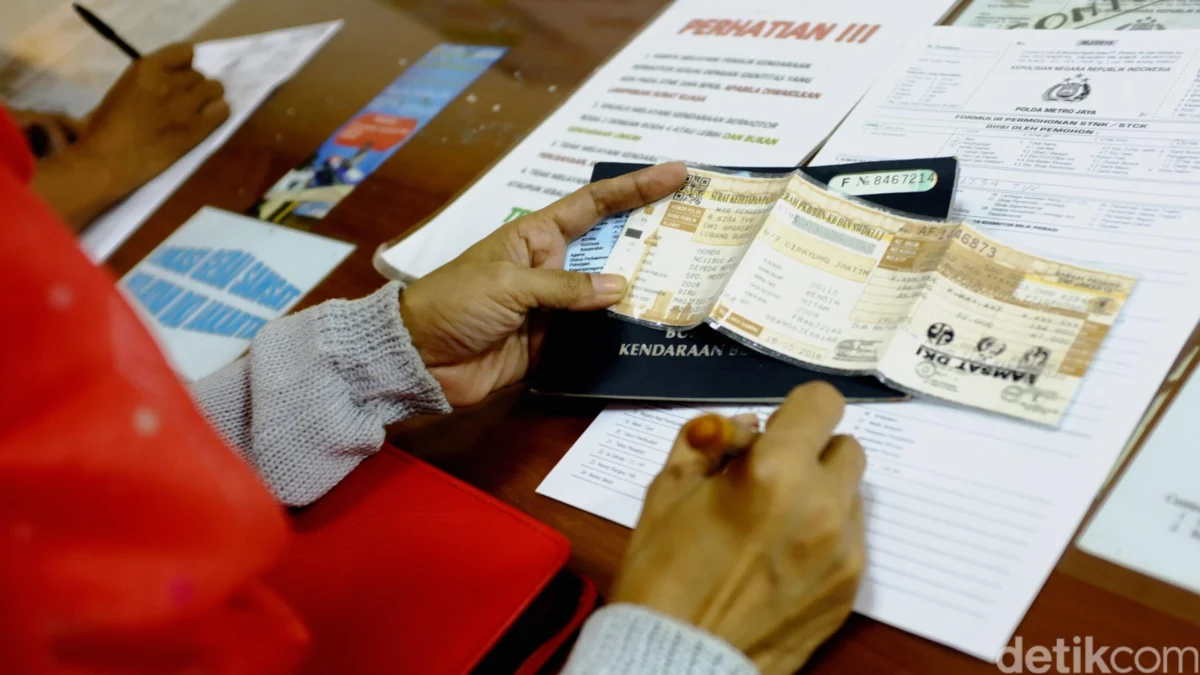
In an effort to optimize regional tax collection and update vehicle ownership databases, at least seven Indonesian provinces have officially rolled out vehicle tax amnesty programs, commonly known as pemutihan, throughout June 2026. These initiatives are designed to provide financial relief to vehicle owners while simultaneously encouraging the regularization of administrative records. The programs vary by region but generally include the waiving of administrative sanctions or fines for late payments of Vehicle Tax (PKB) and Vehicle Ownership Transfer Fees (BBNKB), as well as discounts on the principal tax amount for specific categories of taxpayers. This massive move across the archipelago comes at a strategic time as regional governments seek to stabilize their Regional Original Income (PAD) amidst evolving national economic policies.
The Strategic Context of Tax Amnesty in 2026
The implementation of these programs in June 2026 is not merely a routine administrative gesture but is deeply rooted in the enforcement of Law Number 22 of 2009 concerning Traffic and Road Transportation. Specifically, Article 74 of this law stipulates that vehicle registrations can be permanently deleted if the owner fails to renew the registration for at least two consecutive years after the expiration of the five-year STNK (Vehicle Registration Certificate). By June 2026, the National Police Traffic Corps (Korlantas Polri) and regional revenue offices (Bapenda) have intensified their synchronization of data, making these amnesty programs a "last call" for many citizens to save their vehicles’ legal status.
Furthermore, the 2026 programs are influenced by Law Number 1 of 2022 concerning Financial Relations between the Central Government and Regional Governments (HKPD). This law changed the distribution of vehicle tax revenue, giving regencies and cities a larger direct share (option) of the tax collected within their jurisdictions. Consequently, provincial governments are highly motivated to clean up their databases to ensure that future revenue projections are accurate and that the transition to the new tax-sharing scheme is seamless.
Jakarta: Automatic Waivers and Digital Integration
The Jakarta Provincial Government, through the Regional Revenue Agency (Bapenda) DKI Jakarta, has taken a leading role by issuing the Decree of the Head of the Regional Revenue Agency Number e-0018 of 2026. This regulation focuses on the "Exemption of Administrative Sanctions by Office" (Pembebasan Sanksi Administratif Secara Jabatan) for both PKB and BBNKB.
Running from June 1, 2026, to August 31, 2026, the Jakarta program is distinguished by its automated system. Unlike previous years where taxpayers might have had to file specific applications for leniency, the 2026 system automatically removes accumulated interest and fines upon payment through the official digital portals or at physical Samsat offices. This move is aimed at reducing the administrative burden on the state and minimizing physical queues.
Bapenda DKI Jakarta officials have stated that this policy is a response to the public’s need for economic breathing room. By removing the "interest burden," the government hopes to recover billions in outstanding arrears from hundreds of thousands of vehicles currently operating with expired documentation in the capital.
Central Java: A Long-Term Compliance Strategy
In Central Java, the provincial government has extended its tax relief program until December 2026, making it one of the longest-running initiatives this year. The focus in Central Java is twofold: increasing the number of active taxpayers and legalizing the status of second-hand vehicles.
The four primary pillars of the Central Java program include the exemption of BBNKB II (for second-hand vehicle transfers), the waiving of late payment fines, the waiving of progressive tax rates for those owning more than one vehicle, and a "tax holiday" for certain public transport categories. By eliminating the transfer fee for second-hand vehicles, the provincial government aims to ensure that the names listed in the database match the actual owners, which is critical for the implementation of Electronic Traffic Law Enforcement (ETLE).
Bali: Incentivizing Obedience Through Graduated Discounts
Bali has adopted a unique approach by linking tax relief to the engine capacity of the vehicle and the taxpayer’s history of compliance. Based on Governor Regulation Number 53 of 2025, which remains in full effect through June 2026, the province offers structured discounts on the principal PKB.
For vehicles with an engine capacity of up to 200 cc, a base reduction of 8 percent on the principal tax is provided. For larger vehicles above 200 cc, the reduction is set at 9 percent. In a move to reward "obedient taxpayers"—those who have no arrears from previous years—the Bali government offers an additional 10 percent discount for small-capacity vehicles and a 5 percent bonus discount for high-capacity vehicles. This model is being closely watched by other provinces as a potential "best practice" for encouraging long-term tax discipline rather than just short-term amnesty.
Central Kalimantan: Comprehensive Relief Including SWDKLLJ
The program in Central Kalimantan, which runs from May 17 to July 22, 2026, is particularly comprehensive as it includes the Mandatory Contribution to the Road Traffic Accident Fund (SWDKLLJ). Under the management of Jasa Raharja, the SWDKLLJ is a vital component of vehicle registration that provides insurance coverage for road accident victims.
In Central Kalimantan, the government is waiving fines for late PKB payments as well as SWDKLLJ fines for previous years. However, taxpayers are reminded that while the fines are waived, the "current year" premium for SWDKLLJ and the principal PKB must still be paid. Additionally, the province is offering a sliding scale of discounts on the principal tax based on how long the tax has been in arrears, providing a significant incentive for those whose vehicles have been "off the grid" for several years to re-enter the legal system.
South Sulawesi and the Short-Window Strategy
South Sulawesi has opted for a high-impact, short-duration program running exclusively from June 1 to June 30, 2026. This "sprint" amnesty offers a 100 percent waiver on administrative fines and a staggering reduction of up to 50 percent on the principal tax for specific vehicle types, particularly public transportation and freight vehicles.
The South Sulawesi Bapenda emphasized that this limited-time offer is intended to create a sense of urgency. Local data suggested that a significant portion of the province’s logistics fleet was operating with expired licenses due to the rising costs of maintenance. By halving the principal tax for a month, the government aims to revitalize the legality of the transport sector, which is a backbone of the regional economy.
Lampung and Bengkulu: Regional Variations and Arrears Erasure
In Lampung, the program launched on June 2 and will continue through August 31, 2026. The Lampung Bapenda has utilized social media platforms to educate the public on the "New Year, New Status" campaign, encouraging residents to take advantage of the BBNKB II waivers.
Meanwhile, Bengkulu has implemented one of the most generous "arrears erasure" policies. From May 1 to August 31, 2026, owners of vehicles with multiple years of unpaid taxes are only required to pay the current year’s tax to have their entire past debt cleared. This "pay one, clear all" policy is specifically targeted at low-income households and rural farmers who rely on motorcycles and small trucks for their livelihoods.
Broader Implications and Economic Analysis
The simultaneous launch of these programs across seven provinces indicates a coordinated effort between regional governments and the central authorities, including the Ministry of Home Affairs and the National Police. Analysts suggest that the primary goal is not just immediate cash flow, but the "cleansing" of the national vehicle database.
"When a vehicle’s data is accurate, the government can better plan infrastructure, manage traffic flow, and ensure that insurance protections are valid," says a transport economist from the University of Indonesia. "The 2026 amnesty programs are a bridge to a more digital and strict enforcement era. Once these windows close, we expect to see the full implementation of vehicle data deletion for persistent defaulters."
From a fiscal perspective, while the waiver of fines represents a "loss" of potential revenue, the recovery of the principal tax from tens of thousands of previously inactive accounts usually results in a net gain for the regional treasury. In 2025, similar programs contributed to a 12 percent increase in the realization of PKB targets in participating provinces.
Conclusion and Taxpayer Guidance
As June 2026 progresses, vehicle owners in Jakarta, Central Java, Lampung, Bengkulu, Central Kalimantan, Bali, and South Sulawesi are urged to check their registration status. The process has been simplified through various "Samsat Digital" apps, allowing users to verify their total bill—minus the waived fines—before visiting a payment point.
The 2026 tax amnesty cycle serves as a reminder of the evolving relationship between the Indonesian state and its taxpayers—one that increasingly favors digital transparency and compliance incentives over purely punitive measures. However, with the threat of permanent registration deletion looming under Law 22/2009, this June may well be the final opportunity for many to keep their vehicles legally on the road.