Nila Kartika Wati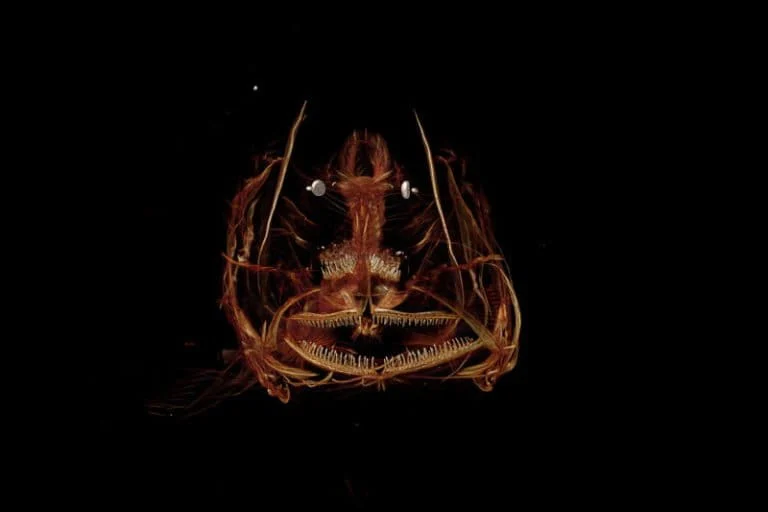
The discovery of life at depths exceeding eight kilometers has fundamentally altered our understanding of marine biology, shattering the long-held assumption that the Hadal zone—the deepest region of the ocean—is a desolate, barren void. Among the most extraordinary inhabitants of these extreme environments is the Mariana snailfish (Pseudoliparis swirei), a creature whose ethereal, translucent appearance belies its status as a highly specialized predator. Thriving in the crushing pressures of the Mariana Trench in the western Pacific Ocean, this species serves as a masterclass in evolutionary adaptation, demonstrating that life can flourish even under conditions previously thought to be physiologically impossible.
The Scientific Unveiling of Pseudoliparis swirei
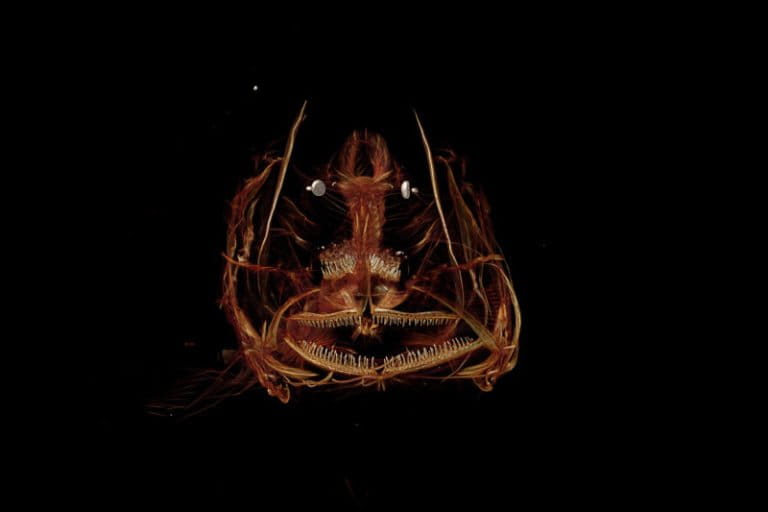
The scientific community officially recognized the Mariana snailfish in 2017, following an exhaustive analysis of specimens captured at depths ranging from 6,900 to over 8,000 meters. Researchers from a consortium of institutions, including the University of Washington and Newcastle University, conducted a rigorous examination of the fish’s morphological characteristics, including its skeletal structure, tissue composition, and genetic makeup.
The findings revealed a creature that defies the stereotypical image of a deep-sea monster. Rather than possessing jagged, oversized teeth or bioluminescent lures, the Mariana snailfish resembles a delicate, gelatinous tadpole. Its skin is almost entirely transparent, allowing observers to peer directly into its internal anatomy. Despite this fragile appearance, it reigns as a dominant predator within its isolated ecosystem, feeding primarily on the small, abundant amphipods and crustaceans that populate the trench floor.
Evolutionary Engineering Under Extreme Pressure
The survival of Pseudoliparis swirei at pressures reaching 800 times that of sea level is not a stroke of luck but a result of sophisticated evolutionary engineering. To endure the immense weight of the water column, the snailfish has undergone significant physiological modifications. Unlike shallow-water fish, it lacks a gas-filled swim bladder, an organ that would be instantly crushed by such extreme hydrostatic pressure.
Furthermore, its skeletal structure is largely cartilaginous, failing to fully ossify into dense bone. This flexibility allows the fish to maintain structural integrity where rigid bones would shatter. Genomic studies have provided further insight, revealing adaptations in cellular membranes and protein-stabilizing molecules that prevent the fish’s internal chemistry from collapsing. Research indicates that the snailfish has evolved specific mutations in genes governing pigment production and vision, allowing it to navigate and hunt in a world of absolute, permanent darkness.
A Chronology of Deep-Sea Exploration
The journey to identify and document life at these depths has been a gradual, technology-driven process. For decades, the Hadal zone was considered largely inaccessible. The following timeline outlines the major milestones in the study of ultra-deep-sea life:
- 1960: Don Walsh and Jacques Piccard reach the bottom of the Challenger Deep, providing the first human observations of life at the absolute limit of the ocean.
- 2014: Researchers deploy autonomous landers to the Mariana Trench, capturing high-definition footage of unidentified snailfish species.
- 2017: Pseudoliparis swirei is formally described and named, solidifying its place in the scientific record.
- 2023: A significant development occurs in the Izu-Ogasawara Trench, where scientists document a member of the Pseudoliparis genus at a record-breaking depth of 8,336 meters.
While the 2023 record eclipsed the Mariana snailfish’s title as the "deepest fish ever documented," the discovery underscores the importance of the Mariana specimen. Because the Izu-Ogasawara fish has not yet been taxonomically classified, Pseudoliparis swirei remains the benchmark for understanding the physiological limitations of vertebrate life in the Hadal zone.
The Biological Threshold of Existence
A critical question remains: how deep can fish actually go? Marine biologists hypothesize that there is a definitive "physiological limit" for fish life, estimated to be between 8,200 and 8,400 meters. Beyond this depth, the pressure begins to interfere with the fundamental chemistry of life.
At extreme depths, proteins and enzymes require specific molecular stabilizers to function. If the pressure exceeds the efficacy of these stabilizers, the cells cannot maintain the necessary fluid balance, leading to systemic failure. While invertebrates such as sea cucumbers and certain amphipods have been found at the very bottom of the Challenger Deep (nearly 11,000 meters), vertebrates appear to be restricted by their complex metabolic requirements. Thus, the Mariana snailfish sits near the very edge of the habitable zone for its class.
Methodology: Reaching the Abyss
Studying these creatures requires patience and specialized equipment. To document the behavior of the Mariana snailfish, researchers utilize "landers"—autonomous, weighted platforms equipped with high-resolution cameras and bait canisters. Because the water pressure is so intense, these landers must be constructed from pressure-resistant materials like titanium and high-density syntactic foam.
Once deployed from a research vessel, the landers sink slowly, taking approximately four hours to reach the bottom. Upon arrival, the researchers observe a surprising level of activity. Far from being a barren wasteland, the floor of the trench is home to a thriving community of crustaceans. In the absence of large, competing predators, the Mariana snailfish thrives, exhibiting an active hunting style that relies on the high concentration of food sources in the benthic zone.
Broader Implications for Ocean Science
The discovery and ongoing study of the Mariana snailfish have significant implications for fields ranging from evolutionary biology to astrobiology. By understanding how life adapts to the crushing, cold, and dark conditions of the Hadal zone, scientists gain valuable insights into the resilience of biological systems.
"The existence of these fish provides a blueprint for how complex life can navigate extreme environments," notes one researcher familiar with deep-sea expedition data. "It forces us to re-evaluate our definitions of ‘hostile’ environments, not just on Earth, but on other celestial bodies."
Indeed, the study of the Mariana snailfish is often cited in discussions regarding the potential for life in the subsurface oceans of icy moons, such as Jupiter’s moon Europa or Saturn’s Enceladus. If vertebrate life can evolve to withstand the immense pressures of our own deep-sea trenches, it opens the possibility that similar, albeit perhaps alien, life forms could exist in the vast, pressurized oceans beneath the icy crusts of distant moons.
A Call for Continued Conservation
Despite their remote habitat, creatures like the Mariana snailfish are not immune to human influence. Climate change, deep-sea mining interests, and the accumulation of microplastics are beginning to reach even the most isolated parts of the ocean. The discovery of Pseudoliparis swirei highlights the need for a more comprehensive understanding of these ecosystems before they are impacted by industrial expansion.
The scientific consensus is that we have barely scratched the surface of the deep ocean. With over 90% of the world’s oceans remaining largely unexplored, the Mariana snailfish is likely just one of many specialized species waiting to be identified. Its survival is a testament to the power of evolution, and its discovery is a reminder that the deep sea is not merely a geographic location, but a dynamic, living frontier.
As technology continues to advance, allowing for longer deployments and higher-resolution imaging at depth, the scientific community expects further revelations. For now, the Mariana snailfish stands as a symbol of scientific curiosity and natural wonder, a fragile inhabitant of a high-pressure world that continues to challenge our perceptions of what is possible in the deep. Future expeditions, already in the planning stages, will likely focus on the genetic pathways that allow these fish to thrive, potentially unlocking medical or biological breakthroughs related to protein stability and pressure-resistant cellular structures.
Ultimately, the story of the Mariana snailfish is one of triumph over adversity. It is a reminder that life on Earth is far more adaptable and resilient than previously imagined, and that the darkest, deepest corners of our planet hold secrets that could redefine our place in the natural world.