Nila Kartika Wati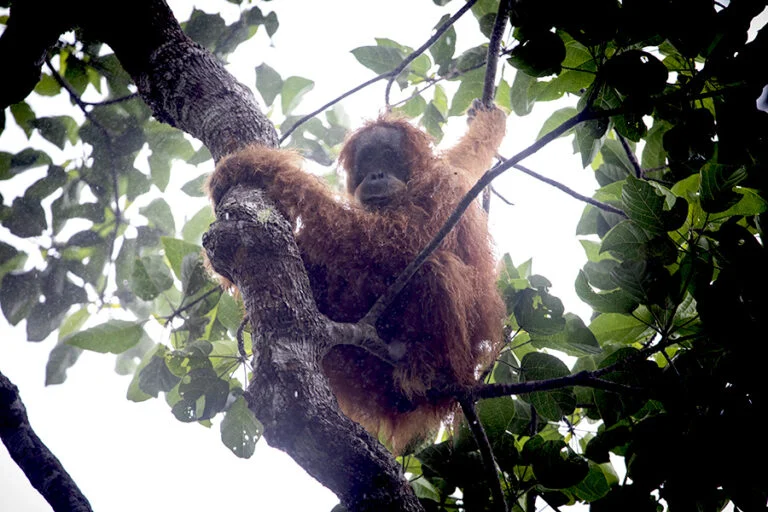
The Tapanuli orangutan (Pongo tapanuliensis), a species teetering on the precipice of extinction, faces a critical turning point as conservationists push for the urgent construction of arboreal bridges within the Batang Toru ecosystem. With the population of this highly endangered primate estimated at fewer than 800 individuals, the fragmentation of their habitat in North Sumatra has necessitated innovative, engineering-based solutions to facilitate safe movement between isolated forest blocks. Yayasan Ekosistem Lestari (YEL) is currently leading a comprehensive assessment to determine whether the installation of canopy bridges can mitigate the severe ecological damage caused by decades of deforestation and infrastructure development.
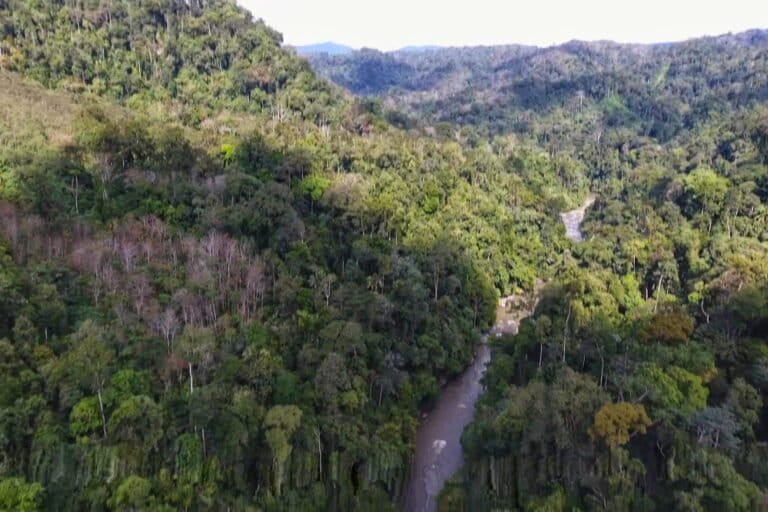
The crisis in Batang Toru is underscored by stark longitudinal data. According to YEL, the forest cover in the Hutaimbaru ecological corridor has suffered a drastic reduction, dropping from 9,958.38 hectares in 2004 to 8,980.84 hectares by 2024. In the last two decades alone, more than 1,700 hectares of critical orangutan habitat have vanished, largely due to agricultural encroachment, road construction, and industrial projects. This loss is not merely quantitative; it is a structural fracturing of the landscape that isolates metapopulations, severely limiting the genetic flow necessary for the long-term viability of the species.

The Science of Connectivity and Survival
Julius Paolo Siregar, Head of the In-Situ Conservation Division at YEL, emphasizes that the primary objective is to restore the functional link between the western and eastern blocks of the Hutaimbaru corridor. "The question we must answer is not merely when we build a bridge, but why the ecological connectivity between these two separated metapopulations is a non-negotiable requirement for their survival," Siregar explained.
The orangutan, an arboreal specialist, is biologically tethered to the canopy. When forest patches are separated by roads or steep terrain, these primates are forced to descend to the forest floor to navigate the gaps. This transition is perilous, exposing them to predators, human-wildlife conflict, potential poaching, and the risk of vehicle strikes. For a species with a slow reproductive rate, the loss of even a few individuals to these anthropogenic threats can have devastating impacts on population growth.
The degradation of the ecosystem was further exacerbated by a series of climate-related disasters in 2025, which left over 46 hectares of land—comprising both open areas and riparian zones—in a state of severe degradation. While initial restoration efforts have included the development of an arboretum, the canopy cover remains insufficient to allow for natural movement. Consequently, YEL is evaluating the use of engineered arboreal bridges as a temporary, yet vital, bridgehead while larger reforestation projects mature.
Lessons from Pakpak Bharat: A Multi-Pillar Approach
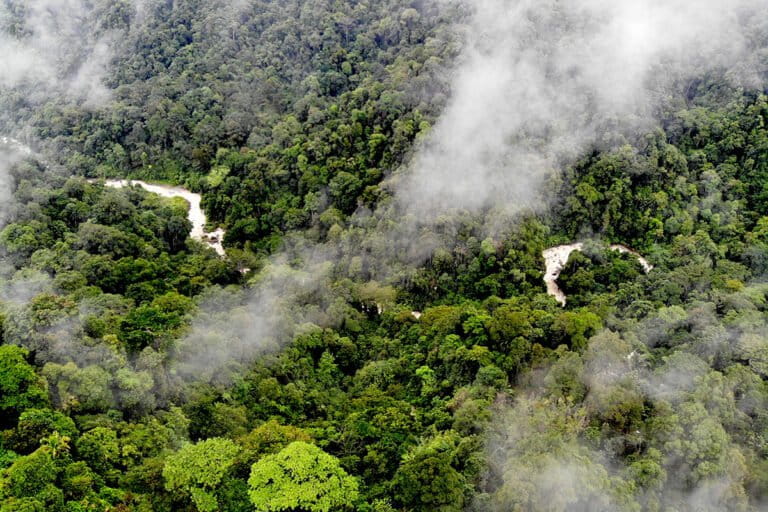
The strategy proposed for Batang Toru draws heavily from successful initiatives in Pakpak Bharat, where the Yayasan Tangguh Hutan Khatulistiwa (TaHuKah) has implemented a robust "Protect, Connect, and Rewild" framework. In Pakpak Bharat, the landscape is fragmented by three major arterial roads, including the Sumatra-Aceh National Road, which effectively bisect the habitats of approximately 350 Sumatran orangutans.
Lina Rita Silaban, West Toba Landscape Manager at TaHuKah, notes that the integration of canopy bridges is a form of "ecological reconciliation." Between 2023 and 2026, the foundation installed a series of canopy crossings. The initial implementation faced challenges; the first model, a double-rope structure, remained unused for a month, likely due to residual human scent. Subsequent designs, which incorporated ladder-like structures and tiered platforms, proved far more successful, as they catered to the behavioral preferences of larger primates.
The data gathered from March 2025 to March 2026 revealed a significant breakthrough: 14 distinct species utilized the canopy bridges, recording over 374 crossings. Most significantly, on December 14, 2025, a Tapanuli orangutan successfully completed a full crossing after days of cautious observation. This two-year period of surveillance highlighted the extreme intelligence and wariness of the species, suggesting that any future infrastructure must be designed with the animal’s psychological comfort and safety as the primary parameter.
Behavioral Insights and Technical Innovations
The design of these bridges is not a standard engineering task but an exercise in biological mimicry. Nadine Adrianna Sugianto, Head of the Research and Animal Welfare Division at the Borneo Orangutan Survival Foundation (BOSF), has provided critical insights into how orangutans navigate their environment. Her research indicates that wild orangutans spend roughly 40% of their time engaged in "irregular upright suspensory locomotion," a complex movement pattern involving the simultaneous use of limbs.
In rehabilitative settings, orangutans often struggle to master these movements because standard enclosures fail to provide the necessary "challenge" or instability inherent in a natural canopy. To address this, BOSF has experimented with three-dimensional rope netting that vibrates in response to movement, mimicking the sway of actual tree branches. This technique has been shown to increase the frequency of natural suspensory behavior, effectively preparing captive-bred individuals for life in the wild.
For large-scale wild installations, the engineering must be even more precise. Recent innovations include "Tree Saver Slings," a system of loose-fitting bindings that prevent the chafing of tree trunks and accommodate the natural growth of the host trees. This ensures that the infrastructure does not inadvertently harm the very environment it seeks to support.

Strategic Implications and Multi-Stakeholder Governance
The implementation of these bridges requires more than just biological data; it necessitates a sophisticated governance structure. YEL and other conservation stakeholders are calling for the establishment of a formal management body, sanctioned by the Tapanuli Selatan regional government, to oversee the maintenance and security of these corridors.
This management framework must address several key risks:
- Security: Preventing the use of these bridges by poachers to gain easier access to the forest interior.
- Land Tenure: Securing written agreements with local communities to ensure the corridors are not repurposed for agriculture.
- Industrial Coordination: Aligning the corridor protection plans with regional spatial planning and private sector infrastructure projects to avoid future conflict.
- Community Involvement: Engaging local residents in monitoring and providing alternative livelihoods, transforming them from passive observers into active custodians of the forest.
The cost of inaction is, by all scientific accounts, irreversible. The Tapanuli orangutan exists in a precarious state, and the isolation of its remaining population pockets is a precursor to a "genetic bottleneck," where the loss of genetic diversity will eventually lead to the collapse of the population from within.

Conclusion: The Path Forward
The proposed construction of arboreal bridges in the Batang Toru ecosystem represents a shift in conservation strategy from passive protection to active landscape management. While these bridges are not a panacea for the broader crisis of deforestation, they function as essential life-lines that allow for the movement of individuals, the dispersal of seeds, and the maintenance of genetic health across a broken landscape.
As the data from Pakpak Bharat demonstrates, the animals are willing to use these bridges once they are deemed safe and structurally sound. However, the success of these projects hinges on the commitment of government agencies to enforce land-use regulations and the willingness of developers to minimize their footprint within these critical ecological zones.
The survival of the Tapanuli orangutan will ultimately depend on our ability to reconcile the needs of a growing human population with the spatial requirements of one of the world’s most intelligent primates. If implemented with scientific rigor, community participation, and long-term institutional support, the installation of these canopy bridges could serve as a model for landscape restoration across Indonesia, providing a glimmer of hope for a species that is truly running out of time.