Nila Kartika Wati
The Pasemah region of South Sumatra stands as a silent witness to a sophisticated prehistoric era, hosting a megalithic civilization that flourished between 2,500 and 1,500 BC. This vast archaeological landscape, spanning approximately 8,000 hectares, stretches across the administrative boundaries of Lahat Regency, Pagaralam City, and Empat Lawang Regency. Within this rugged terrain, hundreds of stone artifacts provide a window into the lives of an ancient people who mastered stone carving, social organization, and ecological harmony long before the dawn of modern history. At the center of the contemporary effort to document and protect this legacy is Mario Andramartik, a self-taught researcher whose dedication has made him an unofficial spokesperson for the Pasemah highlands. Born on July 31, 1970, in Lahat, Mario’s journey from a professional career on international cruise ships to becoming a leading advocate for South Sumatran heritage highlights the growing importance of grassroots conservation in Indonesia.
The Transformation of a Cultural Guardian
Mario Andramartik, born Maryoto, spent a significant portion of his early professional life working for the Holland America Line, a world-renowned cruise company. However, the allure of his ancestral homeland eventually drew him back to the Bukit Barisan mountain range. In 2009, he made a pivotal decision to dedicate his life to the study and excavation of the Pasemah megalithic civilization. Despite lacking a formal academic background in archaeology, Mario’s approach has been rigorous and scholarly. He immersed himself in the works of pioneering researchers, such as van der Hoop’s 1932 seminal text "Megalithic Remains in South Sumatra" and William Marsden’s "The History of Sumatra."
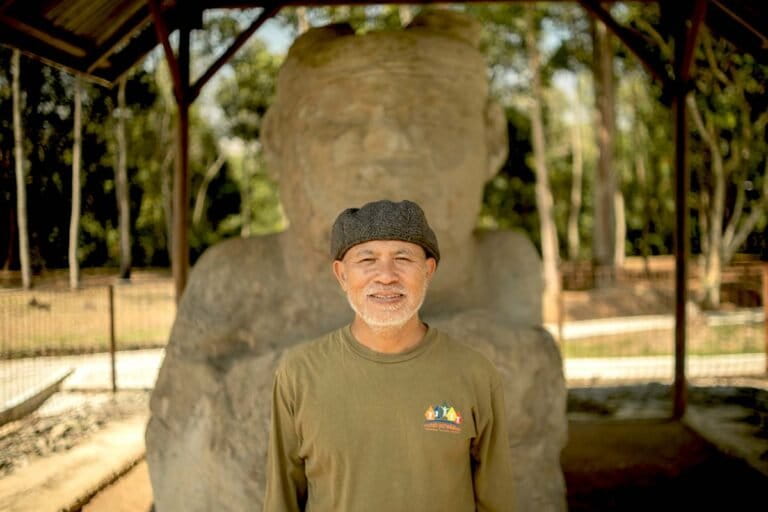
His education was further bolstered by field collaborations with prominent Indonesian archaeologists. Mario has worked alongside figures such as the late Nurhadi Rangkuti, Budi Wiyana, Siswanto, and Rr. Triwurjani, as well as contemporary researchers from the National Research and Innovation Agency (BRIN). His expertise is not confined to South Sumatra; to gain a comparative perspective, Mario has visited megalithic sites across the Indonesian archipelago—including Gunung Padang in West Java, Batu Berak in Lampung, and sites in Bondowoso—and even traveled as far as Easter Island in Chile to understand the global context of stone-based civilizations. Today, he serves as a member of the Cultural Heritage Expert Team (TACB) for Lahat Regency, bridging the gap between scientific research and public awareness.
The Unmatched Diversity of Pasemah Megaliths
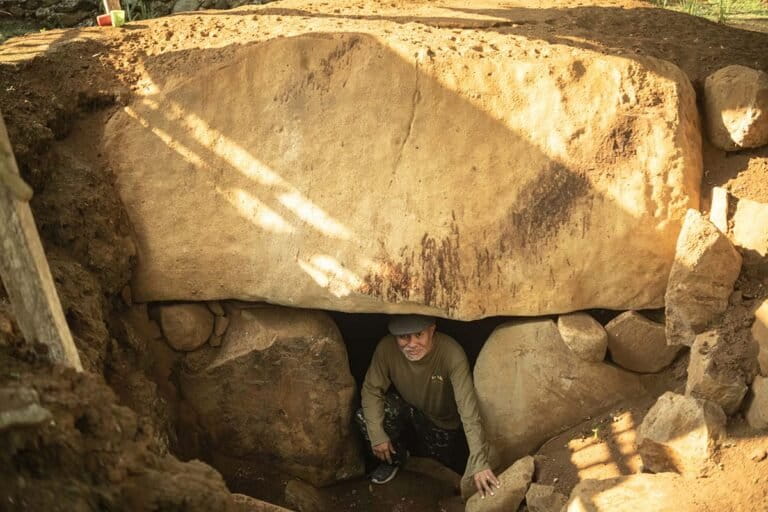
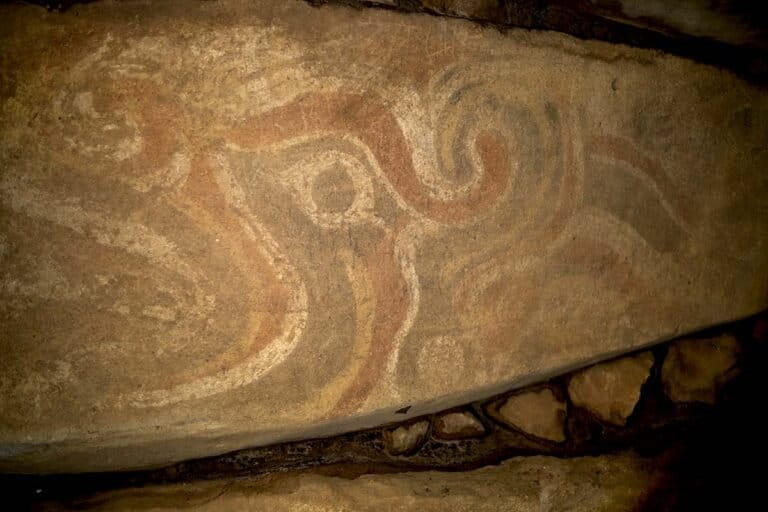
According to Mario, the Pasemah civilization is arguably the most "perfect" megalithic culture in the world due to the sheer variety of its stone structures. While famous sites like Stonehenge in England or the Moai of Easter Island are characterized by specific, repeating forms, Pasemah offers an extraordinary diversity of 15 distinct types of megalithic remains. These include arca (statues), arca menhir (statue-menhirs), menhir (standing stones), monoliths, triliths, tetraliths, batu datar (flat stones), dolmens, lesung batu (stone mortars), lumpang batu (stone bowls), batu bergores (incised stones), batu temu gelang (stone enclosures), bilik batu (stone chambers), paintings within stone chambers, and tempayan kubur (burial jars).
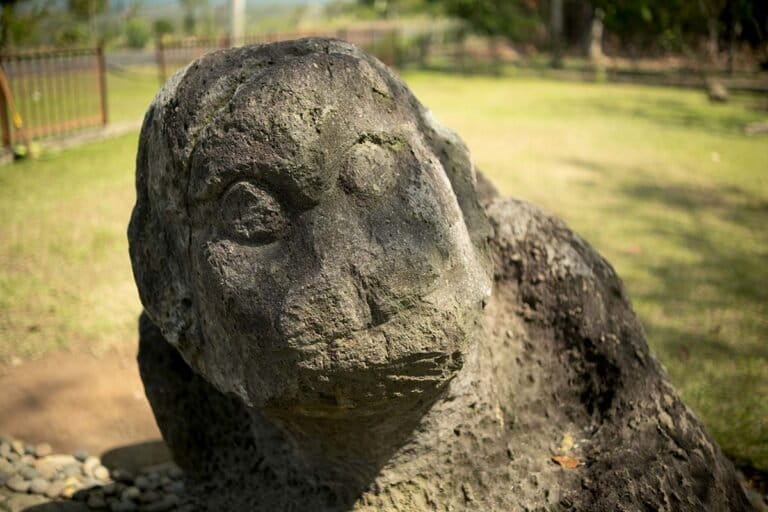
The data recorded across the landscape is staggering. There are approximately 1,165 identified megalithic objects, including 85 intricate statues and 25 stone chambers. These artifacts are not merely scattered rocks but products of a highly organized society. The creation of these massive stone works required advanced planning, a clear division of labor, strong leadership, and a large workforce. The Pasemah megaliths are particularly noted for their dynamic and expressive carvings. Unlike the static, stiff figures found in many other prehistoric cultures, Pasemah statues often depict movement, human-animal interactions, and detailed depictions of ancient fashion, including headdresses, necklaces, anklets, and patterned tunics.
Ecological Wisdom and the Austro-Melanesian Connection
One of the most profound aspects of the Pasemah civilization is its evident harmony with the natural environment. Mario’s research indicates that these ancient inhabitants were masters of sustainable living. They strategically established settlements near water sources like the Musi and Lematang rivers, yet chose elevated locations that remained safe from seasonal flooding. Their art further reflects a deep spiritual and physical connection with local fauna. Statues frequently depict humans interacting with tigers, elephants, crocodiles, and snakes. In these carvings, the human and animal forms often appear to merge, suggesting a philosophy of coexistence rather than conquest. This is encapsulated in the local wisdom of Mendale Kencane Mandulike, a traditional concept emphasizing that harmony between humanity and the universe is the ultimate source of strength and tranquility.
From an anthropological perspective, the physical features depicted on the Pasemah statues offer clues about the origins of these people. The figures possess Austro-Melanesian characteristics—round faces, curly hair, large eyes, flat noses, and thick lips—distinguishing them from the later Austronesian migrations that define much of modern Indonesia. Mario posits that while the current residents of Pasemah are largely of Austronesian descent, the megalithic builders may have been an earlier Austro-Melanesian group. This makes the region a "living laboratory" for understanding human migration and the evolution of cultural identity in Southeast Asia.
Mythology as a Tool for Conservation
In the villages of Lahat and Pagaralam, the survival of these ancient stones is often attributed to local folklore. The most enduring myth is that of Si Pahit Lidah (The Bitter Tongue), or Serunting Sakti, a legendary figure believed to have the power to turn anyone or anything into stone with a single curse. According to local belief, the megalithic statues are the remains of people or animals who crossed the legendary ancestor.
While modern science provides a different explanation, Mario acknowledges that this mythology has served as a powerful traditional conservation mechanism. Because the stones are viewed as ancestral remains or sacred objects, local farmers and villagers have historically protected them, even when the artifacts are located in the middle of coffee plantations or private rice fields. This cultural reverence has prevented the widespread destruction of sites that might otherwise have been cleared for agriculture or construction.
The Hidden Beauty of "Cughup" and the Natural Landscape
Mario’s advocacy extends beyond archaeology to the preservation of the region’s natural beauty, particularly its waterfalls, known locally as cughup. He has documented 179 waterfalls in Lahat Regency alone, viewing them as integral parts of the megalithic landscape. Among the most notable are:
- Curup Mangkok: A 70-meter, three-tiered waterfall.
- Curup Maung: Located in Atung Bungsu, this unique waterfall spreads across an 80-meter wide cliff, resembling a curtain of water.
- Curup Perigi: A 15-meter fall that forms a pristine natural swimming pool.
- Curup Buluh: A majestic seven-tiered waterfall in the Pulau Pinang district.
These natural features were likely as significant to the megalithic builders as they are to modern visitors, providing the essential water resources that allowed a large-scale civilization to thrive in the highlands.
Current Threats and the Urgency of Legal Protection
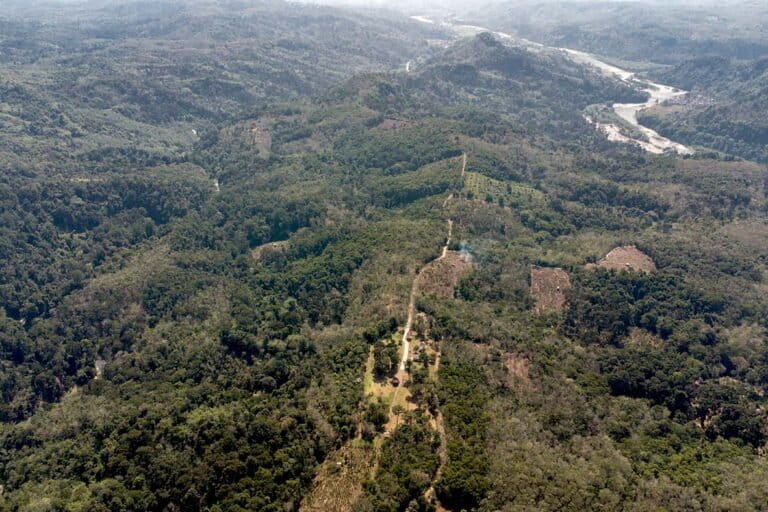
Despite its global significance, the Pasemah megalithic complex faces unprecedented threats. Currently, of the 101 identified megalithic sites—71 in Lahat, 21 in Pagaralam, and 9 in Empat Lawang—only six have been officially designated as protected Cultural Heritage (Cagar Budaya) sites. This lack of legal status leaves the vast majority of the artifacts vulnerable to the encroachment of monoculture plantations and, more dangerously, the expansion of coal mining operations.
Sondang M. Siregar, an archaeologist from BRIN’s Research Center for Environmental, Maritime, and Sustainable Culture, has voiced urgent concerns regarding the industrialization of the region. She emphasizes that mapping the distribution of megalithic remains is critical, particularly in areas designated for mining. Under Indonesian law, if a territory is found to contain cultural heritage, economic activities that threaten its integrity must be halted. However, the process of formal designation is often slow.
Agung Saputro of the South Sumatra Provincial Tourism and Culture Office noted that while many sites were recognized under older 1992 regulations, they must now be re-evaluated and re-certified under Law No. 11 of 2010 on Cultural Heritage. Several sites are currently in the proposal stage to become National Cultural Heritage sites, a status that would provide higher levels of funding and protection.
Conclusion: A Legacy at a Crossroads
The work of Mario Andramartik and the supporting scientific community highlights a critical juncture for South Sumatra’s heritage. The Pasemah megaliths are more than just ancient stones; they are a record of human ingenuity, social complexity, and a sophisticated understanding of the natural world. They represent a period when humans lived in deep dialogue with their environment, a lesson that remains highly relevant in the face of modern ecological crises.
As coal mines and plantations continue to expand across the Bukit Barisan, the race to document and legally protect these sites has become a matter of national importance. The preservation of Pasemah is not merely about honoring the past; it is about ensuring that future generations can access the scientific, cultural, and spiritual wisdom embedded in this 4,000-year-old landscape. Through the synergy of local guardians like Mario, academic researchers, and government intervention, there is hope that the "Stone Age Masterpieces" of South Sumatra will continue to stand as a testament to the enduring spirit of the Pasemah highlands.