Azin Asro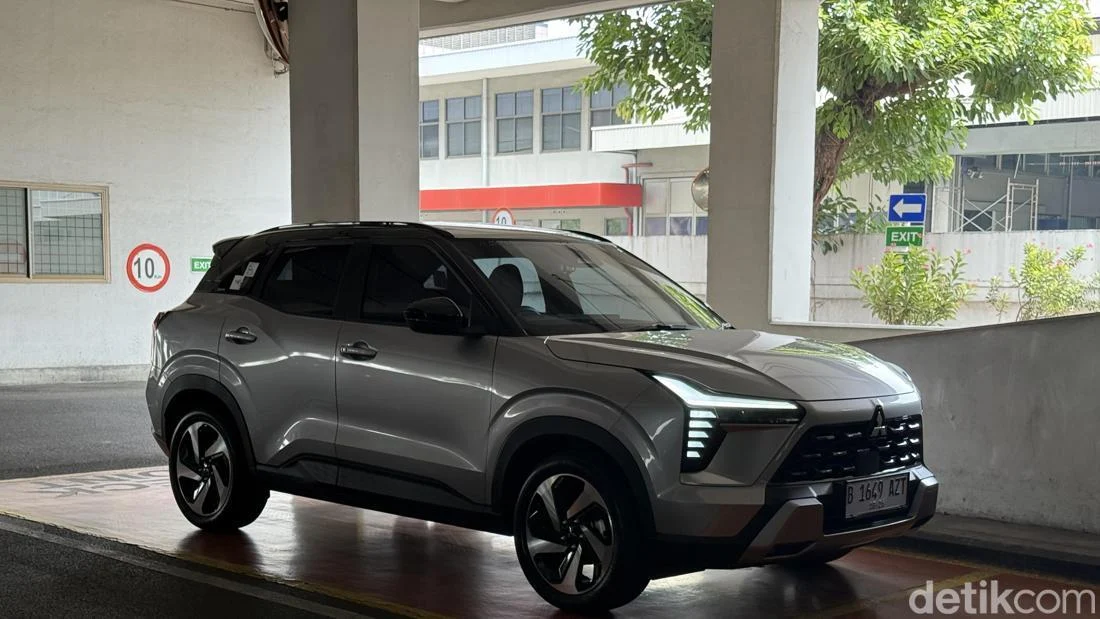
The modern landscape of Indonesian infrastructure has fundamentally transformed intercity travel, particularly the corridor connecting the bustling capital of Jakarta to the cool mountainous retreat of Bandung. With the extensive network of toll roads now linking these two economic and cultural hubs, journeys that once took arduous hours of navigating winding mountain passes can now be completed with relative ease. However, for automotive enthusiasts and everyday consumers alike, a round-trip exceeding 300 kilometers remains the ultimate litmus test for evaluating a vehicle’s real-world fuel efficiency. This is especially true when the testing methodology replicates genuine daily usage scenarios, complete with passenger loads, cargo, and mixed driving environments ranging from high-speed tollways to congested urban streets.
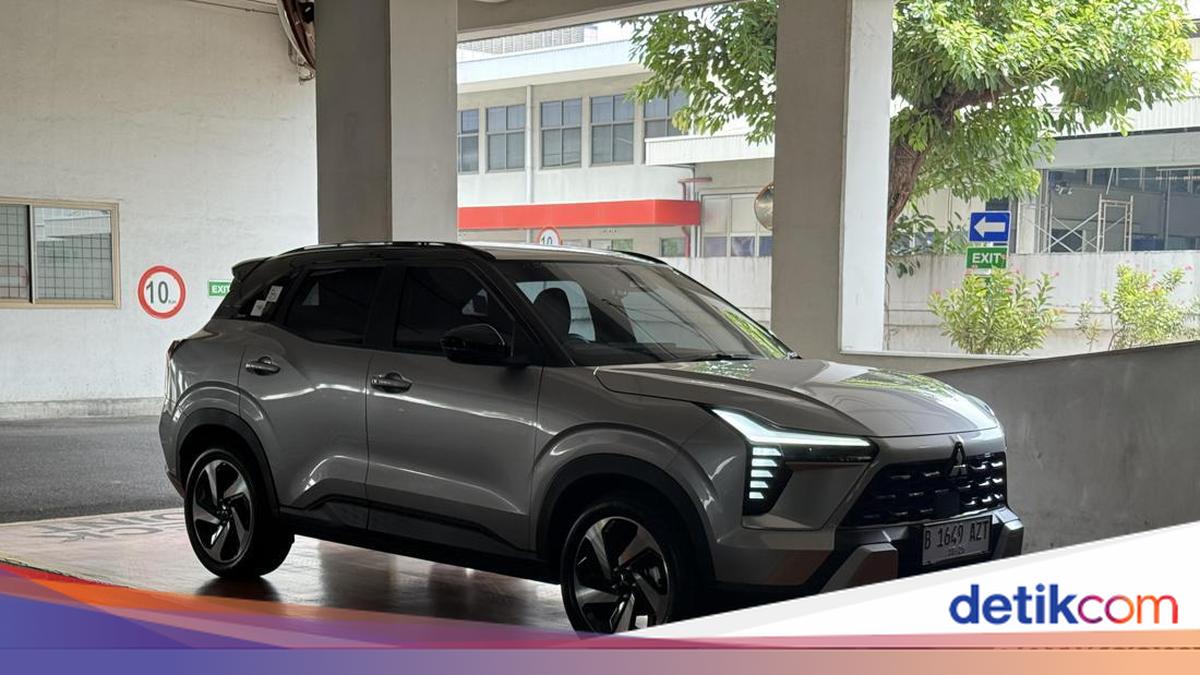
In a recent comprehensive road test, the Mitsubishi XFORCE Ultimate non-hybrid variant was subjected to a rigorous Jakarta-Bandung-Jakarta round-trip evaluation. Far from a sterile laboratory test on a dynamometer, this journey was designed to mimic a typical weekend getaway or a demanding business trip. The vehicle was loaded to near-capacity, accommodating four adult passengers alongside their respective luggage, thereby pushing the powertrain to demonstrate its capability under realistic operational weight. The objective was clear: to uncover the true fuel economy credentials of Mitsubishi’s popular compact SUV when operating under heavy loads and diverse topographical conditions.
Chronology of the Journey: From Urban Sprawl to Mountain Pass
The expedition commenced at a commercial fuel station situated along the prominent TB Simatupang corridor in South Jakarta. To establish an absolute baseline for the subsequent fuel consumption calculations, the vehicle’s fuel tank was filled to the brim using the precise "full-to-full" method, utilizing the first automatic nozzle shut-off click as the standardized marker. With the odometer readings meticulously noted and the cabin comfortably settled, the Mitsubishi XFORCE merged into the initial leg of the journey, navigating through the Jakarta Outer Ring Road (JORR), transitioning onto the elevated Mohammed Bin Zayed (MBZ) Elevated Toll Road, and eventually feeding into the Cipularang Toll Road heading eastward toward West Java.
The transit across the MBZ elevated highway provided an ideal testing ground for the vehicle’s advanced driving assistance technologies. Here, the test team engaged the Adaptive Cruise Control system, a core component of the comprehensive Mitsubishi Diamond Sense active safety suite. This technology proved instrumental in maintaining a safe, consistent following distance from surrounding traffic while allowing the driver to experience a more relaxed cruising rhythm during steady-state highway operation.
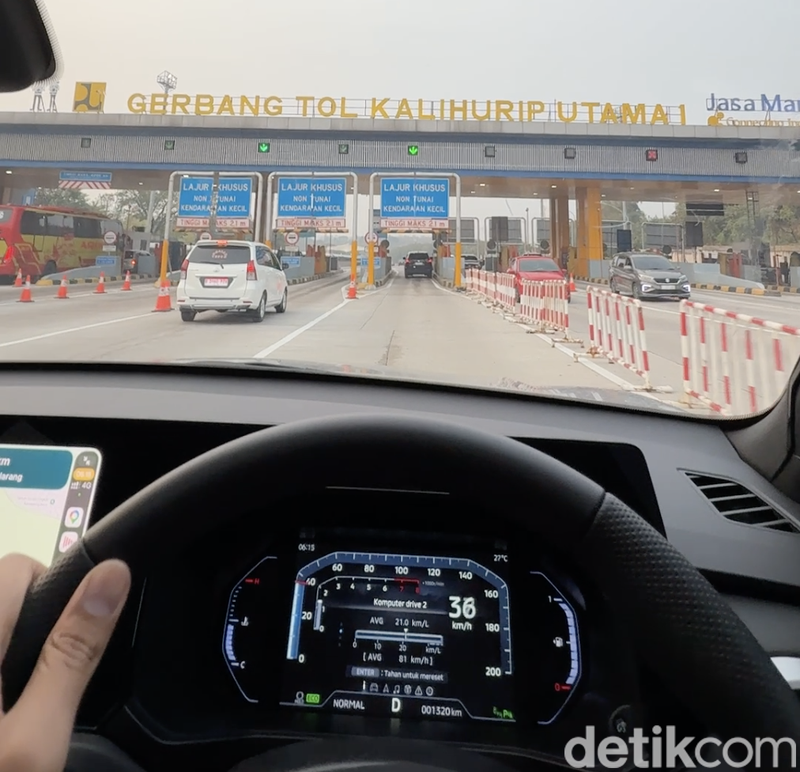
As the landscape shifted and the vehicle transitioned into the Cipularang Toll Road, the nature of the driving dynamics changed dramatically. This specific highway segment is renowned for its undulating topography, featuring extended, grueling inclines and sustained descents that place a heavy demand on internal combustion engines. Interestingly, despite the punishing nature of the sustained climbs, a visual check of the instrument cluster just before passing through the Kalihurip Utama Toll Gate revealed that the fuel gauge indicator remained resolutely at maximum capacity, signaling a promising start to the journey’s energy management.
Navigating West Java: Urban Exploration and Return Transit
Upon traversing the challenging elevation changes of the Cipularang corridor, the test vehicle exited the highway at the Padalarang Toll Gate. A scheduled stop for breakfast provided a brief respite for both the driver and the mechanical components before the journey resumed via the Purbaleunyi Toll Road directly toward the heart of Bandung, with the final highway exit leading through the Pasteur toll gate.
In Bandung, the Mitsubishi XFORCE was integrated into typical urban usage patterns, engaging in short-distance city driving, navigating local traffic lights, and handling localized congestion. To further mirror authentic consumer behavior, the itinerary included a scheduled stop for coffee and rest, ensuring that the evaluation encompassed a balanced amalgamation of high-speed cruising, demanding uphill climbs, and stop-and-go urban mobility rather than relying solely on uninterrupted highway runs.
The return leg from Bandung to Jakarta replicated the reverse trajectory, tracking back through the Cipularang Toll Road, merging onto the Jakarta-Cikampek highway, traversing the MBZ elevated structure once more, and exiting at the Halim Toll Gate. However, the ultimate test of the vehicle’s urban efficiency awaited upon re-entering the capital. Negotiating the notorious Jakarta rush-hour congestion, the SUV navigated through Cawang, Pancoran, Kalibata, Pasar Minggu, and Jalan Samali before finally pulling into a designated fuel station in the Warung Buncit area to conclude the grueling test. At the end of the route, the final trip odometer registered a cumulative distance of 314.3 kilometers.
Powertrain Specifications and Testing Methodology
The subject of this evaluation was the Mitsubishi XFORCE Ultimate, representing the pinnacle of the model’s non-hybrid lineup. Beneath the sculpted bonnet lies the proven 4A91 1.5-liter MIVEC (Mitsubishi Innovative Valve timing Electronic Control) engine, engineered to deliver an output of 105 PS at 6,000 rpm and a maximum torque of 141 Nm delivered at 4,000 rpm. Power is transferred to the front wheels via a smooth Continuously Variable Transmission (CVT), designed to optimize fuel delivery across varying throttle inputs.
The vehicle is equipped with four distinct driving modes tailored to different surface conditions: Normal, Wet, Gravel, and Mud. Throughout the entirety of the 314.3-kilometer test, the drivers deliberately utilized the Normal mode. This choice was made to reflect standard, everyday driving habits of typical vehicle owners who rarely switch modes during standard intercity commutes, thereby providing a baseline consumption figure that consumers can realistically expect to replicate in their own ownership experiences.
During the active driving phases, the Multi-Information Display (MID) continuously recorded real-time telemetry, indicating an average fuel consumption figure of 18.4 kilometers per liter alongside an average travelling speed of 60 kilometers per hour. While these digital readdowns offered an encouraging initial metric, automotive testing protocols demand physical verification to account for minor discrepancies in onboard computer algorithms.
The Definitive Full-to-Full Fuel Consumption Results
To ascertain the definitive, empirical fuel consumption, the test vehicle underwent the exact same refuel protocol upon returning to the original service station in Jakarta. The tank was meticulously refilled using the identical dispenser nozzle until the automatic shut-off mechanism clicked for the first time.
The mathematical calculation yielded revealing results. Over the total recorded distance of 314.3 kilometers, the Mitsubishi XFORCE consumed precisely 19.04 liters of gasoline to restore the fuel tank to its maximum capacity. Dividing the total distance by the volume of fuel consumed resulted in an actual, real-world fuel economy figure of 16.51 kilometers per liter.
While this empirical figure of 16.51 km/l sits slightly lower than the 18.4 km/l projection displayed on the vehicle’s onboard MID, automotive experts consider the full-to-full calculation to be the gold standard for accuracy. The discrepancy is a common occurrence in modern vehicle testing, attributable to slight variances in fuel expansion, pump calibration, and the conservative nature of digital sensor polling.
Broader Market Implications and Consumer Analysis
Achieving an actual efficiency of 16.51 kilometers per liter under heavy operational conditions holds significant weight within the highly competitive compact SUV segment. It is crucial to contextualize this metric: the vehicle was not running empty for the sake of hypermiling; rather, it carried four adult passengers and a substantial amount of luggage, representing a near-maximum payload capacity. Furthermore, the testing conditions exposed the powertrain to a punishing combination of factors: high-speed sustained cruising on elevated toll roads, thermal and mechanical stress while conquering the steep and prolonged inclines of the Cipularang pass, unpredictable urban stop-and-go navigation in Bandung, and the infamous, gridlocked traffic congestion of central Jakarta.
For prospective buyers navigating the crowded landscape of modern utility vehicles, these findings provide tangible reassurance. While electrified powertrains and hybrid variants continue to dominate industry discussions regarding maximum energy conservation, the performance of the non-hybrid Mitsubishi XFORCE demonstrates that traditional internal combustion engines, when paired with efficient CVT technology and well-tuned aerodynamics, remain remarkably competent at keeping operational costs manageable during long-distance voyages.
As fuel prices remain a primary consideration for household budgeting across Indonesia, the ability of a fully loaded compact SUV to clear the 16 km/l threshold over a mixed-terrain 300-kilometer route underscores its viability as both a daily commuter and a reliable long-distance cruiser. Ultimately, the data indicates that drivers prioritizing comfort, cabin space, and robust styling do not have to heavily compromise on fuel economy, making the XFORCE a balanced contender in its class.