
 Lina Irawan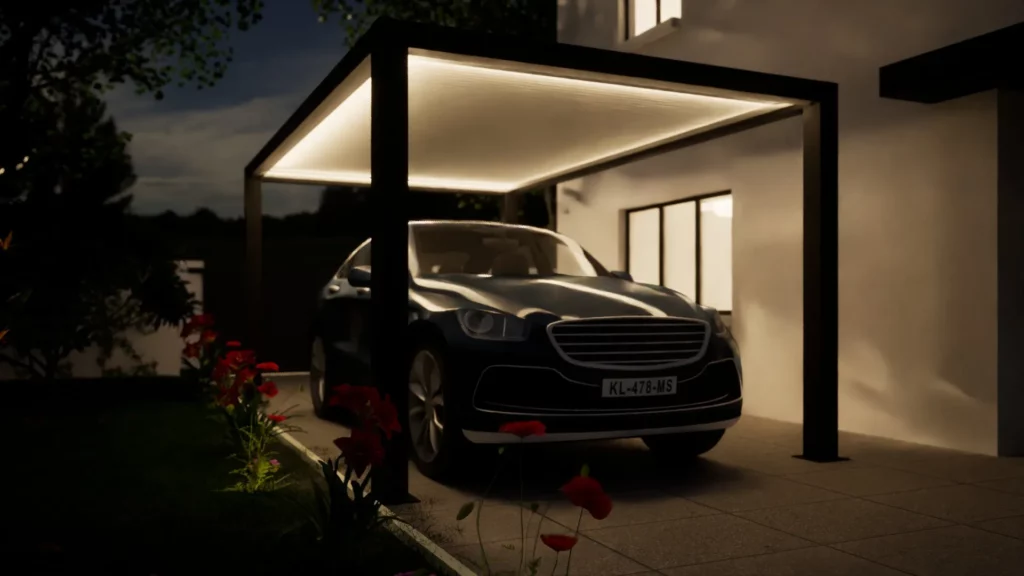
Designing and navigating a carport within a mere 3-meter width, a common reality in many dense urban housing developments, presents a significant challenge that extends beyond mere aesthetics. This guide delves into the precise architectural considerations, psychological aspects of driving in confined spaces, and strategic maneuvering techniques essential for ensuring vehicle safety and driver convenience. The focus remains on functional design and spatial optimization, moving past decorative elements to address the critical "hard space" measurements, vehicle turning radii, and overall layout that prevents body scratches and daily frustration.
The Urban Carport Conundrum: A Product of Density
The prevalence of 3-meter wide carports in Indonesian urban areas is a direct consequence of escalating land prices and the drive for higher housing density. Developers often maximize buildable area, leaving minimal space for auxiliary functions like carports. Simultaneously, the automotive market in Indonesia is dominated by larger vehicles, particularly Multi-Purpose Vehicles (MPVs) and Compact SUVs, which range from 1.7 to 1.85 meters in width, including their side mirrors. This creates an inherent conflict: increasingly larger vehicles attempting to fit into increasingly smaller parking spaces. This spatial crunch necessitates a meticulous approach to design and daily use, making efficient space management a critical aspect of urban living.

Precise Measurement and Asymmetrical Parking: Maximizing Every Centimeter
The fundamental principle of narrow carport design is the realistic calculation of "net clearance." A 3-meter (300 cm) wide plot quickly diminishes once the actual dimensions of a vehicle are factored in. For example, popular models like the Toyota Kijang Innova or Mitsubishi Pajero Sport, with widths easily exceeding 1.8 meters (180 cm) with mirrors extended, consume more than half of the available space. This leaves a remainder of approximately 120 cm. However, this figure is often an overestimation. Architectural finishes such as wall plaster, stone cladding, skirting, or even external rainwater pipes can further reduce the effective maneuvering space, often shrinking the usable width to around 100 cm.
The key to navigating this tight space lies in adopting an asymmetrical parking strategy. Attempting to park a vehicle perfectly centered (symmetrically) within a 100 cm remaining clearance would leave only 50 cm on each side, making it nearly impossible for the driver to open their door safely. Instead, the vehicle should be positioned closer to the passenger side wall, leaving a minimal gap of 15 to 20 cm. This allows for tolerance in case of mirror folding or slight body sway. By doing so, the driver’s side gains a crucial 80 cm or more of clearance, providing ample room for safe entry and exit. This seemingly minor adjustment significantly enhances daily usability and reduces stress.
Mastering the Micro-Maneuver: Driver Psychology and Advanced Techniques

Parking in a confined 3-meter carport is as much a psychological challenge as it is a physical one. Drivers often experience "visual intimidation" due to the close proximity of walls, leading to panic and incorrect maneuvers.
- Visual Pressure and Depth Perception: As the vehicle enters the narrow carport, the surrounding walls create a tunnel effect that distorts depth perception. Walls can appear closer than they are, prompting drivers to overcorrect their steering to avoid a perceived collision, which can inadvertently cause the opposite side of the vehicle to scrape against the other wall.
- Overcoming Blind Spots at the Gate: A significant blind spot occurs as the front wheels cross the gate line. The vehicle’s nose obscures the ground, and side mirrors may not yet fully cover the carport area. This "hanging" position is a common point for bumper scrapes. Relying solely on instinct is risky, especially when fatigued. Clear visual navigation aids are indispensable here.
- Managing Steering Panic: Drivers frequently react to perceived closeness by slamming the brakes and performing "dry steering" (turning the wheel while stationary). This dramatically alters the vehicle’s body angle in a tight space. A crucial technique is to always turn the steering wheel while the vehicle is in slow motion, allowing the rear wheels to smoothly follow the front’s trajectory, minimizing abrupt shifts in body position. Driving instructors often emphasize this technique for precise control in confined environments, stating that even a minimal forward or backward roll while steering significantly improves maneuverability and reduces strain on power steering components.
Architectural Engineering for Optimal Access: Gate and Entrance Design
The choice and design of the carport gate are paramount, as an unsuitable gate type can severely restrict the vehicle’s turning radius.
- Avoiding Swing Gates: Swing gates, which pivot inward or outward, are highly inefficient for narrow carports. An inward-swinging gate requires at least 1 meter of clear space within the carport, forcing the vehicle to park further back. An outward-swinging gate can obstruct public pathways or the main road. Both scenarios are impractical for limited space.
- Leveraging Sliding Gates: Sliding gates are functionally superior due to their parallel movement, which does not consume carport depth. This allows the vehicle to park closer to the front. However, a key prerequisite is sufficient lateral space alongside the gate, equal to the gate’s width, for the panels to slide into. For a 3-meter frontage, a single sliding gate might be unfeasible without an adjacent wall or clear space. For wider openings or more complex designs, double-sliding gates or even telescoping sliding gates (which stack panels) can be considered, though these add complexity and cost.
- The Ingenuity of Hanging Folding Gates: Folding gates offer an excellent compromise when lateral space is restricted by neighboring properties. Their panels fold accordion-style, typically consuming only 20 to 30 cm of the total gate opening. Opting for a "hanging" system (top rail) is highly recommended. This eliminates the need for a ground rail, which can cause the vehicle’s suspension to oscillate when driven over, a movement that could lead to scraping in extremely narrow confines. Modern folding gates also offer automated options, enhancing convenience and security.
Eliminating "Architectural Traps": Designing for Damage Prevention

Poorly placed architectural elements can become recurring hazards, causing scratches and dents during daily maneuvers.
- Hazardous Protruding Pillars: Large decorative concrete pillars, often found on house facades, may project forward, significantly cutting into the vehicle’s turning radius. In a 3-meter carport, such pillars necessitate a much wider approach angle from the street. Where possible, these decorative elements should be flush with the property line to maximize entrance width.
- Removing Planter Boxes: Permanent planter boxes at ground level along the walls are major space infringers. While the upper body of the car might clear them, the wheels or rims can easily scrape against the concrete. Removing these ground-level obstructions and relocating greenery to vertical gardens using thin, wall-mounted pots is a practical solution that frees up crucial ground clearance.
- Relocating Utilities: Electrical meter boxes (PLN boxes) or water taps are often mounted on walls at bumper or mirror height. These seemingly small protrusions can cause significant damage during daily maneuvers. Relocating these installations to the rear wall of the carport or, if not feasible, embedding the meter box flush into the wall ("inbow" installation) eliminates these potential collision points. Other common "traps" include exposed drainage covers with sharp edges, low-hanging decorative lights, or even poorly placed bicycle racks. A thorough walkthrough of the carport area, simulating vehicle movement, can help identify and mitigate such risks.
Ramp Design for Underbody Protection: A Smooth Transition
The transition between the street level and the carport floor, typically facilitated by a ramp, must be meticulously designed to prevent damage to the vehicle’s undercarriage.
- Optimal Elevation Angle: The ideal maximum slope for a parking ramp is between 10 to 15 degrees. Beyond this, low-slung sedans or even SUVs risk scraping their front bumpers when ascending, or their rear bumpers when descending. Extending the ramp’s length as much as possible helps to flatten the gradient. This might necessitate slightly encroaching onto the sidewalk area, a common practice that requires coordination with local authorities.
- Smooth Transition Curves: Sharp breaks or abrupt changes in angle at the top and bottom of the ramp are notorious for causing underbody damage. A sharp break at the bottom can hit the front bumper, while a sharp break at the top can scrape the chassis as the front wheels transition. Building contractors must ensure these transition points are smoothed into gentle radius curves, allowing the wheels to gradually ascend and descend without impacting the vehicle’s underside. This "breakover angle" is crucial for vehicle integrity.
- Flared Ramp Ends: Designing the lower end of the ramp to be wider than the gate opening creates a "funnel" effect. This flared design allows the rear wheels to begin ascending the ramp and align with the carport entrance before the vehicle’s body is fully straightened. This is particularly beneficial when the street in front of the house is narrow, as it accommodates angled approaches without the tires hitting sharp asphalt corners. The material used for the ramp should also offer excellent traction, even when wet, to prevent slippage during ascent or descent.
Strategic Maneuvering Techniques: Precision in Motion

Even with optimal design, a narrow carport demands a refined driving approach to maintain the vehicle’s paintwork and prevent daily damage.
- The Superiority of Reverse Parking: Reverse parking is unequivocally the most accurate method for navigating tight spaces. When backing up, the rear wheels act as a relatively static pivot point, while the steerable front wheels guide the vehicle’s nose. This provides far greater control and accuracy for fitting into narrow angles. Attempting to drive in forward often results in the rear of the car being misaligned within the space.
- The 45-Degree Approach: Before backing into the carport, position the vehicle at a 45-degree angle to the entrance. This involves extending the rear of the car towards the gate, effectively pre-aligning the body with the narrow carport lane. This technique significantly reduces the required turning radius. If executed correctly, the rear of the vehicle will be almost perfectly aligned with the garage entrance, allowing the driver to reverse straight back with minimal steering adjustments, while ensuring the front bumper does not swing out to hit an opposite wall or obstruction.
- Maximizing Automatic Mirrors and Technology: For an extra margin of safety, utilize automatic mirror folding functions when the widest part of the vehicle passes through the gate. This can provide an additional 20 cm of clearance. Once the vehicle’s nose is fully inside, unfold the mirrors. While 360-degree cameras and parking sensors are invaluable aids, drivers must be aware that fisheye lenses can distort distances, making objects appear further away than they are. Consistent practice and a combination of visual aids are recommended.
Visual Guidance Systems: Enhancing Driver Confidence and Accuracy
The human brain processes visual cues more rapidly and accurately than it estimates distances in empty space. Incorporating clear visual guidance elements can significantly reduce parking errors and driver stress.
- Floor Guide Lines: Painting extended lines on the carport floor with bright epoxy paint or using contrasting paving blocks creates a "runway" effect. By continuously monitoring these lines through the side mirrors, drivers can ensure their vehicle remains within the safe zone, preventing contact with walls. These lines serve as tangible reference points, especially when backing up.
- Convex Mirrors for Blind Spots: In an asymmetrical parking setup, where the passenger side is close to the wall, the driver’s side mirror may not provide adequate visibility of the passenger-side rear bumper, which is at risk of hitting the wall. Installing a small convex traffic mirror in the rear corner of the carport, angled to show this blind spot, provides crucial visual information, eliminating potential collisions.
- Wheel Stoppers for Precision Stopping: Wheel stoppers, typically made of rubber or concrete, are essential for preventing vehicles from overshooting their parking spot and hitting the rear wall. They should be installed approximately 30 cm from the back wall of the carport (or the adjacent living space wall). The gentle bump felt by the rear tires upon contact serves as a clear signal to stop and engage the parking gear, ensuring consistent and safe positioning. Other options include hanging objects like a tennis ball from the ceiling, which touches the windshield when the car is in the correct position.
Strategic Nighttime Illumination: Safety, Visibility, and Aesthetics

Effective lighting is critical, especially when parking in narrow spaces during adverse conditions like rain, which can obscure visibility. Lighting must be bright, evenly distributed, and free from glare.
- Avoiding Harsh Spotlights: Installing powerful floodlights directly facing the street from the rear wall of the carport is counterproductive. Their intense beam will reflect harshly in the rearview mirrors, causing debilitating glare. Carport lighting should be diffused and positioned so it does not directly align with the driver’s line of sight.
- Implementing Wall Washer Lighting: "Wall washer" lights, which illuminate the side walls with a downward cast, are ideal. This technique not only provides clear visibility of the side walls and floor guide lines but also enhances the architectural aesthetics of the house facade at night. The even wash of light minimizes shadows and improves depth perception.
- Utilizing Motion Sensor Technology: Integrating motion sensors with carport lights offers convenience and safety. The lights automatically activate as the sensor detects vehicle movement near the gate, illuminating the area as the driver prepares to park. After the vehicle is parked and the area is clear, the lights can automatically switch off after a set delay, contributing to energy efficiency. This hands-free operation is particularly valuable during inclement weather or when arriving home late at night. Advanced systems can even integrate with smart home platforms for greater control.
Durable and Functional Floor Materials: The Foundation of Safety
The carport floor endures significant stress from vehicle weight and tire rotations, necessitating materials chosen for traction and durability.
- Optimal Tire Traction: Highly glazed, slippery ceramic tiles are unsuitable for carport floors, especially when wet, as they can cause tires to slip and the vehicle to slide into walls. Materials with excellent grip, such as heavy-duty unglazed ceramics, flamed Andesite stone, or textured stamped concrete, are preferred to ensure optimal tire traction in all weather conditions.
- Resistance to Shear Stress: The rotational forces of tires, particularly during dry steering, create significant "shear stress" on the floor surface. Poorly mixed concrete or inadequately installed paving blocks or exposed aggregate (sikat) can lead to these materials dislodging over time. A robust, thick concrete slab foundation is crucial to withstand the daily weight and maneuver stress of a two-ton vehicle, ensuring the longevity and integrity of the carport floor. Permeable paving solutions, while aesthetically pleasing and good for drainage, need careful consideration for their load-bearing capacity and resistance to shear stress in high-traffic, tight-maneuver areas.
A Functional Approach to Carport Design: Enhancing Urban Living

The 3-meter wide urban carport demands a functional-first approach, prioritizing practical utility over purely decorative elements. Implementing asymmetrical parking to create ample driver-side clearance, eliminating protruding architectural obstacles, and relying on clear visual guidance systems for reverse parking are non-negotiable strategies. By meticulously planning and executing these design and maneuvering principles, urban dwellers can transform a challenging narrow carport into an efficient, safe, and stress-free parking solution, protecting their vehicles from scratches and enhancing their daily quality of life in compact living environments. These considerations, often overlooked, are increasingly becoming critical components of sustainable urban planning and property value in densely populated areas.








