Lina Irawan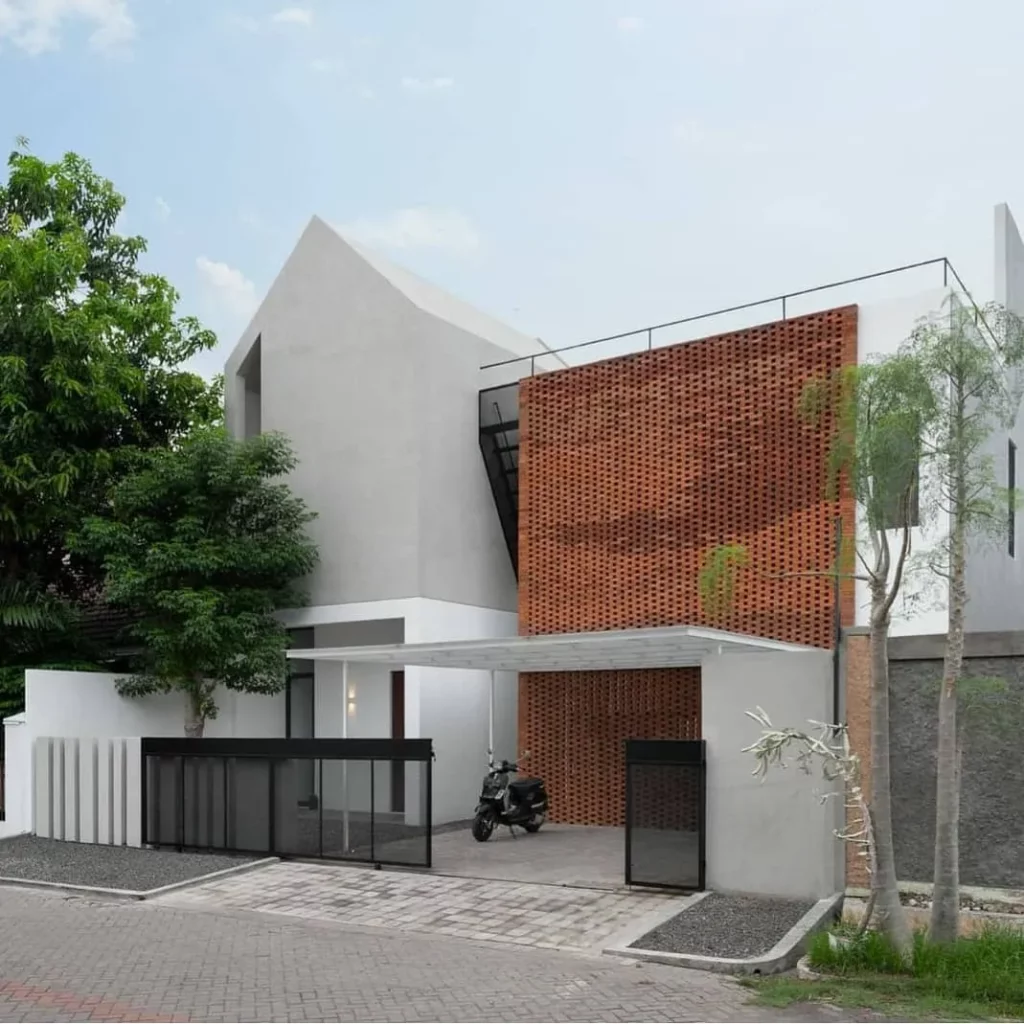
The optimal slope for a carport floor is a critical design element, typically ranging between 1% to 2% of the total length of the parking area. This translates to a drop of 1 to 2 centimeters for every meter of horizontal distance. This seemingly minor detail is fundamental in ensuring efficient water runoff, preventing water from infiltrating the main dwelling, and safeguarding vehicles from premature corrosion, while also enhancing safety for users. Architectural and construction experts, including the team at InteriorDesign.ID, consistently advocate for adherence to these precise specifications to maintain dry, functional, and durable outdoor spaces. Unfortunately, the crucial aspect of elevation is frequently overlooked during construction, with many builders prioritizing aesthetic facades over essential functional integrity, leading to significant long-term issues.
The Overlooked Imperative: Why Carport Slope Matters
Carports serve as essential extensions of modern homes, providing protection for vehicles from the elements and often doubling as versatile outdoor spaces. However, their functional design hinges entirely on effective water management. The absence of an adequate slope creates a flat or uneven surface where water, whether from heavy rainfall, car washing, or melting snow, can pool. This stagnation is not merely an inconvenience; it precipitates a cascade of problems that compromise both the structural integrity of the home and the longevity of parked vehicles.
Frequent complaints from homeowners often highlight the direct infiltration of water into their residences after heavy rains. Water that accumulates on a poorly sloped carport, especially if the lowest point is adjacent to the house, will inevitably seek the path of least resistance, seeping under front doors or through foundation cracks. Inside, this can lead to extensive damage to wooden flooring, premature decay of furniture legs, and the growth of mold and mildew, posing health risks and requiring costly remediation. Externally, prolonged water exposure beneath parked vehicles accelerates the oxidation process, leading to rust on chassis and other metallic components, significantly reducing a vehicle’s lifespan and resale value.
The neglect of proper elevation often stems from a combination of factors: a desire to simplify construction processes, a focus on achieving a level appearance that might align with the overall facade design, or simply a lack of specialized knowledge among some contractors. This oversight, driven by short-term cost-saving or aesthetic preferences, invariably leads to greater expenses and headaches in the long run, underscoring the importance of meticulous planning and execution from the outset.
Engineering for Efficiency: Understanding Optimal Slopes
The recommended 1% to 2% slope is not an arbitrary figure but is derived from basic principles of fluid dynamics and gravitational flow, balanced with practical considerations for vehicle safety. At 1%, water is given sufficient gravitational impetus to move across the surface. A 2% slope offers a more aggressive and faster runoff, particularly beneficial in areas prone to heavy precipitation. For every meter (approximately 3.28 feet) of carport length, the floor should gently descend by 1 to 2 centimeters (0.4 to 0.8 inches). This subtle gradient ensures that water is effectively channeled towards designated drainage points without creating a noticeable incline that could impede daily use or vehicle maneuverability.

It is crucial, however, to avoid exceeding a 3% slope in the primary parking area. While a steeper slope would undoubtedly enhance water runoff, it introduces significant safety risks. Vehicles parked on overly steep inclines require greater force to engage the parking brake, increasing wear on the braking system. For automatic transmission vehicles, an excessive slope places undue stress on the transmission’s ‘Park’ mechanism, potentially leading to premature failure. Furthermore, a steep and wet surface can increase the risk of tires slipping, especially when entering or exiting the carport, posing a hazard to occupants and pedestrians. Therefore, the 1-2% range represents a carefully calibrated balance between effective drainage and practical safety.
Precision in Practice: Calculating and Implementing the Slope
Achieving the correct carport slope requires careful calculation and precise execution during the construction phase. The calculation itself is straightforward: simply multiply the total length of the carport by the desired slope percentage. For instance, if a carport measures 5 meters (approximately 16.4 feet) from the boundary fence to the house terrace, and an average slope of 1.5% is chosen, the total elevation difference needed would be 5 meters * 0.015 = 0.075 meters, or 7.5 centimeters (approximately 3 inches). This means the edge of the carport nearest the road or fence should be 7.5 centimeters lower than the edge closest to the house, creating a consistent gradient for water flow.
Accurate implementation of this calculated slope relies heavily on the use of appropriate tools and skilled craftsmanship. Relying on visual estimation or "instinct" is a common pitfall that leads to uneven surfaces and drainage issues. Essential tools for ensuring precise leveling include:
- Transparent Hose Level (Water Level Hose): This simple yet highly effective tool uses water to establish perfectly level reference points, even over long distances. It allows builders to accurately mark the high and low points of the slope.
- Nylon String: Once the high and low points are established with the hose level, a brightly colored nylon string should be stretched tautly between these markers, creating an inclined guide rail. This string serves as a visual and tactile reference for workers to consistently maintain the desired slope while pouring and leveling the concrete or laying pavers.
- Aluminum Spirit Level (Long): For final verification and to ensure the evenness of the surface, a long aluminum spirit level is indispensable. When placed on the freshly leveled surface, the bubble in the spirit level should show a slight, consistent deviation from the center, indicating the accuracy of the designed incline. Any central bubble or inconsistent deviation signals an uneven surface that requires immediate correction.
Mastering Water Management: Effective Drainage Systems
Beyond establishing the correct slope, integrating an effective drainage system is paramount to prevent water accumulation and ensure proper disposal. The primary goal is to channel all runoff away from the house and towards a designated collection point, ideally the municipal stormwater system or a sustainable alternative.
-
Trench Drain (Linear Drain): This is arguably the most aesthetically pleasing and highly efficient solution for capturing water runoff. A trench drain consists of a shallow, linear channel installed across the width of the carport, typically near the entrance or at the lowest point of the slope. It is covered with a robust grating, usually made of cast iron or galvanized steel, capable of withstanding the weight of vehicles. Unlike small, circular floor drains that are prone to clogging with leaves and debris, linear trench drains offer a larger collection area and are less susceptible to blockages. Their elongated design ensures comprehensive interception of water before it can reach the street or adjacent properties. Maintenance is also simplified, often requiring just a high-pressure hose to clear debris from one end to the other.
-
"Tali Air" (Expansion Joints as Mini Channels): Water often accumulates along the perimeter of the carport where the floor meets the house wall or boundary walls. To counteract this, small, deliberately created channels or expansion joints, often measuring around 3×3 centimeters, can be incorporated along these edges. These "tali air" act as express pathways, directing residual water efficiently towards the main trench drain or other designated outlets. Beyond drainage, these channels also serve a functional purpose as expansion joints, accommodating the natural expansion and contraction of concrete or tiles due to temperature fluctuations, thereby preventing cracking or "popping" of the flooring material.

-
Sustainable Drainage Solutions: For environmentally conscious homeowners, permeable paving blocks offer an alternative to directing all water to the city’s stormwater system. While still requiring a minimal 1% slope to ensure initial surface runoff and prevent standing water, permeable pavers allow a significant portion of rainwater to infiltrate directly into the ground and underlying gravel layers. This approach recharges groundwater, reduces strain on municipal drainage infrastructure, and mitigates urban heat island effects. For car wash water, directing it towards a biopore or rain garden in the adjacent garden is preferable, allowing natural filtration of detergents and oils before it re-enters the water table, rather than overwhelming urban sewers.
The Grand Hierarchy: Elevating Home, Carport, and Road
A fundamental principle in landscape and building design is establishing a clear elevation hierarchy: the main house should always be at the highest elevation, followed by the carport, and finally, the public road or street at the lowest. This tiered arrangement acts as a natural defense against water intrusion. A minimum drop of 10 centimeters (approximately 4 inches) from the living room floor to the carport floor is generally recommended. This elevation difference serves as a crucial last line of defense, acting as a small dam or barrier to prevent water from overflowing into the house during extreme weather events or if the street drainage system becomes overwhelmed.
However, many residential developments, particularly those built on lower-lying terrains or in areas susceptible to subsidence, face the challenge of having the public road at a higher elevation than the house. In such challenging scenarios, a conventional outward-sloping carport would direct water towards the house. To mitigate this, specialized solutions are required:
- Reverse Slope with Robust Drainage: The carport floor must still be sloped, but in this case, it will subtly incline towards the house (or rather, towards a designated collection point within the carport).
- High-Capacity Trench Drain at the Entrance: A large-capacity trench drain must be installed precisely at the boundary between the carport and the public road. This drain acts as a primary interceptor, capturing all incoming surface water from the road and any runoff from the carport itself.
- Integrated Sump Pit and Submersible Pump: Directly beneath or adjacent to the trench drain, a hidden sump pit (bak kontrol terpendam) is essential. This pit collects the intercepted water. An automatic submersible pump (pompa celup otomatis) is then installed within the sump. This pump activates automatically when water levels rise, efficiently drawing water from the pit and discharging it back onto the higher street level or into a dedicated stormwater system, preventing any accumulation or ingress into the property. This system ensures continuous protection even against significant external flooding.
Avoiding Costly Blunders: Common Construction Pitfalls
Even with precise calculations, errors during the execution phase can lead to significant and costly problems. Meticulous supervision and attention to detail are paramount.
- Uneven Concrete Shrinkage and Depressions: Concrete naturally shrinks as it cures. If the concrete mix is inconsistent, or if the surface is leveled prematurely before the material has sufficiently settled, uneven shrinkage can occur. This often results in shallow depressions or "birdbaths" on the carport floor. These depressions become mini-reservoirs, holding water and accumulating dirt and calcium deposits (white scale) after evaporation. Rectifying this usually requires grinding down the high spots or applying a self-leveling compound, which adds significant cost and time.
- Improper Drain Placement (Too High): A surprisingly common and critical error is installing floor drain plates or trench drain covers higher than the surrounding finished floor surface. Instead of facilitating drainage, the elevated drain acts as a small dam, preventing water from flowing into it. For optimal performance, the drain grate or plate should be recessed by 2-3 millimeters below the final ceramic tile or concrete surface. This subtle depression ensures that water flows smoothly into the drain from all directions.
For tiled carports, skilled masons often employ a "four-cut envelope" method around square or rectangular drains. This involves cutting the surrounding tiles diagonally from each corner towards the drain, creating a gentle, funnel-like slope that directs water efficiently into the opening.
Optimal Flooring Materials for Sloped Carports
The effectiveness of a carport’s slope can be negated by the choice of inappropriate flooring materials. Surfaces that are too rough can impede water flow, while overly smooth or undulating textures can create hazards.

-
Flamed Andesite Stone: Andesite, particularly with a "flamed" (dibakar) finish, is an excellent choice. The flamed process creates a micro-textured, rough surface that provides superior grip for vehicle tires, crucial on a sloped area, especially when wet. Despite its roughness, the surface remains generally flat, allowing water to flow freely. Andesite should be installed in a straight, brick-bond pattern aligned with the direction of water flow. Avoid installing it perpendicular to the flow, as the grout lines could act as small impediments.
-
Permeable Paving Blocks: As discussed, permeable paving offers an eco-friendly solution by allowing water to seep into the ground. While a minimal slope of 1% is still necessary to guide surface water and prevent puddling, the primary drainage occurs vertically. These pavers are effective for reducing stormwater runoff and replenishing groundwater. Regular cleaning, such as sweeping and occasional power washing, is essential to prevent pores from clogging with oil residues or soil.
-
Heavy-Duty Tiles with Additional Grooves: If heavy-duty ceramic or porcelain tiles are chosen, their drainage efficiency can be enhanced. Using a grinding machine, small, linear grooves (tali air tambahan) can be etched onto the tile surface, running parallel to the direction of the slope. These mini-channels actively capture and direct water towards the main drainage system, improving flow and reducing standing water. It is vital to select tiles specifically rated for outdoor, heavy-traffic use and ensure they possess inherent anti-slip properties.
Navigating Transitions: Designing Safe Carport Ramps
The ramp connecting the public road to the carport is a critical transition zone. Improper ramp design can lead to vehicles scraping their undersides, damaging bumpers, or even getting stuck.
If the carport floor is significantly higher than the road (e.g., 20 centimeters or 8 inches), a short, steep ramp must be avoided. Such abrupt changes in gradient are particularly problematic for vehicles with low ground clearance or long wheelbases, like sedans or sports cars, which are prone to scraping their front bumpers or undercarriage.
The solution lies in creating a gradual, extended transition ramp, ideally spanning 1 to 1.5 meters (approximately 3 to 5 feet). This longer length distributes the change in elevation over a greater distance, creating a gentler incline that accommodates most vehicle types without incident.
In residential areas where permanent concrete ramps over municipal drains are prohibited, removable steel checker plates (pelat baja bordes) offer a practical alternative. These thick steel plates, featuring a raised diamond pattern for enhanced grip, can be easily placed over the drain channel when a vehicle needs to pass and removed afterward. The thickness and pattern are crucial to prevent bending under vehicle weight and to ensure tire traction, especially in wet conditions.

Quality Assurance: Testing Your Carport’s Drainage
Before final payment to the contractor, it is imperative to conduct thorough tests to verify the effectiveness of the carport’s drainage system. These tests should be performed once the concrete or tile work has fully cured.
-
Large-Scale Water Test:
- Using a garden hose, liberally spray the entire carport area, simulating heavy rainfall.
- Observe the water flow: it should consistently and swiftly form a straight path towards the designated trench drain or collection point at the lowest end.
- Any water that deviates towards house walls, flows back towards the main entrance, or forms persistent puddles indicates a fundamental flaw in the leveling.
- After turning off the water, monitor the area for 10 minutes. A properly sloped and drained carport should dry out significantly, leaving no substantial standing water. Isolated damp spots are acceptable, but thick, stagnant pools are not.
-
Marble Roll Test:
- Place a small marble or ball bearing at various points on the carport floor, particularly near the highest elevation points (e.g., closest to the house terrace).
- Release the marble without any manual push.
- A correctly sloped floor will cause the marble to roll consistently and smoothly towards the lowest drainage point.
- If the marble slows down abruptly, changes direction, or stops in the middle, it indicates unevenness or depressions in the concrete, signaling a defective surface that requires rectification. Such defects often necessitate re-leveling or even partial demolition and re-pouring of the problematic sections.
Expert Insights: Frequently Asked Questions on Carport Slopes
Q: Is a 3% slope safe for daily parking?
A: No, a slope exceeding 3% is generally not recommended for daily parking. It places excessive strain on vehicle braking systems, particularly the parking brake, and the ‘Park’ mechanism of automatic transmissions, potentially leading to premature wear or failure. It also increases the risk of tires slipping, especially when wet, compromising safety.
Q: My car has low ground clearance. How can I design the garage ramp?
A: For low-clearance vehicles, a "double-angled ramp" or "two-segment ramp" is highly recommended. This design breaks the total incline into two gentler segments with a slight transition point in between, effectively reducing the angle of approach and departure, thus preventing the front bumper or undercarriage from scraping the ground. The transition should be gradual and extended over a longer horizontal distance (e.g., 1.5 to 2 meters).
Q: What’s the solution if the street drain frequently floods my carport?
A: If the street drain regularly overflows into your carport, you need a robust defensive system. Install a concrete threshold or curb (tanggul beton) 10-15 cm high immediately behind your gate or fence line. This acts as a barrier. Within the carport, install a large-capacity trench drain connected to a hidden sump pit equipped with an automatic submersible pump. This pump will actively draw any accumulated floodwater from the carport and discharge it back over the concrete threshold onto the street or into a dedicated high-capacity drain.

Q: Can I discharge car wash water directly into the stormwater drain?
A: It is generally not advisable to discharge detergent-laden car wash water and lubricant residues directly into the municipal stormwater system. These chemicals can harm aquatic ecosystems and overwhelm water treatment facilities. Instead, consider directing this water into a dedicated infiltration well (sumur resapan) or an oil trap (penangkap oli) before it enters any public drainage. Even better, direct it to a biopore or rain garden in your yard, where soil and plants can naturally filter the water.
Q: My garage floor has slippery tiles. Will adding elevation prevent tire slip?
A: No, simply adding elevation to a slippery tiled floor will not prevent tire slip; in fact, it could exacerbate the problem. A steep, slippery surface is highly hazardous. The primary solution is to replace the slippery tiles with a textured, anti-slip material such as flamed andesite, textured porcelain tiles (rated R10 or higher for slip resistance), or apply a specialized epoxy flake coating that provides excellent traction.
Q: How often should a trench drain in front of the house be cleaned?
A: The frequency depends on environmental factors. If your carport lacks a canopy or is surrounded by trees, the trench drain grating should be cleaned at least every two weeks, or more frequently during autumn or heavy rainfall seasons, to prevent blockages from leaves, soil, and debris. Regular flushing with water is also recommended.
Q: Is it better to drain car wash water towards the road or a side garden?
A: It is significantly better to drain car wash water towards a side garden with permeable soil or a biopore. The soil and vegetation act as natural filters, allowing the water to infiltrate the ground and preventing chemical pollutants from entering the municipal stormwater system. This approach is more environmentally responsible and reduces the burden on public infrastructure.
Q: How can I fix an existing flat garage floor without a total demolition?
A: If the existing floor is relatively sound but lacks slope, you can apply a layer of self-leveling concrete or a thin overlay. This involves preparing the existing surface (cleaning, priming), establishing the correct new elevation points, and then pouring a new, thin layer (typically 2-3 centimeters or 1 inch thick) of self-leveling concrete that is carefully guided to create the desired slope. This method can save on demolition costs but requires specialized products and skilled application.
Q: What’s the estimated cost to re-level a 15-square-meter garage floor?
A: The estimated cost for re-leveling a 15-square-meter garage floor can vary significantly based on location, material choices, and the extent of work required (e.g., demolition, new sub-base, new finish). However, a rough estimate could range from IDR 4 million to IDR 8 million (approximately USD 250 to USD 500+). This budget typically covers the removal of old tiles/concrete, installation of steel wire mesh reinforcement, re-pouring of concrete with the correct slope, and the installation of new heavy-duty flooring materials.
Broader Implications
The meticulous planning and execution of a carport’s floor slope extend far beyond mere convenience. It is an investment in the long-term health of a home’s structure, the preservation of valuable assets like vehicles, and the safety of its inhabitants. By prioritizing proper drainage, homeowners can mitigate the risks of costly water damage, enhance property value, and contribute to more sustainable urban water management practices. This seemingly small detail underscores a larger principle in construction: functional design, when executed with precision and foresight, is the cornerstone of durability, safety, and enduring value.