
 Nila Kartika Wati

The legal battle against the illegal wildlife trade in Indonesia has reached a transformative milestone as a civil lawsuit, filed by the Scents Foundation, seeks to hold perpetrators accountable not just through criminal prosecution, but through significant environmental restitution. This case, registered at the East Jakarta District Court under number 565/Pdt.G/2026/PN Jkt.Tim, marks a paradigm shift in how the justice system treats endangered species. By positioning the Sunda Pangolin (Manis javanica) as a legal subject—a first for wildlife in the Indonesian judiciary—the plaintiffs are challenging the conventional perception of animals as mere objects of commerce, advocating instead for their inherent right to exist, thrive, and fulfill their ecological roles.
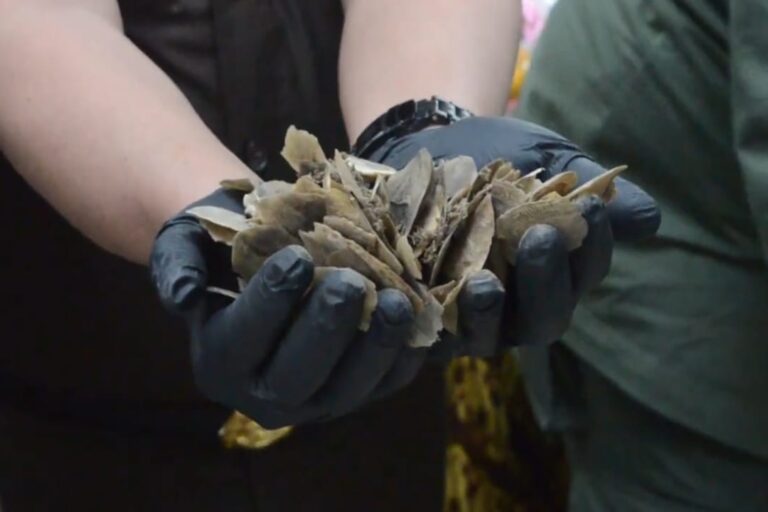
The litigation arises from the high-profile seizure of three tons of pangolin scales, an operation that exposed a sophisticated illicit network involving multiple corporate entities and individual actors. The defendants named in the lawsuit include three companies—PT VTM, which allegedly facilitated the export administration; PT TSR, the primary exporter linked to the shipment destined for Cambodia; and PT LWA, identified as the storage provider for the contraband. Alongside these corporate entities, four individuals—AAM, VXH, MIS, and TT—are cited for their roles as suppliers, operators, and coordinators of the criminal ring.
The Scale of Destruction and the Quest for Restitution
The environmental damage caused by this single operation is staggering. According to the Scents Foundation, the three tons of scales represent the slaughter of approximately 8,532 individual pangolins. These animals, classified as critically endangered by the International Union for Conservation of Nature (IUCN), were targeted specifically for their keratin scales, which are highly sought after in illegal international markets for traditional medicine despite lacking any scientifically proven therapeutic properties.

In their civil claim, the plaintiffs are demanding Rp2.46 billion in damages. Crucially, the foundation emphasizes that this sum is not intended for the organization itself but is earmarked for the comprehensive restoration of the ecosystem. The financial breakdown for the proposed restitution includes:
- Rp1.42 billion for long-term population monitoring.
- Rp577.5 million for molecular genetic research to identify the origins of the seized scales and inform future conservation strategies.
- Rp337.8 million for the restoration of 15 hectares of critical habitat within the Mount Halimun Salak National Park (TNGHS).
- Rp125 million for public education and awareness campaigns.
The Ecological Significance of the Sunda Pangolin
To understand the severity of the loss, one must examine the ecological niche occupied by the pangolin. Often described as the "gardener of the forest," these solitary mammals are essential for soil health. As insectivores, they consume vast quantities of ants and termites, acting as natural regulators that prevent insect populations from reaching levels that could damage local vegetation.
Furthermore, their unique behavior of excavating the earth to forage and create dens provides vital ecosystem services, including soil aeration and the promotion of water infiltration. Ma’ruf Erwan, Director of the Scents Foundation, highlighted during a recent press briefing that the removal of thousands of these animals from their habitat creates a "cascade effect." Because pangolins are solitary, territorial, and exist in low population densities, the mass extraction of individuals severely disrupts reproductive success. With the probability of mating pairs meeting significantly reduced, the long-term viability of entire local populations is placed under immediate threat.
Defining Animals as Legal Subjects
The core of the Scents Foundation’s strategy is the assertion that the pangolin should be recognized as a legal subject. This concept, while nascent in Indonesia, has historical parallels in international law, such as the recognition of the Amazon River in Colombia and the Te Urewera forest in New Zealand as legal entities.
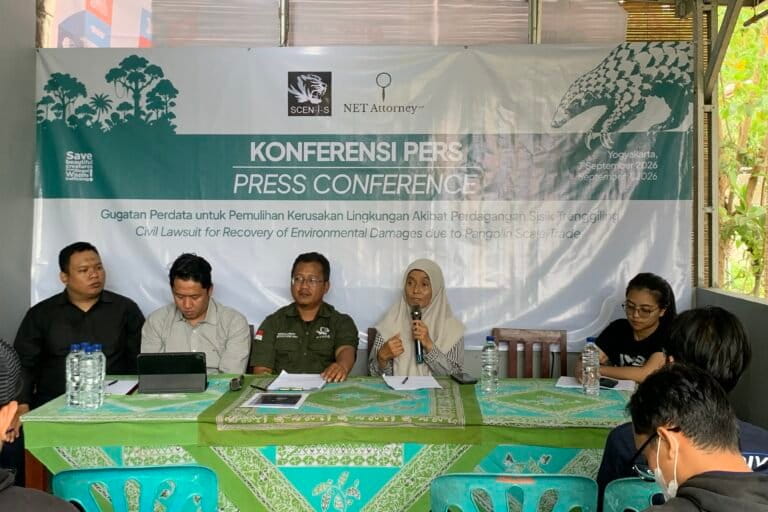
Nasrul Saftiar, the lead legal counsel for the foundation, argues that this legal maneuver is necessary to move beyond treating wildlife as property of the state or individuals. "Our objective is to establish that these animals have rights—the right to live, the right to reproduce, and the right to function within their habitat," Saftiar noted. By framing the lawsuit this way, the legal team hopes to provide the judiciary with a new framework for adjudicating environmental crimes, effectively creating a precedent that will guide future cases.
Legal Framework and Previous Precedents
The lawsuit is grounded in a robust suite of Indonesian legislation, including the Law on Environmental Protection and Management (UU PPLH), the Law on the Conservation of Living Natural Resources and Their Ecosystems (UU KSDAE), and the Minister of Environment and Forestry Regulation No. 106 of 2018.
Irma Hermawati, another key attorney for the plaintiffs, explains that the defendants’ actions violate clear statutory prohibitions against the possession, transport, and trade of protected species. Despite these clear laws, civil litigation for environmental damage involving wildlife has historically struggled in Indonesian courts. A notable past attempt involved a case of neglected orangutans at a mini zoo in North Sumatra in 2021, which resulted in a defeat for the plaintiffs. However, the legal team remains optimistic, viewing the current case as a "breath of fresh air" due to the overwhelming, objective evidence of illegal capture, slaughter, and international trafficking.
The Necessity of Scientific Intervention
The financial demand for molecular research is particularly vital, according to Dr. Gono Semiadi, a researcher at the National Research and Innovation Agency (BRIN). Currently, scientific knowledge regarding the population dynamics and genetic health of Indonesian pangolins is severely limited. By utilizing the evidence seized during the bust, scientists can perform DNA analysis to determine the precise geographical origin of the animals.

"We cannot rely solely on the testimonies of the suspects to understand the extent of the poaching," Dr. Semiadi stated. "We need objective, scientific data to inform our conservation efforts." This research will provide the empirical basis for future rehabilitation and release programs, ensuring that any subsequent reintroduction efforts are genetically appropriate for the ecosystems in which they occur.
Broader Implications for Wildlife Conservation
The outcome of this trial will have far-reaching implications for environmental justice in Southeast Asia. As illegal wildlife trade routes continue to evolve, the ability of NGOs and civil society to utilize civil courts to force restitution—rather than relying solely on the slow and often lenient process of criminal sentencing—could become a primary tool in the defense of biodiversity.
The increase in such criminal activity suggests that existing enforcement mechanisms have been insufficient to deter high-level syndicates. The shift toward demanding massive financial compensation for ecosystem services—rather than just nominal fines—is a strategy aimed at the "financial heart" of the trafficking networks. By making the cost of illegal trade prohibitive, proponents hope to dismantle the economic incentives that drive the poaching of protected species.
Furthermore, this case underscores a growing societal demand for environmental accountability in Indonesia. The coordination between legal experts, environmental NGOs, and government agencies like the Directorate General of KSDAE signals a more collaborative approach to conservation. If the court rules in favor of the Scents Foundation, it will not only provide the resources necessary to restore a small fraction of the lost habitat in the Mount Halimun Salak region but will also send a definitive message to the international market: the cost of pillaging Indonesia’s natural heritage will no longer be limited to prison sentences, but will extend to the full price of ecological restoration.
As the legal proceedings continue, the international conservation community will be watching closely. The case of the three tons of pangolin scales is no longer just about the tragedy of thousands of dead animals; it is about the birth of a new legal doctrine that recognizes nature as a stakeholder in the court of law. Whether the Indonesian judiciary will embrace this evolution remains to be seen, but the foundation has already succeeded in elevating the discourse on wildlife rights to an unprecedented level.