
 Tata Titiana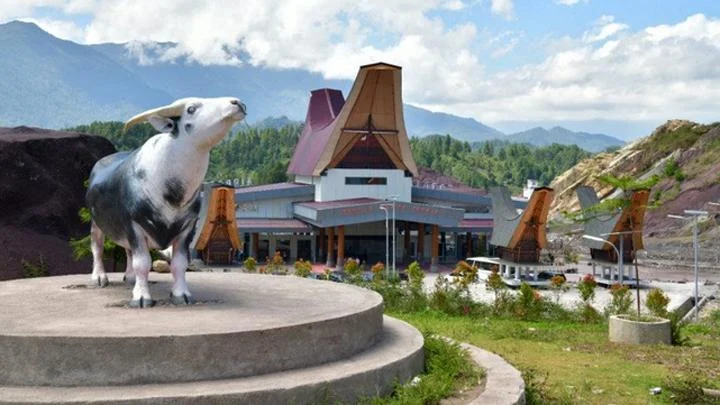
The infrastructural landscape of South Sulawesi reached a significant milestone on Thursday, March 18, 2021, as President Joko Widodo formally inaugurated the Toraja Airport, previously known as Buntu Kunik Airport, located in Tana Toraja Regency. The inauguration ceremony, broadcast live via the official YouTube channel of the Presidential Secretariat, marked the culmination of a decade-long infrastructure project characterized by severe topographical challenges, administrative transitions, and high economic expectations. During the inauguration, President Widodo emphasized that the newly operational facility is expected to serve as a vital catalyst for regional economic expansion, stimulate job creation, and foster the emergence of new economic hubs across the mountainous regency renowned for its rich cultural heritage and tourism potential.
The realization of Toraja Airport addresses long-standing transportation bottlenecks in Tana Toraja, a region globally celebrated for its unique indigenous traditions, megalithic culture, and breathtaking landscapes. For decades, regional accessibility was heavily constrained by the limitations of the older Pongtiku Airport in Ratentayo, which featured a shorter runway incapable of accommodating larger commercial aircraft, thereby restricting tourism influx and heavy cargo logistics. With the inauguration of the new facility, the government aims to bridge this connectivity gap, integrating Tana Toraja more seamlessly into the national transportation network and opening up remote economic centers to domestic and international markets.
A Decades-Long Chronology of Construction and Engineering Challenges
The development timeline of Toraja Airport reflects a complex history of planning, suspension, and resumption. Initial construction began in 2011 with the primary objective of replacing the aging Pongtiku Airport. However, progress stalled significantly during the early stages due to complex budgetary allocations, logistical hurdles, and immense engineering obstacles posed by the rugged terrain of the Bukit Barisan Selatan extension in Sulawesi.
Construction remained largely dormant until the administration of President Joko Widodo prioritized the project’s resumption in 2018. Under the directive of the central government, Phase I of the revitalization and construction effort was accelerated, culminating in the successful completion of initial operational facilities by mid-2020. This renewed momentum allowed commercial services to commence prior to the official inauguration, with major domestic carriers such as Wings Air and Citilink establishing regular scheduled flights connecting Toraja to the provincial capital of Makassar.
The engineering feat required to construct the airport cannot be overstated. According to statements from the Ministry of Transportation, the project necessitated the unprecedented leveling of three distinct hills within the mountainous Tana Toraja landscape to carve out a viable aviation corridor. Minister of Transportation Budi Karya Sumadi noted that the topography of the region presented some of the most difficult challenges ever encountered in domestic airport construction. The massive earthmoving operations involved cutting down entire elevated landmasses to accommodate the runway alignment, an ongoing engineering effort that continued into 2021 to eliminate remaining obstacles surrounding the approach and departure paths.
Technical Specifications and Infrastructure Capacity
Spanning a total area of 141 hectares, Toraja Airport has been designed and engineered in progressive phases to accommodate both current regional turboprop operations and future narrow-body jet traffic. In its initial configuration completed during Phase I, the airport features a runway length of 1,600 meters and a width of 30 meters, specifically dimensioned to safely handle ATR 72-600 type aircraft commonly deployed on regional Indonesian routes. Supporting airside infrastructure includes an apron measuring 94.5 by 67 meters and a taxiway measuring 124.5 by 15 meters.
To accommodate anticipated growth in passenger traffic, the landside infrastructure comprises a modern terminal building spanning 1,000 square meters. The terminal is designed with an optimal passenger handling capacity of approximately 150 travelers during peak operational hours, ensuring a comfortable and efficient processing experience for arriving and departing visitors.
Looking ahead, Phase II development plans outline an extension of the runway to 2,000 meters. This crucial expansion will allow the airport to handle larger, mainline commercial aircraft such as the Boeing 737 and Airbus A320, directly connecting Tana Toraja to major metropolitan hubs outside of Sulawesi, such as Jakarta, Surabaya, and Bali, without the necessity of layovers.
The Cultural and Administrative Context of the Renaming Process
Prior to its official designation as Toraja Airport, the aviation facility was widely recognized during its development phase as Buntu Kunik Airport, reflecting the local geographical nomenclature of the area. The formal transition to Toraja Airport was not merely an administrative decree but the result of an extensive consensus-building process involving local government authorities and traditional cultural leaders.
The renaming initiative involved formal consultations with customary stakeholders representing all 19 sub-districts (kecamatan) across Tana Toraja. Following unanimous agreement among traditional and civic leaders, the proposed name was formally submitted to the Regional House of Representatives (DPRD) for ratification during a plenary session. Upon legislative approval, the proposal was forwarded to the provincial government before receiving final legal authorization and decree from the Ministry of Transportation. This participatory approach ensured that the facility’s identity honors the cultural prestige and historical legacy of the Toraja indigenous community while maintaining clear geographic recognition for international and domestic travelers.
Strategic Economic Implications and Tourism Sector Outlook
The establishment of Toraja Airport carries profound macroeconomic and tourism implications for South Sulawesi. Tana Toraja has long held status as one of Indonesia’s premier cultural tourism destinations, attracting global anthropologists, historians, and leisure travelers drawn to its iconic Tongkonan traditional houses, elaborate cliffside burial sites, and unique funeral rituals. However, historical access limitations—traditionally requiring an eight-to-ten-hour mountainous overland journey from Makassar—acted as a significant deterrent for time-constrained tourists and high-yield travel segments.
By reducing travel time between Makassar and Toraja to less than an hour by air, the new airport effectively removes the logistical barrier that constrained the region’s tourism economy. Economic analysts project that improved accessibility will translate directly into increased visitor expenditures, longer average lengths of stay, and expanded hospitality investments, ranging from boutique accommodations to locally owned culinary enterprises. Furthermore, the reliable air transport corridor facilitates the expedited shipment of perishable agricultural commodities, specialized local coffee beans, and handicraft products to broader domestic markets, thereby diversifying income sources for local agrarian communities.
Government Vision for Regional Connectivity
President Widodo’s administration has consistently prioritized infrastructure development outside of Java as a primary mechanism for reducing regional economic disparities, lowering logistics costs, and ensuring equitable national development. The inauguration of Toraja Airport forms part of a broader national strategy that has seen the construction and modernization of dozens of commercial airports across remote and outer islands of the Indonesian archipelago over the past decade.
In his address during the inauguration, the President reiterated that national connectivity should not be measured solely by massive inter-island toll roads or major metropolitan transit systems, but equally by regional airfields that bind remote communities to the national economic mainstream. By unlocking the geographical isolation of Tana Toraja, the central and regional governments anticipate that the airport will serve as a sustainable engine for socioeconomic resilience, empowering local micro, small, and medium-sized enterprises (MSMEs) and integrating the region more deeply into the global tourism map. As finishing touches, obstacle clearance, and future runway extensions continue to progress, Toraja Airport stands as a testament to modern engineering overcoming formidable natural barriers in pursuit of inclusive regional development.








