Bambang Pamungkas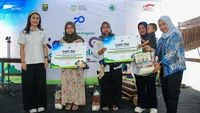
Jakarta, CNBC Indonesia — PT Astra International Tbk (Astra) continues to demonstrate its steadfast commitment to national health and community development by actively supporting the Gerakan Orang Tua Asuh Cegah Stunting (GENTING) program. Through its localized initiative, Kader Gizi Sahabat Keluarga, deployed in the village level of Desa Sejahtera Astra (DSA) Gedepangrango, located in Sukabumi Regency, West Java, the corporation is tackling malnutrition at its roots. Since June 2025, the DSA Gedepangrango program has systematically focused on comprehensive nutritional interventions, capacity building for local health cadres, strengthening Posyandu (integrated health post) services, and intensive family counseling.
The synergy between private sector resources and government health targets was prominently highlighted when the Deputy Minister of Population and Family Development / Head of the National Population and Family Planning Board (BKKBN), Ratu Ayu Isyana Bagoes Oka, conducted an official working visit to DSA Gedepangrango. The visit underscored the deepening public-private partnership designed to combat stunting nationwide, utilizing village-level health cadres as the frontline agents of change.
High-Level Governmental Endorsement and Collaborative Momentum
During her visit, Deputy Minister Ratu Ayu Isyana Bagoes Oka praised Astra’s proactive role in stepping up as an adoptive parent (orang tua asuh) within the GENTING framework. Her presence signaled a strong endorsement from the administration regarding the effectiveness of corporate social responsibility (CSR) initiatives when aligned with national strategic priorities.
"We are optimistic that the stunting rate can be continuously suppressed. We are pursuing various collaborative efforts, such as partnering with Astra today. Moving forward, it is hoped that more corporations will become actively involved in stunting prevention efforts," stated the Deputy Minister during her inspection.
Her itinerary included a thorough review of community health initiatives, beginning with direct nutritional interventions for toddlers and pregnant women, assessments of modernized Posyandu facilities, and evaluations of family coaching protocols managed by trained health cadres. The delegation participated in symbolic handover ceremonies, distributing nutritional aid packages consisting of ready-to-eat meals and specialized food ingredients tailored to Ministry of Health standards for the critical first 1,000 days of life.
Beyond nutritional support, the assistance extended into structural and educational realms. Non-nutritional aid delivered during the visit included infrastructure improvements such as latrine rehabilitations, provision of clean water facilities, and upgrades to livable housing units. Beneficiaries also received educational packages focusing on stunting prevention, maternal health counseling, toddler childcare techniques, and economic empowerment strategies. To honor the frontline workers, the event featured the ceremonial pinning of recognition badges for local family counseling cadres.
The official tour proceeded to Posyandu Integrasi Layanan Primer (ILP) Sawo, where officials interacted directly with previous recipients of nutritional interventions. The delegation then visited two target households within the GENTING program radius near Posyandu ILP Sawo to observe firsthand the practical impacts of domestic nutritional tracking. Concluding the tour, the officials visited Wisata Legok Icak, a prominent nature-based tourism asset nurtured within the Desa Sejahtera Astra Gedepangrango ecosystem, highlighting how health, social welfare, and economic development can be successfully intertwined at the village level.
Evolution and Structured Timeline of Desa Sejahtera Astra Gedepangrango
The integration of health programs into DSA Gedepangrango represents the culmination of years of sustained community development. Initially established as part of Astra’s broader sustainable social contribution framework, the Desa Sejahtera Astra initiative focuses on holistic village empowerment encompassing health, education, the environment, and entrepreneurship. Nationwide, the program spans more than 1,500 villages across 35 provinces, positively impacting over 3 million beneficiaries.
The systematic coaching of DSA Gedepangrango commenced in 2021, initially focusing on economic potential and foundational community structures. Recognizing the urgency of maternal and child health, Astra expanded its scope in June 2025 to heavily emphasize health service strengthening through targeted capacity building, nutritional interventions, the integration of Posyandu ILP systems, and routine home visits by trained volunteers.
A critical milestone in this health-focused trajectory occurred during the early development phase, when 55 local cadres from DSA Gedepangrango underwent rigorous assessments covering 25 fundamental Posyandu health competencies. Demonstrating high levels of dedication and capability, all 55 candidates successfully passed, achieving official competency certifications at the Purwa, Madya, and Utama levels recognized by the Ministry of Health.
Building upon this certified human capital, September 2025 marked the full operational implementation of primary health service strengthening through the Posyandu ILP model. This structural upgrade yielded immediate, quantifiable improvements in community engagement. Data indicates that total Posyandu visits surged from 706 prior to the implementation to 795 visits afterward, representing a 13% overall increase in community utilization. Notably, this utilization pattern diversified significantly, with modern attendance driven largely by youth groups (68%) alongside strong participation from adults and senior citizens (90%).
To ensure long-term accountability and continuous monitoring at the household level, a dedicated family assistance framework was scheduled from April through June 2026. During this period, the 55 certified cadres executed systematic, routine home visits reaching 674 households, encompassing a total of 1,781 family members. Backed by corporate CSR funding, this intensive home-visiting protocol is slated to continue through March 2027, creating a continuous feedback loop between healthcare providers and at-risk families.
Corporate Vision and Broad Socio-Economic Implications
Reflecting on the comprehensive impact of these initiatives, Executive in Charge of Astra, Boy Gemino Kalae, emphasized that the Desa Sejahtera Astra program serves a dual purpose: elevating village economic potential while providing a sustainable platform to enhance overall community quality of life.
"We hope that the collaboration between the government, the community, and families can continue to be strengthened so that the benefits of the program can be felt sustainably," Boy Gemino Kalae remarked.
He further contextualized the initiative within Astra’s broader corporate milestone framework. As the conglomerate approaches its 70th anniversary, its operational strategy remains deeply anchored in creating shared value for Indonesia, in strict alignment with its corporate philosophy of prospering alongside the nation ("Sejahtera Bersama Bangsa"). Today, Astra’s collective footprint spans economic and social dimensions, directly reaching over 16 million individuals—including employees and their families, valued customers, and the more than 3 million beneficiaries embedded within the Desa Sejahtera Astra network across the archipelago.
From an analytical standpoint, private-sector interventions in national health programs like GENTING generate profound structural implications. By channeling corporate resources directly into primary healthcare infrastructure—such as upgrading Posyandu ILP units and certifying grassroots health workers—corporations alleviate fiscal pressures on local governments while accelerating human capital development. Addressing stunting during the critical first 1,000 days of life directly influences cognitive development, educational attainment, and future workforce productivity, thereby mitigating long-term socio-economic burdens on the state.
Astra’s holistic approach in Gedepangrango—pairing nutritional distribution with structural sanitation improvements, clean water access, and economic empowerment—recognizes that malnutrition is multidimensional, requiring simultaneous interventions in poverty alleviation, environmental hygiene, and education.
Concluding his remarks, Boy Gemino Kalae reaffirmed the company’s long-term commitment to national development, noting that corporate sustainability is inseparable from community resilience.
"Astra’s spirit to continue collaborating with the community, such as here in Desa Sejahtera Astra Gedepangrango, is in line with Astra’s aspiration to prosper alongside the nation and support Indonesia’s Sustainable Development Goals (SDGs)," he concluded.