Nasution Nanang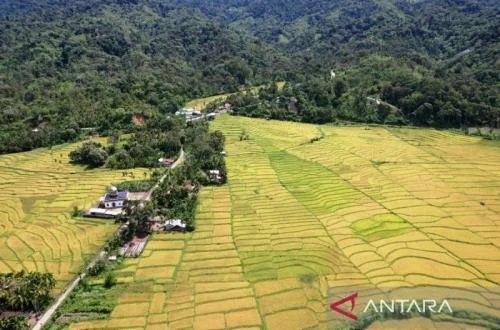
A broad coalition of residents from Beutong Ateuh, Nagan Raya, Aceh, joined by various civil society organizations including the Pawang Uteun community and Yayasan APEL Green Aceh, have formally petitioned President Prabowo Subianto to immediately cease plans for a gold mining operation in the ecologically sensitive region of Beutong Ateuh Banggalang. The urgent appeal underscores profound anxieties over potential large-scale environmental degradation, catastrophic ecological disasters, and the irreversible loss of vital natural resources that underpin the community’s livelihoods and cultural heritage. This collective action highlights a deepening conflict between economic development aspirations through extractive industries and the imperative of environmental preservation and community well-being in one of Indonesia’s most biodiverse provinces.
Ecological Significance of Beutong Ateuh and Impending Threats
Beutong Ateuh, nestled within the mountainous terrain of Nagan Raya, is recognized as a critical watershed and a biodiversity hotspot within the Leuser Ecosystem, one of the most important and threatened conservation areas globally. Its dense forests are home to an array of critically endangered species, including the Sumatran orangutan, tiger, rhinoceros, and elephant, making it a cornerstone for regional and global conservation efforts. The proposed gold mining activities, according to environmental advocates, pose an existential threat to this delicate balance. Rahmat Syukur, Director of Yayasan APEL Green Aceh, articulated the profound concerns in the petition, stating that the project risks widespread deforestation, the obliteration of essential water sources, and irreversible damage to the stunning mountain landscape. He emphasized that the region possesses immense ecological value, demanding robust protection to maintain environmental equilibrium far beyond local boundaries.
The environmental ramifications of open-pit gold mining, often associated with the proposed project type, are well-documented globally. These include extensive land clearing, which exacerbates soil erosion and sedimentation of rivers, thereby disrupting aquatic ecosystems and diminishing water quality. Furthermore, the use of heavy machinery and chemical processes, such as cyanide and mercury amalgamation, for gold extraction can lead to severe water and soil contamination, posing long-term health risks to both human populations and wildlife. The destruction of forests also compromises their vital role as carbon sinks, contributing to climate change, and eliminates the natural barriers that protect communities from floods and landslides, risks that are particularly acute in mountainous regions like Beutong Ateuh.
A History of Environmental Conflict and Legal Precedents
The current outcry is not an isolated incident but rather the latest chapter in a long-standing struggle to protect Beutong Ateuh from extractive industries. The community’s resistance gained significant traction following Supreme Court Decision Number 91.K/TUN/LH/2020. This landmark ruling was widely interpreted by environmental groups and local communities as a definitive legal victory, effectively nullifying previous mining permits and designating the area as free from gold mining exploitation. The decision provided a crucial legal shield for Beutong Ateuh, restoring a sense of justice and hope for its inhabitants.
However, the recent resurgence of mining plans has reignited fears and sparked outrage, prompting the community to question the efficacy and enforceability of legal protections. Rahmat Syukur underscored this sentiment, asserting that the reappearance of mining permits after such a decisive court ruling not only undermines legal precedent but also "injures the sense of justice" of a community still reeling from recent natural disasters. This legal seesaw highlights the complex interplay between national development policies, regional autonomy, and the persistent efforts of powerful mining interests to access resource-rich territories. The specifics of how the new permits re-emerged, whether through new applications, revisions of old ones, or different concession boundaries, remain a key point of contention and investigation for the community and its legal advocates.
Chronology of Resistance and Recent Trauma
The timeline of resistance in Beutong Ateuh dates back years, with local communities and environmental organizations consistently advocating for the protection of their ancestral lands and the integrity of the ecosystem. The Supreme Court decision in 2020 marked a significant victory, temporarily halting mining aspirations. However, the respite was short-lived. The community’s resilience was severely tested in November of the preceding year (2023) when a devastating flash flood swept through Beutong Ateuh. The calamity caused widespread destruction, damaging homes, obliterating agricultural lands, and causing rivers to overflow their banks, leaving a deep scar of trauma and economic loss.
Teungku Diwa, a respected local community leader, vividly recalled the harrowing experience, emphasizing that the memory of the flood remains fresh and painful. He warned that allowing gold mining to proceed would only amplify the risk of similar, if not more severe, future disasters. Deforestation associated with mining operations dramatically reduces the soil’s capacity to absorb rainwater, leading to increased surface runoff and heightened flood susceptibility. Coupled with the erosion caused by mining activities, the risk of landslides and mudslides also escalates, endangering lives and property in an already vulnerable region. The community views the proposed mining as a direct threat that would exacerbate their existing vulnerabilities and potentially trigger further ecological catastrophes.
Voices from the Community and Cultural Heritage
The protest against mining is deeply rooted in the cultural and historical identity of the Beutong Ateuh community. Ismail, representing the Pawang Uteun community, eloquently articulated this profound connection, stating that the forest is not merely a collection of trees but an intrinsic part of their history and identity. He emphasized that the loss of the forest would equate to the loss of their ancestral heritage and, critically, the future prospects of generations to come. For indigenous and local communities across Indonesia, forests are often revered as sacred spaces, sources of traditional medicines, food, and spiritual connection. The destruction of these areas not only dispossesses them of their material resources but also strips away their cultural fabric and spiritual well-being.
The Pawang Uteun, traditional forest guardians, embody this deep reverence for nature. Their knowledge of the forest ecosystem, accumulated over centuries, is invaluable for sustainable resource management and conservation. Their active involvement in the protest underscores the traditional wisdom that views humans as integral parts of nature, rather than separate entities entitled to exploit it without consequence. This cultural perspective provides a powerful counter-narrative to the purely economic arguments often put forth by mining proponents. The ongoing struggle for Beutong Ateuh has garnered significant support from a diverse network of civil society organizations, both nationally and internationally, who recognize the universal importance of protecting such critical ecosystems and upholding indigenous rights.
Broader Implications and National Policy Context
The conflict in Beutong Ateuh resonates with broader debates across Indonesia concerning the balance between economic development and environmental protection. Indonesia, rich in natural resources, has historically relied on extractive industries to fuel its economy. However, this reliance often comes at a significant environmental and social cost, leading to conflicts over land rights, resource degradation, and human rights abuses. The petition to President Prabowo places the issue squarely on the national agenda, challenging the new administration to articulate a clear stance on sustainable development and the enforcement of environmental laws.
President Prabowo Subianto, having recently assumed office, faces the immediate challenge of addressing complex environmental issues while pursuing his ambitious economic agenda. His administration’s response to the Beutong Ateuh petition will be a litmus test of its commitment to environmental stewardship and the protection of local communities. A decision to uphold the community’s demands and reinforce environmental protections would signal a shift towards a more sustainable development paradigm. Conversely, allowing the mining project to proceed despite overwhelming local opposition and ecological concerns could set a concerning precedent for future environmental conflicts across the archipelago.
The case also highlights the complexities of governance in Aceh, which operates under a special autonomy status, granting it unique powers over resource management and spatial planning. While this autonomy theoretically allows Aceh to tailor policies to its specific environmental and cultural contexts, it also means that provincial and regency governments play a crucial role in permit issuance and oversight, often navigating competing pressures from national economic policies, local development needs, and environmental advocacy.
The Economic vs. Environmental Dilemma
Proponents of the gold mining project typically argue for its potential economic benefits, including job creation, local revenue generation through taxes and royalties, and contributions to regional and national GDP. In a developing region, such arguments often hold significant sway, particularly for local governments seeking to boost their economies and improve infrastructure. However, environmental economists and social scientists increasingly point to the long-term costs associated with such projects. These "externalities," such as environmental degradation, loss of ecosystem services (clean water, fertile soil, biodiversity), health impacts on communities, and the destruction of traditional livelihoods, often outweigh the short-term economic gains.
The economic model of sustainable development emphasizes the importance of preserving natural capital for future generations. In Beutong Ateuh, the forest and its associated ecosystem services provide invaluable, non-monetized benefits to the community – clean water for drinking and agriculture, flood regulation, cultural resources, and climate stability. These benefits, often overlooked in conventional economic assessments, are irreplaceable once destroyed by mining. The petition to the President is therefore not just a plea for environmental protection but also a demand for a development model that prioritizes long-term sustainability and the well-being of its citizens over short-term resource exploitation.
Outlook and Call for Action
The petition delivered to President Prabowo Subianto marks a critical juncture for Beutong Ateuh. The community and its allies are calling for the President to intervene decisively, upholding the Supreme Court’s decision and ensuring that Beutong Ateuh remains free from mining. This would involve a comprehensive review of any new or re-emerged mining permits, an assessment of their compliance with existing environmental laws and spatial planning regulations, and a genuine engagement with the concerns of the local populace.
The future of Beutong Ateuh will serve as an important indicator of Indonesia’s commitment to its environmental pledges, including its contributions to global climate action and biodiversity conservation. It will also test the resilience of its legal framework in protecting vulnerable communities and critical ecosystems from the pressures of industrial exploitation. As the nation watches, the fate of Beutong Ateuh hangs in the balance, representing a microcosm of the larger struggle to reconcile economic ambitions with the imperative of preserving Indonesia’s rich natural heritage.