Nila Kartika Wati
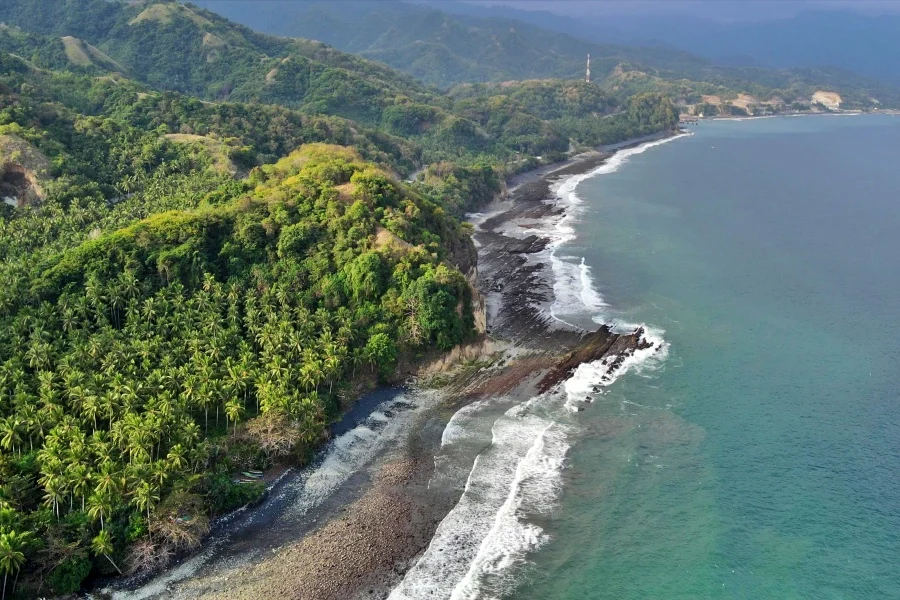
As the sun began to dip below the horizon on Monday, July 27, 2026, Imran Tabri stood on the shores of Maurongga, a coastal village in the Nangapanda District of Ende Regency, East Nusa Tenggara. His gaze remained fixed on the churning, turbulent waters of the Indian Ocean. For the local fishing community, the prevailing seasonal high tides are not merely a meteorological challenge; they represent a significant socio-economic blockade. The rough sea conditions, which have persisted for weeks, have forced fishermen to pull their vessels onto the beach, effectively suspending their primary livelihoods, particularly octopus fishing, which requires calmer, clearer waters.
The situation in Maurongga mirrors a broader struggle faced by coastal communities across the Indonesian archipelago. While the high seas dictate a seasonal rhythm of hardship, the resilience of these communities is being tested by both environmental shifts and the ongoing scourge of illegal, unreported, and unregulated (IUU) fishing practices.
The Economic Ripple Effects of Seasonal Volatility
The high-wave season in the southern waters of Flores typically peaks between April and August. During this period, the sea state becomes hostile, characterized by dangerous swells that make small-scale navigation impossible. For a village like Maurongga, where nearly the entire population relies on the ocean for sustenance and income, the "off-season" creates a vacuum in domestic productivity.
However, the community has adapted by diversifying their activities. When the boats are grounded, the shore becomes a hub of supplementary economic activity. Women and children can be observed meticulously scouring the beach, collecting flat, vibrant green stones that are washed ashore. These stones, which are in high demand in urban markets for decorative and landscaping purposes, are gathered and sold for approximately Rp20,000 per 25-kilogram sack. This micro-economy serves as a crucial safety net, providing families with essential liquidity when the primary source of income—fishing—is interrupted.
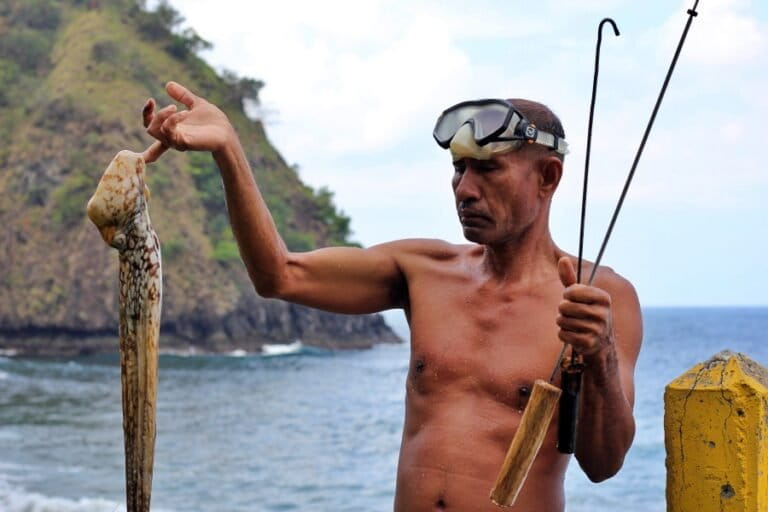
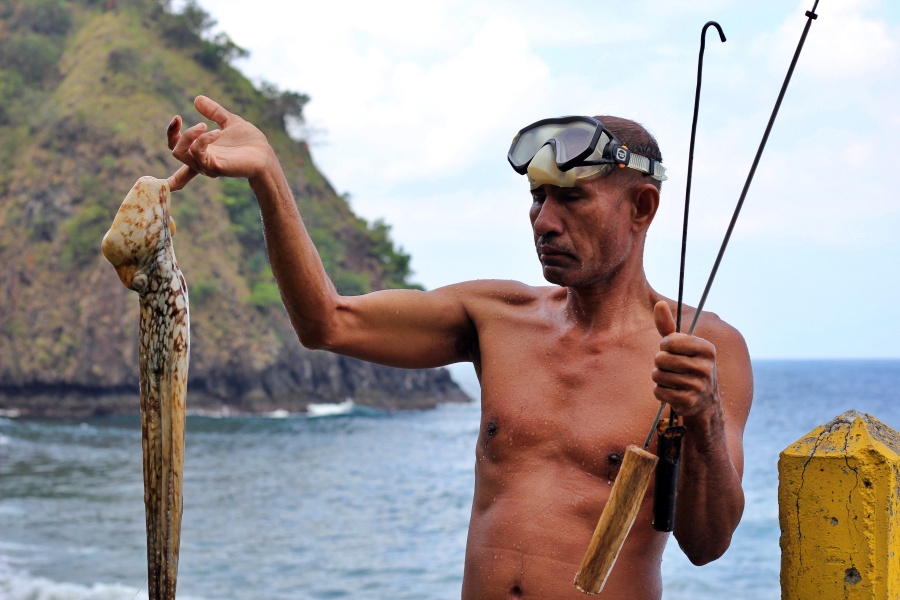
Imran Tabri, a veteran octopus fisherman who has honed his craft since 2015, notes that the green stones vary in shade depending on their geographic origin along the coastline. This secondary trade, while humble, underscores the resourcefulness of the Maurongga community in the face of environmental constraints.
The Evolution of Octopus Fishery in Ende
The trajectory of the octopus fishery in Maurongga underwent a significant shift in 2019. Previously, the practice was largely informal and individualistic. With the intervention of the Tananua Flores Foundation, the community began to receive formal training and organizational support. This collaboration was pivotal, leading to the formation of the Embo Angi Locally Managed Marine Area (LMMA) group.
The impact of this institutional support was tangible. In 2022, the Ende Regency Government recognized the potential of the local fleet by donating seven 1-Gross Tonnage (GT) vessels to the group, followed by another eight units the following year. This infusion of resources significantly expanded the capacity of the local fishers, transforming what was once a subsistence activity into a more organized and productive enterprise.
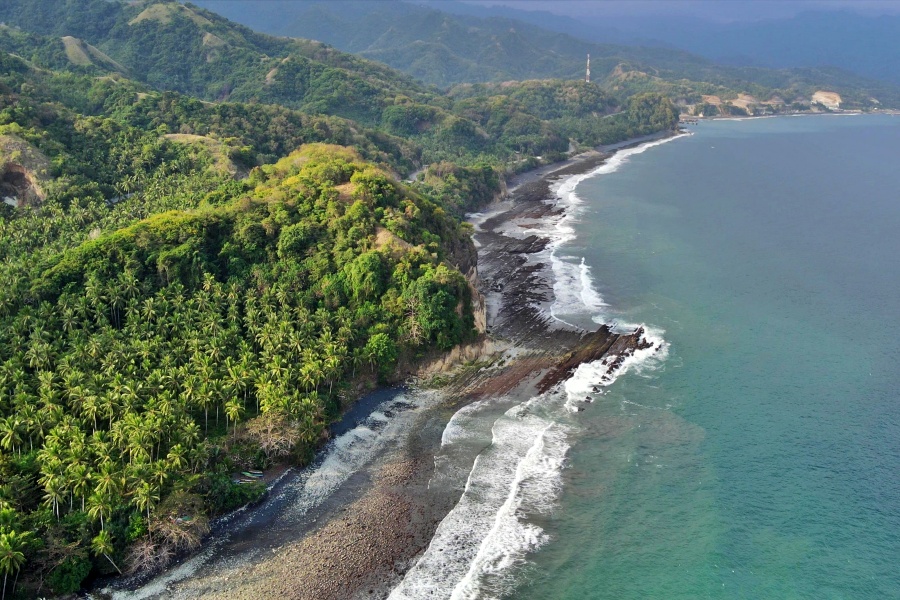
According to data from the Tananua Flores Foundation, the total catch for Maurongga in 2025 reached 1,096 kilograms across seven different species. Among these, octopus held the top position, with a total yield of 479.8 kilograms valued at over Rp16 million. This demonstrates the economic viability of sustainable octopus harvesting, which has become a flagship industry for the region.
Implementing a Sustainable Future: The Buka-Tutup Model
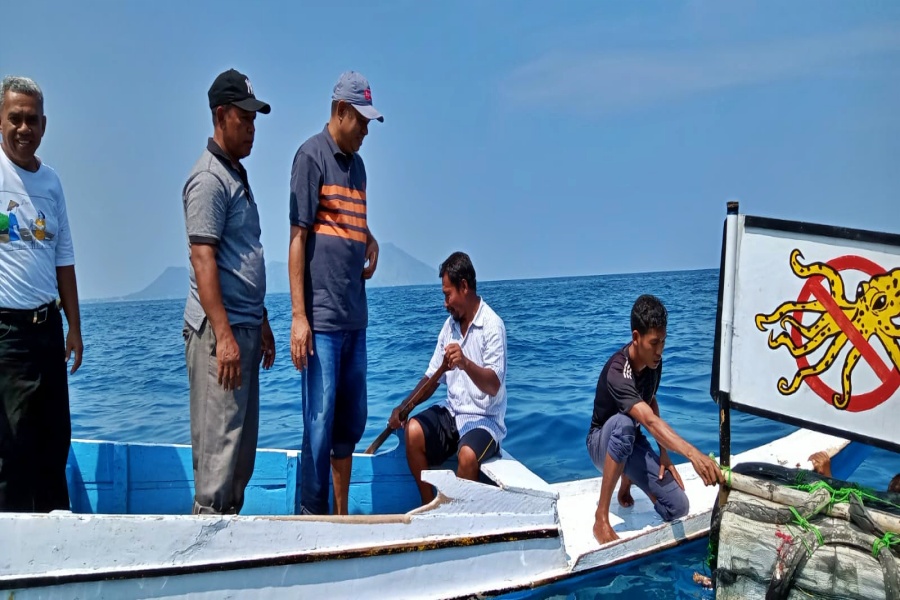
Recognizing that the long-term viability of their catch depends on healthy reef ecosystems, the Embo Angi group, under the leadership of Ismail Isman, implemented a "buka-tutup" (open-closed) system. This rotational management strategy divides the 54.95-hectare management area—of which the Sera Numba sector covers 14.35 hectares—into distinct zones.
Under this model, specific segments of the reef are closed to fishing for three months at a time, allowing the octopus and other marine biota to complete their reproductive cycles and reach optimal weight. When these areas are "opened," the result is a marked increase in both the size and quality of the catch. Imran Tabri reports that since the implementation of this system, the average weight of an individual octopus has risen to between 3 and 4 kilograms, a substantial improvement from previous years.
This bottom-up conservation approach is supported by broader national trends. According to the Indonesian Ministry of Marine Affairs and Fisheries (KKP), Indonesia’s octopus production in 2020 reached 55,913 tons, valued at approximately Rp1.2 trillion. East Nusa Tenggara stands as a national powerhouse in this sector, contributing 19,102 tons, followed by Central Sulawesi and East Java.
The Persistent Threat of Destructive Fishing
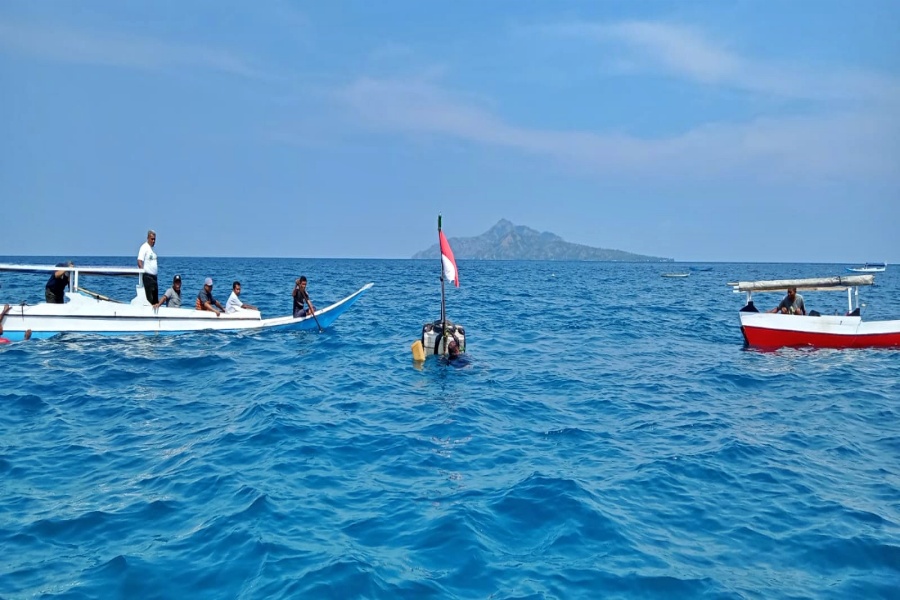
Despite the local successes in conservation, the Maurongga community faces a grave and ongoing threat from external actors. The use of destructive fishing methods—specifically the use of explosives (fish bombs) and cyanide-based chemicals—remains a pervasive issue.
These illegal practices are often carried out by transient fishing groups from outside the region who operate under the cover of night or during periods when local surveillance is low. Muhammad Nuhu, a member of the Embo Angi group, describes the intruders as aggressive, often utilizing compressors to reach the seafloor where they deploy "danke," a pesticide commonly used in local cocoa farming, to stun the marine life.
"The perpetrators are reckless," Nuhu stated. "When we approach them to defend our waters, they threaten us with explosives. It is a constant battle to protect our ‘field of gold’ from those who choose to destroy the environment for short-term gain."
The conflict is not merely environmental; it is a clash between two different paradigms of resource management. While the local fishers view the reef as a legacy to be protected for future generations, the encroaching illegal fishers view it as a finite resource to be extracted as quickly as possible. The Embo Angi group has taken a firm stance, organizing regular patrols and reporting illegal activity to local authorities. However, the transient nature of the offenders, who frequently discard evidence upon spotting patrols, makes successful prosecution difficult.
Broader Implications and Institutional Response
The struggle in Maurongga serves as a microcosm of the challenges facing Indonesia’s maritime sector. While the national government has made significant strides in increasing productivity, the enforcement of regulations at the village level remains a bottleneck.
Bernadus Sambut, Chairman of the Tananua Flores Foundation, emphasizes that the strategy for success must remain multi-dimensional. "We are not just teaching them to stop using destructive tools," Sambut explained. "We are fostering a holistic understanding of the marine ecosystem, which includes the management of plastic waste and the importance of long-term ecological health."
The economic data supports this focus on sustainability. With the value of octopus exports in East Nusa Tenggara rising from US$8.7 million in 2019 to over US$10.2 million in 2020, the incentive to protect the resource is higher than ever. However, without a robust, multi-agency effort to eradicate illegal bomb fishing, these gains remain vulnerable.
Looking Ahead
As the 2026 season progresses, the fishermen of Maurongga remain vigilant. The transition from the high-wave season to the calmer months in late August will mark the resumption of their primary work. For the 12 members of the Embo Angi group, the focus remains clear: maintain the rotational closures, protect the coral reefs from chemical and explosive damage, and continue to advocate for greater government presence in their waters.
The story of Maurongga is one of resilience in the face of both the uncontrollable forces of nature and the avoidable destruction caused by human greed. It highlights the indispensable role of community-led conservation in preserving Indonesia’s vast marine wealth. As global demand for sustainable seafood continues to rise, the experiences of these local heroes in Ende Regency offer a blueprint for how coastal communities can successfully balance economic survival with the imperative of environmental stewardship. The sea, for the people of Maurongga, is not just a source of income; it is a shared inheritance that they are fighting to protect, one octopus and one reef at a time.