Nila Kartika Wati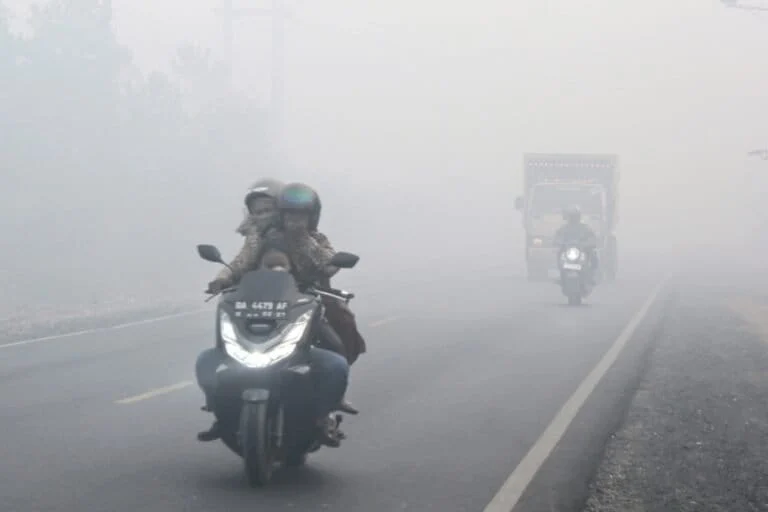
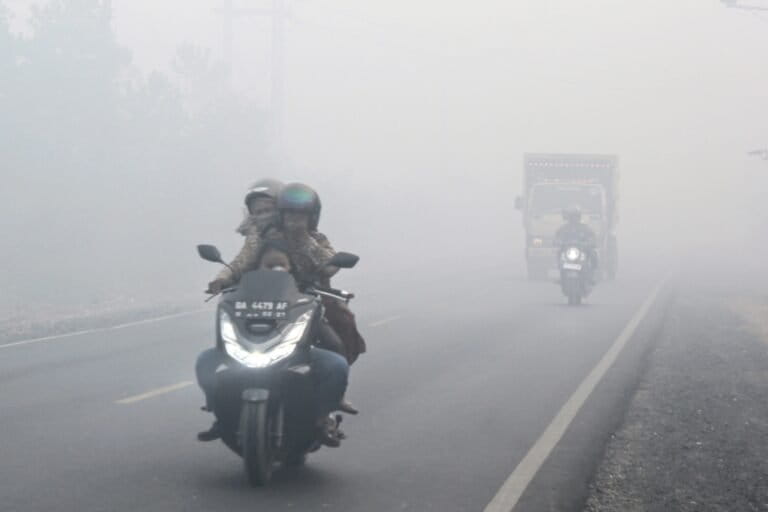
The massive forest and land fires currently ravaging Kalimantan have transcended environmental degradation, evolving into a severe public health emergency that threatens millions of lives across Southeast Asia. As of September 2026, the situation has spiraled into a regional catastrophe, with toxic haze engulfing not only Indonesian provinces but also neighboring nations, including Malaysia, Singapore, Brunei Darussalam, and the Philippines. The intersection of peatland destruction, corporate negligence, and inadequate emergency response has created a perfect storm, manifesting in a sharp surge in acute respiratory infections (ISPA) and long-term health risks for the region’s most vulnerable populations.
The Epicenter of the Crisis: Kalimantan’s Health Emergency
In Central Kalimantan, the provincial health department has documented a staggering 72,431 cases of acute respiratory infections (ISPA). Palangka Raya stands as the hardest-hit area, accounting for 16,166 cases, followed by Kotawaringin Barat (12,467), Kotawaringin Timur (7,982), and Kapuas (7,910). These regions, characterized by vast expanses of deep peatland, have become the primary sources of carbon emissions and particulate matter as underground fires burn unabated through the dry season.
The health implications of this haze are profound. According to Fachrial Kautsar, a researcher at the Center for Indonesia’s Strategic Development Initiative (CISDI), the fine particulate matter (PM2.5) generated by burning peat is significantly more toxic than standard urban air pollution. These microscopic particles bypass the body’s natural defenses, entering the bloodstream and causing systemic inflammation. Kautsar notes that these particulates are ten times more damaging to the developing lungs of children than typical pollutants, creating a legacy of chronic illness for the next generation. Pregnant women, the elderly, and those with pre-existing cardiovascular conditions are also at extreme risk, facing increased threats of asthma, chronic obstructive pulmonary disease (COPD), and potential complications in fetal development.
A Chronology of Declining Air Quality
The 2026 fire season began in earnest during the first half of the year, with data from Yayasan Auriga Nusantara indicating that 190,546 hectares of land were consumed by flames between January and June alone. This area, roughly 2.6 times the size of Singapore, serves as a stark indicator of the scale of the disaster.
By August 2026, the regional impact became undeniable. Despite the declaration of a "Status Tanggap Darurat" (Emergency Response Status) in Central Kalimantan on August 31, 2026, the crisis failed to stabilize. Instead, reports suggest that the situation worsened in the weeks following the declaration. The inability of authorities to contain the fires, coupled with the slow distribution of relief supplies—such as masks, portable oxygen tanks, and the establishment of "haze-free" shelters—has sparked intense public criticism regarding the effectiveness of local and central government interventions.
The Transboundary Dimension and Regional Tension
The environmental impact has long since breached Indonesia’s borders. Greenpeace monitoring stations identified that the haze began drifting across the archipelago and into neighboring maritime Southeast Asia between August 4 and September 6, 2026. The impact was most severe in Sarawak, Malaysia, which endured 34 consecutive days of thick smog. On September 5, the situation in Malaysia reached a critical peak, with the Air Pollutant Index (API) exceeding 500—a level classified as "hazardous" and capable of causing life-threatening complications for healthy individuals.
In response, local authorities in neighboring countries were forced to implement emergency measures. In many affected regions, schools were shuttered to protect students from toxic air, and citizens were strongly advised to restrict outdoor activities. This regional disruption highlights the failure of the ASEAN Agreement on Transboundary Haze Pollution, which has struggled for decades to provide a robust enforcement mechanism for member states to address the root causes of seasonal burning.
Expanding Frontiers: The Threat to Papua
While Kalimantan remains the primary focus of the 2026 crisis, environmental analysts are sounding the alarm regarding Papua. Data from Greenpeace reveals at least 97 active fire sources within the country’s designated national strategic food and energy project zones. Furthermore, "Pantau Gambut" (Peat Monitoring) reports identified 9,536 hot spots in the forest clearing areas of South Papua between January and August.
The expansion of fire threats into Papua is attributed to aggressive land-use changes. The clearing of primary vegetation, the construction of logging roads, and the systematic draining of wetlands have rendered the landscape exceptionally prone to combustion. As the government pushes for agricultural expansion, the loss of natural fire breaks in these pristine areas risks repeating the catastrophic environmental history of Kalimantan and Sumatra.
Accountability and the Legal Battleground
The Indonesian Ministry of Environment and Forestry (KLHK) has initiated investigations into 19 corporations linked to fires within their concessions, covering a total area of 11,046.69 hectares. However, critics argue that enforcement remains lopsided, with a persistent tendency to prosecute small-scale farmers and indigenous communities rather than large-scale industrial players.
This imbalance has led to calls for a more robust application of the law. Andri Gunawan Wibisana, a Professor of Environmental Law at the University of Indonesia, argues that the legal framework for corporate accountability has evolved. He points to Supreme Court Regulation No. 1 of 2023, which provides a pathway for victims to sue corporations for damages. The regulation allows for collective legal action even when it is difficult to attribute specific plumes of smoke to a single source, acknowledging that the combined contribution of multiple corporations creates the collective harm.
"We are moving toward a reality where companies must be held liable for their contribution to the total environmental impact," says Wibisana. "The victims of this haze have a legal standing to seek restitution for the medical and economic damages they have endured."
Analysis: Beyond the Flames
The 2026 fires demonstrate a fundamental failure in landscape governance. The recurring nature of these fires suggests that temporary fire-fighting measures—such as water bombing or cloud seeding—are insufficient to address the systemic issue of peatland management. As long as peat remains drained for commercial agriculture, the land will act as a ticking time bomb during every dry season.
The implications for Indonesia’s global reputation and its climate commitments are equally severe. Indonesia has pledged significant reductions in land-use emissions under the Paris Agreement, yet the 2026 fire season suggests that these goals remain elusive. The economic cost of the haze, including public health expenditures, loss of productivity, and regional diplomatic friction, far outweighs the short-term profits gained from the conversion of forest land into plantations.
Furthermore, the humanitarian dimension of the crisis cannot be overstated. With tens of thousands of respiratory cases, the burden on local health infrastructure is immense. Hospitals and clinics in Kalimantan are already reporting shortages of essential medical supplies, and the long-term impact on the development of children exposed to high concentrations of particulate matter will likely be felt for decades.
Conclusion
The current forest fire crisis is not an isolated environmental event; it is a profound failure of sustainable development. The smoke that blankets the region is the visible symptom of a deeper malady: the prioritization of short-term industrial gain over the fundamental human right to clean air and a healthy environment. As the smoke continues to drift across international boundaries, the pressure on the Indonesian government to move beyond emergency rhetoric and toward permanent, systemic reform—including the restoration of peatlands and the rigorous prosecution of corporate polluters—has never been greater.
Without a paradigm shift in how land is managed and how corporations are held accountable, the cycle of smoke and illness will continue to plague Kalimantan, Papua, and the rest of the Southeast Asian region. The 2026 crisis serves as a sobering reminder that in an interconnected ecosystem, the failure to protect a forest is, in effect, a failure to protect the health and security of an entire population.