Nila Kartika Wati
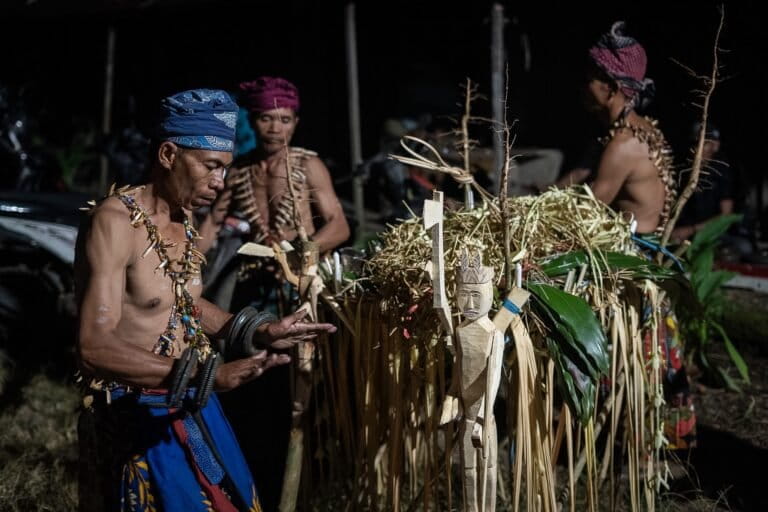
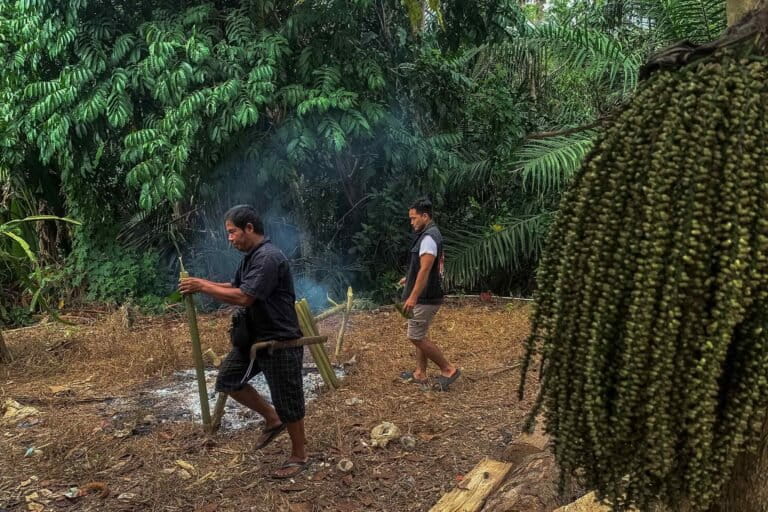
The low, rhythmic thrum of gongs and the intricate cadence of traditional gendang drums pierced the stillness of the night in Dusun Muara Kate, located within the Desa Muara Langon area of Paser Regency, East Kalimantan. As the final days of July 2026 drew to a close, the air was thick with the scent of burning agatis wood—a fragrant, sacred resin used to bridge the mortal realm with the divine. This was the setting for the Belian Bawo, a profound spiritual ceremony performed by the Dayak Deah community to invoke ancestral protection and offer gratitude for a hard-won legal victory.
Under the soft glow of village lights, four men, their torsos bare, moved in a hypnotic circle around a structure of vibrant yellow palm leaves. Among them was 56-year-old Rohani, a mulung—a high-ranking ritual leader tasked with mediating between the community and the Sangiang, or ancestral spirits. The ceremony served a dual purpose: to cleanse the village of malevolent energies and to honor the liberation of Misran Toni, a local figure who had become a symbol of resistance against the encroachment of heavy coal-hauling trucks on public roads.
A Chronology of Conflict and Resistance
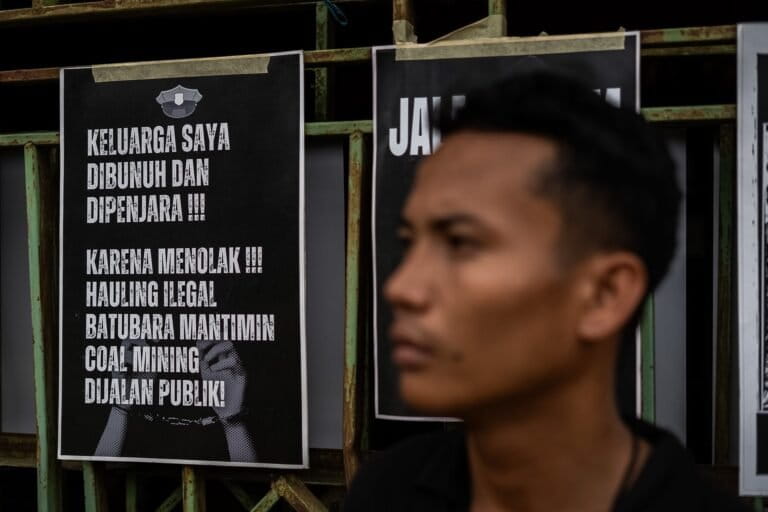
The tension in Muara Kate is not a recent phenomenon but the culmination of years of environmental and social friction. For over two years, residents have maintained a vigil, protesting the use of local public roads by heavy vehicles transporting coal. These roads, intended for community mobility and agricultural transport, have become hazardous corridors for industrial activity.
The human cost of this conflict has been devastating. In a tragic incident that galvanized the community, a local pastor named Pronika, only 24 years old, lost her life after being struck by a coal-hauling truck. This event shattered the local sense of security and escalated the intensity of the protests.
On November 15, 2024, the conflict reached a bloody apex. As the community was immersed in the rice planting season, a group of unidentified individuals attacked the residents’ protest post in the dead of night. Two men, Russel and Anson, suffered severe lacerations from sharp weapons. Russel succumbed to his injuries, marking a dark chapter in the struggle for local autonomy. Despite the gravity of the assault, the ensuing investigation remained stagnant for months, drawing sharp criticism from local residents and human rights organizations, including the National Commission on Human Rights (Komnas HAM).
The Criminalization of a Local Hero
The legal saga of Misran Toni began following the November attacks. Despite his role as a prominent leader in the movement to restrict coal hauling on public roads, he was named a suspect by the East Kalimantan Regional Police (Polda Kaltim) on July 22, 2025. Authorities accused him of involvement in the murder and assault that occurred at the protest post.
The move was met with immediate, widespread condemnation. Human rights coalitions, including the Mining Advocacy Network (Jatam), the Indonesian Forum for the Environment (Walhi) of East Kalimantan, and the Legal Aid Institute (LBH) of Samarinda, characterized the arrest as an act of criminalization. Fathul Huda, a legal counsel representing Misran Toni from YLBHI-LBH Samarinda, publicly highlighted significant procedural irregularities in the case, suggesting that the charges were a strategic attempt to silence opposition to the coal industry.
During his nine-month incarceration—which saw him transferred between the Paser Police Detention Center, the Polda Kaltim cell in Balikpapan, and finally the Rutan Kelas IIB in Tanah Grogot—the community’s resolve only hardened. A robust solidarity movement formed, bringing together environmental activists and residents from neighboring villages, such as Batu Kajang, who shared the same plight.
The Judicial Path to Exoneration
The legal battle reached a turning point on April 16, 2026, when the Tanah Grogot District Court delivered a verdict of acquittal. In the case numbered 256/Pid.B/2025/PN Tgt, presiding judge Andi Hardiansyah declared that Misran Toni was not proven guilty of the charges of murder or assault. The court found no evidence to link him to the violence, effectively clearing his name.
However, the pursuit of justice did not end there. Within a week of the acquittal, the Public Prosecutor (JPU) from the Paser District Attorney’s Office filed an appeal to the Supreme Court. The legal process dragged on for another 136 days, casting a shadow of uncertainty over the village. It was during this period of anxiety that the community decided to hold the Belian Bawo ritual, seeking divine intervention to ensure the finality of their victory.
The prayers of the Dayak Deah were answered on August 5, 2026. The Supreme Court, led by Chief Justice Jupriyadi with members Ainal Mardhiah and Sigid Triyono, formally rejected the prosecutor’s appeal, upholding the lower court’s decision to acquit Misran Toni.
Broader Implications for Environmental Justice
The acquittal of Misran Toni is viewed by many as a landmark case in the fight against the systemic criminalization of environmental defenders in Indonesia. While the community of Muara Kate celebrates the return of their leader, the underlying issues remain unresolved. The presence of coal-hauling trucks on public roads continues to pose a threat to public safety, and the perpetrators behind the initial attacks at the protest post have yet to be brought to justice.
Andre, the son of Misran Toni, expressed a mixture of relief and persistent apprehension. "This is not the end of this long struggle," he stated. "We are relieved, but we remain cautious. We know that the real perpetrators are still out there, and the possibility of further incidents remains high."
The case of Muara Kate serves as a stark reminder of the risks faced by rural communities when their livelihoods collide with the interests of large-scale industry. It highlights the critical need for a more transparent legal system that protects the rights of citizens to protest and ensures that environmental regulations are strictly enforced.
As the smoke from the ritual fires in Muara Kate dissipated, the community returned to their daily lives, but with a renewed sense of purpose. The Belian Bawo ritual was not just a celebration of an acquittal; it was a public declaration of the community’s refusal to be intimidated. As the legal dust settles, the eyes of the nation remain fixed on the authorities, awaiting a comprehensive and impartial investigation into the violence that continues to haunt this corner of East Kalimantan. The struggle for safe roads and accountability in Muara Kate is, in many ways, just beginning.