Tyo Susilo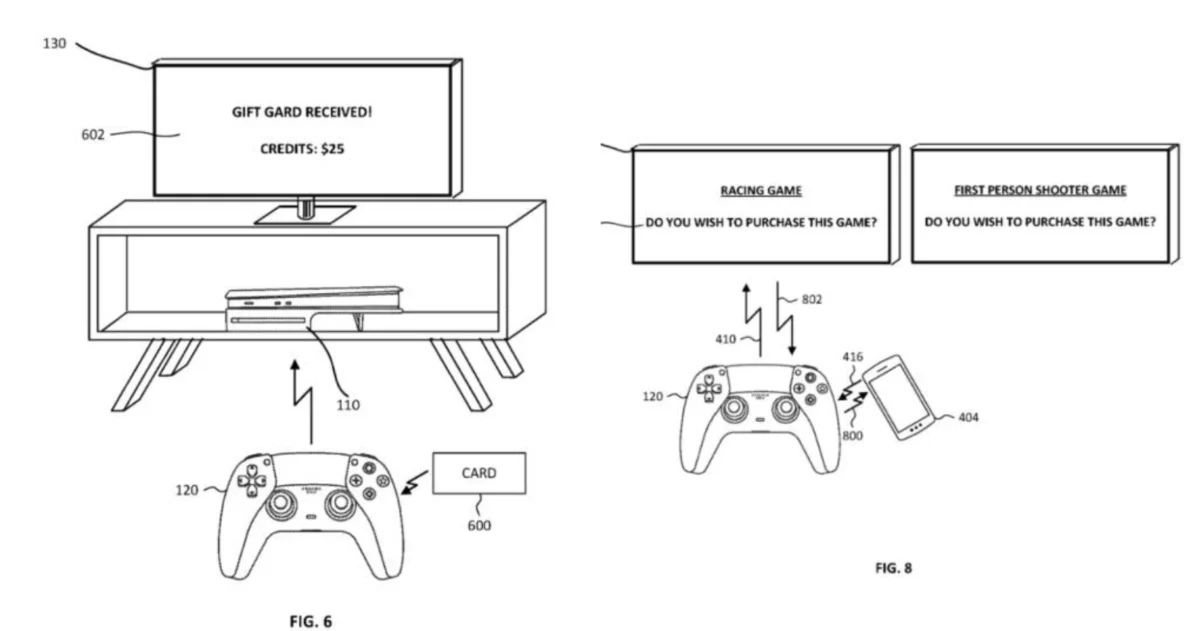
Sony Interactive Entertainment has taken a significant step toward redefining the capabilities of interactive hardware by securing a patent for a technology that transforms standard video game controllers into active hubs for digital information transfer, secure authentication, and seamless financial transactions.
The patent, officially titled "Video Game Controller-Driven Information Transfer," outlines a system wherein physical peripherals—such as a console gamepad—can communicate directly with external smart devices, near-field payment methods, and digital wallets. While the concept initially centers on easing the friction of purchasing digital video games, downloadable content (DLC), and subscriptions, the broader architectural framework hints at a multi-functional interface designed to integrate console gaming deeper into everyday digital consumer habits.
This development arrives at a time when friction reduction in digital commerce is paramount. By enabling hardware-level communication via short-range wireless protocols or optical sensors, Sony aims to bypass traditional, cumbersome input methods that have long defined the console checkout experience.
Chronology and Filing Timeline
The formal trajectory of this intellectual property began in the spring of 2025. According to public records from the United States Patent and Trademark Office (USPTO), Sony initially filed the documentation on March 17, 2025. The regulatory review process culminated over a year later on September 17, 2026, when the USPTO officially published the patent document under the identifier US20260273403A1, bringing the concept into the public domain and shedding light on Sony’s ongoing research and development priorities.
The publication does not indicate an immediate commercial rollout. Rather, it represents a foundational legal claim to the specific methods by which data transfer between a controller, a console, and external physical or digital tokens is executed.
Mechanics of Controller-Driven Information Transfer
Traditional console ecosystems require users to input long strings of alphanumeric data manually using a directional pad or analog sticks, or alternatively, to utilize companion mobile applications by scanning dynamic QR codes displayed on a television screen. These methods, while functional, introduce latency and user friction.
Sony’s patented architecture introduces a streamlined alternative. Under the proposed system, the game controller is equipped with communication modules—specifically noting near-field communication (NFC), Bluetooth, or optical sensors capable of reading QR codes and barcodes.

When a user initiates a purchase within a storefront interface or upon completing a game demo, the console signals the controller to await authentication. The user then brings a physical payment card, a gift card, or a smartphone running a digital wallet into close proximity with the gamepad. The controller reads the incoming cryptographic token or financial identifier via NFC or optical scanning.
Feedback mechanisms built directly into the hardware—such as haptic vibration motors, integrated LED illumination arrays, or acoustic alerts—then notify the user that the data transfer has been successfully completed. The controller securely relays this encrypted information upstream to the connected console, which processes the transaction through the PlayStation Network infrastructure without requiring the user to navigate multi-step manual billing menus.
Expanding Use Cases Beyond the Living Room
While the initial assumption regarding payment technology centers on home console setups, Sony’s patent documentation illustrates a far wider scope of practical applications, particularly within out-of-home entertainment and retail environments.
One prominent scenario detailed in the filing involves experiential retail and promotional kiosks. In this use case, a prospective buyer interacts with a playable game demo at a retail outlet or gaming convention using a demonstration controller. Instead of writing down a title or searching a mobile storefront later, the consumer taps their smartphone against the demo unit’s controller. The system immediately registers the intent to purchase, links the software license to the user’s cloud-based account library, and queues the game for background installation upon the player’s return to their home console.
Furthermore, the technology extends past software acquisitions. The patent framework accounts for microtransactions, in-game currency purchases, and physical merchandise ordering. It also touches upon auxiliary services, including:
- Rapid Player ID sharing for local or online multiplayer matchmaking, allowing participants to exchange profile credentials instantly by bringing peripherals close together.
- Seamless content migration, such as transferring captured gameplay screenshots, video clips, or active chat threads from a console environment directly to a mobile device.
- Alternative point-of-sale verification for esports tournament registrations, arcade credits, or venue-based gaming lounge fees.
Industry Context and Friction Reduction in Digital Commerce
The pursuit of frictionless checkouts is a primary focus for major technology and entertainment conglomerates. In the video game sector, digital storefronts such as the PlayStation Store, Xbox Marketplace, and Nintendo eShop generate the vast majority of software revenue. As physical retail media continues to decline in market share, optimizing the digital purchasing funnel directly impacts conversion rates.
By minimizing the steps required to complete a transaction, platforms can capture impulse purchases more effectively. Current digital checkout procedures often require entering account passwords, navigating multi-factor authentication (MFA) prompts on smartphones, or updating saved credit card credentials manually. Integrating a hardware-level tap-to-pay or token-transfer system mirrors the convenience already popularized by contactless smartphone payments in physical retail, potentially increasing average revenue per user by removing administrative hurdles.
Security Architecture and Technical Dependencies

Introducing direct financial data pathways to an input peripheral naturally raises questions regarding cybersecurity, encryption standards, and data privacy. Game controllers are typically viewed as local input devices rather than secure cryptographic modules.
For Sony’s concept to transition from a theoretical patent to a viable consumer product, stringent security protocols must be established. The patent implies that the controller acts merely as a secure relay channel rather than a persistent storage medium for sensitive financial data. Information captured via NFC or optical scanning must be encrypted end-to-end before being passed to the console, ensuring that intercepted signals between the controller and the system architecture remain unreadable.
Additionally, the reliance on external hardware standards means that backward compatibility could present logistical challenges. Current-generation hardware, such as the PlayStation 5’s DualSense controller, lacks dedicated NFC transceivers or optical data-scanning sensors in standard consumer models. Consequently, implementing this technology would necessitate either specialized hardware iterations or entirely new controller generations designed with these specific modules embedded from the manufacturing stage.
Market Implications and Future Outlook
Despite the detailed schematics and operational workflows outlined in the documentation, industry analysts emphasize a crucial distinction between patented concepts and commercial products. Technology companies routinely patent innovative ideas to protect intellectual property portfolios and stake claims in emerging technological intersections long before market demand or manufacturing costs align.
The illustrations accompanying the patent application utilize imagery resembling current PlayStation 5 hardware and the standard DualSense controller layout. However, this artistic choice is standard practice for patent drafts and does not officially confirm whether this technology is slated for inclusion in current-generation hardware revisions, mid-cycle upgrades, or eventual next-generation platforms.
Sony has not made any official announcements regarding the commercialization timeline or pricing structure of hardware featuring controller-driven information transfer. The realization of the technology will ultimately depend on consumer appetite for hardware-integrated financial tools, regulatory compliance across different global markets regarding digital payments, and the cost efficiency of embedding secure wireless sensors into mass-produced gaming peripherals.
As gaming hardware continues to intersect with mobile computing and cloud ecosystems, patents of this nature underscore the industry’s ongoing efforts to blur the lines between dedicated gaming platforms and comprehensive digital lifestyle hubs. Whether consumers will soon be using their gamepads to authorize transactions remains an open question, but the legal framework for such an ecosystem is officially in place.