Nasution Nanang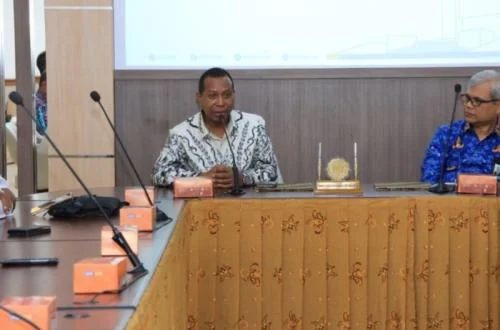
JAYAPURA – The Provincial Government of South Papua has forged a pivotal partnership with Universitas Sebelas Maret (UNS) Surakarta, a leading state university in Indonesia, to significantly bolster educational development within the newly established province. This strategic collaboration, formally sealed through a memorandum of understanding (MoU) signed in Jayapura on Saturday, May 4, 2024, is poised to unlock the vast potential of South Papua, particularly focusing on the critical sectors of agriculture, fisheries, and plantations. The initiative is a direct response to the province’s urgent need for enhanced human capital and technical expertise to drive sustainable economic growth and improve community welfare.
The agreement marks a significant milestone in South Papua’s journey as a new autonomous region, signaling a proactive approach to addressing foundational challenges in human resource development. Governor Apolo Safanpo articulated the core objective of this collaboration: to provide unparalleled educational opportunities for the youth of South Papua at UNS. This strategic pipeline aims to equip the next generation with the specialized knowledge and skills required to optimally manage and develop the province’s abundant natural resources in agriculture, fisheries, and plantations. The Governor emphasized that by investing in education aligned with the region’s economic pillars, South Papua can accelerate its development trajectory and ensure that its natural wealth translates into tangible benefits for its people.
Professor Dr. Hartono, Rector of UNS, echoed Governor Safanpo’s sentiments, highlighting the collaboration as a strategic move to reinforce synergy between higher education institutions and regional governments. He underscored UNS’s commitment to upholding the Tri Dharma Perguruan Tinggi—the three pillars of higher education comprising education, research, and community service. This partnership, according to Prof. Hartono, will facilitate the development of academic programs and research initiatives that are directly relevant and responsive to the specific needs and challenges faced by South Papua. He further affirmed UNS’s dedication to cultivating superior human resources capable of making substantial contributions to society. "We are confident that this cooperation will serve as a concrete solution for the community," Prof. Hartono stated, emphasizing the tangible and practical outcomes expected from this joint endeavor. The overarching vision is to generate measurable, innovative, and sustainable programs that yield mutual benefits for both UNS and the Province of South Papua, fostering a model of integrated regional development.
Chronology and Genesis of the Partnership
The signing of the MoU on Saturday, May 4, 2024, was not an isolated event but the culmination of several months of preliminary discussions and assessments between the South Papua Provincial Government and UNS. Recognizing the unique challenges and opportunities presented by South Papua’s recent establishment as a New Autonomous Region (Daerah Otonomi Baru, DOB) in November 2022, Governor Safanpo’s administration prioritized human resource development as a cornerstone of its provincial agenda. Initial overtures from the provincial government to various leading universities across Indonesia sought partners with strong track records in rural development, agricultural science, and community empowerment. UNS, with its distinguished faculties in agriculture, engineering, economics, and social sciences, along with a robust history of collaborative research and community engagement, emerged as an ideal partner.
The preparatory phase involved a series of virtual meetings and working group discussions between officials from the South Papua Provincial Secretariat, the Provincial Education Agency, and representatives from UNS’s Rectorate and relevant faculties. These discussions focused on identifying specific areas of need in South Papua, such as the scarcity of skilled agricultural extension workers, fisheries experts, and plantation managers, as well as the broader challenge of access to quality higher education for local students. UNS conducted internal assessments of its capacity to support these needs, particularly in developing tailored curricula, providing scholarships, and deploying faculty for research and community service projects in the region. The formal signing in Jayapura, attended by key provincial officials and UNS delegates, symbolized the official commitment to moving these strategic discussions into actionable programs. This collaborative approach underscores a proactive, phased strategy to build long-term educational infrastructure and human capital in the nascent province.
South Papua: A New Province with Untapped Potential
South Papua is one of Indonesia’s youngest provinces, carved out of the larger Papua province to accelerate development and improve governance. With its capital in Merauke, the province encompasses a vast geographical area characterized by diverse ecosystems, from fertile plains to coastal areas. Its population, while relatively small compared to other Indonesian provinces, is culturally rich and primarily dependent on natural resources. The establishment of South Papua as a DOB was driven by the central government’s policy to bring public services closer to the people and to decentralize development efforts, recognizing the unique socio-economic and geographical contexts of the Papua region.
However, as a new province, South Papua faces significant developmental hurdles. Infrastructure, particularly in remote areas, remains a challenge, and access to quality education and healthcare is often limited. Data from the Central Statistics Agency (BPS) for the broader Papua region often indicates lower educational attainment rates compared to the national average, with a critical need for skilled professionals across various sectors. The illiteracy rate, while improving, still requires focused interventions, and the Gross Enrollment Rate (GER) for tertiary education lags significantly behind national figures. This disparity highlights the urgency of initiatives like the UNS collaboration to bridge the educational gap and foster a generation of skilled professionals.
Economically, South Papua is endowed with immense potential in agriculture, fisheries, and plantations. The region’s fertile lands are suitable for rice cultivation, particularly in the Merauke Regency, which is often dubbed Indonesia’s "food basket." Additionally, vast sago palm forests offer opportunities for sustainable food processing and agro-industry. The extensive coastline and numerous rivers provide a rich environment for both marine and freshwater fisheries, with potential for aquaculture development. Furthermore, plantation crops such as oil palm, rubber, and cocoa have existing footprints, albeit with room for significant improvement in productivity and sustainable management practices. The challenge lies in transforming these raw potentials into a robust, diversified, and sustainable economy, which requires a highly skilled workforce, innovative research, and modern technological applications—precisely what the UNS partnership aims to deliver.
UNS’s Role and Expertise in Strategic Sectors
Universitas Sebelas Maret, established in 1976 in Surakarta, Central Java, has grown into one of Indonesia’s most respected public universities, known for its strong emphasis on research and community engagement. UNS houses a comprehensive array of faculties relevant to the development needs of South Papua, particularly its Faculty of Agriculture, Faculty of Engineering, and Faculty of Economics and Business.
The Faculty of Agriculture at UNS offers programs in Agribusiness, Agronomy, Soil Science, Animal Husbandry, and Agricultural Engineering. These programs are designed to produce graduates capable of innovating and managing modern agricultural systems, from farm to market. The faculty also boasts research centers focused on sustainable agriculture, food security, and rural development, making it an ideal partner for a region like South Papua. UNS’s expertise in developing high-yield crop varieties, sustainable farming practices, and agro-processing technologies can be directly applied to enhance productivity and value addition in South Papua’s agricultural sector.
While UNS does not have a dedicated Faculty of Fisheries and Marine Sciences, its Faculty of Engineering has departments like Environmental Engineering and Chemical Engineering, which can contribute significantly to sustainable aquaculture practices, water quality management, and processing of fishery products. Furthermore, research in biodiversity and ecological conservation, often cross-disciplinary, can support the sustainable management of marine and freshwater resources crucial for fisheries. The Faculty of Economics and Business can provide critical insights into market access, supply chain management, microfinance, and entrepreneurship within the agricultural and fisheries sectors, helping local communities transform subsistence activities into viable economic enterprises.
UNS’s long-standing commitment to the Tri Dharma principles extends beyond classroom education. It has a robust track record of community service programs, often deploying students and faculty to remote areas for practical field experience and direct community engagement. This experience will be invaluable in designing and implementing programs that are culturally sensitive and truly impactful for the indigenous communities of South Papua. The university’s research output, frequently published in national and international journals, provides a strong foundation for evidence-based policy recommendations and innovative solutions tailored to regional challenges.
Expected Outcomes and Broader Implications
The collaboration between the South Papua Provincial Government and UNS is expected to yield a multitude of positive outcomes, extending far beyond simply increasing access to education.
- Human Capital Development: The most immediate impact will be on the educational attainment and skill level of South Papua’s youth. Through scholarships, exchange programs, and tailored curricula, a new generation of local experts in agriculture, fisheries, and plantations will emerge. These graduates are expected to return to their home province, becoming catalysts for innovation, entrepreneurship, and local development.
- Economic Transformation: By applying advanced knowledge and technologies in strategic sectors, the province can expect increased productivity, improved quality of products, and greater value addition. For example, modern farming techniques can boost rice yields, sustainable aquaculture can enhance fish production, and efficient processing methods can create new markets for sago and other plantation products. This will contribute to food security, diversify the local economy, and generate higher incomes for local communities.
- Research and Innovation Hub: The partnership is envisioned to foster a localized research ecosystem. UNS faculty and students can undertake field research in South Papua, addressing specific local challenges such as crop diseases, sustainable resource management, and climate change adaptation. This research will generate context-specific solutions and contribute to the global body of knowledge while directly benefiting the region.
- Community Empowerment and Welfare: Beyond economic gains, the initiative aims to empower local communities. Education and training programs can uplift rural populations, reduce poverty, and improve overall living standards. The focus on sustainable practices will also ensure environmental protection and responsible resource utilization, crucial for the long-term well-being of the indigenous communities.
- Regional and National Development: This collaboration aligns perfectly with Indonesia’s national agenda for accelerating development in Papua and achieving food security. By strengthening South Papua’s economic base and human resources, the province contributes significantly to national resilience and equitable development across the archipelago. It serves as a model for inter-regional cooperation between developed educational institutions and developing regions.
- Institutional Strengthening: For UNS, the partnership offers opportunities to expand its Tri Dharma mission, gain unique research insights into tropical agriculture and indigenous knowledge systems, and further solidify its reputation as a university committed to national development and social impact.
Challenges and Mitigation Strategies
While the potential benefits are immense, the implementation of such an ambitious collaboration in a new and geographically challenging province will inevitably face hurdles.
- Logistical Challenges: South Papua’s vast and often remote terrain, coupled with limited infrastructure, can complicate the deployment of faculty, resources, and the mobility of students. Mitigation strategies will involve utilizing digital learning platforms, establishing local learning centers, and leveraging existing provincial infrastructure.
- Funding Sustainability: Sustaining scholarships, research projects, and community programs over the long term requires significant and consistent funding. The partnership will need to explore diverse funding sources, including provincial budgets, central government grants, corporate social responsibility (CSR) programs, and international development aid.
- Cultural Sensitivity and Local Context: Programs must be designed and implemented with profound respect for local customs, traditions, and indigenous knowledge systems. Engaging local community leaders and integrating traditional wisdom into modern curricula will be crucial for the success and acceptance of the initiatives. UNS will need to develop culturally competent programs and foster an inclusive learning environment.
- Brain Drain: A potential concern is that highly educated graduates might seek opportunities outside South Papua. The provincial government must work to create attractive local employment opportunities, incentivize entrepreneurship, and foster a supportive environment for graduates to apply their skills within the province. Mentorship programs and local startup incubators could play a vital role.
- Program Monitoring and Evaluation: Establishing robust mechanisms for monitoring the progress and evaluating the impact of the programs will be essential to ensure accountability, adapt strategies as needed, and demonstrate the tangible benefits of the collaboration. Key performance indicators (KPIs) related to student success, research output, and community impact will need to be developed.
A Vision for a Prosperous South Papua
The collaboration between the South Papua Provincial Government and Universitas Sebelas Maret represents more than just an educational agreement; it is a declaration of commitment to the future of South Papua. By strategically investing in human capital development, particularly within the vital sectors of agriculture, fisheries, and plantations, the province is laying the groundwork for sustainable growth, economic self-sufficiency, and improved quality of life for its citizens. This partnership exemplifies a forward-thinking approach to regional development, harnessing the intellectual power of academia to unlock the vast, untapped potential of Indonesia’s newest province, ultimately contributing to a more prosperous and equitable nation. The journey ahead will require dedication, innovation, and perseverance, but with a strong foundation now established, the vision of a thriving South Papua powered by its own skilled population appears increasingly within reach.